Quick Answer
Abbotsford VIC suits buyers and investors who want inner-Melbourne convenience, walkability, and strong everyday amenity rather than large blocks or suburban space. It tends to appeal to owner-occupiers who value a low-maintenance lifestyle and investors seeking broad tenant appeal from professionals, couples, and lifestyle-led renters. The main decision point is property type: in Abbotsford, building quality, strata costs, parking, noise, and river-adjacent due diligence can matter as much as the address itself.
Key Takeaways
- Abbotsford suits lifestyle-first buyers and investors who prioritise convenience, amenity, and short CBD travel times.
- The suburb’s appeal is strongest where location, building quality, and liveability work together rather than relying on prestige alone.
- Apartments and low-maintenance homes dominate buyer choice, so strata health and common-property condition deserve close review.
- Tenant demand is generally supported by professionals and couples who want a practical inner-city base.
- Relative value can change quickly between streets and building types, so compare nearby suburbs and recent sales carefully.
Pros & Cons
Pros
- Close to the CBD and major employment hubs
- Strong walkability and public transport access
- Rich café, river, and park amenity
Cons
- Limited land-backed housing compared with outer suburbs
- Strata fees and building-specific issues can affect net returns
- Traffic, parking, and noise can reduce comfort in some pockets
Market Overview
-wise, it is an urban, amenity-rich suburb near the Yarra River, retail strips, and major transport corridors. That combination supports demand, but also means buyers should inspect street-by-street differences carefully, especially around noise, parking, and any flood or drainage overlays that may affect a specific property.
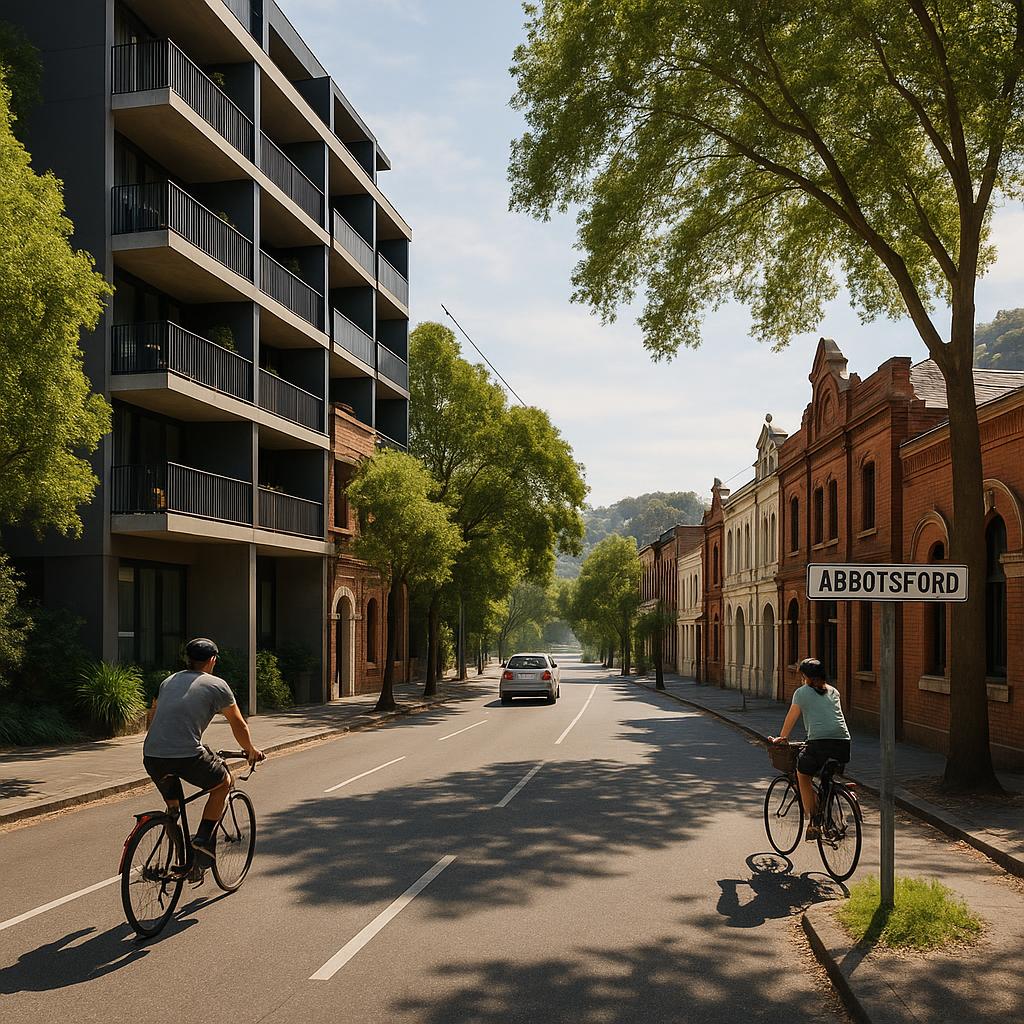
Abbotsford is an inner-Melbourne suburb where the market is shaped by convenience, compact living, and proximity to the CBD rather than big blocks or family-size yards. The local mix of apartments, townhouses, and character homes means buyers are really choosing between building quality, lifestyle fit, and ongoing ownership costs.
For many purchasers, Abbotsford makes sense when the goal is to trade land size for access, time savings, and a lower-maintenance lifestyle. For investors, that same convenience can support tenant depth, but the best outcomes usually come from practical, well-located stock rather than the flashiest looking apartment.
Buyer Demand
Demand in Abbotsford is typically driven by people who want to live close to work, dining, and public transport without paying for a full CBD address. That includes young professionals, couples, downsizers, and buyers who value a walkable routine more than a large backyard.
Buyer competition is often strongest for properties that feel easy to live in: good natural light, efficient layouts, secure parking where available, and buildings with sensible strata management. In this suburb, “best property” often means the one with the fewest practical compromises, not necessarily the biggest floor area.
Rental Market
The rental market usually benefits from Abbotsford’s inner-city convenience and broad appeal to tenants who want a short commute and low-maintenance living. Well-kept apartments, particularly those with good layout efficiency and easy access to amenity, tend to be the most straightforward to lease.
For investors, the key is to match the dwelling type to the tenant pool. A functional one- or two-bedroom apartment may attract stable long-term demand if the building is well managed, while a poorly designed unit with weak storage, noise exposure, or high strata costs can erode the benefit of a strong location.
Lifestyle, Transport & Schools
Abbotsford offers a city-fringe lifestyle with cafés, riverside walking, parks, and a strong everyday convenience factor. It suits buyers who enjoy being close to activity and amenity, but who still want some separation from the most intense parts of the CBD.
Transport access is a major part of the suburb’s appeal, with public transport and road links making the commute relatively straightforward for many residents. That matters because transport convenience widens both the buyer and tenant pool, especially in market periods when people become more selective about commute time and everyday friction.
School considerations are still relevant for family buyers, but Abbotsford is often chosen more for lifestyle than for a conventional family-estate profile. If schooling matters, verify current catchments, enrolment rules, and travel time using official sources rather than relying on reputation or hearsay.
Abbotsford (Vic.) Suburb Profile
Official 2021 Census snapshot for the ABS Suburbs and Localities geography.
Age profile
Housing tenure
Occupied private dwellings by tenure type.
Salary & income profile
Median total income reported in the Census.
*Annual figures are weekly median × 52 estimates, not separate ABS annual medians.
Education & qualifications
Highest educational attainment, people aged 15+.
Employment status
People aged 15+ who reported being in the labour force.
Industry of employment
Top responses among employed people aged 15 years and over.
Occupation profile
Broad occupation groups among employed residents, including managers.
Property Type Guide
- Apartments: Common, practical, and often the easiest entry point for buyers seeking low maintenance and broad rental appeal.
- Townhouses / low-rise homes: Useful for buyers wanting a more private feel without moving to a fully detached suburban format.
- Character homes / converted buildings: Attractive for buyers who value character, but older layouts and renovation constraints need close attention.
- Best fit for investors: Well-managed apartments with strong tenant appeal and reasonable ongoing costs.
- Best fit for owner-occupiers: Homes with good light, storage, quiet orientation, and a layout that suits daily use.
Risks & Watch-Outs
- Noise, traffic, and parking pressure can vary sharply by street and building position.
- River-adjacent and low-lying pockets may require extra checking for flood or drainage overlays.
- Strata levies, special levies, and deferred maintenance can materially change holding costs.
- Older apartments may have issues such as poor insulation, dated services, or waterproofing concerns.
- High lifestyle demand does not guarantee strong investment performance if the building is substandard.
Nearby Suburbs to Compare
- Richmond VIC Property Market Guide: Buyers & Investors
- Carlton VIC Property Market Guide: Buyers & Investors
- Fitzroy VIC Property Market Guide: Buyers & Investors
- Hawthorn VIC Property Market Guide: Buyers & Investors
- Kew VIC Property Market Guide: Buyers & Investors
FAQ
Is Abbotsford a good suburb for first-home buyers?
It can be, especially for buyers who prioritise location, walkability, and a lower-maintenance lifestyle. First-home buyers should focus on building quality, strata records, and whether the floorplan actually suits daily living, because inner-city convenience comes with compromises.
Is Abbotsford better for investors or owner-occupiers?
It can suit both, but the property choice differs by strategy. Owner-occupiers often pay for light, quiet, and usability, while investors usually want broad rental appeal, manageable holding costs, and a building that does not create avoidable maintenance surprises.
What property type is usually best in Abbotsford?
There is no single best type. Apartments often suit investors and first-home buyers, while low-rise townhomes or character homes may suit buyers wanting more privacy or emotional appeal. The right answer depends on budget, risk tolerance, and how long you plan to hold.
What should buyers inspect most carefully?
Check strata minutes, recent maintenance, building condition, parking practicality, and noise exposure at different times of day. If the property is near the river or in a low-lying pocket, also verify overlays and drainage considerations with current planning information.
How does Abbotsford compare with nearby suburbs?
Abbotsford is often more compact and convenience-led than family-oriented inner-east suburbs, while still offering strong access to the CBD. Nearby areas can differ meaningfully in housing stock, street activity, and buyer profile, so compare on property type as well as location.
Conclusion
Abbotsford is a strong fit for buyers and investors who value inner-city access, daily convenience, and low-maintenance living. The suburb can be highly effective when the property type, building quality, and ownership costs are aligned. As always, the best result comes from comparing the specific building and street, not just the postcode.
Sources & how to verify
- Check current comparable sales and active listings on Domain to confirm what similar Abbotsford properties are actually trading for today.
- Review sold history and listing trends on realestate.com.au so you can compare asking prices, time on market, and property-type differences.
- Use Public Transport Victoria to verify current tram, train, and bus access rather than relying on assumptions about commute convenience.
- Check zoning and planning controls on Victoria’s Planning Portal before buying, especially if redevelopment or heritage constraints matter.
- Confirm school zones and enrolment rules on Find My School because catchments can change and should never be assumed from reputation alone.
- Review local mapping and flood-related overlays through the relevant Yarra City Council resources and property documents where available.
- Check Australian Bureau of Statistics community data on ABS to understand broad household and dwelling trends without using stale third-party summaries.
- Ask a licensed conveyancer, buyer’s agent, or property manager to review strata records, special levies, and leasing demand before you make an offer.