Quick Answer
Richmond is one of Melbourne’s most location-driven suburbs: walkable, transport-rich, and consistently attractive to owner-occupiers and tenants who prioritise convenience over space. It suits buyers who want inner-city access, strong everyday amenity, and a broad choice of terraces, apartments, and converted dwellings. Investors should focus on tenant appeal, building quality, and street-level noise exposure rather than assuming every Richmond property performs the same way.
Key Takeaways
- Richmond behaves like a blue-chip inner-ring market, where micro-location matters as much as suburb reputation.
- Character homes, apartments, and infill townhouses each serve different buyer goals and holding strategies.
- Strong access to the CBD, employment hubs, and amenity supports broad demand from renters and buyers.
- Noise, parking, building quality, and heritage constraints can materially affect comfort and resale outcomes.
- Best results usually come from buying the right dwelling type in the right street, not from chasing the “Richmond” label alone.
Pros & Cons
Pros
- Excellent inner-Melbourne convenience and strong day-to-day livability.
- Broad appeal to professionals, downsizers, couples, and investors.
- Diverse housing stock with character and low-maintenance options.
Cons
- Some pockets are exposed to noise, congestion, or rail and tram activity.
- Parking, storage, and private outdoor space can be limited.
- Older homes and apartments may carry higher maintenance or strata risk.
Market Overview
Richmond is an established inner-Melbourne suburb where demand is shaped by location, amenity, and housing type rather than land size alone. It sits close to major employment, entertainment, health, and education precincts, which helps explain why it remains tightly held and highly scrutinised by buyers.
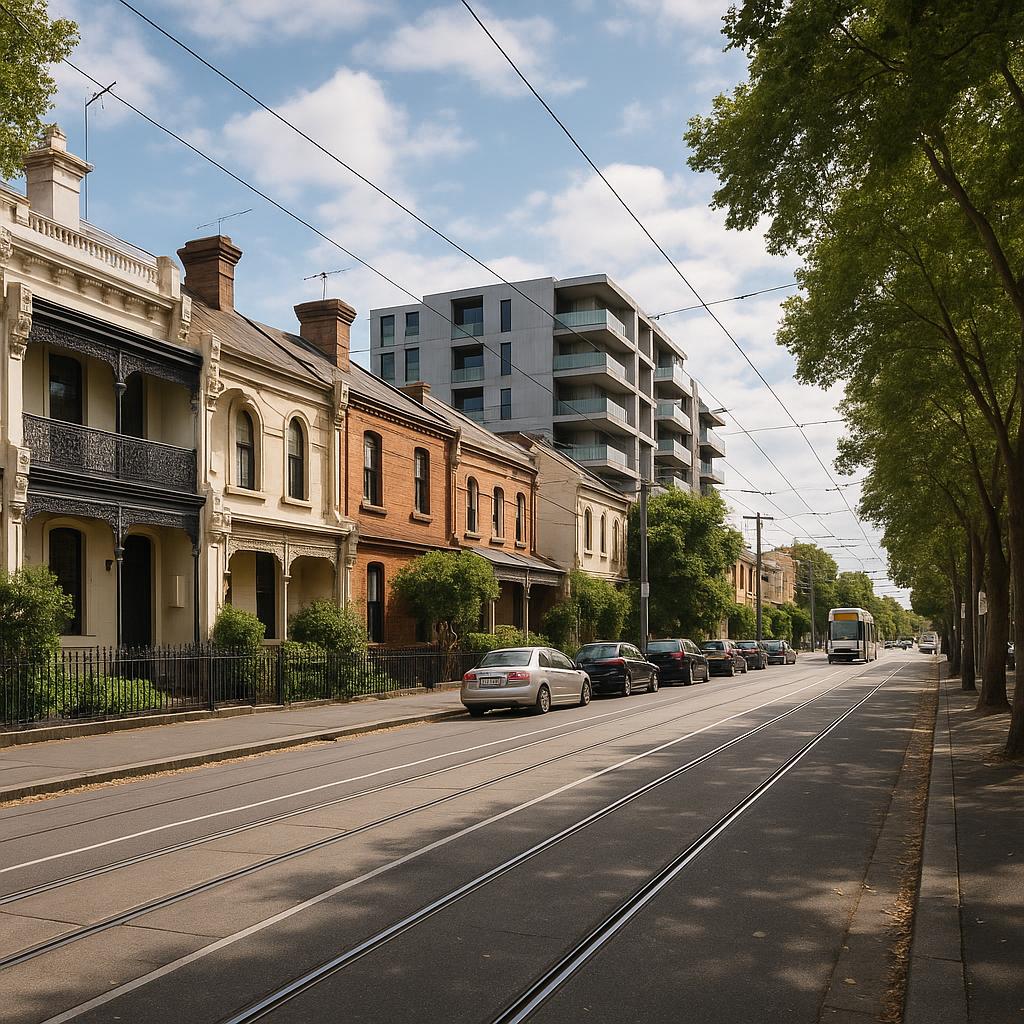
The key point for investors and homeowners is that Richmond is not one uniform market. A quiet tree-lined terrace, a warehouse conversion, and a compact apartment near transport can all attract different buyers and tenants. That means the street, building, and floorplan are often more important than the postcode shorthand.
For a broader context, Richmond often competes with inner-east and inner-city alternatives where buyers are making a lifestyle-versus-space decision. The suburb’s appeal is strongest when the property offers practical access, low friction living, and a layout that suits the owner’s daily routine.
Buyer Demand
Buyer demand in Richmond is typically strongest from professionals, couples, downsizers, and investors who value convenience and a car-light lifestyle. Many buyers are trading floor area for better access to work, hospitality, and transport, which keeps demand broad across market cycles.
Demand often splits by property type. Renovated terraces and well-kept character homes attract owner-occupiers who want charm and location, while apartments and townhouses can appeal to buyers seeking easier upkeep. In practice, the best-supported properties are usually those with good light, sensible layouts, and a quieter street setting.
Rental Market
Richmond is generally attractive to renters because it offers a strong mix of convenience, amenity, and proximity to major job nodes. That keeps the tenant pool wide, especially for renters who prefer an inner-urban lifestyle and value quick access to trains, trams, and local dining.
From an investor perspective, the rental outcome usually depends on practicality rather than premium finishes alone. Good orientation, secure access, manageable strata costs, and a layout that is easy to furnish can matter more than decorative upgrades. A well-located apartment may lease more smoothly than a larger property with awkward access or poor acoustics.
Lifestyle, Transport & Schools
Richmond’s lifestyle strength comes from its mix of hospitality, shopping strips, parks, and major precinct access. It suits people who want an urban village feel with strong daily convenience. For many households, that convenience offsets the trade-off of living in a denser, busier inner suburb.
Transport is a core part of the suburb’s value proposition. Train and tram access supports car-light living and makes Richmond practical for CBD commuters and inner-city workers. Buyers should still check the exact walking route to the station or tram stop, because busy roads, rail proximity, or awkward crossings can change the lived experience.
School planning is also part of the decision for family buyers. Rather than relying on reputation alone, verify current school zones, enrolment rules, and access times directly through official sources. In an inner suburb like Richmond, families often balance school access against commute times, noise, and the amount of usable indoor and outdoor space.
Richmond (Vic.) Suburb Profile
Official 2021 Census snapshot for the ABS Suburbs and Localities geography.
Age profile
Housing tenure
Occupied private dwellings by tenure type.
Salary & income profile
Median total income reported in the Census.
*Annual figures are weekly median × 52 estimates, not separate ABS annual medians.
Education & qualifications
Highest educational attainment, people aged 15+.
Employment status
People aged 15+ who reported being in the labour force.
Industry of employment
Top responses among employed people aged 15 years and over.
Occupation profile
Broad occupation groups among employed residents, including managers.
Property Type Guide
- Terraces and period homes: Best for buyers wanting character, charm, and renovation potential. Check heritage controls, roof condition, services, and ongoing maintenance costs.
- Apartments: Best for investors, downsizers, and first-home buyers seeking lower-maintenance living. Review body corporate records, building quality, soundproofing, and owner-occupier versus investor mix.
- Townhouses and newer infill: Often a middle-ground option with better privacy than apartments and less upkeep than older houses. Inspect layout efficiency, access, and parking.
- Warehouse or converted dwellings: Can offer strong lifestyle appeal, but buyers should assess light, ventilation, thermal comfort, and practical storage before committing.
- Best-fit lens: Buy for lifestyle if character matters, buy for investment if tenant convenience is the priority, and buy for flexibility if you want broad resale appeal.
Risks & Watch-Outs
- Noise can be a real issue near tram corridors, rail lines, activity strips, or nightlife zones, so inspect at different times of day.
- Parking and access can be constrained, especially in older streets or apartment buildings with limited off-street arrangements.
- Apartment buyers should review owners corporation records carefully for defects, special levies, and planned maintenance.
- Older terraces and converted buildings may hide expensive upkeep in roofing, services, damp, or compliance-related works.
- Heritage or planning controls can limit renovation flexibility, so confirm what is actually permitted before buying for future upgrade plans.
Nearby Suburbs to Compare
- Collingwood — similar inner-city energy with a different housing mix and street feel.
- Cremorne — useful for comparing apartment-led convenience and employment proximity.
- Abbotsford — worth considering for buyers wanting a slightly different inner-riverside feel.
- South Yarra — compare for premium apartment living and established prestige.
- Hawthorn — a stronger family-oriented comparison for some buyers assessing inner-east trade-offs.
FAQ
Is Richmond VIC good for first-home buyers?
Yes, if the buyer is comfortable prioritising location and convenience over space. Many first-home buyers start with apartments or smaller dwellings here because entry into an inner suburb usually means making practical compromises on size, parking, or outdoor area.
Is Richmond a good suburb for investors?
It can be, because tenant demand is supported by transport access, employment proximity, and lifestyle amenity. The key is selecting a property with strong rentability, manageable upkeep, and a building or street position that avoids common livability problems.
What type of property is best in Richmond?
There is no single best type. Terraces suit buyers wanting character and long-term owner-occupier appeal, apartments suit those seeking low maintenance, and townhouses can be a practical middle ground. The right choice depends on your budget, time horizon, and tolerance for upkeep.
What should buyers inspect before purchasing in Richmond?
Focus on noise, natural light, floorplan efficiency, parking, storage, and building condition. For apartments, review the owners corporation records and defects history. For older homes, check maintenance items such as roofs, damp, wiring, and heating or cooling performance.
Does Richmond suit families?
It can suit some families well, especially those who value inner-city convenience and access to services. Families should be realistic about space, outdoor area, traffic exposure, and school planning. The best-fit homes are usually in quieter pockets with practical layouts.
Conclusion
Richmond is a premium inner-Melbourne suburb where the main value drivers are convenience, amenity, and property-specific quality. It rewards buyers who think carefully about dwelling type, street context, and holding costs. If you buy for the right purpose, Richmond can be an excellent long-term lifestyle or investment location.
Sources & How to Verify
- Check current listings and recent sold examples on Domain so you are comparing live market evidence rather than relying on outdated commentary.
- Review comparable sales and suburb-level supply trends on realestate.com.au to see how different property types are being priced and presented.
- Use the Australian Bureau of Statistics to verify broad demographic and household context before drawing conclusions about buyer or renter profiles.
- Check transport access, service patterns, and any disruptions through Public Transport Victoria rather than assuming route convenience from a map alone.
- Confirm school zones and enrolment boundaries on Find My School because boundaries and eligibility rules can change.
- Review planning controls, overlays, and permit requirements via Planning Victoria if you are considering renovations or redevelopment.
- Use the City of Yarra website to check local planning, parking, amenity, and community information that may affect day-to-day livability.
- Request title searches, owners corporation records, and a building inspection before purchase so you can verify the property’s actual risks rather than relying on appearance.