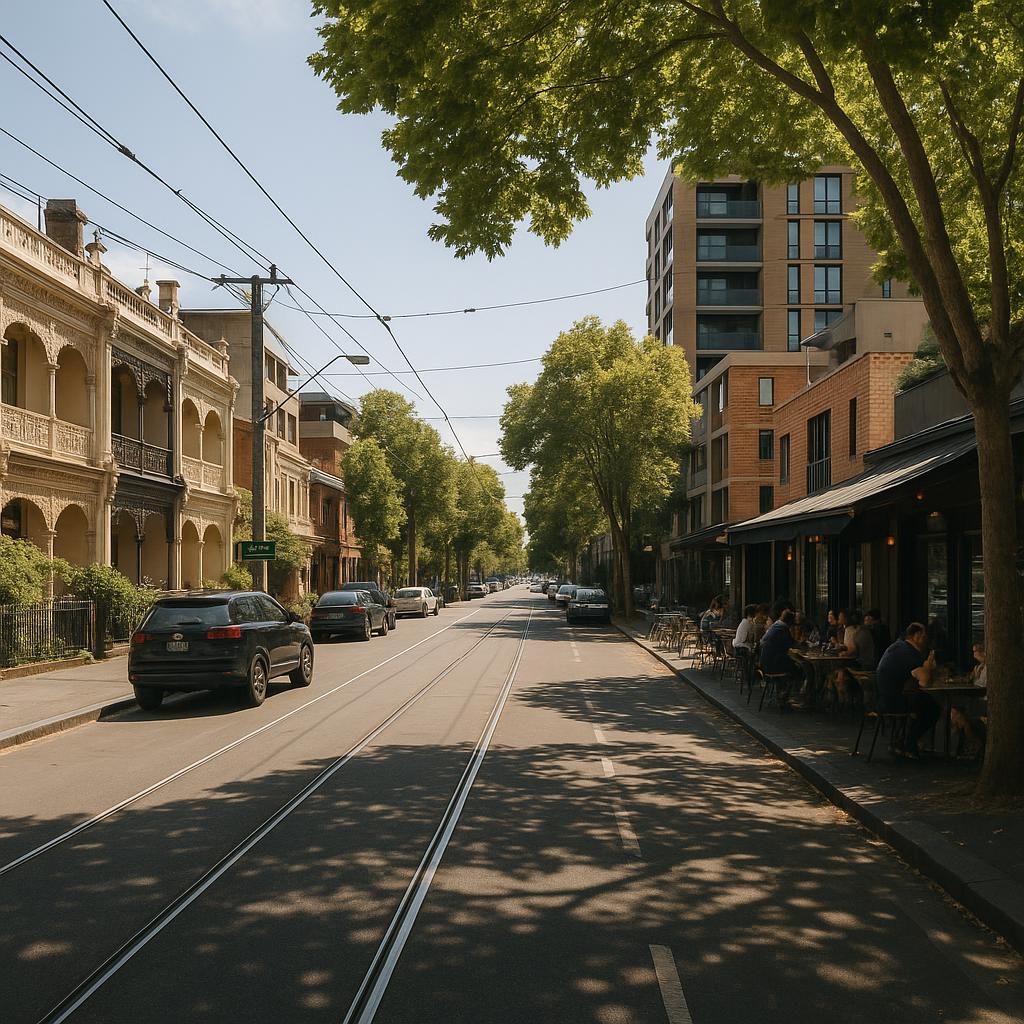
Quick Answer
Carlton VIC is an inner-Melbourne suburb best known for its apartment-heavy housing stock, strong student and professional demand, and walkable lifestyle. It suits buyers who value proximity to the CBD, universities, hospitals, and tram access more than large land holdings. Investors are usually drawn to its broad tenant pool and low-maintenance stock, while owner-occupiers should focus on building quality, noise, light, and strata health. The suburb’s appeal is durable, but the best result comes from buying the right property, not simply the right postcode.
Key Takeaways
- Carlton suits buyers who want inner-city convenience, strong amenity, and a compact, low-maintenance lifestyle.
- The suburb’s demand is underpinned by universities, hospitals, CBD access, and a steady pool of student and professional tenants.
- Apartments dominate, so layout, natural light, and body corporate quality matter more than headline suburb appeal.
- Older terraces and heritage stock can be attractive, but they need careful inspection for maintenance and renovation constraints.
- For both investors and owner-occupiers, building-level comparison is essential because Carlton’s outcomes vary widely by property.
Pros & Cons
Pros
- Close to major employment, education, and health precincts.
- Broad rental appeal across students, workers, and city-fringe tenants.
- Walkable lifestyle with strong café, dining, and everyday amenity.
Cons
- Apartment-heavy stock limits land-banking and family-home options.
- Some buildings bring higher strata costs, noise, or maintenance issues.
- Parking and storage can be constrained in older or denser developments.
Market Overview
Carlton is an established inner-city suburb where value is driven by access, convenience, and long-term liveability rather than large blocks or detached housing. The housing mix leans heavily toward apartments, with a smaller share of terraces, heritage homes, and mixed-use stock. That makes Carlton more of a property-selection market than a “buy anywhere and win” suburb.
Its market profile is shaped by proximity to the University of Melbourne, RMIT, major hospitals, the CBD, and tram corridors. That creates a persistent base of renters and buyers who prioritise location over space. For homeowners, this can mean superb day-to-day convenience; for investors, it often means solid leasing depth if the property is well presented and sensibly priced.
Buyers should think at the building level. In Carlton, two apartments a few streets apart can feel like different markets depending on noise exposure, age of building, aspect, security, and body corporate performance. That is why comparable sales and strata documents matter as much as suburb reputation.
Buyer Demand
Buyer demand in Carlton typically comes from first-home buyers, professionals, downsizers, and parents or investors looking for accommodation near university and health precincts. Many are seeking a low-maintenance foothold close to the city rather than a large home with land value upside.
The strongest buyer interest usually goes to properties with efficient floorplans, good natural light, decent storage, and practical access to transport and amenity. A smaller but well-designed apartment can often appeal more than a larger one with poor layout or weak outlook, because Carlton buyers tend to buy utility as much as postcode.
Rental Market
Carlton’s rental market is supported by students, academics, hospital workers, and CBD commuters. That diversity helps reduce reliance on any single tenant type. Properties that are easy to maintain, simple to access, and close to tram routes or education precincts are usually the easiest to lease.
Investors should match the property to the likely tenant profile. Compact apartments often suit students and young professionals, while quieter or slightly larger units may attract long-term tenants who want stability. The main leasing edge comes from a clean, functional, well-located dwelling rather than from flashy features that may not be used.
Lifestyle, Transport & Schools
Carlton offers a dense urban lifestyle with cafés, restaurants, bars, specialist retail, and everyday services within easy reach. That convenience is a major part of its identity and one reason it remains popular with people who value time savings and walkability.
Transport access is a core advantage, especially via tram connections and easy access to the CBD. In many pockets, car ownership is optional rather than essential, although that depends on the building and individual routine. Buyers should still check parking, storage, and street parking conditions if they own a car or plan to rent to tenants who do.
Education is another defining feature, though Carlton is more commonly associated with tertiary access than with family-school demand. That matters for investors because nearby institutions can support ongoing rental demand, even if the suburb is not primarily chosen for family schooling. For buyers with school priorities, catchment verification should be done carefully using current official sources.
Carlton (Vic.) Suburb Profile
Official 2021 Census snapshot for the ABS Suburbs and Localities geography.
Age profile
Housing tenure
Occupied private dwellings by tenure type.
Salary & income profile
Median total income reported in the Census.
*Annual figures are weekly median × 52 estimates, not separate ABS annual medians.
Education & qualifications
Highest educational attainment, people aged 15+.
Employment status
People aged 15+ who reported being in the labour force.
Industry of employment
Top responses among employed people aged 15 years and over.
Occupation profile
Broad occupation groups among employed residents, including managers.
Property Type Guide
- Apartments: The dominant stock type. Best for investors, first-home buyers, and downsizers if the layout, building quality, and strata setup are sound.
- Heritage terraces: Less common and often tightly held. Attractive for character and inner-city charm, but inspect for maintenance, insulation, and renovation limitations.
- Older walk-ups: Can offer value, but the condition of common areas, stair access, and ongoing building upkeep should be checked carefully.
- Newer developments: Often suit buyers wanting modern finishes and easier maintenance, but review defects history, levies, and long-term liveability.
- Best for investors: Easy-to-lease apartments with good light, security, functional storage, and a building that presents well to tenants.
- Best for owner-occupiers: Quiet orientation, natural light, sensible room proportions, and manageable ongoing costs.
Risks & Watch-Outs
- Do not assume every Carlton property will perform the same; building quality and micro-location can materially change outcomes.
- Check for body corporate health, because high levies, deferred maintenance, or special levies can affect returns and livability.
- Inspect for noise transfer, traffic exposure, nightlife spillover, and poor acoustic separation, especially in dense apartment buildings.
- Parking and storage can be limited, so confirm what is included and whether the arrangement actually suits your daily use.
- Heritage controls, older construction, and apartment layouts can limit renovation options and raise the cost of future improvements.
Nearby Suburbs to Compare
- Parkville
- Fitzroy VIC Property Market Guide: Buyers & Investors
- Brunswick
- North Melbourne
- Richmond VIC Property Market Guide: Buyers & Investors
FAQ
Is Carlton good for first-home buyers?
Carlton can work well for first-home buyers who want an inner-city location and are comfortable with apartment living. It is especially suitable if you value transport access, low maintenance, and walkability over the space of a detached house.
Is Carlton a good suburb for property investors?
It often is, because the suburb supports a broad tenant base and has enduring location appeal. The best investor outcomes usually come from practical, easy-to-lease apartments in well-managed buildings rather than from properties chosen only for postcode prestige.
What type of property is most common in Carlton?
Apartments are the dominant housing type, with some terraces, heritage homes, and older low-rise buildings mixed in. Buyers should expect apartment-style decision making, where strata, aspect, noise, and floorplan matter more than land size.
What should buyers check before purchasing in Carlton?
Check the building’s condition, body corporate records, noise exposure, parking, storage, ventilation, and natural light. If you are comparing apartments, inspect several buildings so you can judge whether the property stands out for the right reasons.
How does Carlton compare with nearby inner-north suburbs?
Carlton is more education- and CBD-adjacent than many nearby suburbs, which gives it strong rental depth. Compared with places like Fitzroy, Brunswick, or North Melbourne, the right choice depends on whether you prioritise lifestyle feel, transport, or tenant profile.
Conclusion
Carlton is a classic inner-Melbourne suburb where convenience, access, and tenant depth are the main value drivers. It can suit both investors and owner-occupiers, but the winning strategy is careful property selection. Focus on building quality, floorplan, noise, and ongoing ownership costs so the property works in real life, not just in theory.
Sources & How to Verify
- Check current sold results and active listings on Domain so you can compare Carlton’s asking prices and recent sales at the building level.
- Review rental listings on realestate.com.au to see what property types are leasing, how they are presented, and which features tenants are paying for.
- Use ABS data to understand broad demographic and household context, but avoid treating it as a substitute for current on-the-ground market evidence.
- Check planning and local policy information on City of Melbourne if you want to understand zoning, heritage overlays, and any precinct-level planning considerations.
- Verify transport access and service changes through Public Transport Victoria before relying on commute assumptions or tram and train convenience.
- Use the Victorian school finder on Find My School to confirm current school zones, because boundaries and intake conditions can change.
- If strata is relevant, review the owners corporation records carefully and confirm any special levies, maintenance plans, or disputes before making an offer.