Quick Answer
Collingwood is an inner-Melbourne suburb that suits buyers and investors who prioritise location, lifestyle, and low-maintenance convenience over large blocks. It appeals to people wanting walkable access to the CBD fringe, dining, transport, and a mix of heritage character and apartment stock. For investors, tenant demand is usually driven by proximity, presentation, and functional floorplans. For homeowners, the key question is whether you value urban energy enough to accept density, parking pressure, and street-by-street variation.
Key Takeaways
- Collingwood rewards buyers who want an inner-city lifestyle with strong everyday convenience and easy access to major employment hubs.
- Property performance can vary sharply by street, building quality, and dwelling type, so local due diligence matters more than broad suburb headlines.
- Investors should prioritise low-maintenance layouts, strong tenant presentation, and careful review of strata costs where relevant.
- Owner-occupiers often trade space for walkability, character, and a more active urban environment close to the city.
- Best fit: buyers who understand the compromise between convenience and density, and who are happy to verify details before committing.
Pros & Cons
Pros
- Inner-city access supports strong day-to-day convenience and broad lifestyle appeal.
- Mixed housing stock gives buyers options, from terraces to apartments and warehouse-style conversions.
- Renters often value the suburb’s location-led convenience, helping underpin occupancy.
Cons
- Parking, traffic, and noise can be real trade-offs in the busiest pockets.
- Some buildings carry strata fees, special levies, or maintenance risks that need careful review.
- Space is limited compared with middle-ring or outer suburbs, which may narrow family buyer appeal.
Market Overview
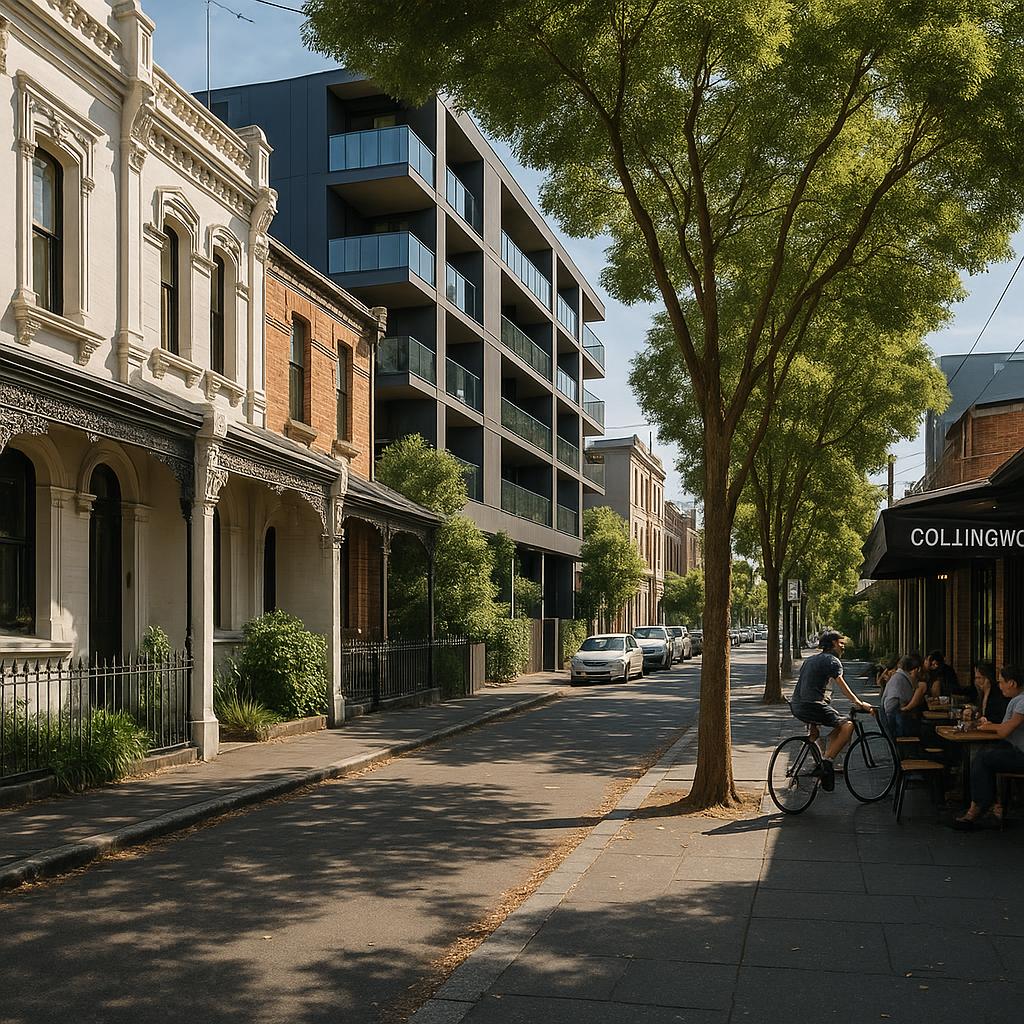
Collingwood is one of Melbourne’s most recognisable inner-north suburbs, with a market shaped by heritage streets, converted warehouses, apartment living, and a strong urban identity. It tends to attract a mix of owner-occupiers, investors, creative professionals, downsizers, and renters who want to stay close to the CBD fringe without living in the city centre.
The suburb’s market is less about one headline trend and more about micro-location, building quality, and property type. A renovated terrace on a quiet street can attract a very different buyer pool from a compact apartment near a busy activity corridor. That makes comparable sales, building inspection quality, and street-by-street context essential.
For buyers, the practical question is whether you are purchasing lifestyle convenience, long-term land component, or a tenant-friendly asset. For investors, the main advantage is that the suburb’s appeal is driven by enduring location factors rather than one single amenity or project cycle.
Buyer Demand
Buyer demand in Collingwood is typically strongest among people who want proximity, character, and low-friction access to work and leisure. First-home buyers, young professionals, downsizers, and investors all tend to compete for different parts of the market, which is why presentation and product type matter so much.
Competition can intensify for well-located properties with usable layouts, good natural light, and sensible ongoing costs. A polished terrace, townhouse, or boutique apartment usually appeals more broadly than a property that needs major work or carries awkward access and parking constraints.
Rental Market
Collingwood suits renters who want convenience, access to public transport, and a lively inner-city setting. That can support ongoing tenant interest when the property is practical, well maintained, and easy to live in. In many cases, layout quality and presentation matter more than pure size.
For investors, the strongest rental candidates are often properties that reduce friction: low-maintenance finishes, good storage, sensible floorplans, and manageable body corporate arrangements. If you are comparing two similar assets, the one with better livability and easier upkeep is often the safer long-term hold.
Lifestyle, Transport & Schools
Collingwood offers a distinctly urban lifestyle, with cafés, bars, dining, galleries, retail, and a street life that feels active rather than quiet. That is a major draw for buyers who want to walk for daily needs and enjoy a suburb with strong character.
Transport is a core part of the suburb’s appeal, especially for people commuting to the CBD or nearby employment areas. Good access to trains, trams, and major roads can reduce dependence on car ownership, although parking remains an important consideration for many households.
School access can still matter for family buyers, even in a suburb better known for lifestyle than backyard space. If schools are important, verify current catchments and enrolment rules directly rather than assuming the nearest option is automatically available.
Collingwood (Vic.) Suburb Profile
Official 2021 Census snapshot for the ABS Suburbs and Localities geography.
Age profile
Housing tenure
Occupied private dwellings by tenure type.
Salary & income profile
Median total income reported in the Census.
*Annual figures are weekly median × 52 estimates, not separate ABS annual medians.
Education & qualifications
Highest educational attainment, people aged 15+.
Employment status
People aged 15+ who reported being in the labour force.
Industry of employment
Top responses among employed people aged 15 years and over.
Occupation profile
Broad occupation groups among employed residents, including managers.
Property Type Guide
- Heritage terraces and older homes: Suited to buyers who want character, renovation potential, and more land-like feel, but they may need higher maintenance.
- Apartments: Often attractive for investors and entry-level buyers seeking convenience, lower upkeep, and easier tenant appeal; review strata carefully.
- Townhouses and newer infill stock: A middle ground for buyers wanting modern living without the full compromises of apartment-only living.
- Warehouse conversions: Appeal to buyers chasing character and a unique product, though layouts, light, and fit-out quality can vary widely.
Risks & Watch-Outs
- Street-by-street variation is significant, so one pocket of Collingwood can feel very different from another in noise and privacy.
- Inner-city convenience often comes with less parking, more foot traffic, and a denser living environment.
- Apartment buyers should review body corporate records, insurance arrangements, and any upcoming levies before making an offer.
- Older homes may have hidden maintenance costs, renovation limits, or compliance issues that are easy to underestimate.
- Do not rely on suburb reputation alone; inspect layout, orientation, storage, and acoustics as carefully as location.
Nearby Suburbs to Compare
- Fitzroy VIC Property Market Guide: Buyers & Investors
- Abbotsford VIC Property Market Guide: Buyers & Investors
- Richmond VIC Property Market Guide: Buyers & Investors
- Carlton VIC Property Market Guide: Buyers & Investors
FAQ
Is Collingwood a good suburb for first-home buyers?
It can be, if you value inner-city convenience and are comfortable with smaller spaces, higher density, and potentially stronger competition. First-home buyers should focus on layout efficiency, ongoing costs, and whether the property suits their everyday routine.
Is Collingwood better for investors or owner-occupiers?
It can work for both, but the best fit depends on the asset. Investors often prefer low-maintenance properties with broad tenant appeal, while owner-occupiers may pay a premium for character, walkability, and a specific street feel.
What property types are most common in Collingwood?
You will typically see a mix of older terraces, renovated homes, apartments, warehouse-style conversions, and newer infill dwellings. Each attracts a different buyer pool, so comparing property type is just as important as comparing suburb name.
Is Collingwood a good place to rent?
Yes, for tenants who want convenience, transport access, and an active urban lifestyle. Rental success usually depends on practical factors like layout, presentation, storage, and maintenance rather than size alone.
What should buyers inspect before purchasing in Collingwood?
Check noise, parking, orientation, natural light, and street amenity at different times of day. If it is an apartment or townhouse, also review body corporate records, maintenance plans, and any restrictions that could affect use or resale.
Conclusion
Collingwood is best viewed as a lifestyle-led inner-city market where location, property type, and building quality matter more than broad suburb branding. It suits buyers and investors who understand the trade-off between convenience and density. If you want urban access, rental appeal, and character, it is worth serious consideration.
Sources & How to Verify
- Check current sold results and active listings on Domain so you are comparing real, recent evidence rather than relying on stale market commentary.
- Review current rental listings on realestate.com.au to understand what tenants are actually seeing in the market.
- Use the Australian Bureau of Statistics to confirm demographic or household information before drawing conclusions about buyer or renter profiles.
- Check planning and zoning information on the Victorian Government planning site so you understand overlays, controls, and development constraints.
- Review local transport information through Public Transport Victoria to confirm routes, service frequency, and access assumptions.
- Use the relevant council website to verify local planning matters, permits, and community infrastructure before assuming a project or improvement can proceed unchanged.
- For apartments and townhouses, request body corporate records and a strata report so you can verify levies, sinking fund position, defects, and by-law restrictions.
- Cross-check any school-related assumptions through official school enrolment or finder tools, because catchments and intake rules can change and are best verified directly.