Quick Answer
Ryde NSW is a well-connected, established Sydney market with broad appeal for families, professionals, downsizers, and investors. The best buying results usually come from matching the property type to the micro-location: quieter residential pockets suit families and long-term owners, while transport-linked apartments can suit renters and entry-level buyers. For investors, the key is tenant demand, building quality, and low-maintenance ownership. Ryde rewards careful street-level due diligence more than postcode chasing.
Key Takeaways
- Ryde is a multi-market suburb, so the street, building, and housing type matter as much as the postcode name.
- Owner-occupiers should weigh commute convenience, school access, and practical liveability before comparing properties.
- Investors should prioritise tenant fit, strata quality, and walkability over cosmetic features that do not improve rental appeal.
- Detached homes tend to suit families and long-term owners, while apartments often suit convenience-focused buyers and tenants.
- Use recent comparable sales, strata records, and school-zone verification to test whether a specific property is genuinely well positioned.
Pros & Cons
Pros
- Strong convenience factor with access to jobs, transport links, shopping, and everyday services.
- Broad buyer appeal across families, investors, downsizers, and professionals.
- Mixed housing stock creates more entry points than a one-product suburb.
Cons
- Different pockets perform very differently, so the wrong micro-location can dilute value and livability.
- Apartment-heavy areas can face more direct competition from similar stock.
- Older buildings may require more due diligence on maintenance, strata levies, and defects.
Market Overview
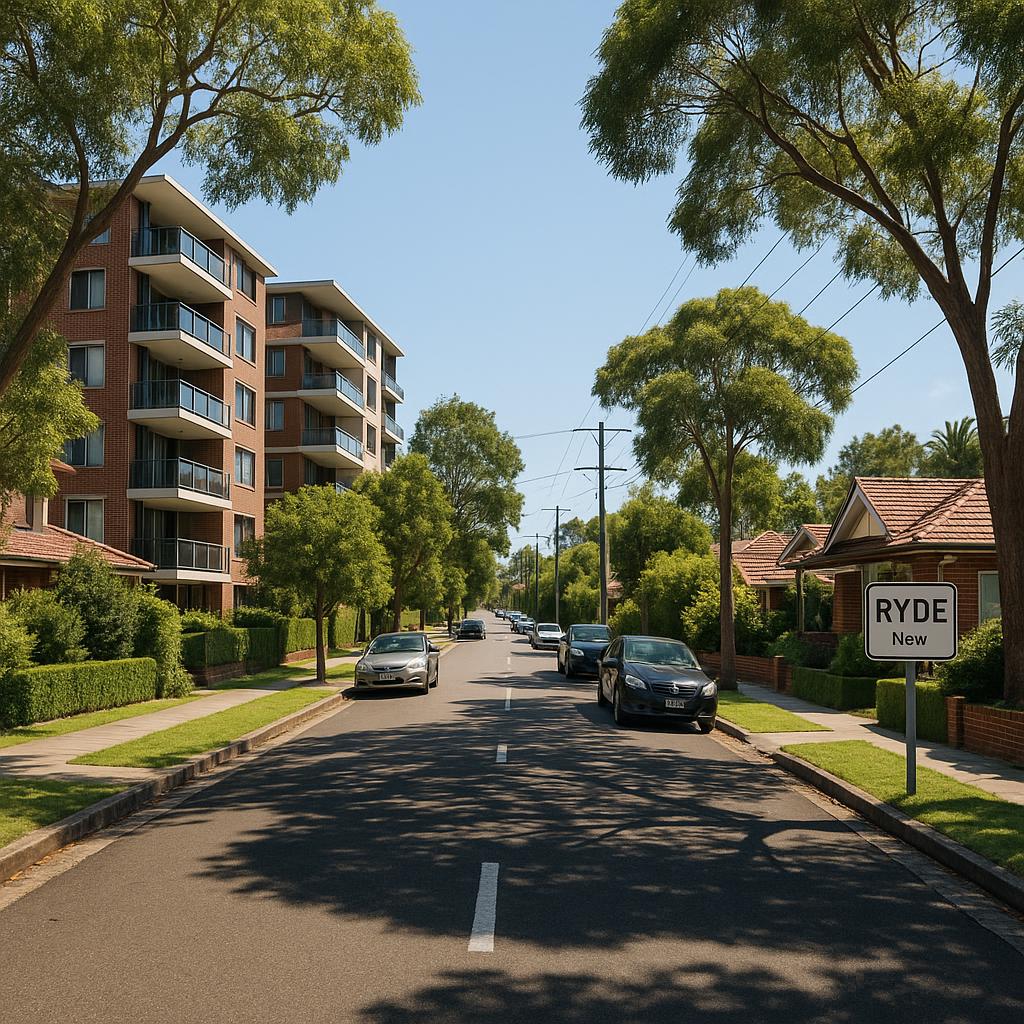
Ryde sits in a practical middle ground of Sydney’s inner-to-middle ring: established, connected, and attractive to buyers who want convenience without giving up everyday amenity. It is not a single, uniform market. Detached homes, duplexes, townhouses, and apartments all compete for different buyer groups, which means the best purchase in Ryde depends heavily on the precise pocket and property type.
That diversity is the key market feature to understand. A quieter residential street can behave very differently from an apartment near a commercial strip or transport node. Buyers who focus on street appeal, building quality, aspect, parking, and noise exposure usually make better decisions than those who simply target the suburb name. The same logic applies to investors, who need to understand whether a property is likely to attract stable long-term tenants or more price-sensitive renters.
Ryde’s long-term attraction comes from usefulness rather than hype. It offers practical access to employment corridors, education options, retail, and established services, which tends to support resilient demand through different market cycles. For homeowners, that often means liveability and resale confidence; for investors, it means a broader tenant base and less reliance on one narrow buyer segment.
Buyer Demand
Buyer demand in Ryde is typically led by households that value convenience and flexibility. Families often look for a house or townhouse with usable space, while professionals and downsizers often prefer lower-maintenance apartments with better access to transport and services. That spread of demand helps keep the suburb active, but it also means competition can vary sharply by product type.
In practice, the most desirable properties are usually those that combine functional floorplans with genuinely useful location advantages. A well-kept apartment with parking and a sensible walk to transport may attract stronger enquiry than a larger property in a less convenient or noisier spot. For investors, this means reading the likely buyer and tenant profile before committing, rather than assuming every Ryde asset will perform the same way.
Rental Market
Ryde tends to appeal to a broad rental pool, including professionals, couples, students, healthcare workers, and families who need access to Sydney employment and education corridors. Apartments often suit tenants who want low-maintenance living and transport convenience, while townhouses and houses attract longer-stay households needing more space, parking, and outdoor usability.
For investors, that diversity can be a strength if the property matches the right renter. A well-located apartment with good natural light and practical storage can be easier to lease than a poorly designed larger dwelling. The main watch-outs are strata health, building condition, and competition from similar stock nearby. In this suburb, rental resilience is usually built on fit-for-purpose accommodation, not just a strong postcode.
Lifestyle, Transport & Schools
Ryde offers an established suburban lifestyle with practical access to shopping, parks, services, and recreation. That makes it attractive to households who want life to feel organised and convenient rather than purely aspirational. For many buyers, the appeal is the ability to get everyday tasks done without constant long-distance travel.
Transport access is a major part of the suburb’s value proposition. Buyers should look closely at road connectivity, public transport convenience, and how easy it is to move between home, work, and school. For some households, being near transport will be worth trading off space; for others, a quieter residential pocket will win out even if the commute is less direct. Test the commute at the times you would actually travel, not just on a map.
Schools and family infrastructure also influence demand here. Families typically check zoning early, and that can shape both owner-occupier competition and tenant interest. Parks, childcare, sports facilities, and weekend practicality matter too. The best Ryde purchase is often the one that works smoothly for the full weekly routine, not just the inspection on a Saturday.
Ryde Suburb Profile
Official 2021 Census snapshot for the ABS Suburbs and Localities geography.
Age profile
Housing tenure
Occupied private dwellings by tenure type.
Salary & income profile
Median total income reported in the Census.
*Annual figures are weekly median × 52 estimates, not separate ABS annual medians.
Education & qualifications
Highest educational attainment, people aged 15+.
Employment status
People aged 15+ who reported being in the labour force.
Industry of employment
Top responses among employed people aged 15 years and over.
Occupation profile
Broad occupation groups among employed residents, including managers.
Property Type Guide
- Detached houses: Best for families, long-term owners, and buyers who want land value, renovation scope, and more control over the asset.
- Townhouses and duplexes: Often suit buyers balancing space and maintenance, including downsizers who still want a ground-level feel.
- Apartments: A practical entry point for first-home buyers and investors, especially where transport and amenity are strong.
- Renovators: Can work well if the block, street, and layout are right, but budget carefully for hidden costs and timing.
- Turnkey homes: Better for buyers who want certainty, shorter settlement-to-move-in timelines, or a lower-management investment.
Risks & Watch-Outs
- Micro-location risk is real in Ryde, because busy roads, commercial edges, and quieter streets can produce very different outcomes.
- Older apartment buildings can carry higher strata costs, special levies, or maintenance issues that affect both yield and resale.
- Overpaying for convenience is a common trap when buyers ignore floorplan quality, parking, light, and noise exposure.
- Nearby development or future supply can change outlook, especially for apartments competing in the same price band.
- School-zone assumptions and transport expectations should always be verified before you rely on them in your purchase decision.
Nearby Suburbs to Compare
- Ryde alternatives often include Parramatta for a different CBD-adjacent value proposition.
- Chatswood can be a useful comparison for buyers prioritising transport, amenity, and strong apartment demand.
- North Sydney may suit buyers looking at a more commercial, high-density convenience market.
- Strathfield is worth comparing for families and buyers weighing established housing stock against different commuter options.
- Nearby plain-text comparisons include Eastwood, Gladesville, Meadowbank, and Macquarie Park.
FAQ
Is Ryde a good suburb for first-home buyers?
It can be, especially if you are open to apartments or smaller townhouses rather than a detached house. First-home buyers should focus on liveability, strata quality, and future resale rather than stretching for the largest property available.
Is Ryde better for houses or apartments?
It depends on your goal. Houses usually suit family buyers and long-term owners wanting land and flexibility, while apartments often suit investors, downsizers, and buyers prioritising convenience, lower maintenance, and access to transport.
What type of property suits investors in Ryde?
Typically, investors should look for well-kept apartments or townhouses with strong tenant appeal, functional layouts, and sensible ongoing costs. The best asset is usually the one that matches the local renter profile and has manageable strata risk.
Is Ryde family-friendly?
Yes, particularly in the quieter residential pockets with access to parks, schools, and everyday services. Family buyers should still inspect street noise, traffic, parking, and school-zone details carefully, because those factors can change the day-to-day experience materially.
How important is transport access in Ryde?
Very important. Transport access can influence buyer competition, rental demand, and long-term convenience. If you commute regularly, or you expect your tenant to value mobility, check both walking access and broader connectivity before you buy.
Conclusion
Ryde is best understood as a convenience-led, multi-market suburb where the right property type matters as much as the suburb name. It can suit families, investors, and downsizers, but only if the micro-location, building quality, and ownership costs align with the strategy. In Ryde, careful due diligence is not optional; it is the difference between a practical purchase and an expensive compromise.
Sources & How to Verify
- Check current sold prices and active listings on Domain so you are comparing recent evidence, not outdated price impressions.
- Review current rental listings on realestate.com.au to understand what tenant-facing stock is competing with your target property.
- Use ABS data to confirm broader demographic and household trends instead of relying on anecdotes about who lives in the suburb.
- Check zoning, development controls, and planning proposals through the NSW Planning Portal before assuming a street will remain low-rise or unchanged.
- Verify route options and service frequency with Transport for NSW because commute quality can differ materially by exact location and timetable.
- Confirm school catchments and enrolment boundaries through the NSW School Finder rather than relying on informal suburb talk or older maps.
- Order a building and pest inspection, and for apartments request strata minutes, insurance, levies, and capital works evidence before committing to a purchase.
- Cross-check at least three comparable properties in the immediate area, because Ryde’s value can shift quickly between apartment precincts and quieter residential streets.