Quick Answer
Parramatta NSW is one of Sydney’s most important middle-ring markets, appealing to both home buyers and investors because it combines strong transport access, major employment anchors, and a broad mix of housing. It suits buyers who value convenience, rental depth, and long-term infrastructure-led confidence more than a quiet low-density streetscape. The key is to match the property type and micro-location to your goals, then verify current market conditions before you buy.
Key Takeaways
- Parramatta functions like a major urban centre, so suburb-wide headlines can miss important street-by-street differences.
- Buyer demand is driven by jobs, transport access, education, and the convenience of a mature city-style amenity base.
- Investors should focus on building quality, strata health, and tenant fit rather than relying on the suburb name alone.
- Apartments, townhouses, and houses each serve different buyer groups, so property type matters as much as location.
- The smartest buyers compare current listings, recent sales, and future planning impacts before making a decision.
Pros & Cons
Pros
- Excellent access to major employment, transport, and everyday services.
- Broad appeal across investors, first-home buyers, downsizers, and families.
- Flexible housing mix creates multiple entry points and exit strategies.
Cons
- Busy urban character can reduce appeal for buyers wanting a quieter residential feel.
- Apartments require careful scrutiny of strata, defects, and ongoing levies.
- Some pockets face traffic, density, or construction disruption.
Market Overview
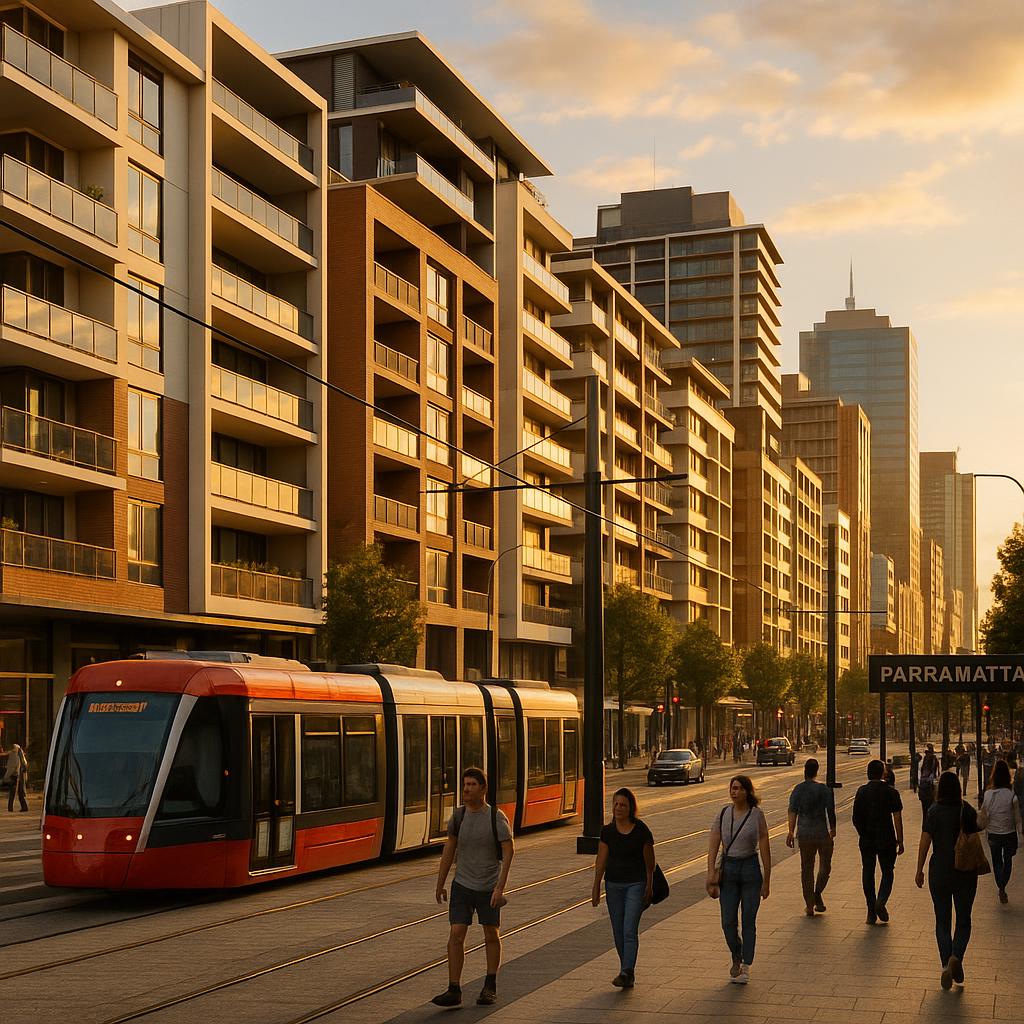
Parramatta is best understood as a city within a suburb. It has a strong commercial core, major civic functions, and residential pockets that range from high-density living near the centre to quieter surrounding streets. That mix gives the area a broader buyer base than a typical suburban market.
For buyers, the practical takeaway is that location quality changes quickly across a small area. A property close to transport, employment, and amenity may suit an investor or busy professional, while a slightly removed pocket may better suit a family or long-term owner-occupier. Always assess the exact street, building, and access pattern, not just the postcode.
Parramatta also stands out because it offers multiple ways to participate in the market. Some buyers want a low-maintenance apartment, others want a townhouse with better space-efficiency, and a smaller group will chase houses where land and privacy remain the main attraction.
Buyer Demand
Buyer demand in Parramatta comes from several directions at once. First-home buyers, investors, downsizers, and families can all find something relevant here, which helps create depth in the market. That diversity is valuable because it can support resale options when one segment slows.
Demand tends to concentrate around transport convenience, walkability, and access to employment and services. For investors, that means the next buyer or tenant is often already obvious: a commuter, a professional working locally, or a household wanting low-maintenance urban living. For homeowners, the question is whether the daily convenience offsets reduced space or a busier environment.
Rental Market
Parramatta’s rental appeal is tied to its role as a major employment and education centre. That usually broadens the tenant pool beyond one demographic, which is helpful for vacancy management. Properties that are easy to maintain, easy to access, and practical to live in tend to lease more smoothly.
Tenant fit matters more than many investors expect. A compact apartment may suit a single professional or couple, while a townhouse or house may attract longer-term family tenants. Before buying, inspect how the property functions in real life: parking, storage, light, noise, and access often influence rental performance as much as the floor area.
Lifestyle, Transport & Schools
Lifestyle in Parramatta is urban and service-rich rather than leafy and quiet. You get shopping, dining, riverside spaces, cultural activity, and a strong sense of a working city centre. That is a major advantage for buyers who want everyday convenience without relying on the inner city.
Transport access is one of the suburb’s biggest decision drivers. Rail and broader public transport connectivity support commuting and widen the buyer and renter pool. Road access also matters because many residents move across Western Sydney or into other employment centres. Buyers should verify current service patterns and travel times through official sources, rather than assuming the map tells the whole story.
School access is relevant for family buyers, but catchments and enrolment rules should always be checked directly with the relevant education authority. The right school zone can materially affect demand and liveability, so it is worth confirming before you make an offer. Visit at different times of day to test traffic, parking pressure, and pedestrian flow.
Parramatta Suburb Profile
Official 2021 Census snapshot for the ABS Suburbs and Localities geography.
Age profile
Housing tenure
Occupied private dwellings by tenure type.
Salary & income profile
Median total income reported in the Census.
*Annual figures are weekly median × 52 estimates, not separate ABS annual medians.
Education & qualifications
Highest educational attainment, people aged 15+.
Employment status
People aged 15+ who reported being in the labour force.
Industry of employment
Top responses among employed people aged 15 years and over.
Occupation profile
Broad occupation groups among employed residents, including managers.
Property Type Guide
- Apartments: Best for convenience-led buyers and investors. They usually offer lower-maintenance living, but strata quality, building reputation, and noise exposure need close inspection.
- Townhouses: Often suit families and upgraders who want more space than an apartment without the upkeep of a full house. Check parking, layout, and strata rules carefully.
- Houses: More limited in central Parramatta and generally appeal to buyers who prioritise land, privacy, and long-term control. Scarcity can support demand, but entry costs are usually higher.
- Best fit by strategy: Choose based on end-user appeal first. If you want rental flexibility, convenience matters; if you want family liveability, space and parking become more important; if you want long-term hold potential, scarcity and land component matter more.
Risks & Watch-Outs
- Do not assume every pocket performs the same; busy roads, development zones, and quieter residential streets can produce very different outcomes.
- Apartment buyers should check strata records, defects, building maintenance, and levy trends before treating the unit as a straightforward investment.
- Construction activity can improve amenity over time, but it can also add noise, disruption, and short-term supply competition.
- Headline demand can tempt buyers into overpaying for average stock, so compare the specific building and street against recent sales.
- Lifestyle mismatch is a real risk; some buyers want suburban calm, then discover the pace, density, and traffic are not for them.
Nearby Suburbs to Compare
- Sydney NSW Property Market Guide: Buyers & Investors
- Westmead
- Harris Park
- North Parramatta
- Merrylands
- Homebush / Sydney Olympic Park area
FAQ
Is Parramatta good for first-home buyers?
Yes, if you value access and convenience more than a large block or quiet streetscape. First-home buyers often trade space for transport, services, and future flexibility. The best approach is to compare apartments, townhouses, and smaller houses by liveability, not just headline price.
Is Parramatta better for investors or owner-occupiers?
It can work for both, but the right property differs by strategy. Investors usually focus on tenant depth, building quality, and easy leasing. Owner-occupiers may prioritise parking, layout, noise levels, and walkability. The suburb rewards buyers who choose carefully rather than broadly.
What property type is best in Parramatta?
There is no single best option. Apartments suit convenience and rental depth, townhouses can balance space and practicality, and houses appeal to buyers who want land and privacy. The right choice depends on your budget, time horizon, and whether you are buying for lifestyle or holding.
Is Parramatta a good long-term buy?
It can be, because it has a diversified demand base and a strong role in Western Sydney’s employment and transport network. Long-term resilience usually comes from location quality, property type, and buyer depth. Verify current conditions before assuming past demand will repeat.
What should I inspect before buying?
Check strata records, building condition, parking, noise, sunlight, and nearby development activity. For family buyers, confirm school options and daily travel patterns. For investors, assess whether the property matches the likely tenant profile, not just whether it photographs well online.
Conclusion
Parramatta is a serious Sydney market, but it is not a one-size-fits-all purchase. Buyers who understand the differences between buildings, streets, and property types are far better placed than those chasing the suburb name alone. If you want convenience, depth of demand, and a market with multiple exit paths, Parramatta deserves close inspection.
Sources & how to verify
- Check current transport routes and service changes on Transport for NSW so you understand how accessible the property really is day to day.
- Review planning activity and zoning information on the NSW Planning Portal to see whether nearby development could affect amenity or future supply.
- Use the NSW Department of Education website to confirm catchments, enrolment rules, and school information directly before relying on assumptions.
- Compare current listings and recent sales on Domain to understand real-time pricing, stock quality, and competition in the suburb.
- Cross-check sold and rental evidence on realestate.com.au so you can separate asking prices from actual market clearing levels.
- Use the Australian Bureau of Statistics for broader demographic context, but always confirm whether the data refers to the suburb, SA2, or local government area.
- Review council planning and local place-making updates through City of Parramatta Council to monitor public works, policy changes, and precinct-level improvements.
- If you are buying an apartment, request strata records and any building inspection reports so you can verify maintenance, levies, defects, and dispute history before committing.
General information only, not financial or legal advice.