Quick Answer
Moonee Ponds is one of Melbourne’s more established inner-northwest suburbs, and it tends to suit buyers who value convenience, character, and everyday liveability over chasing a bargain. It works especially well for owner-occupiers wanting a walkable lifestyle and investors who prefer durable demand drivers rather than speculative upside. The key is to pay close attention to the pocket, because busy streets, apartment fees, parking, and renovation costs can materially affect value and comfort.
Key Takeaways
- Moonee Ponds combines established housing, strong amenity, and inner-city convenience, which keeps broad buyer interest steady across cycles.
- The suburb suits owner-occupiers, downsizers, families, and investors who want a practical, lower-volatility Melbourne location.
- Property type matters: period homes, apartments, and townhouses each serve different budgets, lifestyle needs, and holding strategies.
- Rental demand is usually supported by commuters, professionals, and tenants who want low-friction access to transport and services.
- Street position, noise exposure, parking, strata costs, and renovation scope can change the value proposition more than the suburb name alone.
Pros & Cons
Pros
- Established reputation and consistent demand.
- Strong access to transport, shopping, and services.
- Appeals to multiple buyer groups, including families and downsizers.
Cons
- Premium entry prices can narrow affordability.
- Busy pockets can bring traffic, noise, and parking pressure.
- Older homes and apartments may carry higher maintenance or strata costs.
Market Overview
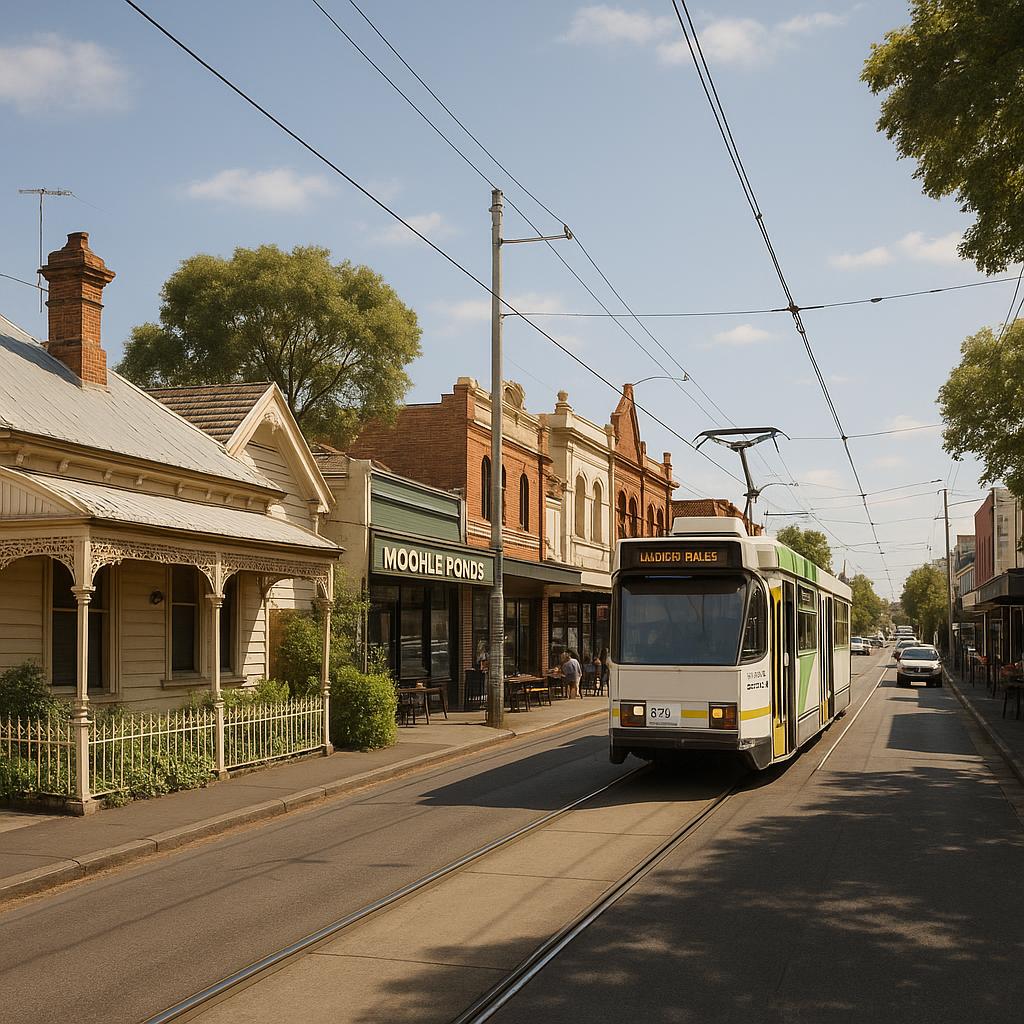
Moonee Ponds is a mature inner-northwest Melbourne suburb with a strong village feel, a recognised retail strip, and convenient access to the city. It attracts buyers who want an established suburb with day-to-day amenity rather than a newer growth-area proposition.
The market appeal comes from a mix of period homes, townhouses, and apartment stock, so there are entry points for different budgets and strategies. That diversity helps, but it also means the right pocket and property type matter more than simply buying “in Moonee Ponds”.
In practical terms, the suburb rewards buyers who think carefully about location within the suburb: quieter residential streets suit family living, while homes near the commercial and transport core offer convenience but can trade off privacy and parking. For investors, that same mix can be a strength if the dwelling is easy to lease and well maintained.
Buyer Demand
Moonee Ponds tends to draw a broad mix of buyers: owner-occupiers seeking a long-term home, professionals wanting a straightforward commute, downsizers looking for low-maintenance living, and investors chasing dependable tenant demand. That breadth matters because it reduces reliance on one single buyer segment.
Demand is usually strongest for properties that balance liveability with practicality: good natural light, usable layouts, sensible parking, and access to the suburb’s amenities. A well-located apartment or townhouse can perform well if it avoids the common drawbacks of tight floorplans, poor storage, or excessive noise exposure.
Rental Market
The rental market is typically supported by tenants who value convenience, transport access, and easy access to retail and services. That includes young professionals, couples, sharers, and smaller households who want suburb branding and a manageable commute.
From an investor perspective, apartments and townhouses often offer the broadest leasing appeal because they are easier to maintain and simpler for tenants to use day to day. Houses can also lease well, particularly where the layout suits families or long-term renters, but buyers should factor in maintenance, garden upkeep, and capital works.
Lifestyle, Transport & Schools
Moonee Ponds offers the kind of established suburban lifestyle many Melbourne buyers actively seek: cafes, shopping, parks, and a streetscape that feels settled rather than transient. That makes it attractive to people who want convenience without moving into a dense, purely apartment-centric environment.
Transport is a major part of the suburb’s value proposition. Train and tram access supports commuting, while road access connects residents to the broader inner north and northwest. For many buyers, the difference between a property near transport and one deeper in a quieter pocket is a trade-off between convenience and daily calm.
For schools, the key point is not ranking claims but access and zoning. Families should verify catchments directly and inspect practical school runs, because school proximity can influence both lifestyle and resale demand. In suburbs like Moonee Ponds, school access often supports long holding periods rather than short-term speculation.
Moonee Ponds Suburb Profile
Official 2021 Census snapshot for the ABS Suburbs and Localities geography.
Age profile
Housing tenure
Occupied private dwellings by tenure type.
Salary & income profile
Median total income reported in the Census.
*Annual figures are weekly median × 52 estimates, not separate ABS annual medians.
Education & qualifications
Highest educational attainment, people aged 15+.
Employment status
People aged 15+ who reported being in the labour force.
Industry of employment
Top responses among employed people aged 15 years and over.
Occupation profile
Broad occupation groups among employed residents, including managers.
Property Type Guide
- Period homes: Strong character appeal, land value potential, and renovation upside; check for maintenance load, heritage constraints, and realistic upgrade costs.
- Apartments: Useful for entry buyers and investors; assess strata fees, building quality, storage, and noise before relying on location alone.
- Townhouses/newer dwellings: Often the best compromise for space and low upkeep; inspect light, parking, layout efficiency, and developer quality carefully.
- Best for first-home buyers: Focus on liveability, total holding costs, and future flexibility rather than chasing the largest floor area.
- Best for investors: Prioritise easy-to-lease layouts, sensible owner-corporate arrangements, and properties with broad tenant appeal.
Risks & Watch-Outs
- Properties near busy corridors may face traffic, tram, or commercial noise that is easy to underestimate on a quick inspection.
- Parking can be tighter than buyers expect, especially near retail and station-adjacent areas where street demand is high.
- Older homes can hide major maintenance work, so building inspections should check structure, roofing, services, and moisture issues.
- Apartment buyers should read strata records carefully for levies, defect history, and sinking fund strength.
- Do not assume every pocket behaves the same; a quieter residential street and a main-road frontage can deliver very different outcomes.
Nearby Suburbs to Compare
- Essendon VIC Property Market Guide: Buyers & Investors
- Ascot Vale
- Flemington
- Brunswick VIC Property Market Guide: Buyers & Investors
- Preston VIC Property Market Guide: Buyers & Investors
FAQ
Is Moonee Ponds good for first-home buyers?
Yes, if you are comfortable trading size for location. First-home buyers often target apartments or smaller townhouses because they offer easier entry into an established suburb. The key is to check the total ongoing cost, not just the purchase price.
Is Moonee Ponds better for buyers or investors?
It can work for both, but the suburb is especially compelling for buyers who want to live in the area long term. Investors can still do well, provided the property is easy to lease, well located, and not burdened by high ongoing costs.
What property type is best in Moonee Ponds?
There is no single best type. Period homes suit land and character buyers, apartments suit convenience-led purchasers, and townhouses can provide a useful middle ground. Your decision should reflect budget, maintenance tolerance, and how long you plan to hold.
Is Moonee Ponds family-friendly?
It can be, particularly for families who value access to schools, parks, shops, and transport. The main question is whether you want a quieter residential street with more space, or a more convenient location that comes with activity and traffic.
What should I watch out for before buying?
Check noise, parking, building condition, and strata obligations. In Moonee Ponds, those factors can materially affect comfort and resale. A property that looks attractive online may feel very different at street level, especially near busier commercial or transport areas.
Conclusion
Moonee Ponds is a strong choice for buyers who value established amenity, reliable access, and a suburb with broad long-term appeal. It is not about finding the cheapest entry point; it is about selecting the right pocket and dwelling type for your goals. If you compare carefully, the suburb can offer durable liveability and solid leasing confidence.
Sources & How to Verify
- Check current sold results and active listings on Domain to verify how different property types are actually trading in Moonee Ponds.
- Review comparable sales on realestate.com.au so you can compare apartments, townhouses, and houses by pocket rather than relying on suburb-wide assumptions.
- Confirm train and tram access through Public Transport Victoria before assuming a property is truly commuter-friendly.
- Use the Find My School tool to confirm official school zones, because zoning matters more than informal reputation.
- Check planning controls and local project information with the Moonee Valley City Council site if you are considering renovation or development potential.
- Review census context on the ABS Census to understand the suburb’s household makeup, but treat it as background rather than a pricing forecast.
- Ask a local conveyancer, building inspector, or strata manager to verify site-specific risks, because apartment records and building condition can change the investment case quickly.