Quick Answer
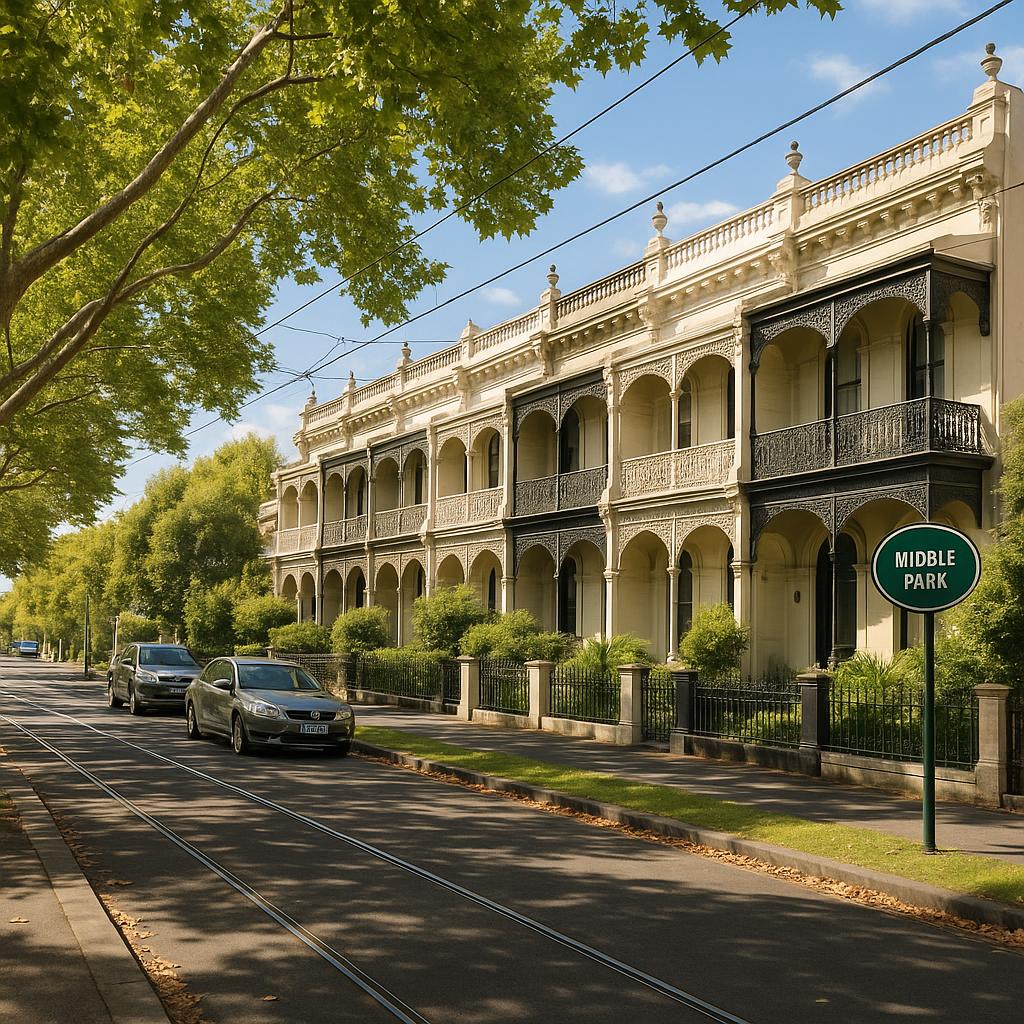
Middle Park is a tightly held inner-bayside suburb where lifestyle, heritage character, and scarcity do most of the heavy lifting. It suits buyers who value village amenity, tram access, and beachside convenience, and investors who are comfortable prioritising quality tenant demand and long-term capital growth over strong cash flow. The best outcomes usually come from well-located, well-presented homes or low-maintenance apartments that reduce immediate work and preserve resale appeal.
Key Takeaways
- Middle Park is an established, prestige suburb where scarcity and streetscape quality strongly influence buyer competition.
- Renovated period homes, tidy apartments, and properties near village amenity tend to attract the widest pool of interest.
- Investors should underwrite conservatively, because heritage charm and bayside location do not automatically translate into high rental yield.
- Owner-occupiers are often drawn to the suburb’s calm feel, walkability, and easy access to the CBD and bay.
- Buyers need to check heritage controls, building condition, parking practicality, and strata quality before committing.
Pros & Cons
Pros
- Prestige inner-bayside address with enduring lifestyle appeal
- Strong heritage character and attractive streetscapes
- venient access to the CBD, bay, parks, and tram routes
Cons
- Entry pricing can be difficult to justify on rent alone
- Older homes may require more maintenance and capital works
- Parking, access, and renovation flexibility can be constrained
Market Overview
Middle Park is a compact, established bayside suburb with a strong reputation and limited turnover. It is known for period homes, boutique apartments, and a calm village atmosphere that appeals to buyers who want character as much as convenience.
The market tends to behave like a scarcity market rather than a volume market. Well-presented homes in desirable streets often attract attention from emotionally driven lifestyle buyers, while properties needing substantial work usually require a clearer value case.
For investors and homeowners alike, the main question is not whether Middle Park is attractive, but whether the specific property aligns with your budget, maintenance tolerance, and holding horizon. Presentation, layout, and liveability matter more here than generic suburb headlines.
Buyer Demand
Demand is typically strongest from families, professionals, and downsizers who want an established inner-bayside lifestyle without the intensity of higher-density precincts. The suburb’s appeal is broad, but the strongest competition usually appears on homes that offer immediate usability and good street presence.
Buyers often compare Middle Park with nearby prestige and lifestyle suburbs, then choose it for its quieter feel and village-scale amenity. Properties that reduce friction — such as renovated interiors, practical parking, and light-filled layouts — usually stand out because many purchasers are buying for lifestyle first and project potential second.
Rental Market
Middle Park generally appeals to tenants who want a well-located, low-stress lifestyle close to the city, beach, and tram routes. That typically means professionals, couples, and smaller households who value convenience and quality presentation.
For investors, the key point is that rental strength here is usually driven by tenant quality and location desirability, not headline yield. Apartments and low-maintenance homes can be easier to lease and manage, while older character properties may need more upkeep to stay competitive.
Lifestyle, Transport & Schools
Middle Park has a calm, established feel that many buyers value more than sheer scale or flash. The lifestyle proposition is easy to understand: village amenities, beach access, leafy streets, and proximity to major inner-Melbourne destinations.
Transport is a practical strength. Tram access supports a car-light lifestyle and makes commuting to the CBD or nearby employment centres more convenient. For households that value predictability, that can be a meaningful daily advantage.
Families should still verify school options, zoning, and enrolment details directly, because catchments and requirements can change. In suburbs like Middle Park, education access can influence both owner-occupier demand and rental interest, especially for tenants planning longer stays.
Middle Park (Vic.) Suburb Profile
Official 2021 Census snapshot for the ABS Suburbs and Localities geography.
Age profile
Housing tenure
Occupied private dwellings by tenure type.
Salary & income profile
Median total income reported in the Census.
*Annual figures are weekly median × 52 estimates, not separate ABS annual medians.
Education & qualifications
Highest educational attainment, people aged 15+.
Employment status
People aged 15+ who reported being in the labour force.
Industry of employment
Top responses among employed people aged 15 years and over.
Occupation profile
Broad occupation groups among employed residents, including managers.
Property Type Guide
- Heritage homes and terraces: Highly desirable for character and location, but inspect carefully for maintenance, renovation scope, and any heritage constraints.
- Apartments: Often suit investors and downsizers seeking lower maintenance, but strata quality, layout, natural light, and building upkeep are critical.
- Townhouses and newer infill: Can offer a balance of house-like living and reduced upkeep, though design quality must match the suburb’s prestige.
- Best fit by goal: Lifestyle buyers often prefer period charm; investors may lean toward easier-to-manage stock; downsizers usually prioritise convenience and access.
Risks & Watch-Outs
- Older properties may hide roofing, moisture, plumbing, or structural issues that are not obvious on first inspection.
- Heritage overlays can limit extensions, façade changes, and some exterior works, so check what is actually permissible.
- Parking and access can be tighter than buyers expect, especially for households with multiple cars or frequent visitors.
- Bayside exposure can increase wear from wind, moisture, and salt, making external maintenance more important over time.
- Apartment buyers should review owners corporation records, sinking fund position, and building maintenance history before proceeding.
Nearby Suburbs to Compare
- Albert Park VIC Property Market Guide: Buyers & Investors
- South Melbourne Dc VIC Property Market Guide: Buyers & Investors
- Southbank VIC Property Market Guide: Buyers & Investors
- East Melbourne VIC Property Market Guide: Buyers & Investors
- Port Melbourne VIC Property Market Guide: Buyers & Investors
FAQ
Is Middle Park good for families?
Yes, if you value a quieter, established inner-bayside lifestyle with good amenity and easy access to transport. Families should check the specific street, the home’s layout, and current school details rather than relying on suburb reputation alone.
Is Middle Park better for buyers or investors?
It can work for both, but it is usually more naturally suited to owner-occupiers and long-term investors than yield-focused buyers. The suburb’s strengths are scarcity, desirability, and resale appeal rather than strong cash flow.
What type of property is most sought after in Middle Park?
Renovated period homes and well-kept apartments generally attract the widest interest. Buyers often want something that balances character with practical liveability, because time-consuming renovation projects are harder to justify in a premium location.
Are apartments a good option in Middle Park?
They can be, especially for investors, downsizers, and buyers seeking lower maintenance. The main checks are strata health, layout efficiency, natural light, parking, and whether the building’s presentation supports long-term resale confidence.
What should buyers inspect before purchasing?
Focus on building condition, renovation scope, parking, layout, heritage controls, and ongoing maintenance obligations. For apartments, review owners corporation documents. For homes, get a proper building and pest inspection and verify planning constraints.
Conclusion
Middle Park is a classic Melbourne suburb for buyers who value character, scarcity, and a refined bayside lifestyle. It rewards careful property selection more than speculative buying. If you can match the right dwelling type to your goals, the suburb offers durable appeal, but you should still assess maintenance, renovation limits, and holding costs with discipline.
Sources & how to verify
- Check current listings and sold evidence on Domain to test whether asking prices and comparable sales support your budget.
- Use realestate.com.au to compare recent rentals, property types, and supply levels before assuming a dwelling will lease quickly.
- Review suburb and dwelling-level census context on ABS to understand household composition and how that may affect demand.
- Confirm planning controls, zoning, and heritage overlays through Planning Victoria before planning renovations or extensions.
- Check tram routes, service changes, and stop details on Public Transport Victoria to verify daily commute practicality.
- Look up school zones and enrolment information on Find My School rather than relying on hearsay or marketing copy.
- Review local council planning and permit guidance via the City of Port Phillip website to understand local rules that may affect alterations.
- For apartments, request owners corporation records and building reports so you can verify levy history, maintenance plans, and any known defects before making an offer.