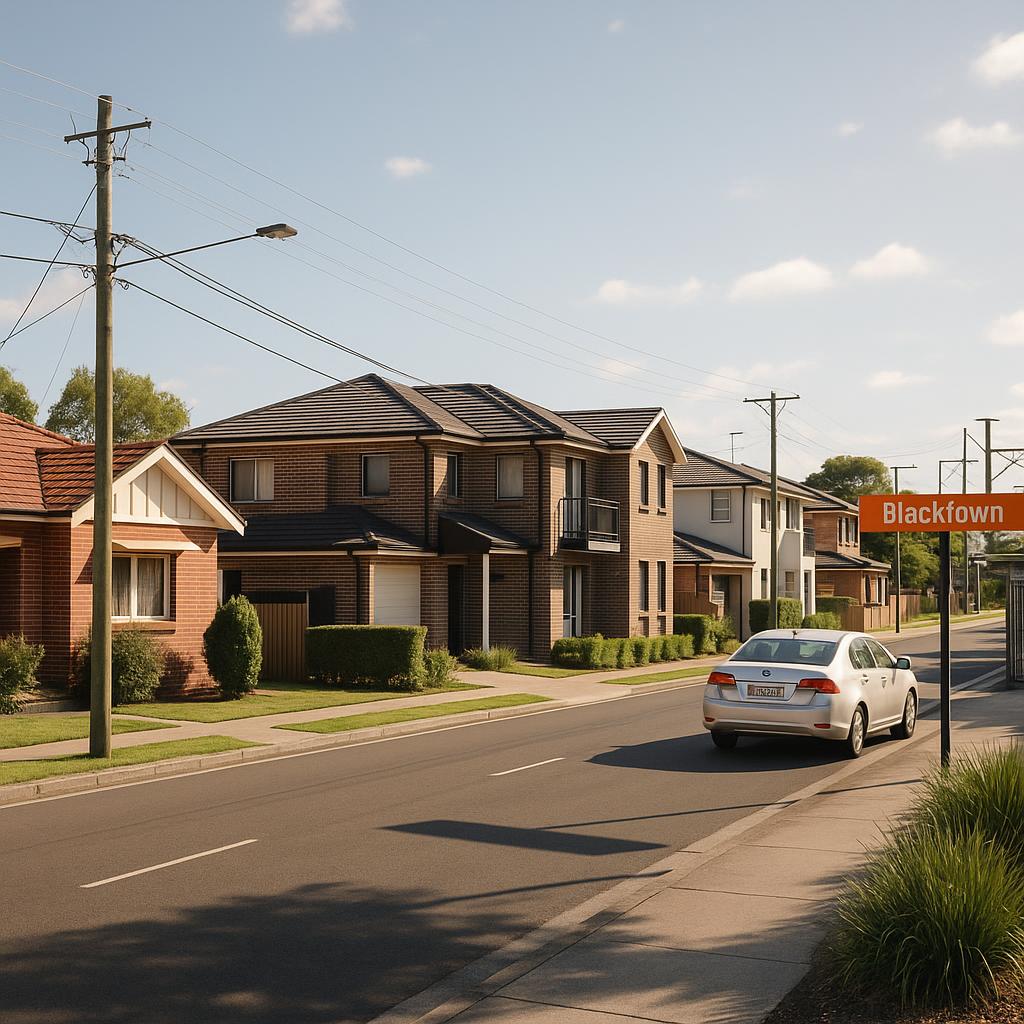
Quick Answer
Blacktown is a large, established Western Sydney market that suits buyers who want relative affordability, practical transport access, and a wide choice of housing. It tends to appeal to first-home buyers, families, and investors because the suburb’s scale supports multiple demand drivers at once. The best outcomes usually come from choosing the right pocket and dwelling type, not just buying on suburb name alone. For investors and owner-occupiers, the strongest assets are typically those with broad appeal, easy access to daily essentials, and manageable ongoing costs.
Key Takeaways
- Blacktown is best assessed as a set of micro-markets, because housing style, streetscape, and amenity access vary widely.
- The suburb attracts first-home buyers, families, and investors who value practicality, transport access, and everyday convenience.
- Broad demand helps, but the right property type matters more than buying the cheapest listing in the area.
- Houses suit long-term liveability and land value; units and townhouses often suit lower-maintenance or entry-focused strategies.
- Success in Blacktown comes from comparing exact streets, recent comparable sales, and current rental competition before you buy.
Pros & Cons
Pros
- Relative affordability compared with many closer-in Sydney locations.
- Large, diverse buyer and tenant pool supports ongoing demand.
- Strong practical appeal for commuters and households needing daily convenience.
Cons
- Pocket-by-pocket variation makes superficial suburb comparisons risky.
- Traffic, noise, and access issues can materially affect liveability and resale.
- Some stock may require more maintenance, especially older houses and less desirable units.
Market Overview
Blacktown functions as both a suburb and a major local centre, so it should be treated as a broad market with multiple property sub-markets inside it. That matters because a well-located unit near transport can behave very differently from an older house on a quieter street, even within the same postcode.
The suburb’s appeal is rooted in practicality: a mix of housing types, established services, and access to key employment corridors across Western Sydney. For many buyers, it provides a compromise between affordability, space, and access that is harder to find in more expensive Sydney areas.
Market conditions are often shaped by the balance between houses, townhouses, and units, plus how close a property is to transport, retail, and everyday amenities. Buyers should verify recent sales in the immediate pocket, not rely on a broad suburb label, because street appeal and dwelling quality can shift buyer depth materially.
Buyer Demand
Blacktown attracts first-home buyers trying to enter the Sydney market, families wanting usable space, and investors looking for broad tenant demand. That combination helps support transaction activity because the suburb can meet different budgets and life stages.
Demand usually strengthens for properties that feel practical rather than aspirational: good parking, sensible layouts, low ongoing maintenance, and access to transport or services. A property that suits both owner-occupiers and tenants generally has the widest resale pool.
Rental Market
For investors, Blacktown’s rental appeal comes from its large and varied tenant base. Workers, couples, small families, and shared households can all find value in a location that offers everyday convenience and access to wider Western Sydney employment patterns.
The strongest rentals are usually those that are easy to maintain, easy to live in, and easy to inspect. A compact property with a strong location and parking may outperform a larger but less practical home if the tenant pool is broader and turnover is lower.
Lifestyle, Transport & Schools
Blacktown offers a straightforward, service-rich lifestyle rather than a prestige lifestyle. That is a genuine advantage for many households, because it means everyday tasks—shopping, schooling, health appointments, commuting—can be handled without crossing half the city.
Transport is a major part of the suburb’s value proposition. Rail and bus access, plus road connectivity to major corridors, can materially improve liveability and support rental demand. For buyers, practical commute times often matter more than map-based distance, so test the route at the time of day you would normally travel.
For families, school access, childcare, parks, and after-school routines are often decisive. The key is not simply whether schools exist nearby, but whether the property supports a workable daily routine. Always confirm catchments, commute paths, and family amenity details directly with current providers and official sources.
Blacktown Suburb Profile
Official 2021 Census snapshot for the ABS Suburbs and Localities geography.
Age profile
Housing tenure
Occupied private dwellings by tenure type.
Salary & income profile
Median total income reported in the Census.
*Annual figures are weekly median × 52 estimates, not separate ABS annual medians.
Education & qualifications
Highest educational attainment, people aged 15+.
Employment status
People aged 15+ who reported being in the labour force.
Industry of employment
Top responses among employed people aged 15 years and over.
Occupation profile
Broad occupation groups among employed residents, including managers.
Property Type Guide
- Detached houses: Best for families and long-term owners who want land, privacy, and renovation flexibility. Check building condition, maintenance history, and street context carefully.
- Townhouses / duplexes: A practical middle ground for buyers wanting more space than an apartment without full house maintenance. Review shared-title or strata obligations before committing.
- Units / apartments: Often suit first-home buyers, downsizers, and investors seeking lower-maintenance entry. Focus on building quality, parking, levies, and comparable stock in the same pocket.
- Renovation stock: Can create value if the location is strong and the upgrade budget is realistic. Avoid overcapitalising on properties where the end value is limited by the street or dwelling type.
Risks & Watch-Outs
- Do not assume every part of Blacktown performs the same; micro-location can change both resale and rental outcomes.
- Older homes may appear affordable but can carry hidden repair, compliance, or maintenance costs.
- Units can be more competitive where similar stock is plentiful, so compare building quality and features closely.
- Noise, traffic, and parking limitations can reduce both owner-occupier appeal and tenant retention.
- Always verify that the property suits your intended use, because a good investment asset is not always the best family home.
Nearby Suburbs to Compare
- Parramatta
- Bankstown
- Liverpool
- Strathfield
- Seven Hills
- Rooty Hill
FAQ
Is Blacktown a good suburb for first-home buyers?
It can be, especially for buyers who want a more practical entry point into Sydney rather than chasing a premium lifestyle location. The key is to choose a property type and pocket that match your budget, commute, and maintenance tolerance.
Is Blacktown better for houses or units?
Neither is automatically better. Houses usually suit buyers wanting land, privacy, and long-term flexibility, while units can suit those prioritising lower upfront cost and easier upkeep. Your decision should be driven by use case, not just price.
Is Blacktown a good suburb for property investors?
It can be, because the suburb attracts a broad tenant base and offers practical housing options. Investors should focus on rental resilience, low maintenance, and broad appeal, rather than assuming the suburb name alone guarantees performance.
What should I check before buying in Blacktown?
Check the exact street, the property’s condition, parking, transport access, and recent comparable sales nearby. Also assess noise, surrounding development context, and whether the home suits your intended buyer or tenant profile over time.
How do I compare Blacktown fairly with nearby suburbs?
Compare similar property types, similar land or unit sizes, and similar access to transport and services. A broad suburb average can be misleading; the better comparison is always the immediate pocket and the specific asset you are targeting.
Conclusion
Blacktown is a practical, high-utility Western Sydney market with real appeal for both buyers and investors. Its strength is not prestige; it is breadth of demand, housing choice, and everyday convenience. The most successful purchases usually come from disciplined micro-location analysis, property-type matching, and a clear understanding of how the home will function over time.
Sources & how to verify
- Check current sold results and active listings on Domain so you are comparing real, recent evidence rather than outdated price assumptions.
- Review comparable listing depth and price competition on realestate.com.au before relying on any broad suburb impression.
- Use Transport for NSW to verify train, bus, and journey-planning details that affect both commuting and rental appeal.
- Confirm planning context and any nearby development implications through the NSW Planning Portal.
- Check official school information and catchments on the NSW School Finder rather than relying on third-party summaries.
- Use the Australian Bureau of Statistics for demographic and household context if you want a slower-changing view of the suburb profile.
- Review local services, development information, and community notices on the relevant local council website to understand amenity, works, and planning issues affecting the area.
- Inspect rental competition directly on major portals and compare only like-for-like properties, because leaseability in Blacktown depends heavily on dwelling type, parking, and presentation.