Quick Answer
Bankstown can suit buyers and investors who want a well-connected southwest Sydney suburb with broad everyday appeal, but it is not a one-size-fits-all market. The strongest results usually come from choosing the right micro-location and the right dwelling type, rather than buying on suburb name alone. For many buyers, Bankstown offers a practical balance of convenience, access to services, and relative value compared with more central Sydney areas.
Key Takeaways
- Bankstown is a major suburban centre, so street-by-street and building-by-building assessment matters more than a generic suburb view.
- Demand is shaped by transport access, services, education, health facilities, and strong family and migrant networks.
- Houses, townhouses, and apartments each carry a different risk-return profile, especially for resale and maintenance.
- Investors should prioritise tenant-friendly locations, building quality, and strata health over headline affordability.
- The best buys are usually practical, well-located, and broadly appealing to local owner-occupiers and renters.
Pros & Cons
Pros
- Strong everyday convenience with shops, services, and transport close by.
- Broad appeal across families, renters, commuters, and value-conscious buyers.
- Diverse stock gives different entry points for first-home buyers and investors.
Cons
- Some pockets contain older stock that may need more maintenance or renovation.
- Apartments can vary widely in quality, strata governance, and long-term livability.
- Busy roads, density, and noise can reduce appeal in less desirable locations.
Market Overview
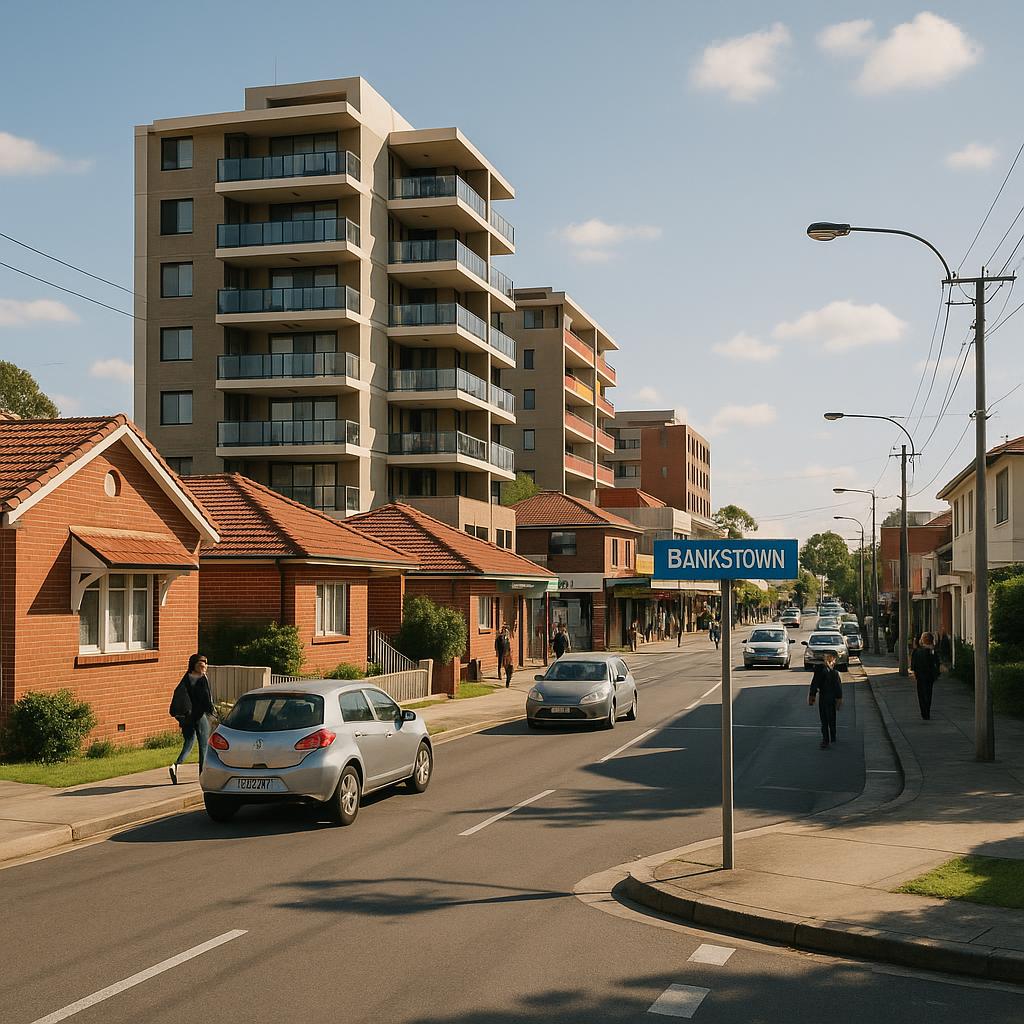
Bankstown is a major southwest Sydney centre with a long-established residential base and a strong commercial core. It functions as both a home base and a service hub, which means the suburb attracts a mix of owner-occupiers, renters, and investors. The local market includes detached homes, duplexes, townhouses, and a substantial apartment component, so “Bankstown property” can mean very different things depending on the street and dwelling type.
For buyers, that variety is the point. A house on a quieter residential street can appeal to family buyers wanting space and long-term flexibility, while a well-positioned apartment may suit commuters or investors chasing tenant depth. The challenge is to separate genuine value from stock that only looks cheap because of age, strata issues, poor presentation, or weaker micro-location.
Bankstown’s appeal is driven less by prestige and more by function: access, convenience, and the ability to live or rent without needing to travel far for daily needs. That makes it a practical suburb, but it also means buyers should compare buildings, streets, parking, and amenity access carefully before making an offer.
Buyer Demand
Demand in Bankstown tends to come from a wide range of buyers, including first-home buyers, upgraders, investors, and households with ties to the local area. The suburb’s role as a service centre means many buyers are looking for an easier daily routine, not just a postcode.
From an investment perspective, the key is matching the property type to the likely buyer pool on exit. Family buyers often value functionality, parking, and a sensible layout, while apartment buyers may prioritise convenience and transport access. A property that fits those needs is usually easier to resell and relet.
Rental Market
Bankstown generally appeals to renters who want access, convenience, and a more practical rental option than many inner or middle-ring Sydney areas. Likely tenant groups include students, young workers, key workers, families, and long-term residents who value location over lifestyle branding.
For investors, the main attraction is breadth of demand. A well-kept property with sensible layout, decent storage, and easy transport access is usually simpler to lease than a niche home with awkward design or heavy ongoing costs. Apartments near key amenities can suit convenience-led tenants, while townhouses or houses can appeal more to tenants wanting extra space and stability.
Lifestyle, Transport & Schools
Bankstown offers a practical suburban lifestyle built around everyday access. That includes shopping, dining, community facilities, health services, and local recreation. It is best suited to buyers who value utility and connection more than premium lifestyle positioning.
Transport is one of the suburb’s core strengths, especially for commuters and renters who want to reduce car dependence. Properties with easy access to public transport usually have broader appeal because they work for more household types and tend to feel more convenient in daily use.
Families also tend to look closely at school access, childcare, walkability, and the general feel of the street. Because school catchments and transport convenience can affect long-term demand, buyers should verify current information rather than assuming every part of Bankstown offers the same outcome.
Bankstown Suburb Profile
Official 2021 Census snapshot for the ABS Suburbs and Localities geography.
Age profile
Housing tenure
Occupied private dwellings by tenure type.
Salary & income profile
Median total income reported in the Census.
*Annual figures are weekly median × 52 estimates, not separate ABS annual medians.
Education & qualifications
Highest educational attainment, people aged 15+.
Employment status
People aged 15+ who reported being in the labour force.
Industry of employment
Top responses among employed people aged 15 years and over.
Occupation profile
Broad occupation groups among employed residents, including managers.
Property Type Guide
- Houses: Often best for families, land-focused buyers, and long-term holders who want flexibility and broader owner-occupier appeal.
- Townhouses and duplexes: A middle ground for buyers wanting more space than an apartment with less upkeep than a detached house.
- Apartments: Suited to first-home buyers and investors who value convenience, lower entry cost, and easier maintenance.
- Older stock: Can offer value, but requires close inspection of renovation scope, drainage, layout, and capital-expenditure risk.
- Strata properties: Need careful review of levies, maintenance history, sinking fund position, and building presentation.
Risks & Watch-Outs
- Check strata records carefully, because cheaper apartments can hide significant maintenance or governance problems.
- Inspect for noise, traffic exposure, and access issues, especially near busy roads or high-density pockets.
- Do not assume older housing stock is good value without budgeting for repairs, compliance, and potential layout limitations.
- Review flood, drainage, and planning considerations where relevant, particularly for lower-lying or redevelopment-sensitive sites.
- Avoid overcapitalising on cosmetic upgrades that do not align with local buyer expectations or rental demand.
Nearby Suburbs to Compare
- Parramatta NSW Property Market Guide: Buyers & Investors
- Strathfield NSW Property Market Guide: Buyers & Investors
- Punchbowl
- Yagoona
- Condell Park
- Revesby
FAQ
Is Bankstown a good suburb for first-home buyers?
It can be, especially for buyers who want a practical location with strong access to services and transport. The key is to focus on property type and micro-location, not just the suburb name. A well-located apartment or townhouse may be a better fit than a cheaper but compromised listing.
Is Bankstown better for houses or apartments?
That depends on your goals. Houses usually suit buyers who want space, land, and broader family appeal. Apartments can suit investors and entry-level buyers who want convenience and lower maintenance, but only if the building quality and strata management are sound.
What do investors need to prioritise most in Bankstown?
Focus on tenant demand, strata quality, and everyday convenience. A property that is easy to live in is often easier to rent and resell. Check the surrounding streets, parking, access, building presentation, and the likely tenant pool before committing.
What are the biggest mistakes buyers make in Bankstown?
The main mistakes are buying purely on price, ignoring strata or building condition, and underestimating noise or traffic impacts. Another common error is assuming all parts of the suburb behave the same. Bankstown contains multiple micro-markets, so inspection quality matters.
How should I research a property in Bankstown properly?
Inspect the home and the street at different times of day, compare recent sales and current listings, and review any strata or building documents carefully. Also check planning, transport, and school information directly through authoritative sources before making an offer.
Conclusion
Bankstown can be a solid Sydney option for buyers and investors who value convenience, variety, and practical liveability. The suburb rewards disciplined selection: the right street, the right building, and the right property type. If you compare micro-locations carefully and verify the details properly, Bankstown can offer a sensible balance of usability and long-term demand.
Sources & How to Verify
- Check current listings and sold examples on Domain so you can compare the exact property type, condition, and location you are considering.
- Use realestate.com.au to review current asking prices, rental listings, and how similar homes are being marketed in Bankstown.
- Confirm transport routes and service changes on Transport for NSW rather than relying on outdated assumptions about commute convenience.
- Verify zoning, planning controls, and development context through the NSW Planning Portal before buying a property with potential redevelopment upside.
- Check school catchments and enrolment details on the NSW School Finder because intake areas can matter more than broad suburb reputation.
- Review local planning, infrastructure, and community updates on the Canterbury-Bankstown Council website to understand nearby works and long-term change.
- Use the ABS for official demographic context, but interpret it as background only rather than a substitute for current property research.
- For a property-specific decision, always cross-check contract notes, strata records, building reports, and professional advice before relying on any suburb guide.