Quick Answer
South Melbourne is a tightly held inner-Melbourne suburb that suits buyers who value walkability, amenity, and long-term desirability more than space alone. For investors, it can be attractive because the tenant pool is broad and location-led, but performance depends heavily on property type, building quality, and ongoing costs. For homeowners, the suburb’s mix of heritage character and low-maintenance living creates strong lifestyle appeal. The best purchases here usually combine scarcity, convenience, and practical liveability.
Key Takeaways
- South Melbourne is an established, blue-chip inner suburb where location and lifestyle are major value drivers.
- Buyer demand commonly comes from professionals, downsizers, and lifestyle-led owner-occupiers who want convenience.
- Rental demand is supported by CBD access, tram connectivity, and low-friction living for location-focused tenants.
- Property type matters more here than in many suburbs, especially when comparing terraces, boutique apartments, and larger modern buildings.
- Careful due diligence is essential because strata quality, heritage controls, noise, and parking can change the experience materially.
Pros & Cons
Pros
- Inner-city location with easy access to the CBD and nearby lifestyle precincts.
- Strong amenity including cafes, parks, tram links, and everyday convenience.
- Broad appeal across owner-occupiers, downsizers, and renters.
Cons
- Competitive entry in quality pockets, especially for scarce property types.
- Apartment quality varies widely, which makes building selection critical.
- Heritage, traffic, noise, and parking constraints can affect liveability.
Market Overview
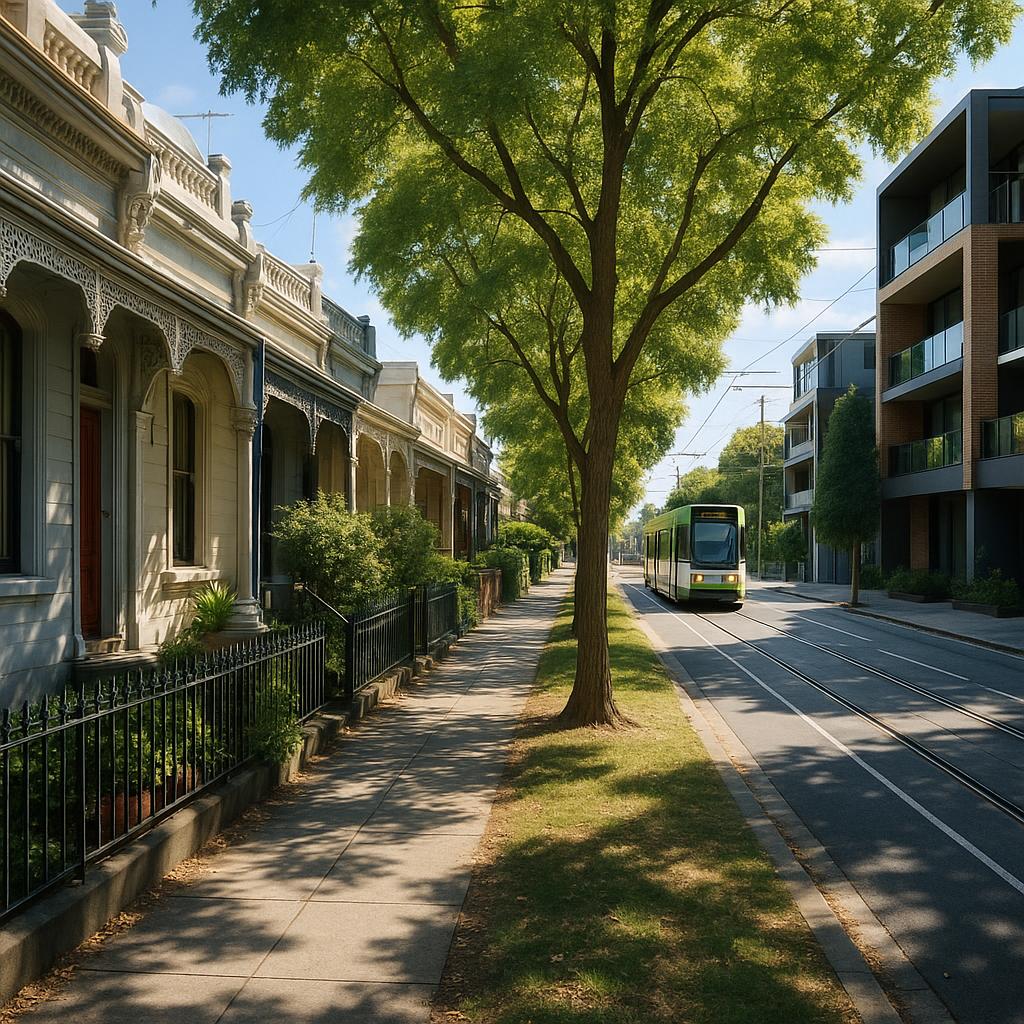
South Melbourne is an inner-city suburb with a strong village identity, heritage streetscapes, and quick access to the CBD, Albert Park, Southbank, and Port Phillip Bay. That combination is a major reason it remains on the radar of both homeowners and investors: the suburb offers a recognisable lifestyle proposition rather than just a central address.
The housing mix is a key part of the market story. Buyers will find Victorian-era terraces and cottages, converted older homes, boutique apartment buildings, and modern apartment stock. Because supply is constrained and the suburb has a mature amenity base, the market often behaves more like a quality-selection market than a volume market.
For buyers, that means the best properties are usually the ones that feel easy to live in now and easy to resell later. For investors, the challenge is choosing stock that aligns with tenant demand rather than simply chasing the biggest advertised rent. In South Melbourne, the wrong floorplan or building can matter more than a small difference in postcode prestige.
Buyer Demand
Demand in South Melbourne is typically driven by owner-occupiers who want a premium inner-city lifestyle, professionals who value short commutes, and downsizers seeking convenience with less maintenance. Investors also remain active because the suburb’s core appeal is easy to explain to tenants and future buyers.
Competition tends to be strongest for well-located, well-presented properties with practical layouts. A renovated terrace, a quality boutique apartment, or a well-kept low-rise building can attract serious interest because these assets fit the suburb’s buyer pool more cleanly than generic stock. In other words, location helps, but the property still has to “make sense” for the next owner.
Rental Market
The renter pool is usually made up of professionals, couples, and some longer-term shared households looking for proximity to the CBD and excellent public transport access. Tenants in this suburb often pay for convenience, security, and a walkable daily routine rather than sheer size.
That is why investor outcomes can vary by asset. Boutique apartments and well-located low-maintenance dwellings often suit the typical tenant story, while awkward layouts, poor natural light, or high-strata buildings can dilute appeal. If you are comparing rental prospects, ask whether the property would feel easy to live in for a busy tenant who values time and access.
Lifestyle, Transport & Schools
South Melbourne’s lifestyle appeal comes from its village atmosphere, strong cafe culture, retail convenience, and close access to parks and event precincts. It is the sort of suburb where daily routines can be done without much car dependence, which is one reason it attracts both owner-occupiers and renters.
Transport is another core advantage. Tram connectivity is strong, and many residents value the ability to move easily to the CBD and adjacent inner areas. That said, road access, parking, and traffic pressure can still influence liveability in some streets, so buyers should inspect the exact pocket rather than relying on the suburb name alone.
School access can matter for family buyers, but this is one of the areas where verification is essential. Catchments, enrolment rules, and transport routes should be checked directly with official sources before making assumptions about family suitability.
South Melbourne Suburb Profile
Official 2021 Census snapshot for the ABS Suburbs and Localities geography.
Age profile
Housing tenure
Occupied private dwellings by tenure type.
Salary & income profile
Median total income reported in the Census.
*Annual figures are weekly median × 52 estimates, not separate ABS annual medians.
Education & qualifications
Highest educational attainment, people aged 15+.
Employment status
People aged 15+ who reported being in the labour force.
Industry of employment
Top responses among employed people aged 15 years and over.
Occupation profile
Broad occupation groups among employed residents, including managers.
Property Type Guide
- Heritage homes and terraces: Best for buyers who want character, scarcity, and strong owner-occupier appeal; watch for renovation limits and maintenance costs.
- Boutique apartments: Often the most balanced choice for investors and downsizers; check strata records, layout efficiency, and owner-occupier ratio.
- Modern apartments: Practical for first-home buyers and renters; quality varies, so assess finishes, ventilation, storage, and levy exposure carefully.
- Mixed-use or high-density stock: Convenient and central, but inspect for noise, privacy, and common-area wear before you commit.
- Best-fit rule: If your goal is capital resilience, prioritise scarcity and livability; if your goal is rentability, prioritise functionality and low friction.
Risks & Watch-Outs
- Strata and building quality: Review levies, maintenance history, and future works so the holding cost does not surprise you later.
- Heritage and planning constraints: Some homes have limited renovation flexibility, which affects both lifestyle and resale options.
- Noise, traffic, and parking: Busy streets and nearby activity can materially change day-to-day comfort and tenant appeal.
- Overpaying for presentation: Styling can mask weak floorplans, poor natural light, or other issues that matter after settlement.
- Apartment selection risk: In this suburb, building reputation and layout quality can matter as much as the address itself.
Nearby Suburbs to Compare
- Port Melbourne VIC Property Market Guide: Buyers & Investors
- St Kilda VIC Property Market Guide: Buyers & Investors
- Melbourne VIC Property Market Guide: Buyers & Investors
- South Yarra VIC Property Market Guide: Buyers & Investors
- Albert Park
FAQ
Is South Melbourne good for investors?
Yes, provided you focus on the right asset. South Melbourne can suit investors because demand is supported by location, amenity, and transport. The key is to assess the building, floorplan, and strata position rather than assuming every property will perform equally.
Is South Melbourne good for first-home buyers?
It can be, especially for buyers who value lifestyle and convenience over large internal space. Many first-home buyers find apartments or smaller dwellings more realistic than houses, but the trade-off is often a stronger address and better day-to-day liveability.
What property types are most common in South Melbourne?
The suburb offers a mix of heritage terraces, older converted homes, boutique apartments, and modern apartment stock. That variety is useful, but it also means buyers need to compare properties by building quality and usability, not just by suburb name.
Is South Melbourne family-friendly?
It can suit some families, particularly those wanting inner-city convenience, access to parks, and strong transport links. The fit depends on the property type, pocket, and whether the home offers enough space, storage, and practical day-to-day functionality.
What should I inspect before buying?
Check the strata records, building maintenance, parking, noise exposure, renovation restrictions, and the floorplan’s practical use. If you are buying a house, also look at heritage controls and what changes are realistically possible within the planning framework.
Conclusion
South Melbourne stands out because it combines lifestyle, transport, amenity, and scarcity in a way that appeals to both homeowners and investors. The best results usually come from choosing the right property type for the suburb’s buyer pool, then verifying the building, street, and ownership structure carefully.
Sources & how to verify
- Check current sold results and listing trends on Domain so you are not relying on outdated price expectations.
- Review comparable listings on realestate.com.au to compare floorplans, building age, and feature sets across similar South Melbourne properties.
- Use the City of Port Phillip website to verify local planning controls, heritage overlays, and development considerations that may affect renovation plans.
- Check Victorian planning information on Planning Victoria when assessing zoning, overlays, and permit pathways.
- Review public transport details on Public Transport Victoria to confirm tram access, route changes, and commute practicality.
- Confirm school zones, catchments, and enrolment rules using the Victorian government’s school finder or the relevant school’s official website rather than relying on third-party claims.
- Ask for strata minutes, insurance, and sinking fund details before buying an apartment, because building costs and upcoming works can materially affect holding costs.
- Inspect the property at different times of day so you can test noise, parking, traffic, and street activity for yourself rather than assuming the suburb is uniform.