Quick Answer
Epping NSW is a well-connected, family-friendly suburb with strong appeal for buyers who value transport access, education options, and long-term liveability. It suits owner-occupiers who want practical convenience and investors who prioritise steady tenant demand over speculative upside. The best purchases usually come down to property quality, building condition, and street-level appeal rather than the suburb name alone.
Key Takeaways
- Epping typically suits buyers who will pay for convenience, schooling access, and a suburb that supports everyday life, not just a postcode.
- Demand is usually broad, with families, professionals, downsizers, first-home buyers, and investors all competing for different stock.
- The suburb’s best assets are often those with strong transport convenience, practical layouts, and low-friction day-to-day living.
- Property type matters: apartments can suit entry-level buyers and investors, while houses usually attract longer-term family ownership.
- The smartest approach is to compare each property’s street, building quality, and maintenance profile, then verify current market evidence.
Pros & Cons
Pros
- Broad appeal across multiple buyer groups supports demand depth.
- Transport convenience and daily amenity strengthen livability.
- Good for buyers who want a long-term, practical Sydney location.
Cons
- Quality stock can be tightly held, which may increase competition.
- Apartment buyers must assess strata, defects, and ongoing costs carefully.
- Some buyers may prefer a quieter, lower-density feel than Epping typically offers.
Market Overview
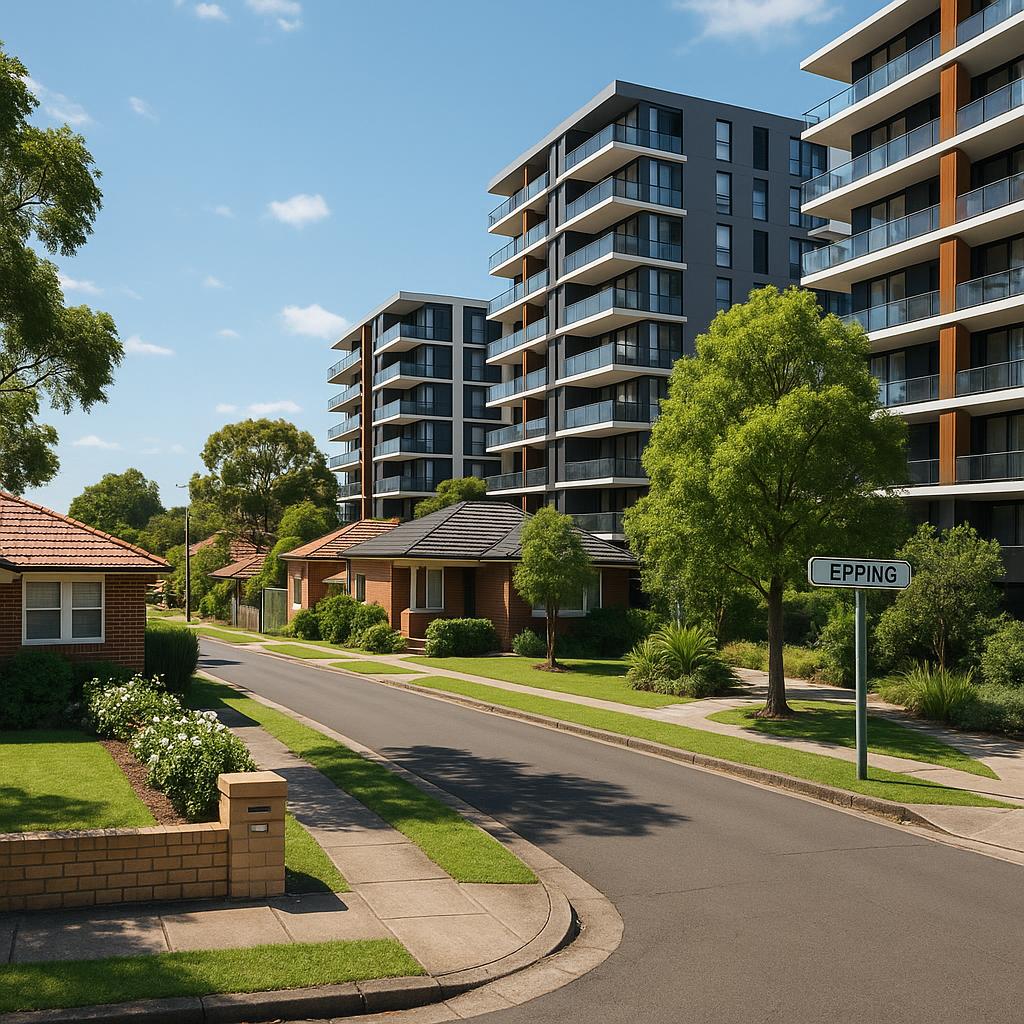
Epping NSW is generally viewed as a practical, established suburban market with strong day-to-day usability. It attracts buyers who want convenience without moving too far from major employment areas and services. The suburb’s mix of detached homes, townhouses, and apartments gives it a more layered market than many single-product suburbs.
For investors and homeowners, that means Epping is not one simple story. A family buyer might target a house or townhouse for space and school access, while an investor may focus on a well-located apartment that aligns with tenant demand. In both cases, location within the suburb, building quality, and layout matter more than broad-brush suburb reputation.
The most useful way to think about Epping is as a suburb where convenience has real market value. Buyers often trade a larger block or cheaper entry point elsewhere for better access, lower commute stress, and stronger long-term livability. Use current comparable sales, rental listings, and building inspections to confirm whether a specific property is priced fairly.
Buyer Demand
Buyer demand in Epping is usually driven by practical life-stage needs rather than lifestyle novelty. Families want education access and functional homes, professionals want commute efficiency, and downsizers often want lower-maintenance living without sacrificing amenity. That creates a stable, mixed buyer pool.
In practice, well-presented properties with sensible floor plans tend to draw stronger interest than homes that need immediate work. In an in-demand suburb like Epping, a poor layout, weak natural light, or questionable building condition can quickly narrow the buyer pool. That is why two similar properties can perform very differently.
Rental Market
Epping’s rental appeal is generally supported by transport convenience, everyday amenity, and a tenant base that includes professionals, couples, small families, and some shared households. For investors, that usually means the suburb can work best when the property is easy to maintain and easy to lease.
Tenants typically prefer functional layouts, good presentation, secure parking where relevant, and properties that feel close to real-life needs rather than just the station. Newer or well-kept apartments may suit convenience-led renters, while houses can attract longer leases from family tenants if maintenance is under control. Verify current asking rents and vacancy conditions through live listings before using any estimate.
Lifestyle, Transport & Schools
Epping’s lifestyle proposition is fundamentally about convenience. It tends to suit buyers who want a suburb that makes weekday routines easier: commuting, school drop-off, groceries, and access to services. That practical focus is a major part of why people stay in the area for years.
Transport is one of the suburb’s strongest decision factors, especially for purchasers who value rail-based commuting or straightforward access to surrounding employment hubs. Even when a property is slightly smaller, buyers may accept that trade-off if it improves daily travel and reduces friction. Always verify current transport services with Transport for NSW rather than relying on memory or old listings.
Schools also matter materially in Epping purchasing decisions. Many family buyers will stretch their budget or narrow their search to stay near preferred education options or within convenient access to schooling. Because school boundaries and enrolment rules can change, confirm the latest details directly with the NSW Government school finder and the relevant school.
Epping (NSW) Suburb Profile
Official 2021 Census snapshot for the ABS Suburbs and Localities geography.
Age profile
Housing tenure
Occupied private dwellings by tenure type.
Salary & income profile
Median total income reported in the Census.
*Annual figures are weekly median × 52 estimates, not separate ABS annual medians.
Education & qualifications
Highest educational attainment, people aged 15+.
Employment status
People aged 15+ who reported being in the labour force.
Industry of employment
Top responses among employed people aged 15 years and over.
Occupation profile
Broad occupation groups among employed residents, including managers.
Property Type Guide
- Houses: Best for families and long-term owner-occupiers who want space, privacy, and future flexibility. Check land size, renovation needs, and the cost of deferred maintenance.
- Townhouses/duplex-style homes: A useful middle ground for buyers wanting less upkeep than a standalone house but more practicality than a compact apartment. Inspect parking, storage, and shared responsibilities.
- Apartments: Often the most accessible entry point for first-home buyers and investors. Focus on strata quality, building age, owner-occupier ratio, layout efficiency, and evidence of ongoing maintenance.
- For investors: Prioritise the property that best matches local tenant demand, not the largest floor area or the prettiest façade.
- For homeowners: Choose the property that best supports your routine over the next five to ten years, especially commute and school needs.
Risks & Watch-Outs
- Do not assume a strong suburb protects you from overpaying for a weak property.
- Apartment buyers should review strata levies, sinking fund adequacy, minutes, and any sign of defect disputes.
- Older homes may need capital expenditure on plumbing, wiring, roofing, or cosmetic refreshes sooner than expected.
- Noise, traffic flow, orientation, and parking can materially affect both liveability and resale appeal.
- Investor returns can be undermined if the property is misaligned with the tenant profile that actually wants to rent in Epping.
Nearby Suburbs to Compare
- Baulkham Hills NSW Property Market Guide: Buyers & Investors
- Blacktown NSW Property Market Guide: Buyers & Investors
- Strathfield NSW Property Market Guide: Buyers & Investors
- Burwood NSW Property Market Guide: Buyers & Investors
- Marrickville NSW Property Market Guide: Buyers & Investors
FAQ
Is Epping a good suburb for property investors?
Epping can suit investors because it attracts a broad tenant pool and has strong convenience-led demand. The better opportunities usually come from well-located, well-maintained properties with layouts that match real tenant needs. Always compare yields, strata, and vacancy using current listings.
What kind of buyer is Epping best suited to?
Epping tends to suit families, professionals, downsizers, and investors who value amenity and transport over a bargain entry price. It is often chosen by people who want a practical long-term base rather than a purely speculative play. The specific property type matters a great deal.
Are apartments a sensible option in Epping?
Yes, provided the building is solid and the floor plan is efficient. Apartments can be a sensible way to enter the suburb or target rental demand, but buyers should be careful with strata costs, defects, and building quality. Verification through strata records is essential.
Should families focus on houses in Epping?
Families often prefer houses or larger townhouses because they offer more space, privacy, and flexibility. However, some family buyers will choose an apartment or townhouse if transport and school access are the priority. The right choice depends on how long you plan to stay.
What should I verify before buying in Epping?
Check comparable sales, building condition, strata documents, school catchment details, and current transport information. Also inspect the immediate street, parking, noise, and day-to-day livability, because those details can matter more than suburb reputation when it comes to resale and tenant demand.
Conclusion
Epping is best understood as a convenience-led Sydney suburb with broad buyer appeal and a practical long-term reputation. It can work well for both homeowners and investors, but only if the property itself is well chosen. Focus on transport, schools, building quality, and liveability first; then use current evidence to decide whether the asking price makes sense.
Sources & How to Verify
- Check current sold results and active listings on Domain so you can compare real asking prices against recent market evidence.
- Review live rental listings on realestate.com.au to understand what tenants are actually being asked to pay in similar properties.
- Confirm train and service updates through Transport for NSW before relying on commute assumptions or station convenience claims.
- Use the NSW Government school finder to confirm the latest school catchment and enrolment information.
- Check planning controls and development context on the NSW Planning Portal if nearby redevelopment could affect supply, views, or amenity.
- Review local area and infrastructure information through the relevant local council website to verify public works, community facilities, and planning notices.
- If buying an apartment, ask for strata records and use a building inspector to confirm defects, maintenance backlog, and any signs of special levies or litigation.
- Use recent comparable sales from a licensed valuer or reputable property data provider to test whether the property is fairly priced for its exact type and location.