Quick Answer
Liverpool NSW is a major Southwest Sydney centre with strong transport access, a large commercial core, and a mix of apartments, townhouses, and freestanding homes. It suits buyers who want everyday convenience, access to health and education precincts, and a more urban lifestyle than many surrounding suburbs. For investors, the key is selective buying: focus on tenant appeal, building quality, and location within Liverpool rather than the postcode alone. A good purchase here is usually practical, well-located, and easy to live in or rent out.
Key Takeaways
- Liverpool is a regional hub, so demand is shaped by jobs, health services, transport, and daily amenity, not just residential appeal.
- Owner-occupiers often value convenience and access; investors should prioritise low-maintenance stock with broad tenant appeal.
- Property type matters greatly here, because apartments, townhouses, and houses each attract different buyers and renters.
- Micro-location is crucial, with street quality, parking, noise, and building reputation often influencing value more than the suburb name.
- Buyers should verify current prices, rents, and strata condition before acting, as local conditions can vary widely block by block.
Pros & Cons
Pros
- Strong amenity and a genuine town-centre environment.
- Broad appeal to families, investors, first-home buyers, and downsizers.
- Good access to transport, services, and major employment nodes.
Cons
- Busy pockets and denser living can reduce liveability for some buyers.
- Older strata stock may bring higher maintenance or special levy risk.
- Traffic, noise, and parking issues can affect tenant and owner-occupier demand.
Market Overview
Liverpool sits in Southwest Sydney and functions as a major urban centre rather than a quiet residential suburb. That matters because the market is shaped by institutional employment, healthcare, education, retail, and transport access. In practical terms, buyers here are often weighing convenience and connection against the trade-off of a busier environment.
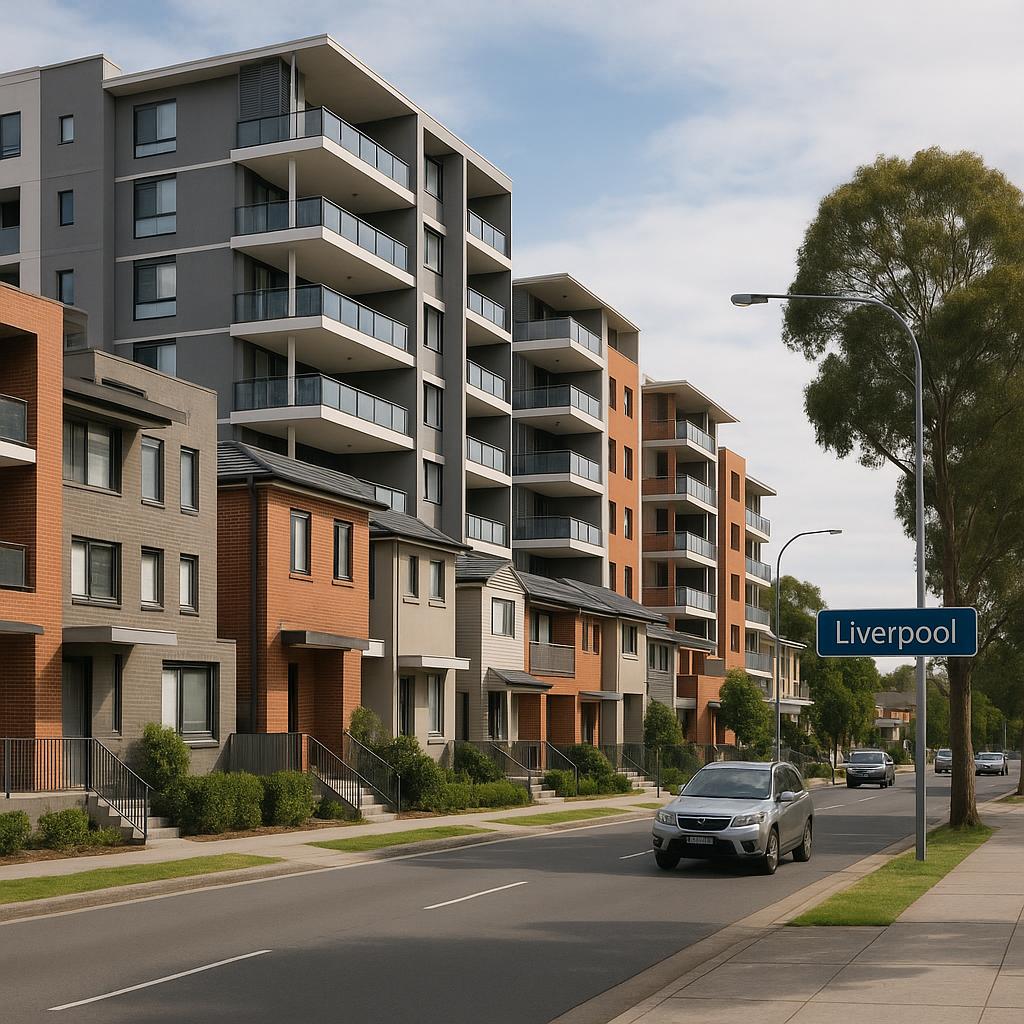
The suburb offers a wide mix of apartments near the core, townhouses and semi-detached homes in surrounding pockets, and freestanding houses further out. That variety creates multiple entry points, but it also means two properties a short distance apart can perform very differently. Buyers should think in terms of asset quality and micro-location, not just suburb-wide reputation.
For homeowners, Liverpool can work well if you want a functional lifestyle with services close by. For investors, the key question is whether the specific property is easy to rent, easy to maintain, and positioned in a pocket that tenants actually want. In this market, “best value” is rarely the cheapest listing.
Buyer Demand
Demand tends to come from first-home buyers, upgraders, downsizers, investors, and families who want a practical base in Southwest Sydney. Owner-occupiers are often drawn to convenience, while investors look for rental depth and a broad tenant pool. Families generally focus on space, parking, and daily routine ease.
What buyers prioritise is highly consistent: transport access, building quality, secure parking, and a layout that works in real life. A well-kept townhouse or apartment with sensible strata and good presentation can appeal more strongly than a cheaper alternative with obvious compromises. If you are comparing options, think like the eventual next buyer as well as yourself.
Rental Market
Liverpool appeals to renters because it offers access to jobs, healthcare, retail, education, and public transport in one connected area. That makes it useful for people who want a short commute or a central, functional base. Rental demand is usually strongest for properties that reduce friction in daily life.
Investors should look for low-maintenance layouts, parking, storage, and a building profile that feels safe and manageable. Apartments and townhouses near services often suit professionals, sharers, and smaller households, while houses can appeal to families wanting stability and outdoor space. Before buying for yield, compare live listings and property manager feedback rather than relying on suburb averages.
Lifestyle, Transport & Schools
Liverpool has a busy, urban lifestyle with strong practical appeal. It suits people who want shopping, health services, dining, and commuting convenience nearby rather than a quiet, leafy setting. That can be a strength if you value ease of living, but it also means location within the suburb matters for noise and day-to-day comfort.
Transport access is a major part of Liverpool’s draw, both for train users and for people who rely on road connections across Southwest Sydney. Buyers should check travel times at the exact time of day they commute, because congestion can materially change the liveability of a home. Parking is not a bonus here; for many buyers, it is essential.
School access also matters, especially for family buyers and long-term owner-occupiers. Even investors should care about this, because family-oriented rentals can be more stable and less turnover-prone. Use official catchment tools and speak to the school directly if school zoning is part of your buying thesis.
Liverpool Suburb Profile
Official 2021 Census snapshot for the ABS Suburbs and Localities geography.
Age profile
Housing tenure
Occupied private dwellings by tenure type.
Salary & income profile
Median total income reported in the Census.
*Annual figures are weekly median × 52 estimates, not separate ABS annual medians.
Education & qualifications
Highest educational attainment, people aged 15+.
Employment status
People aged 15+ who reported being in the labour force.
Industry of employment
Top responses among employed people aged 15 years and over.
Occupation profile
Broad occupation groups among employed residents, including managers.
Property Type Guide
- Apartments: Suited to buyers who want convenience and lower maintenance; check strata health, parking, noise, and building age carefully.
- Townhouses: A strong middle-ground for many Liverpool buyers, balancing space, privacy, and manageable upkeep.
- Freestanding houses: Better for families and long-term holders wanting land and flexibility, though they may sit farther from the centre.
- Duplexes and semis: Often attractive for buyers wanting a house-like feel without the same maintenance burden as a detached home.
Risks & Watch-Outs
- Do not assume every pocket of Liverpool performs the same; street-level quality can change buyer and tenant demand quickly.
- Older apartment stock may hide expensive maintenance issues, so review strata minutes, levies, and capital works planning.
- Busy roads, noise exposure, and awkward access can weaken resale strength even when the purchase price looks attractive.
- Some investors overestimate rent by using broad suburb assumptions instead of comparing current, similar listings.
- Buying on price alone can backfire if the property is hard to live in, hard to maintain, or less appealing to the next buyer.
Nearby Suburbs to Compare
- Parramatta NSW Property Market Guide: Buyers & Investors
- Bankstown NSW Property Market Guide: Buyers & Investors
- Cabramatta
- Moorebank
- Chipping Norton
FAQ
Is Liverpool NSW a good place to buy property?
Liverpool can be a good place to buy if you value transport access, amenity, and a broad housing mix. The suburb is best approached as a selective market: the right street, building, and property type matter more than buying in Liverpool generally.
Is Liverpool better for buyers or investors?
It can suit both, but for different reasons. Buyers often like the convenience and urban services, while investors may like rental depth and a large tenant base. The winning strategy depends on whether you need capital growth, income, or liveability first.
What type of property is most popular in Liverpool?
There is no single dominant choice for every buyer, because the suburb offers apartments, townhouses, duplexes, and houses. Convenience-led buyers often prefer apartments or townhouses, while families tend to look for more space and a better outdoor setup.
Is Liverpool good for rental demand?
It can be, particularly for well-located properties with parking, sensible layouts, and access to transport or services. Demand should still be checked building by building and street by street, because generic or poorly maintained stock can face tougher competition.
What should I check before buying in Liverpool?
Check the exact location, noise exposure, parking, strata quality, and comparable recent listings. If buying a unit or townhouse, review building records, levies, and maintenance plans. If buying for rental, test your expected rent against current advertised stock.
Conclusion
Liverpool NSW is a practical, high-activity suburb with strong amenity, transport access, and a diverse property market. It can suit both homeowners and investors, but only when the asset matches the strategy. Focus on micro-location, property type, and building quality, then verify live market evidence before making a decision.
Sources & How to Verify
- Check current listings on Domain to compare real asking prices, floorplans, and the property types currently available in Liverpool.
- Review rental competition on realestate.com.au so you can test whether your likely tenant pool is well served or price-sensitive.
- Use the ABS to understand official census context, but rely on it for background only because it does not replace current market evidence.
- Check transport access and service changes through Transport for NSW before assuming a commute or station link will remain the same.
- Confirm planning, zoning, and development context using the NSW Planning Portal, especially if a redevelopment or rezoning could affect future value.
- Verify school zones and enrolment rules with the NSW School Finder if schooling is part of your purchase decision.
- Request strata records, building reports, and contract reviews before buying an apartment or townhouse, because hidden maintenance risk can materially change the true cost of ownership.
- Speak with a local property manager or selling agent and compare their comments against advertised stock, because local demand can shift faster than suburb summaries suggest.