Quick Answer
Kangaroo Point is a tightly held inner-city Brisbane suburb that suits buyers and investors who prioritise location, convenience, and long-term scarcity over land size. It appeals to owner-occupiers wanting walkability and city access, and to investors chasing consistent demand from professionals, downsizers, and low-maintenance tenants. The main decision point is not the suburb name itself, but the specific property type, building quality, strata position, and micro-location. In Kangaroo Point, fundamentals matter more than hype.
Key Takeaways
- Kangaroo Point is a premium inner-ring suburb where lifestyle and convenience are major value drivers.
- Buyer demand is shaped by proximity to the CBD, river access, and low-maintenance urban living preferences.
- Apartment quality varies widely, so strata records and building condition deserve careful review.
- Investors should focus on tenant appeal, ongoing costs, and resale flexibility rather than headline suburb prestige.
- The best purchase is usually the one that matches your goal, budget, and holding period, not just the suburb name.
Pros & Cons
Pros
- Inner-city convenience: close to major employment, dining, and entertainment precincts.
- Strong lifestyle appeal: river access, walkability, and urban amenity support broad demand.
- Low land supply: scarcity can support long-term interest in well-located properties.
Cons
- Apartment-heavy stock: building quality and strata management can materially change outcomes.
- Ongoing costs: levies, maintenance, and insurance can affect holding returns.
- Micro-location matters: noise, access, and parking can vary sharply between streets and buildings.
Market Overview
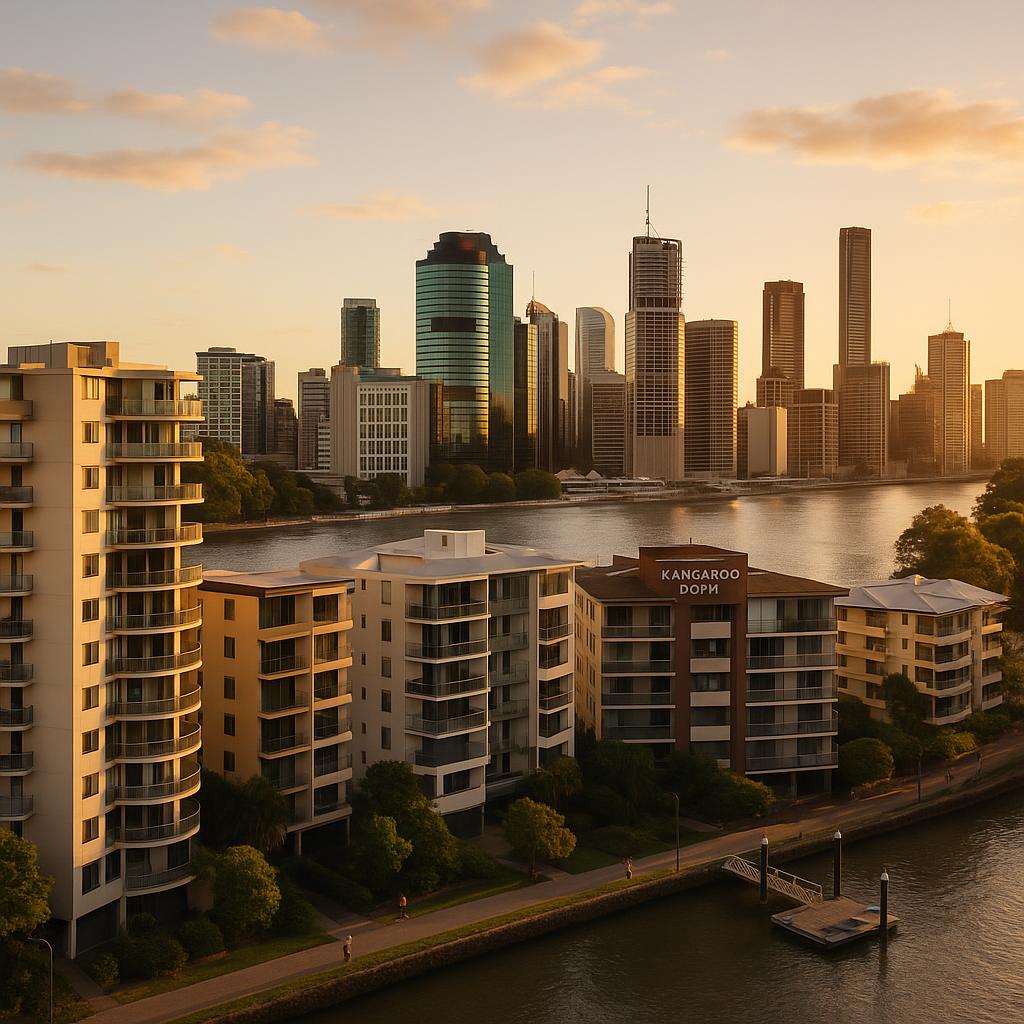
Kangaroo Point sits in Brisbane’s inner city fringe and is known for convenience, river proximity, and a strong lifestyle reputation. That combination attracts a broad mix of buyers, but the suburb is not one uniform market. Apartment towers, boutique units, townhouses, and a smaller pool of houses each behave differently, so property type matters as much as postcode.
For investors and homeowners, the key insight is that Kangaroo Point tends to reward careful selection rather than broad assumptions. A well-positioned, well-managed apartment may suit a buyer who wants a low-maintenance base close to the city. By contrast, an older building with weaker strata governance can look attractive on paper but create expensive surprises later.
The suburb’s appeal is anchored by scarcity and proximity. That does not guarantee strong outcomes for every property, but it does explain why well-presented stock often draws attention from both owner-occupiers and renters. Buyers should compare individual buildings, exact street position, and likely future outgoings before treating “Kangaroo Point” as a shortcut to quality.
Buyer Demand
Demand is usually strongest from owner-occupiers who want to shorten commute times, downsizers seeking ease of living, and professionals who value a city-fringe lifestyle. That buyer mix tends to favour properties with good light, sensible layouts, lift access, parking, and practical storage.
Investors are often drawn to the suburb because it can attract tenants who will pay for convenience and location. The best-performing stock is usually the one that is easy to maintain, easy to lease, and easy to resell. In other words, demand here is less about speculative growth stories and more about everyday desirability.
Rental Market
Kangaroo Point generally suits renters who want access to the CBD, South Brisbane, and nearby employment and leisure hubs without sacrificing convenience. That includes professionals, couples, and mobile tenants who prefer an urban base over larger suburban housing. Well-located apartments often compete on presentation, building quality, and amenity rather than on size alone.
For investors, the rental question is whether the property fits the tenant pool the suburb naturally attracts. A clean, secure, well-kept apartment in a reputable building is usually easier to lease than a cheaper but tired alternative. Before buying, verify current rental listings, body corporate costs, and comparable stock in the same street or complex.
Lifestyle, Transport & Schools
Kangaroo Point’s lifestyle appeal is a major reason people choose it. Riverfront access, dining options, park spaces, and walkability create a strong day-to-day convenience factor. For many buyers, that matters more than a larger block or extra room count elsewhere in Brisbane.
Transport and connectivity are also central to the suburb’s value proposition. Being close to the city reduces daily friction for commuters, and access routes can make a meaningful difference between an easy suburb and a frustrating one. Buyers should check how a property connects to their actual routine, not just the broad suburb map.
School considerations still matter, especially for family buyers evaluating long-term livability. Even if a property is being purchased primarily for lifestyle, school catchments, commute paths, and access to childcare or education can shape resale demand. Always verify school zones and enrolment rules directly before relying on assumptions.
Kangaroo Point (Qld) Suburb Profile
Official 2021 Census snapshot for the ABS Suburbs and Localities geography.
Age profile
Housing tenure
Occupied private dwellings by tenure type.
Salary & income profile
Median total income reported in the Census.
*Annual figures are weekly median × 52 estimates, not separate ABS annual medians.
Education & qualifications
Highest educational attainment, people aged 15+.
Employment status
People aged 15+ who reported being in the labour force.
Industry of employment
Top responses among employed people aged 15 years and over.
Occupation profile
Broad occupation groups among employed residents, including managers.
Property Type Guide
- Apartments: Commonly the most relevant choice for investors and downsizers; check strata fees, building maintenance, noise, and parking before committing.
- Townhouses: Useful for buyers wanting more space than an apartment but less upkeep than a house; review body corporate obligations closely.
- Houses: Scarcer and often more emotionally driven in the market; assess land utility, renovation quality, and long-term usability.
- Prestige or character-style stock: Can hold strong appeal if the location and presentation are right, but due diligence is essential because replacement value is not the whole story.
- Best fit by strategy: Choose apartments for low-maintenance ease, townhouses for balance, and houses for scarcity and owner-occupier depth if the budget supports it.
Risks & Watch-Outs
- Strata risk can be significant, so review levies, sinking fund health, meeting minutes, and any planned capital works.
- Noise and access issues can affect both owner-occupier comfort and tenant retention, especially near busier roads or active precincts.
- Older buildings may need more frequent repairs, making the true cost of ownership higher than the headline purchase price suggests.
- View or lifestyle premium can lead buyers to overpay if they do not compare similar properties in the same building or nearby streets.
- A property that appeals to buyers may still lease poorly if the layout, parking, storage, or presentation does not suit local renters.
Nearby Suburbs to Compare
Comparisons help buyers decide whether Kangaroo Point is the right fit or whether a nearby inner-city suburb offers better value for the same budget.
- South Brisbane QLD Property Market Guide: Buyers & Investors
- New Farm QLD Property Market Guide: Buyers & Investors
- Brisbane City QLD Property Market Guide: Buyers & Investors
- West End QLD Property Market Guide: Buyers & Investors
- Highgate Hill
FAQ
Is Kangaroo Point a good suburb to live in?
Yes, if you value inner-city convenience, river proximity, and a lifestyle-led environment. It suits people who want easy access to the CBD and everyday amenity more than large blocks or quiet suburban isolation. Check the exact street and building first.
Is Kangaroo Point a good suburb for property investors?
It can be, particularly for investors who understand apartment quality, strata costs, and tenant fit. The suburb’s appeal supports leasing potential, but the investment outcome depends on building condition, outgoings, and how well the property matches the local renter profile.
What type of property is most common in Kangaroo Point?
Apartments are a major part of the market, with a smaller mix of townhouses and houses. That means buyers should not assume all stock behaves the same way. Building quality, floor plan efficiency, and strata management can materially affect value.
What should buyers check before purchasing an apartment here?
Review body corporate records, levy history, building maintenance plans, and any signs of special levies or ongoing works. Also inspect noise, parking, storage, ventilation, and lift access. A well-located apartment can still be a poor purchase if the building fundamentals are weak.
How does Kangaroo Point compare with nearby inner Brisbane suburbs?
Kangaroo Point is often compared with suburbs such as South Brisbane, New Farm, Brisbane City, and West End. The best comparison is based on your lifestyle and property type preferences, because each suburb has a different housing mix, feel, and buyer profile.
Conclusion
Kangaroo Point is a suburb where location, amenity, and scarcity do much of the heavy lifting, but they do not remove the need for disciplined selection. Buyers and investors should focus on property type, strata quality, and micro-location. If the asset fits your goals, this suburb can be a strong long-term hold.
Sources & How to Verify
- Check current sold results and rental listings on Domain before using any suburb guide to estimate value or demand.
- Use realestate.com.au to compare active listings, floor plans, and the level of competition between similar properties.
- Verify zoning, overlays, and planning context through Brisbane City Council so you understand any site-specific constraints.
- Check school catchments and enrolment eligibility via the Queensland school catchment finder rather than relying on hearsay.
- Review broader demographic and household data on the ABS to confirm whether the suburb profile still matches current patterns.
- Inspect transport options and service updates through Translink if commute convenience is part of your buying decision.
- Request body corporate records, AGM minutes, and sinking fund information from the manager or seller because strata health can materially affect ownership costs.
- Cross-check any market claim against at least two current sources so you are not basing a purchase on outdated or overly general suburb commentary.