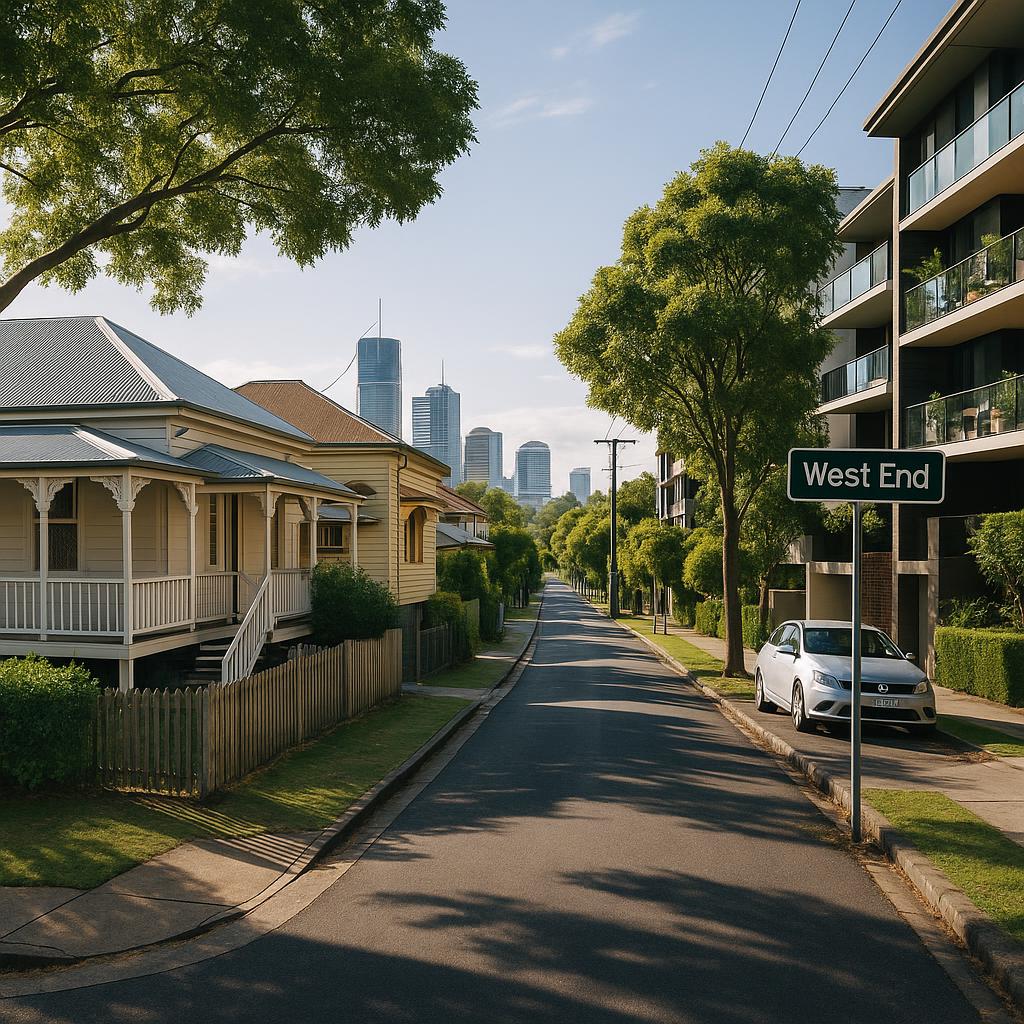
Quick Answer
West End QLD is a tightly held inner-Brisbane suburb with strong lifestyle appeal, walkability, and broad demand from both owner-occupiers and renters. It suits buyers who value location, convenience, and character over larger blocks or quieter suburban form. Investors are often drawn to its tenant depth and inner-city positioning, but success depends on choosing the right property type, street, and building quality. In West End, the suburb matters, but the individual asset matters just as much.
Key Takeaways
- West End offers a rare mix of inner-city convenience, lifestyle amenity, and long-standing suburb identity.
- Demand is supported by proximity to the CBD, river access, and a strong walkable local environment.
- Property choice is critical because apartments, terraces, and houses each suit very different buyer goals.
- The suburb can be competitive, so buyers need clear criteria rather than broad “best suburb” assumptions.
- Investors should prioritise tenant fit, building quality, and practical livability over headline appeal alone.
Pros & Cons
Pros
- Inner-city position with excellent convenience for work, dining, and daily errands.
- Broad appeal to professionals, couples, downsizers, and lifestyle-focused renters.
- Diverse housing stock provides more than one way to enter the suburb.
Cons
- Parking, noise, and density can be real trade-offs in some streets and buildings.
- Competing buyers can reduce negotiation power in well-regarded pockets.
- Apartment quality varies widely, so poor building selection can weaken long-term outcomes.
These trade-offs matter because West End rewards informed buyers, not just enthusiastic ones. A great location can still be a poor purchase if the layout, acoustics, or access do not suit your use.
Market Overview
West End is one of Brisbane’s best-known inner-south suburbs, with a strong identity, established amenity, and a reputation for urban living. It is best understood as a high-demand lifestyle suburb where location and liveability often outweigh land size. Buyers here typically pay for access, convenience, and a distinct neighbourhood feel rather than space alone.
The market is tightly held in parts, and outcomes can vary street by street and building by building. That means the suburb’s reputation is only a starting point; the exact micro-location, building age, renovation quality, and parking situation can materially shape buyer interest and resale appeal.
For homeowners, West End can suit those who want an active, convenient base close to Brisbane’s core. For investors, it is attractive because broad renter interest can support leasing depth, but only if the property matches what local tenants actually want.
Buyer Demand
Buyer demand in West End is usually strongest from owner-occupiers seeking a lifestyle upgrade, professionals wanting shorter commutes, downsizers looking for low-maintenance living, and investors targeting established tenant demand. The suburb also attracts people who value character and urban energy more than traditional suburban space.
What buyers prioritise tends to be practical: walkability, transport access, natural light, storage, parking, and a layout that feels easy to live in. In West End, a well-located but awkward property can underperform a less flashy option with better everyday usability.
Rental Market
West End generally appeals to renters who want convenience and an inner-city lifestyle, including professionals, couples, sharers, and people connected to nearby employment or education hubs. Its rental strength comes from location, amenity, and the fact that many tenants are willing to trade space for access.
For investors, the key is matching the dwelling to tenant expectations. A good apartment or townhouse with sensible storage, decent acoustics, and practical parking will usually lease more smoothly than one that looks impressive but functions poorly. In this suburb, livability is often the difference between steady demand and avoidable vacancy friction.
Lifestyle, Transport & Schools
West End is known for its lively, walkable environment, with cafes, restaurants, local shopping, and nearby river and park connections shaping daily life. It is more urban and energetic than quiet and spacious, which suits buyers who want convenience and activity close to home.
Transport access is a major part of the suburb’s appeal. Bus routes and arterial connections support commuting, while walkability can reduce dependence on car ownership in some pockets. That said, parking and peak-time traffic should be checked carefully before buying.
West End (Brisbane – Qld) Suburb Profile
Official 2021 Census snapshot for the ABS Suburbs and Localities geography.
Age profile
Housing tenure
Occupied private dwellings by tenure type.
Salary & income profile
Median total income reported in the Census.
*Annual figures are weekly median × 52 estimates, not separate ABS annual medians.
Education & qualifications
Highest educational attainment, people aged 15+.
Employment status
People aged 15+ who reported being in the labour force.
Industry of employment
Top responses among employed people aged 15 years and over.
Occupation profile
Broad occupation groups among employed residents, including managers.
For schools, families should verify catchments, enrolment rules, and transport practicality directly with official sources before making assumptions. Education planning is especially important for households comparing West End with nearby inner-Brisbane suburbs that may have different catchment outcomes and school-access trade-offs.
Property Type Guide
- Detached homes and terraces: Scarcer and more tightly held, often appealing to owner-occupiers who value character, privacy, and long-term hold potential.
- Apartments and units: The most common entry point for many buyers and investors, but quality varies sharply by building, layout, and noise exposure.
- Townhouses and low-maintenance homes: A useful middle ground for buyers who want more usability than a unit without the upkeep of a traditional house.
- Best fit for investors: Focus on tenant appeal, functionality, and manageable ongoing costs rather than chasing cosmetic “premium” presentation alone.
- Best fit for homeowners: Prioritise daily comfort, storage, parking, natural light, and how the property feels at different times of day.
Risks & Watch-Outs
- Do not buy on suburb reputation alone; the wrong building or street can undermine an otherwise strong location.
- Noise, traffic, and density can materially affect liveability, especially for apartments near busier corridors or nightlife pockets.
- Body corporate quality and long-term maintenance history matter greatly where strata is involved.
- Some properties sacrifice practical space for postcode appeal, which can reduce resale flexibility later.
- Parking and access should be checked carefully, especially if the property will be used by households with multiple vehicles.
Nearby Suburbs to Compare
- Highgate Hill
- South Brisbane
- Brisbane City
- South Bank
- Woolloongabba
FAQ
Is West End QLD a good suburb to buy in?
West End can be a strong buying location if you value inner-city convenience, lifestyle amenity, and long-term demand. It is less suitable if you want larger land, quieter streets, or a lower-density suburban feel. The right property type matters as much as the postcode.
Is West End good for investors?
It can be, because the suburb attracts a wide renter pool and has enduring inner-Brisbane appeal. Investors should focus on building quality, layout efficiency, noise exposure, and tenant practicality. A well-chosen property may outperform a flashier one with weak liveability.
What types of properties are most common in West End?
West End has a mix of apartments, terraces, townhouses, and character homes, with apartments often providing the most accessible entry point. Detached and character-style dwellings are more tightly held, so buyers usually need to move quickly when quality stock appears.
Is West End a good rental suburb?
It generally appeals to tenants who want convenience and lifestyle rather than space. That broadens the renter pool, which can support leasing depth. However, rental strength still depends on the property itself, including storage, parking, acoustics, and functional layout.
What should buyers watch out for in West End?
Focus on parking, noise, traffic, strata quality, and whether the property is genuinely practical for daily living. Buyers should also verify school catchments, transport access, and any building-specific issues before relying on a general suburb impression or online listings.
Conclusion
West End remains one of Brisbane’s most compelling inner-city suburbs for buyers and investors who value access, convenience, and a distinctive lifestyle setting. The best results usually come from disciplined selection: choose the right property type, inspect the micro-location carefully, and confirm the asset suits your long-term use or leasing strategy.
Sources & how to verify
- Check current listings, recent sold results, and days on market on Domain to see how West End property is actually trading right now.
- Use realestate.com.au to compare active stock, property types, and tenant-facing features across West End and nearby suburbs.
- Review official suburb and planning information on Brisbane City Council to confirm local amenity, road changes, and area context.
- Check demographic and household profiles on the ABS if you want to understand who typically lives in the area and how that may affect demand.
- Verify school catchments and enrolment details through Queensland school catchment maps before making assumptions about education access.
- Inspect transport routes and service patterns on Translink so you are not relying on outdated commute assumptions.
- For apartments, read body corporate records and strata documents carefully, because levies, repairs, and building issues can materially affect returns and livability.
- Cross-check any market commentary with recent comparable sales and rental evidence, because suburb-level reputation does not guarantee a specific property will perform well.