Quick Answer
Port Adelaide suits buyers who value character, relative affordability, and the chance to add value in a suburb with a distinct identity. It is especially relevant for value-focused buyers, renovators, long-term investors, and lifestyle purchasers who want heritage streets and city access rather than a standard new-estate feel. The key is to assess micro-location, property condition, heritage or planning constraints, and tenant demand before you buy. In Port Adelaide, the right street and the right dwelling type matter far more than the suburb name alone.
Key Takeaways
- Port Adelaide combines heritage character, waterfront influence, and working-port practicality in a way few Adelaide suburbs can match.
- Micro-location matters: streets near amenity can behave very differently from industrial-edge pockets or traffic-heavy corridors.
- Older housing can offer value-add upside, but inspections, compliance checks, and repair budgeting are essential.
- Investors should focus on low-friction layouts, tenant convenience, and holding costs rather than charm alone.
- The suburb rewards buyers who verify constraints early, then match property type to their long-term strategy.
Pros & Cons
Pros
- Distinctive character and stronger identity than many standard suburban markets.
- Potential for renovation, restoration, or careful infill strategies.
- Access to employment areas, transport corridors, and Port River precinct amenity.
Cons
- Older stock can bring higher maintenance and compliance costs.
- Some pockets are affected by industrial activity, noise, or traffic.
- Heritage and planning controls can limit redevelopment flexibility.
Market Overview
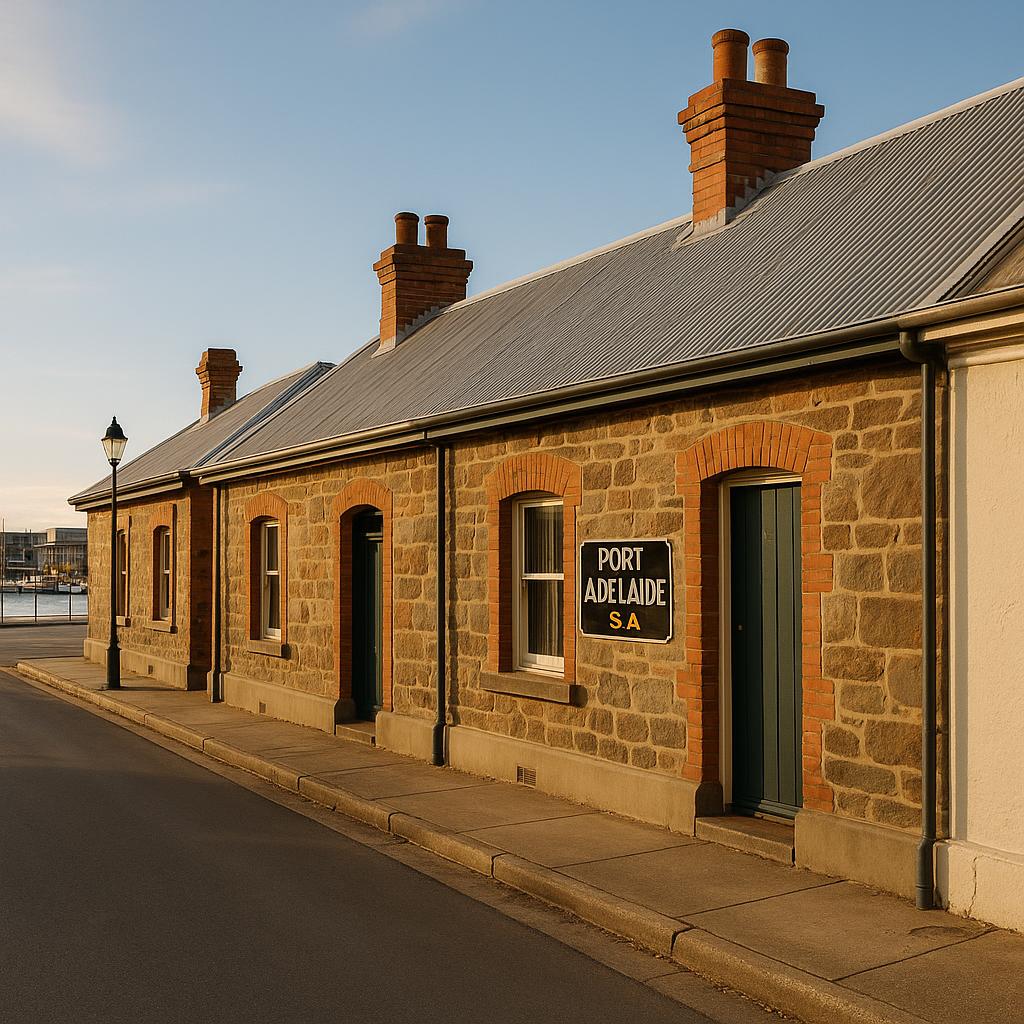
Port Adelaide is a historic waterfront and commercial centre with a strong maritime identity, and that history still shapes how the suburb performs today. The housing mix is varied: original cottages, terrace-style homes, renovated character dwellings, warehouse or conversion opportunities, and newer townhouse or infill product. That variety creates opportunity, but it also means buyers need to think in terms of specific pockets, not the suburb as one uniform market.
Demand tends to be driven by a combination of lifestyle appeal and practical access. Some buyers want the architecture and streetscape; others want access to employment, logistics, and transport links. That mix can support broad interest, but it also means the best-performing properties are usually the ones that solve a clear buyer problem: character with comfort, or convenience with low maintenance. Semaphore SA Property Market Guide: Buyers & Investors is a useful nearby comparison if you are weighing coastal lifestyle against Port Adelaide’s urban heritage feel.
For renovators, Port Adelaide can reward patience and disciplined due diligence. For investors, the suburb can make sense when the asset is easy to lease, sensibly maintained, and located in a pocket that avoids the worst practical downsides. It is not a cookie-cutter suburb; it behaves more like several micro-markets stitched together by history, renewal, and working-port influence.
Buyer Demand
Buyer demand is typically split between value-add purchasers and buyers who want a distinctive lifestyle address. First-home buyers may be drawn to relative value and the chance to buy character without paying premium inner-city prices, while owner-occupiers often want something more memorable than a standard estate home. Investors also pay attention because the suburb can attract a practical tenant base seeking convenience, affordability, and liveability.
The main demand driver is fit. Character-lovers prefer original homes and renovated cottages; practical buyers prefer lower-maintenance townhouses or well-updated dwellings. That distinction matters for resale as well as entry strategy. A home that photographs well but is expensive to maintain may have a narrower buyer pool than a simpler, well-located property with easier upkeep and clearer utility.
Rental Market
Rental appeal usually comes from convenience, condition, and low-friction living. In Port Adelaide, likely tenant groups can include workers in nearby industrial or commercial areas, young professionals, couples, downsizers, and some share-house arrangements depending on layout. Investors should be thinking about what tenants will tolerate day to day: parking, storage, heating and cooling, and access to public transport.
A tidy, functional townhouse or a renovated cottage with sensible upgrades will often lease more smoothly than a charming but awkward property with high maintenance needs. Older homes can work well if they are well presented and easy to live in, but underestimating repair costs or overcapitalising on niche cosmetic features can erode returns. The key is to match the asset to the likely tenant, not just the suburb story.
Lifestyle, Transport & Schools
Port Adelaide offers a layered lifestyle profile: historic streetscapes, waterfront atmosphere, local food and market culture, and an identity that feels more original than polished. That can be a major long-term draw for owner-occupiers and a meaningful support for tenant interest. Buyers should still walk the immediate streets, because amenity, noise, and street presentation can vary quickly block by block.
Transport is a practical strength, but the benefit depends on the exact pocket and your daily routine. Road connections can work well for commuting and logistics access, while public transport convenience should be checked street by street rather than assumed. For families, school preference can influence demand in particular pockets and property types, so verify zones and suitability directly before you buy. Adelaide SA Property Market Guide: Buyers & Investors can help if you are comparing Port Adelaide with inner-city alternatives.
A sensible buyer test is simple: do the commute at peak time, visit at different hours, and assess whether the home fits weekday life, not only weekend appeal. That matters here because character and atmosphere are part of the value proposition, but daily convenience determines whether the property actually works for you.
Port Adelaide Suburb Profile
Official 2021 Census snapshot for the ABS Suburbs and Localities geography.
Age profile
Housing tenure
Occupied private dwellings by tenure type.
Salary & income profile
Median total income reported in the Census.
*Annual figures are weekly median × 52 estimates, not separate ABS annual medians.
Education & qualifications
Highest educational attainment, people aged 15+.
Employment status
People aged 15+ who reported being in the labour force.
Industry of employment
Top responses among employed people aged 15 years and over.
Occupation profile
Broad occupation groups among employed residents, including managers.
Property Type Guide
- Heritage cottages and older character homes: Best for buyers wanting charm and renovation upside; inspect structure, services, and ongoing maintenance carefully.
- Renovated character homes: Suits buyers who want period feel with more convenience; check workmanship quality and how much original fabric remains.
- Townhouses and infill homes: Often the simplest choice for investors and busy owner-occupiers; confirm privacy, design quality, and any community-title style obligations.
- Warehouse or conversion-style properties: Offers strong visual identity and lifestyle appeal; verify heating/cooling, sound, layout usability, and resale depth.
- Which buyer type fits which asset: First-home buyers often prefer lower-maintenance townhouses, investors may favour updated cottages, and experienced buyers may target older homes with staged renovation potential.
Risks & Watch-Outs
- Check heritage and planning controls early, because renovation or demolition assumptions can be wrong in older pockets.
- Review flood, drainage, noise, and traffic exposure where relevant, especially near industrial or transport edges.
- Budget for older-building issues such as damp, ageing wiring, plumbing, roof repairs, and possible structural concerns.
- Do not assume the suburb-wide story guarantees rent or growth; tenant fit and street appeal still need to be proven.
- Use building and pest inspections, planning checks, and comparable sales research to reduce avoidable surprises.
Nearby Suburbs to Compare
- Semaphore — stronger coastal lifestyle comparison.
- Grange — broader beachside prestige and different buyer depth.
- Prospect — inner-suburban comparison for character and convenience.
- North Adelaide — higher-end inner-city benchmark for lifestyle-led buyers.
- Alberton — nearby practical alternative with different street character.
- Queenstown — useful value comparison close to the same employment and access network.
FAQ
Is Port Adelaide a good suburb for first-home buyers?
It can be, if you want character and some upside rather than a brand-new, low-risk product. First-home buyers should prioritise building condition, holding costs, and commute practicality. Verify repairs, insurance, and long-term maintenance before stretching the budget.
Is Port Adelaide better for investors or owner-occupiers?
It suits both, but for different reasons. Investors may value tenant convenience and relative affordability, while owner-occupiers often focus on uniqueness and lifestyle character. The best outcome usually comes from choosing a property type that aligns with the likely buyer or tenant pool.
What property types are most common in Port Adelaide?
You will generally see a mix of older cottages, renovated character homes, townhouse infill, and some conversion-style properties. That mix is important because each type has different maintenance, leasing, and resale characteristics. Always compare the specific building, not just the suburb’s reputation.
What should I check before buying an older home in Port Adelaide?
Start with a thorough building and pest inspection, then confirm planning and heritage constraints, drainage, and any signs of moisture or structural movement. It also helps to compare recent sales and speak with local agents about renovation potential in the exact street.
How do I compare Port Adelaide with nearby suburbs?
Compare property type mix, maintenance load, lifestyle feel, tenant appeal, and commute convenience. For example, Semaphore leans more coastal, while North Adelaide is a different inner-city benchmark. The best choice depends on whether you value character, convenience, or lower upkeep most.
Conclusion
Port Adelaide rewards buyers who understand micro-location, property condition, and the trade-off between charm and maintenance. It is a suburb that can make sense for renovators, practical investors, and lifestyle buyers who want something distinctive. If you want character and upside, it is worth deeper research. If you want low-maintenance certainty, compare property types carefully before committing.
Sources & How to Verify
- Check current sold results and active listings on Domain to confirm whether the property type you want is actually trading in the area.
- Review comparable sales and rental asking prices on realestate.com.au so you do not rely on stale pricing assumptions.
- Use the South Australian Country Fire Service and other official mapping resources to understand location-specific risk overlays where relevant.
- Check planning controls, overlays, and development rules through the SA Planning Portal before assuming renovation or redevelopment is straightforward.
- Review suburb and household context with the Australian Bureau of Statistics if you want a broader demographic picture, but pair it with on-the-ground inspection.
- Verify school zones, enrolment rules, and catchment boundaries using the SA Department for Education rather than relying on third-party summaries.
- Inspect transport options and commute assumptions against current official transport information on Adelaide Metro because convenience can differ by street and timetable.
- Walk the street at different times of day and compare noise, parking, traffic, and amenity, because liveability in Port Adelaide can change quickly over short distances.