Quick Answer
Zetland is a high-demand inner-south Sydney suburb that suits buyers who want apartment living, everyday convenience, and strong tenant appeal close to the CBD. It is generally best for people who value low-maintenance ownership, walkable amenity, and a modern urban setting rather than a detached-house lifestyle. For investors, the key is to assess building quality, strata health, and apartment usability carefully, because in Zetland the complex and floor plan often matter more than the postcode alone.
Key Takeaways
- Zetland is primarily an apartment market, so buyers should judge buildings, not just suburb reputation.
- Its main advantage is location efficiency, with practical access to employment hubs, retail, and transport connections.
- Investors should prioritise strata strength, defect history, and tenant-friendly layouts over cosmetic upgrades.
- Demand is typically supported by professionals, couples, downsizers, and first-home buyers seeking convenience.
- Always compare Zetland with nearby inner-south suburbs to understand whether the building, not just the suburb, is the better buy.
Pros & Cons
Pros
- Close-in urban location with strong day-to-day convenience.
- Large pool of renter demand from apartment-oriented households.
- Modern stock can offer security, lift access, parking, and lower maintenance.
Cons
- Detached houses are scarce, so land content is limited.
- Strata levies and building management quality can vary materially.
- Density, noise, and nearby construction can affect liveability in some pockets.
Market Overview
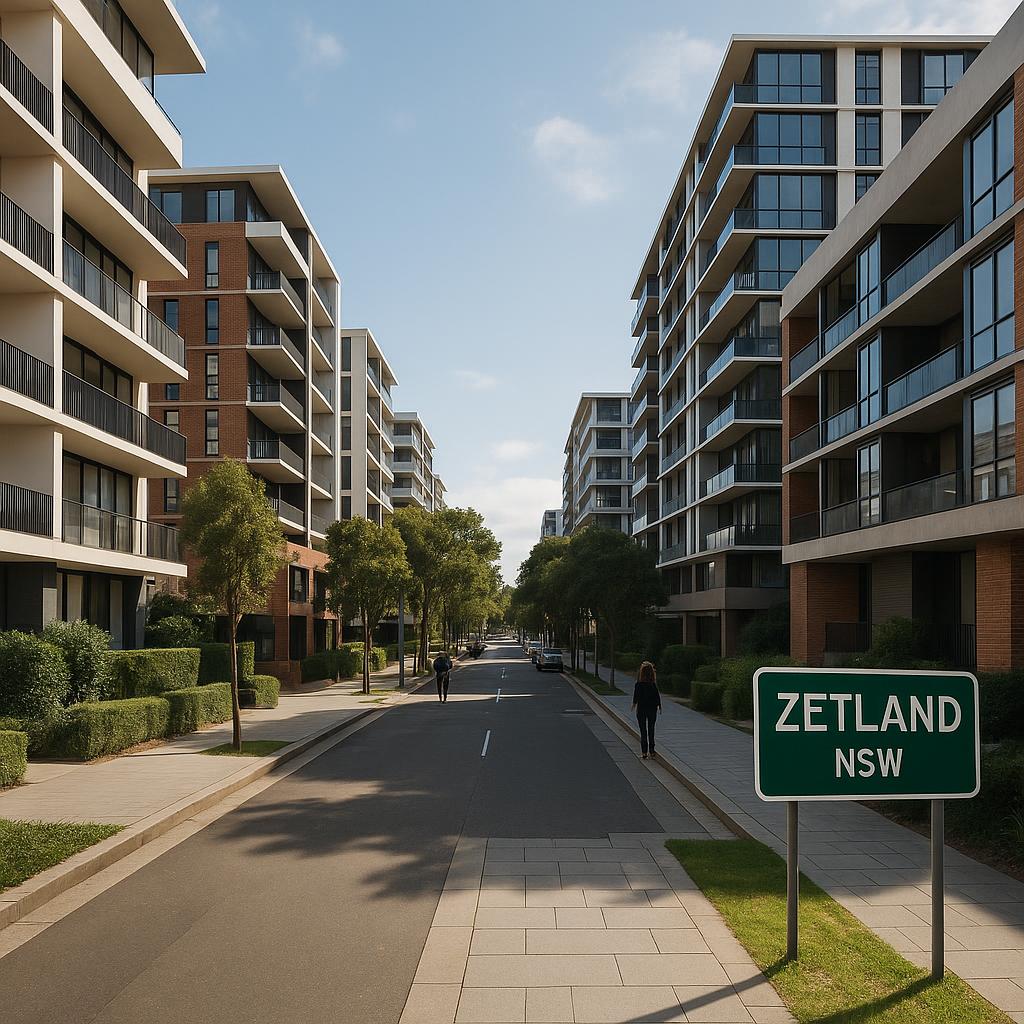
Zetland is an inner-south Sydney suburb shaped by apartment-led urban renewal. That matters because the market behaves less like a traditional family-house suburb and more like a dense, convenience-driven residential precinct. Buyers are usually paying for location efficiency, building quality, and access to amenity rather than backyard space or land value.
The local market is strongly influenced by strata living, newer developments, and the appeal of low-friction city living. In practical terms, the best properties are usually the ones with strong natural light, sensible layouts, good acoustics, and well-run strata arrangements. Buyers comparing stock here should think like apartment analysts, not just suburb hunters.
Zetland is often assessed alongside other inner-south apartment markets because its value proposition comes from proximity and functionality. A well-kept apartment in a reputable building can be far more compelling than a larger unit in a complex with weak maintenance or poor design. That is why due diligence is central in this suburb.
Buyer Demand
Demand in Zetland is typically supported by first-home buyers, owner-occupiers upgrading from older apartments, investors, and downsizers. These groups are drawn to the same core advantages: location, convenience, and modern housing. That creates a broad buyer base, which can help resale depth when a property is well presented and sensibly priced.
What tends to stand out is liveability rather than luxury. Buyers often compare natural light, storage, balcony usability, privacy, and whether the building feels calm or congested. A well-designed two-bedroom apartment with a practical floor plan may outperform a flashier option that feels awkward once you live in it.
Rental Market
Zetland usually has strong appeal for renters who want an easy commute and a modern apartment lifestyle. That includes professionals working in the CBD or nearby employment centres, couples sharing space, and small households that value convenience over large internal areas. For investors, this usually means tenant demand is less about novelty and more about practical everyday fit.
The best rental performers are generally apartments that present cleanly, have efficient layouts, and offer the basics tenants care about most: usable storage, good light, secure access, and proximity to transport and shops. A building with a strong reputation can also make leasing smoother, because renters often prefer certainty over a marginally cheaper option in a less appealing complex.
Lifestyle, Transport & Schools
Zetland offers an urban, apartment-centric lifestyle with easy access to everyday services, dining, and green space in the broader inner-south area. It suits people who like compact convenience and are comfortable living in a higher-density environment. That lifestyle profile is important for owner-occupiers, because long-term satisfaction often depends on whether the suburb matches daily routines.
Transport access is a major part of the suburb’s appeal, particularly for people commuting into the CBD or other major employment hubs. When you combine that with road connectivity and nearby amenity, you get a suburb that is designed around efficiency. For buyers, the key question is not simply “Is it well located?” but “Does the location actually save time in daily life?”
Families should take a careful view of schooling, childcare, and future space needs. Zetland is not typically chosen for a traditional detached-family streetscape, so buyers with children should assess commuting patterns, nearby education options, and whether apartment living will still suit them in three to five years. Verify school options using current official catchments and enrolment information before making assumptions.
Zetland Suburb Profile
Official 2021 Census snapshot for the ABS Suburbs and Localities geography.
Age profile
Housing tenure
Occupied private dwellings by tenure type.
Salary & income profile
Median total income reported in the Census.
*Annual figures are weekly median × 52 estimates, not separate ABS annual medians.
Education & qualifications
Highest educational attainment, people aged 15+.
Employment status
People aged 15+ who reported being in the labour force.
Industry of employment
Top responses among employed people aged 15 years and over.
Occupation profile
Broad occupation groups among employed residents, including managers.
Property Type Guide
- Modern apartments: The dominant stock type, usually best for buyers prioritising convenience and low maintenance.
- Near-new or off-the-plan product: Can be appealing, but buyers should assess defect risk, levies, and finish quality carefully.
- Boutique apartments: Often attractive for liveability if the building is well managed and the layout is efficient.
- Units with parking: Useful for owner-occupiers and many tenants, but only if access is practical and secure.
- Best features to prioritise: Natural light, cross-flow ventilation, storage, acoustic privacy, and sensible internal flow.
In Zetland, a smaller but better-designed apartment can be a smarter purchase than a larger one with poor orientation or awkward rooms. Building reputation matters as much as floor area because strata costs, maintenance standards, and long-term resale strength can differ sharply between complexes.
Risks & Watch-Outs
- Do not buy on presentation alone; glossy finishes can hide weak layouts or poor building fundamentals.
- Strata levies, special levies, and ongoing maintenance costs can change the true affordability of a property.
- Some apartment buildings may have defect, repair, or management issues that affect liveability and resale confidence.
- Noise, privacy, and density trade-offs can be more pronounced than buyers expect, especially in larger complexes.
- Undifferentiated stock can be harder to resell if many similar apartments compete in the same micro-market.
Nearby Suburbs to Compare
- Rosebery
- Waterloo
- Surry Hills
- Alexandria
- Darlinghurst
FAQ
Is Zetland a good suburb for first-home buyers?
Zetland can suit first-home buyers who want an inner-city apartment base and are comfortable with strata ownership. It is less suitable for buyers who want a freestanding house, large backyard, or low-density suburban feel. Focus on layout, ongoing costs, and building reputation.
Is Zetland a good suburb for investors?
It can be, because tenant demand is usually supported by location and convenience. The stronger investment cases are typically found in well-managed buildings with practical floor plans and good presentation. Investors should not rely on suburb demand alone; building fundamentals matter more here.
What type of property performs best in Zetland?
Well-located apartments with efficient layouts, good natural light, and strong strata management are usually the most broadly appealing. In a dense apartment market, usability often matters more than size. A thoughtful two-bedroom apartment can attract better demand than a larger but awkward one.
What should buyers inspect most carefully?
Inspect the strata records, maintenance history, common property condition, building management, and any signs of defects or unresolved works. Also assess noise, airflow, storage, parking access, and how the apartment feels at different times of day. Those factors shape both lifestyle and resale value.
Is Zetland family-friendly?
It can work for some families, especially those who want urban convenience and minimal maintenance. However, it is primarily an apartment suburb, so families should think carefully about space, schooling, childcare, and long-term suitability. Verify local education options and daily logistics before buying.
Conclusion
Zetland is best understood as a convenience-led inner-south Sydney apartment market, not a classic house-and-land suburb. For buyers and investors, the winning approach is to prioritise building quality, liveable layouts, and strata strength over cosmetic appeal. If you compare carefully, Zetland can be a practical, high-demand location with broad lifestyle and rental appeal.
Sources & how to verify
- Check current sales evidence on Domain so you are comparing recent apartment outcomes rather than relying on stale asking prices.
- Review live listings and sold history on realestate.com.au to see how different buildings, floor plans, and parking options are performing.
- Use the NSW Government strata resources to understand levies, records, and the questions you should ask before buying into a complex.
- Check planning and development controls on the NSW Planning Portal to identify nearby projects that could affect noise, outlook, or future supply.
- Confirm transport access and service patterns through Transport for NSW so you are judging commute convenience using current official information.
- Use the NSW School Finder to verify catchments and school options rather than assuming a nearby school is automatically available.
- Review suburb-level demographic context through ABS Census data, but treat it as context only because housing demand depends on more than demographics.
- If you are serious about a specific building, obtain strata minutes, a conveyancer review, and a building and pest inspection before relying on any market summary.