Quick Answer
Darlinghurst NSW is a tightly held inner-city Sydney suburb that appeals to buyers and investors who want walkability, heritage character, and close access to the CBD. It is usually best approached as a property-type market, not a “buy anything in the suburb” market: apartment quality, terrace character, street position, and strata health can matter more than the postcode alone. For buyers, the key question is whether you value convenience and urban energy enough to accept noise, parking pressure, and limited space.
Key Takeaways
- Darlinghurst is an inner-city apartment and terrace market with strong lifestyle appeal and limited land supply.
- Demand is supported by CBD access, healthcare employment, dining, and transport convenience rather than family-home stock.
- Property choice matters: terraces suit character buyers, while apartments often suit investors and low-maintenance owner-occupiers.
- Street position, noise exposure, and strata quality can materially change value and day-to-day livability.
- The suburb suits buyers who prioritise location first, then assess costs, maintenance, and resale constraints carefully.
Pros & Cons
Pros
- Highly convenient inner-city location.
- Strong amenity for dining, services, and everyday living.
- Scarcity of character homes and well-located apartments supports long-term appeal.
Cons
- Noise and activity can be a drawback on busier streets.
- Parking and storage are often limited.
- Older buildings can bring strata risk and higher maintenance exposure.
Market Overview
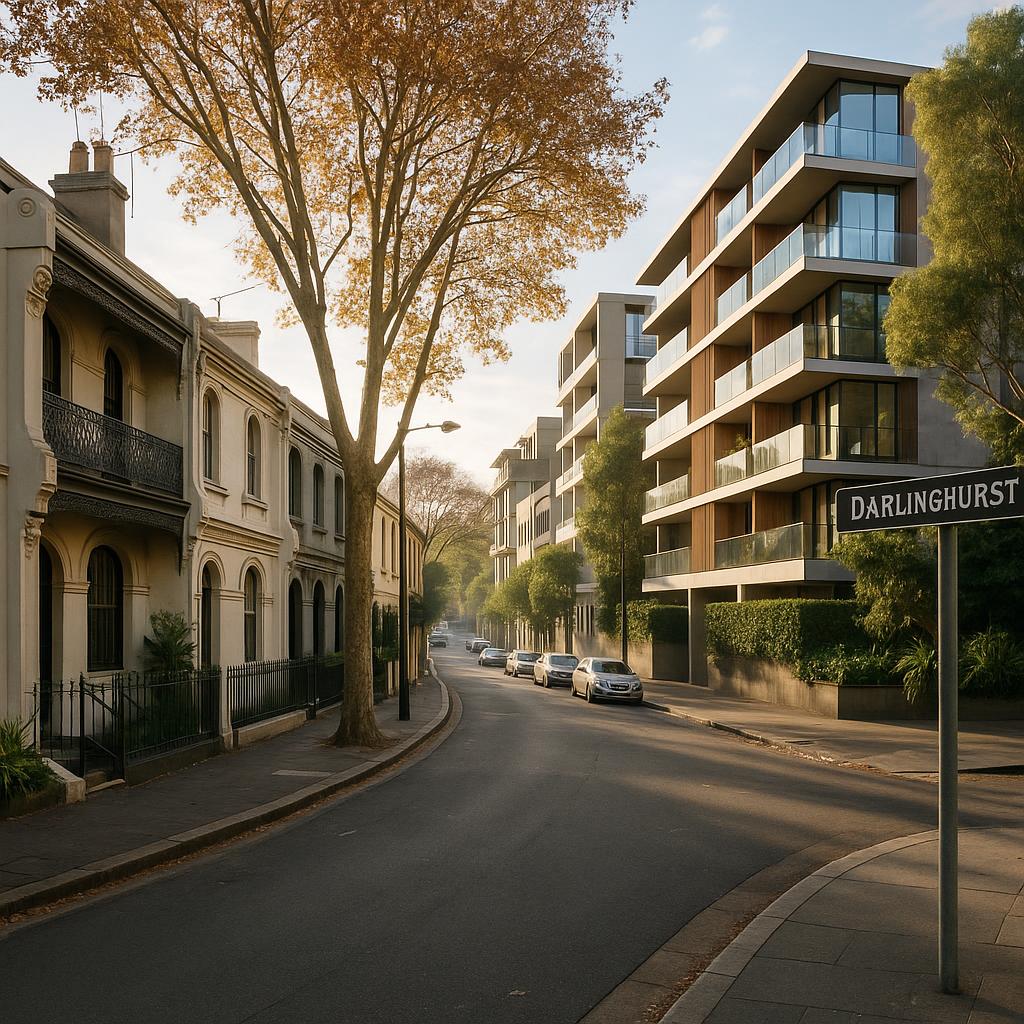
Darlinghurst sits close to the Sydney CBD and behaves like a compact urban market: apartments, terraces, and mixed-use buildings dominate, with only pockets of more residential feel. That matters because two properties that look similar on paper can perform very differently depending on street noise, outlook, light, and building upkeep.
For buyers, the suburb’s appeal comes from convenience and scarcity. You are not buying broad family land; you are buying access to an established inner-city lifestyle, with heritage character in many pockets and limited scope for large-scale change. That tends to keep demand focused on the best-presented, best-located stock.
In practical terms, Darlinghurst rewards disciplined selection. A quiet terrace or well-kept apartment can attract strong interest, while a poorly designed unit on a busy strip may feel compromised even if the address is prestigious. The suburb is best assessed street by street, building by building.
Buyer Demand
Buyer demand is usually driven by buyers who want to shorten their commute, walk to amenities, and live close to employment hubs, healthcare, and entertainment. That makes Darlinghurst attractive to professionals, couples, downsizers, and some first-home buyers entering through smaller apartments.
For owner-occupiers, the emotional appeal is often character and convenience. For investors, demand tends to come from the tenant profile more than the dwelling size: low-maintenance apartments, efficient layouts, and strong access to transport usually lease more smoothly than awkward or noisy stock.
Rental Market
Darlinghurst typically appeals to tenants who pay for location, not land size. The strongest rental demand usually comes from professionals, healthcare workers, and city-fringe renters who want a short, simple commute and a walkable lifestyle.
Investors should focus on presentation and functionality. Renovated interiors, secure entry, good light, and sensible floorplans generally rent better than dated units with poor storage or noise exposure. In this suburb, a smaller but smarter property often competes better than a larger compromise.
Lifestyle, Transport & Schools
Darlinghurst offers an urban lifestyle: cafés, restaurants, bars, galleries, services, and a busy street life. That energy is a major reason buyers choose it, but it is also why some streets can feel busy after hours. The best fit is for people who want convenience and activity rather than suburban calm.
Transport access is a genuine strength because it broadens the buyer and tenant pool. Many residents value walkability and public transport enough that car ownership becomes optional, although parking still influences resale and liveability. Buyers should check how easy it is to access daily needs without relying on a vehicle.
For schools, Darlinghurst is usually assessed in relation to nearby suburbs rather than as a classic family catchment. Families often compare access to education, commute patterns, and housing space with neighbouring areas. That makes Darlinghurst less of a family-house suburb and more of a lifestyle suburb that can suit some family configurations better than others.
Darlinghurst Suburb Profile
Official 2021 Census snapshot for the ABS Suburbs and Localities geography.
Age profile
Housing tenure
Occupied private dwellings by tenure type.
Salary & income profile
Median total income reported in the Census.
*Annual figures are weekly median × 52 estimates, not separate ABS annual medians.
Education & qualifications
Highest educational attainment, people aged 15+.
Employment status
People aged 15+ who reported being in the labour force.
Industry of employment
Top responses among employed people aged 15 years and over.
Occupation profile
Broad occupation groups among employed residents, including managers.
Property Type Guide
- Apartments: Best for investors, first-home buyers, and downsizers seeking lower maintenance and broad tenant appeal.
- Terraces: Best for buyers who value character, scarcity, and a stronger sense of place, provided they accept maintenance trade-offs.
- Boutique or converted buildings: Can suit buyers wanting something distinctive, but building history and layout need careful checking.
- Buy-to-live: Prioritise quietness, aspect, storage, ventilation, and the day-to-day practicality of the floorplan.
- Buy-to-rent: Prioritise tenant demand, strata quality, low maintenance, and a layout that photographs and leases well.
- Long-term hold: Focus on scarcity, building condition, and resale appeal rather than headline address value alone.
Risks & Watch-Outs
- Noise from nightlife, traffic, and busy connecting streets can reduce comfort and rental appeal.
- Older apartments may carry hidden maintenance issues, so strata records and building condition matter.
- Special levies or weak strata management can turn a “good buy” into an expensive hold.
- Parking scarcity can affect both daily convenience and future resale interest.
- Do not assume every Darlinghurst pocket performs the same; street-by-street variation is real.
Nearby Suburbs to Compare
- Surry Hills NSW Property Market Guide: Buyers & Investors
- Potts Point
- Paddington
- Redfern
- North Sydney
FAQ
Is Darlinghurst a good suburb for first-home buyers?
Yes, if you want an inner-city lifestyle and can accept apartment living, limited space, and potentially higher strata exposure. First-home buyers often do well here when they focus on layout, light, and noise rather than chasing size.
Is Darlinghurst better for investors or owner-occupiers?
It can suit both, but the strongest investment outcomes usually come from properties that lease easily to professionals and city-fringe tenants. Owner-occupiers may value character and walkability more, while investors should be stricter on strata and maintenance risk.
What property type is most common in Darlinghurst?
Apartments and terraces are the main forms of housing, often in older or converted buildings. That means buyers should assess building condition, heritage constraints, floorplan quality, and sound insulation instead of assuming all stock is comparable.
Is Darlinghurst suitable for families?
Sometimes, but it depends on the household’s expectations. Families who value location, amenity, and transport may find it workable, while those needing yards, more storage, and quieter residential streets may prefer nearby suburbs with more space.
What should buyers inspect most carefully in Darlinghurst?
Inspect noise exposure, natural light, ventilation, storage, and strata records. Also check how the building feels at different times of day, because a property that seems calm during one inspection may not feel the same in the evening.
Conclusion
Darlinghurst suits buyers and investors who prioritise location, lifestyle, and convenience over larger homes and suburban calm. The best results come from buying the right property type, in the right street, with proper due diligence on strata, noise, and building condition. In this suburb, the smartest purchase is usually the one that balances character, practicality, and long-term resale appeal.
Sources & How to Verify
- Check current listings and recent sold results on Domain so you are comparing the specific Darlinghurst pocket, not just a broad suburb average.
- Review comparable sales and rental asking prices on realestate.com.au to confirm whether a property’s asking price or rent is realistic today.
- Use NSW Planning to check zoning, heritage controls, and nearby development proposals that could affect future amenity.
- Confirm transport access and service changes via Transport for NSW rather than relying on informal maps or outdated assumptions.
- Look up local education options on NSW School Finder if schooling is part of your decision, and verify intake areas directly.
- Check demographic and household characteristics on ABS to understand the suburb’s resident profile without relying on hearsay.
- Request and read strata minutes, building reports, and levy history before buying any apartment so you can identify maintenance risk early.
- Inspect at different times of day and on different days of the week to assess noise, traffic, parking pressure, and overall liveability.