Quick Answer
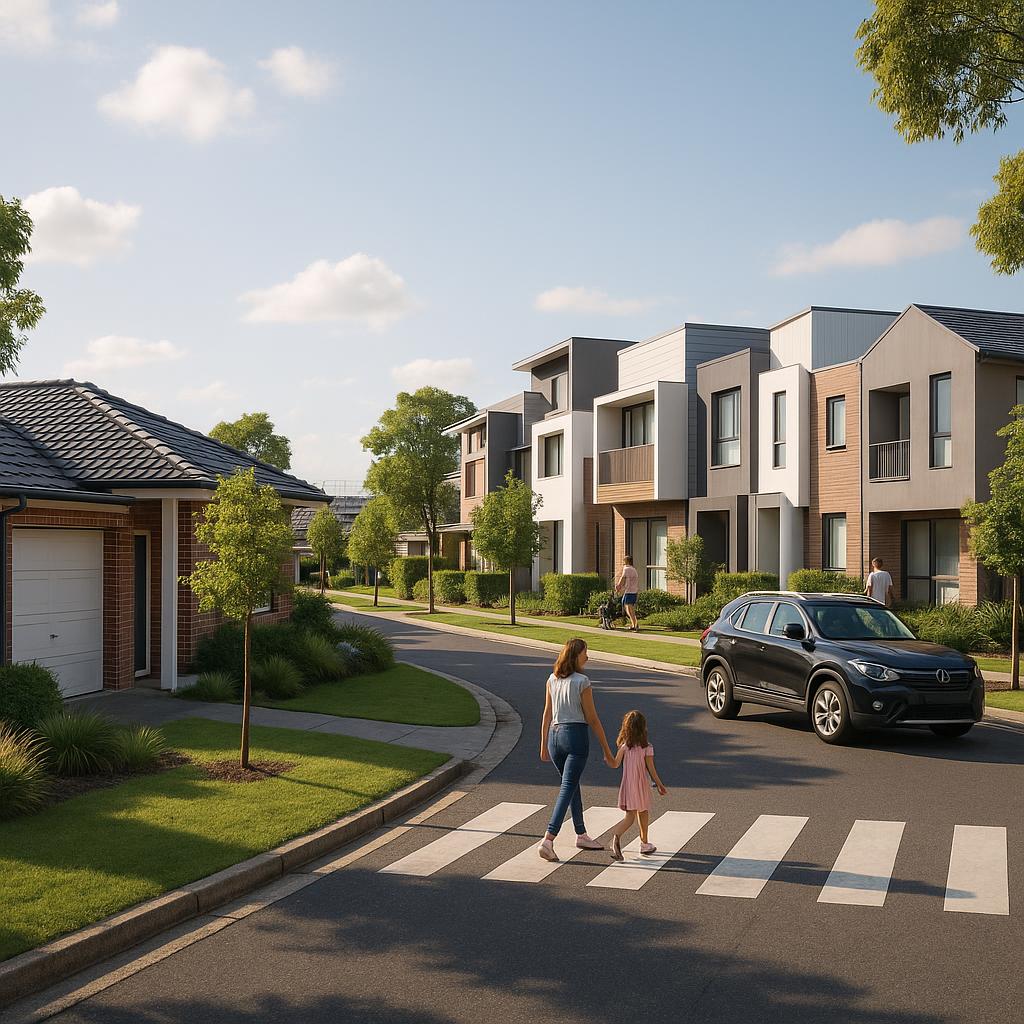
Rouse Hill suits buyers who want a family-oriented North West Sydney suburb with newer housing, practical amenity access, and broad appeal to owner-occupiers and renters. It is generally best for people who value liveability, transport convenience, and modern estates more than heritage character or inner-city convenience. For buyers, the main checks are exact location, build quality, and future costs such as strata or estate restrictions. For investors, the key is matching the property type to the local tenant profile and vacancy resilience.
Key Takeaways
- Rouse Hill sits in Sydney’s north-west growth corridor, so buyer interest is usually supported by ongoing population and infrastructure change.
- The suburb’s appeal comes from modern housing, family-friendly planning, retail convenience, and access to transport and community facilities.
- Owner-occupiers often dominate competition here, which can help resale depth for well-located homes and practical floorplans.
- Investors should compare detached houses, townhouses, and apartments carefully because each attracts different tenants, costs, and exit options.
- Exact pocket, commute convenience, and property quality matter more than suburb branding when assessing value and long-term performance.
Pros & Cons
Pros
- Strong family appeal supported by newer estates, parks, and everyday convenience.
- Good commuter relevance for buyers who want suburban space without sacrificing access to major routes and rail.
- Broad housing mix gives buyers multiple entry points and lets investors tailor strategy to budget and maintenance tolerance.
Cons
- Some pockets can feel uniform, especially where recent development has prioritised density and standardised design.
- Commute quality can vary materially by street, time of day, and access to transport or arterial roads.
- Strata fees, estate rules, and newer-building issues can reduce upside if buyers do not check the fine print.
Market Overview
Rouse Hill is best understood as a North West Sydney suburban market with a strong family focus, newer housing stock, and a convenience-led identity. It attracts buyers who want more space and modern planning than many established middle-ring suburbs, while still keeping access to major employment and retail nodes.
The suburb’s market character is shaped by owner-occupier demand, staged estate development, and the practical appeal of contemporary homes. That usually means buyers should assess the specific dwelling, street, and surrounding amenity rather than assuming every property in the suburb will perform the same way.
For investors, that mix matters because suburb strength does not automatically translate into every asset class. A well-located house, a low-maintenance townhouse, and an apartment in a strong building can all behave differently on resale and leasing, even within the same postcode.
Buyer Demand
Buyer demand in Rouse Hill is typically driven by households that want a functional suburban lifestyle: first-home buyers, young families, and upgraders are often active because the suburb offers contemporary homes and a relatively practical day-to-day environment.
Demand is usually strongest for properties that reduce friction in daily life: easy commuting, sensible layouts, usable outdoor space, storage, and proximity to retail and open space. In a suburb like this, buyers often pay for convenience and presentation, so due diligence should focus on fundamentals rather than surface appeal alone.
Rental Market
Rouse Hill’s rental story is generally attractive to investors because the suburb can appeal to a broad tenant base, especially households seeking modern dwellings and access to transport, shops, and family infrastructure. That diversity can support leasing depth when the property itself is well chosen.
The best rental performers are usually the homes that feel easy to live in: good natural light, low-maintenance finishes, practical parking, and layouts that suit couples or families. Investors should verify current asking rents and vacancy conditions on major portals before making assumptions about income potential, because rental performance changes by dwelling type and pocket.
Lifestyle, Transport & Schools
Rouse Hill is attractive to buyers who want a suburban lifestyle with day-to-day convenience rather than inner-city density. Shopping, parks, family services, and community amenities help the suburb feel practical for long-term living, which also supports resale appeal.
Transport is a major part of the suburb’s value proposition. Exact location within Rouse Hill can change how easy it is to commute, so buyers should test travel times during peak periods and compare rail, road, and parking options rather than relying on a map estimate.
For families, school access, childcare, and recreation are critical decision drivers. Always verify catchments and enrolment rules directly with official sources, because these can affect both lifestyle and buyer demand more than a general suburb reputation suggests.
Rouse Hill Suburb Profile
Official 2021 Census snapshot for the ABS Suburbs and Localities geography.
Age profile
Housing tenure
Occupied private dwellings by tenure type.
Salary & income profile
Median total income reported in the Census.
*Annual figures are weekly median × 52 estimates, not separate ABS annual medians.
Education & qualifications
Highest educational attainment, people aged 15+.
Employment status
People aged 15+ who reported being in the labour force.
Industry of employment
Top responses among employed people aged 15 years and over.
Occupation profile
Broad occupation groups among employed residents, including managers.
Property Type Guide
- Detached houses: Best for buyers wanting land, privacy, and long-term family utility. Check land size, orientation, build quality, and maintenance demands.
- Townhouses: A practical middle-ground for buyers seeking less upkeep than a house but more space than an apartment. Review strata costs and design efficiency.
- Apartments / units: Often suit entry-level buyers, downsizers, and tenants prioritising convenience. Building quality, management, and ongoing fees matter more than cosmetic presentation.
- For investors: Choose the dwelling type that matches likely tenant demand, expected vacancy tolerance, and your willingness to handle repairs or strata complexity.
Risks & Watch-Outs
- Do not buy on suburb reputation alone; the exact pocket, street, and surrounding uses can materially change livability and resale strength.
- Check strata records, building condition, and any special levies carefully if the property is part of a complex.
- Verify commute practicality at peak times, because travel stress can differ significantly from off-peak mapping estimates.
- Watch for estate covenants, uniform design controls, or development restrictions that may limit future improvements.
- In growth corridors, nearby construction and continued supply can affect noise, streetscape quality, and buyer competition.
Nearby Suburbs to Compare
FAQ
Is Rouse Hill good for first-home buyers?
Rouse Hill can suit first-home buyers who want a modern, family-friendly suburb with practical amenities and a range of dwelling types. The main discipline is buying the right property, not just buying into the suburb name. Compare location, strata, and future costs before committing.
Is Rouse Hill good for investors?
It can be, especially if you buy a property that matches the local tenant pool and keeps maintenance manageable. Investors should focus on rental depth, floorplan functionality, and commute convenience rather than expecting every asset in the suburb to perform equally well.
What type of property is best in Rouse Hill?
There is no single best asset class. Houses generally suit families and long-term owner-occupiers, townhouses often offer a balance of price and upkeep, and apartments can work where convenience and low maintenance are the priority. The best choice depends on your budget and exit plan.
How important is transport access in Rouse Hill?
Very important. Transport access affects daily convenience, buyer competition, and rental appeal. In suburbs like this, small differences in distance to rail, roads, and parking can change how a property is valued. Test realistic commute times before making an offer.
What should I verify before buying in Rouse Hill?
Check school catchments, transport options, strata or estate rules, building quality, surrounding development, and recent comparable sales. Also confirm whether the property’s presentation reflects genuine quality or just cosmetic upgrades. Those checks help avoid overpaying for features that do not hold value.
Conclusion
Rouse Hill is a practical North West Sydney suburb for buyers and investors who value modern living, family functionality, and access to established amenity. The best results usually come from careful property selection, not broad assumptions. If you compare pockets, dwelling types, and holding costs properly, the suburb can offer solid long-term relevance.
Sources & how to verify
- Check current listings and recent sold results on Domain to see how property type, condition, and location are being priced right now.
- Review comparable sales and rental activity on realestate.com.au so you can compare asking prices with actual market behaviour.
- Use Transport for NSW to verify rail, bus, and network updates before assuming commute convenience.
- Confirm zoning, planning controls, and development applications via the NSW Planning Portal because nearby projects can affect outlook and livability.
- Check school catchments and enrolment guidance through NSW Department of Education rather than relying on informal maps or agent descriptions.
- Use City of Parramatta or the relevant local council information to review local planning matters, amenities, and community updates.
- If buying a townhouse or apartment, request strata reports and review levies, sinking fund health, and insurance details before exchanging contracts.
- Because suburb conditions change, verify all data with current sources and a local agent or property manager before making a purchase decision.