Quick Answer
Rundle Mall is not a conventional residential suburb, but its surrounding CBD location can suit buyers who value walkability, low-maintenance living, and immediate access to Adelaide’s retail and employment core. For investors, the appeal is tenant access, short-commute convenience, and broad demand from professionals, students, and city-focused renters. The main decision is not just location, but whether the specific building, strata, and apartment layout support liveability, privacy, and resale.
Key Takeaways
- Rundle Mall is a central CBD precinct, so property value depends heavily on building quality, not just the address.
- Convenience is the main advantage: shopping, work, dining, and transport are all close, which supports tenant and owner-occupier demand.
- Apartment selection matters more here than in many suburban markets because noise, strata, and access can change the living experience.
- Investors should focus on tenant depth, low-maintenance appeal, and resale flexibility rather than chasing headline location appeal alone.
- Buyers should verify strata records, parking, soundproofing, and street-level activity before making an offer.
Pros & Cons
Pros
- Excellent access to retail, dining, services, and public transport in the heart of Adelaide.
- Strong appeal for city workers, students, downsizers, and low-maintenance lifestyle buyers.
- Central locations can hold long-term relevance because land is scarce and convenience is hard to replicate.
Cons
- Noise, pedestrian traffic, and privacy can be more challenging than in suburban settings.
- Strata fees and building maintenance costs can materially affect holding costs and net returns.
- The wrong building can underperform even in a strong location if access, layout, or management are poor.
Market Overview
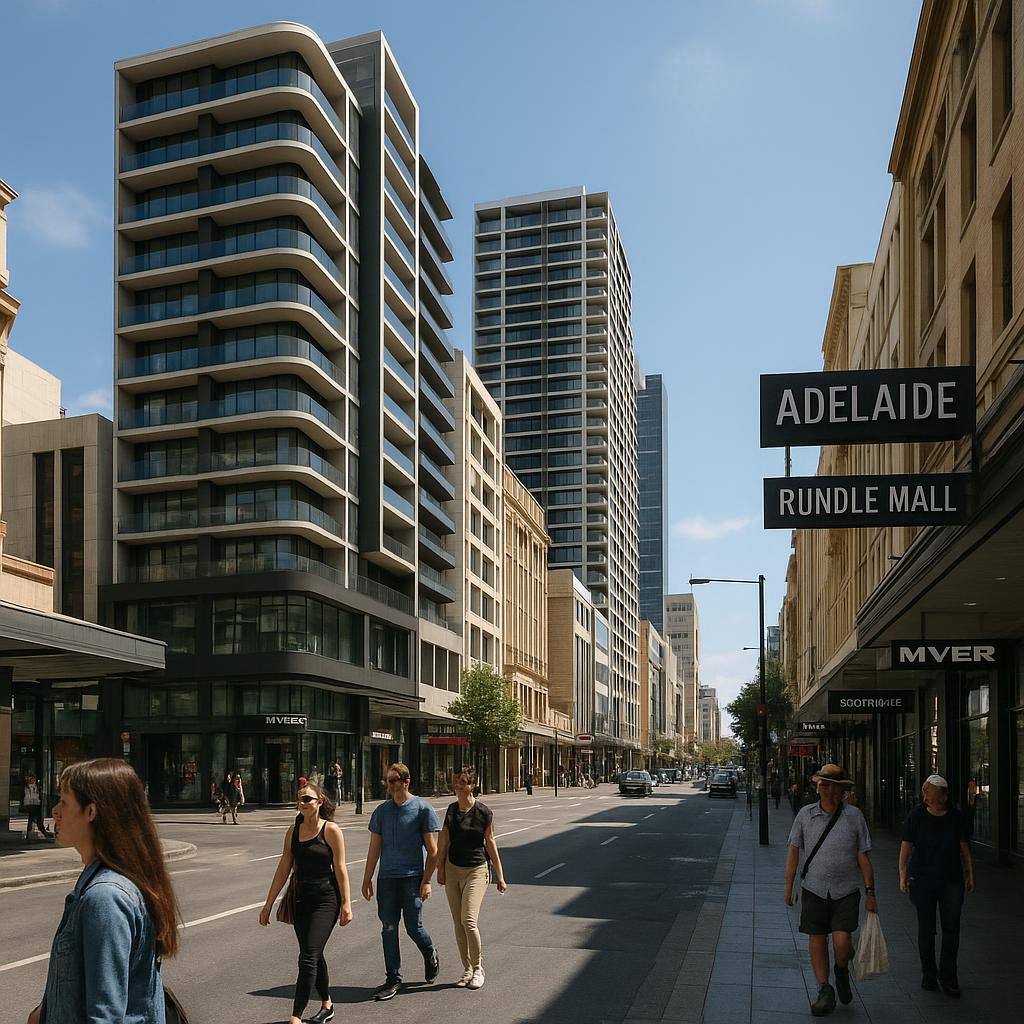
Rundle Mall sits at the retail heart of Adelaide, so its property story is really about CBD living, mixed-use stock, and the surrounding apartment market. It is best understood as a convenience-led urban precinct rather than a family-house suburb. That makes it attractive to people who want to live close to everything and are comfortable with density.
The market here tends to be shaped by building quality, apartment configuration, and the immediate streetscape. A modern, well-managed apartment can feel very different from an older building above late-night activity. For investors and owner-occupiers alike, the best approach is to judge the asset on livability and strata fundamentals first, then location second.
Supply is also different from suburban areas: there is less land, more vertical housing, and more competition between buildings rather than detached homes. That means buyer comparisons often come down to outlook, security, parking, and amenity use rather than block size or backyard appeal.
Buyer Demand
Demand is typically strongest from buyers who benefit directly from centrality. That includes professionals working in or near the CBD, downsizers wanting a simpler lifestyle, and investors targeting tenant-rich city accommodation. The common thread is convenience.
Interest also comes from buyers who want a practical base rather than a large dwelling. A well-located apartment with secure entry, sensible floor plan, and decent natural light can appeal across multiple buyer groups, which supports resale flexibility.
Rental Market
The rental appeal is broad because the location reduces commute friction and supports a car-light lifestyle. Students, city workers, short-term residents, and professionals can all be viable tenant profiles depending on the building and apartment type.
For investors, the strongest rental candidates are usually low-maintenance apartments with good access, reasonable noise levels, and layouts that suit singles, couples, or sharers. Verify current rent levels, vacancy trends, and tenant preference by comparing active listings and recent leased results rather than relying on older assumptions.
Lifestyle, Transport & Schools
Lifestyle is the main drawcard. Residents are close to major shopping, cafés, cultural venues, and everyday services, which is ideal for buyers who want activity and convenience. The trade-off is that the urban environment can feel busier and less private than a suburban street.
Transport is a strength because CBD connectivity usually broadens the tenant pool and improves day-to-day flexibility. Buyers who do not want to rely heavily on a car may place high value on walkability and public transport access. If parking is included, it can be a meaningful advantage for both resale and rentability.
Schools are less central to the area’s core appeal than they would be in a family-oriented suburb. Families should verify catchments, travel time, and the practicality of daily school runs using official sources. For most buyers here, the key question is whether the property supports an urban lifestyle rather than a traditional suburban family pattern.
Property Type Guide
- Apartments: The most relevant stock type. Best suited to low-maintenance buyers and investors, but inspect strata costs, soundproofing, and common-area upkeep carefully.
- Mixed-use properties: Can offer convenience and strong location value, but buyers need to understand access, activity levels, and any potential noise from commercial tenancies.
- Older stock: May offer more space or character, but often needs deeper due diligence on maintenance history and building performance.
- Newer stock: Often better for security, efficiency, and presentation, though not automatically superior if strata costs are high or layouts are poor.
- Investment fit: The best choice is usually the property that matches tenant demand in that exact building, not just the general CBD location.
Risks & Watch-Outs
- Noise from retail activity, traffic, events, and evening foot traffic can affect sleep quality and tenant satisfaction.
- Body corporate complexity can be a major issue, especially where fees, maintenance, or governance are poorly handled.
- Parking scarcity may reduce owner-occupier appeal and narrow the buyer pool for future resale.
- Some properties look strong online but feel very different once you assess lift access, common areas, and street-level ambience.
- Do not assume every central apartment will lease easily; tenant demand still depends on layout, presentation, and building reputation.
Nearby Suburbs to Compare
FAQ
Is Rundle Mall a good place to buy property?
It can be, but only if the property suits your goal. The area is strongest for buyers who value central convenience, low-maintenance living, and easy access to the CBD. The building itself matters just as much as the location.
Is Rundle Mall better for investors or owner-occupiers?
Both can do well, but for different reasons. Investors often like the broad tenant pool and centrality, while owner-occupiers value walkability and convenience. The best choice depends on whether the apartment delivers comfort, access, and manageable holding costs.
What property type works best near Rundle Mall?
Apartments are usually the most relevant stock because the area is dense and urban. Mixed-use properties can also work, but they need careful assessment. Focus on layout, security, parking, noise control, and the ongoing costs attached to the building.
What are the main risks for buyers?
The main risks are noise, privacy, strata expenses, and building management quality. In a central precinct, an attractive address does not guarantee a good living experience. Always inspect the apartment, common areas, and documents before committing to a purchase.
How should I compare Rundle Mall with nearby inner-city areas?
Compare the specific building stock, tenant profile, walkability, parking, and noise exposure rather than just the suburb name. Two nearby precincts can produce very different outcomes depending on how residential the streets feel and how well the building is maintained.
Conclusion
Rundle Mall is best viewed as a convenience-first CBD location with strong appeal for urban buyers and investors. The upside is accessibility and tenant depth; the trade-off is density, strata complexity, and building-specific risk. If you inspect carefully and compare the real asset, not just the postcode, it can be a practical long-term hold.
Sources & how to verify
- Check current sales evidence on Domain to compare similar apartments and understand how building quality affects pricing.
- Review rental listings on realestate.com.au to gauge tenant demand, competing stock, and which layouts lease fastest.
- Use the City of Adelaide website to check precinct plans, local amenity, and any works that may affect access or amenity.
- Confirm zoning and planning details through PlanSA so you understand permitted uses and any redevelopment implications.
- Inspect title, easements, and relevant property records with Land Services SA before relying on marketing material alone.
- Verify public transport routes and service patterns via the Adelaide Metro site, especially if you are buying for car-light living or tenant convenience.
- Check school catchments and enrolment information on official education sources rather than third-party summaries, particularly if family buyers are part of your target market.