Quick Answer
City West Campus can suit buyers and investors who value inner-city convenience, walkability, and low-maintenance living more than land content. Its appeal is strongest for apartments and compact dwellings tied to education, employment, and city-edge demand. It is less suitable if you want a backyard, quiet suburban streets, or detached-house capital growth. The key is to assess the individual building, strata health, parking, and tenant fit rather than relying on the precinct name alone.
Key Takeaways
- City West Campus is a tightly defined city-fringe precinct where convenience, access, and low-maintenance living usually matter more than land size.
- The strongest buyer pool is typically students, professionals, and investors who want a simple, well-located base near Adelaide’s CBD.
- Apartment quality, strata management, and floorplan efficiency can have a bigger impact here than in conventional suburban markets.
- Rental demand is usually supported by education and employment proximity, but tenant expectations still favour practical layouts and easy access.
- Compare it carefully with nearby inner-west and CBD-edge suburbs before buying, because each micro-market offers a different balance of lifestyle and liquidity.
Pros & Cons
Pros
- Central location with strong convenience for CBD access, study, and day-to-day errands.
- Compact dwellings can suit investors and owner-occupiers who prefer low-maintenance living.
- Walkability and public transport access can reduce reliance on car ownership.
Cons
- Limited land-based housing means less appeal for buyers chasing house-and-yard living.
- Strata fees, by-laws, and building maintenance can materially affect net returns and flexibility.
- Noise, density, and parking constraints may reduce comfort for some households.
Market Overview
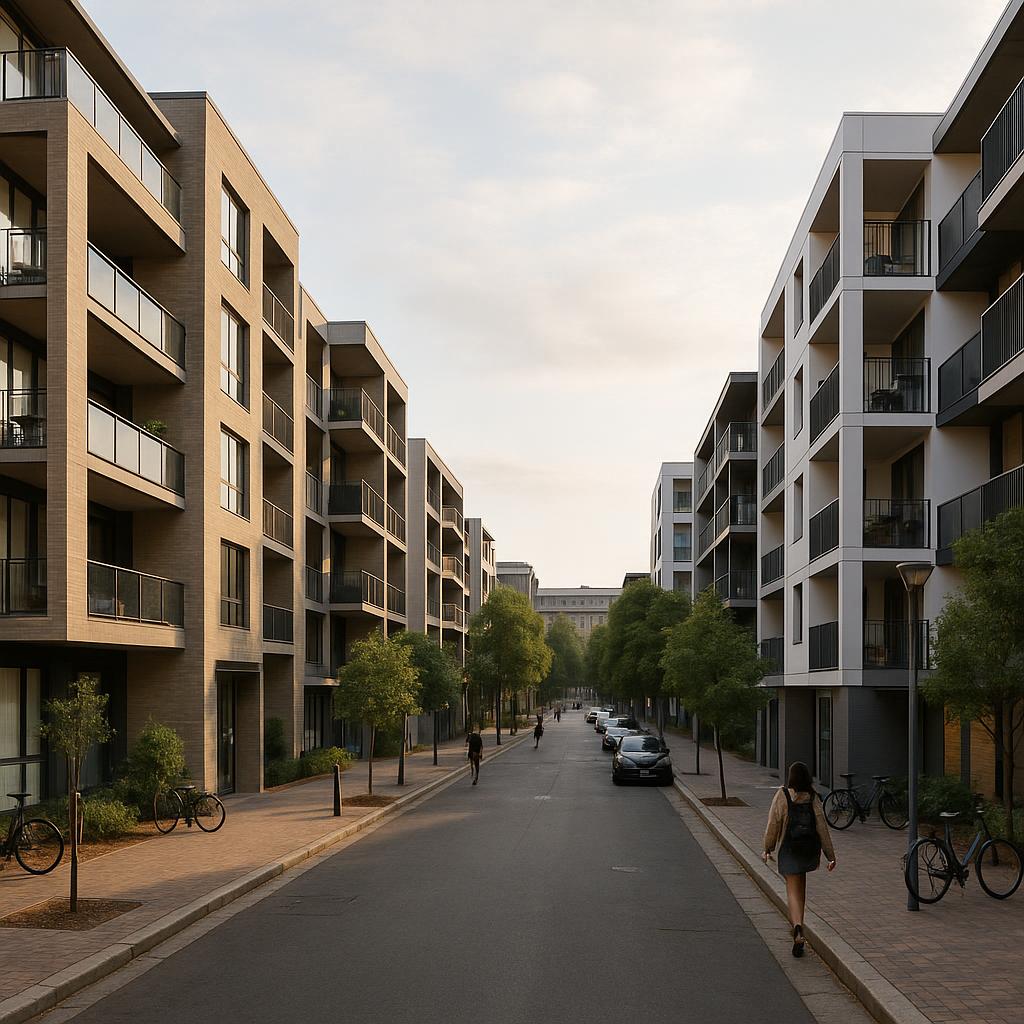
City West Campus is best understood as a compact, city-fringe precinct in Adelaide’s inner urban fabric, shaped by education, mixed-use activity, and convenience-led living. The housing profile is typically apartment-heavy, with compact units and investor-friendly stock more common than traditional family homes. That means the market often behaves more like a building-by-building selection exercise than a broad suburb play.
For buyers, the precinct matters because demand is usually driven by practical access rather than prestige or land content. In a market like this, a smart floorplan, decent natural light, security, and manageable ongoing costs can matter more than cosmetic upgrades. Two similar-looking apartments can perform very differently if one has better orientation, parking, or strata governance.
Buyers often come here for one of three reasons: study, work, or investment convenience. A first-home buyer may trade space for less commuting friction, while an investor may prefer a lower-maintenance dwelling that is easier to lease and manage than a house in a more dispersed suburb.
Buyer Demand
Demand tends to cluster around people who value access over land: students, young professionals, downsizers, and investors seeking a straightforward tenant base. That makes the precinct relatively niche, but also logically demand-supported when the building and location are genuinely convenient.
What matters most is tenant and owner-occupier fit. Properties with practical layouts, parking or strong transit access, secure entry, and reasonable ongoing costs usually attract more attention than overcapitalised finishes. Demand can soften quickly if a building feels tired, awkward, or expensive to hold.
Rental Market
The rental market is usually underpinned by education-linked demand, city-adjacent workers, and tenants wanting low-hassle living close to services. Smaller dwellings with efficient layouts often suit this audience best, especially when they offer security, light, and sensible storage.
For landlords, the main question is not just “what rent can I get?” but “how broad is the tenant pool for this specific building and layout?” A well-presented one-bedroom or compact two-bedroom apartment can be easier to lease consistently than a larger but less functional property. Verify current asking rents and vacancy patterns through live listings, not old assumptions.
Lifestyle, Transport & Schools
Lifestyle here is urban, compact, and convenience-first. That suits people who want to walk, use public transport, or keep commuting simple. It is less suited to buyers who prioritise quiet streets, large private outdoor space, or a conventional suburban rhythm.
Transport access is a major lifestyle lever in this precinct, particularly for car-light residents and tenants who do not want the burden of heavy parking dependence. Proximity to the CBD, nearby amenities, and reliable public transport can be a daily advantage, especially for irregular work hours or study schedules.
On schools, this is not a family-suburb story in the usual sense, but education access still matters because it shapes demand and liveability. Families should always verify catchments, enrolment rules, and current school information directly with official sources before making decisions. In inner-city markets, the education ecosystem often influences both rental and ownership demand.
Property Type Guide
- Best for owner-occupiers: Well-maintained apartments with good natural light, secure access, and a practical layout.
- Best for investors: Low-maintenance dwellings with broad tenant appeal, simple upkeep, and manageable strata costs.
- Best for first-home buyers: Entry-level apartments that balance affordability with liveability and resale flexibility.
- Inspect closely: Building condition, common-area presentation, strata minutes, lift access, ventilation, and parking usability.
- Be cautious with: Awkward floorplans, weak storage, high ongoing levies, and buildings with visible deferred maintenance.
Risks & Watch-Outs
- Strata levies and special contributions can erode returns if the building has poor reserves or major works ahead.
- Noise, density, and privacy issues can affect both liveability and leasing outcomes in compact urban buildings.
- Some stock has limited land component, so long-term performance may depend more on the building than the broader precinct.
- Parking scarcity or awkward car access can narrow the buyer and tenant pool, especially for car-dependent households.
- Rental concentration risk can emerge if too much nearby stock targets the same student or inner-city tenant segment.
Nearby Suburbs to Compare
FAQ
Is City West Campus a good place for first-home buyers?
It can be, if your priority is location, convenience, and lower-maintenance living rather than space. First-home buyers should focus on layout quality, strata costs, and whether the apartment suits their daily routine and future resale options.
Is City West Campus better for investors or owner-occupiers?
It can work for both, but the strongest fit is often for buyers who accept apartment living. Investors may like the tenant depth linked to education and city access, while owner-occupiers benefit if they want walkability and minimal upkeep.
What type of property is most common here?
Expect apartments, units, and other compact urban dwellings rather than detached houses. In this kind of precinct, the building itself matters a great deal, so inspect common areas, strata records, and the floorplan before judging value.
How does the rental market work in a campus-style area?
Rental demand usually comes from students, workers, and other tenants who want practical access to the CBD and education precincts. Well-designed, easy-to-maintain dwellings generally lease more smoothly than awkward layouts or expensive-to-run properties.
What should I inspect before buying an apartment here?
Check strata minutes, levies, building maintenance, parking access, security, natural light, ventilation, and noise transfer. Also compare the apartment against nearby buildings, because one tower or complex can perform very differently from another nearby.
Conclusion
City West Campus is a niche but logical choice for buyers who prioritise access, convenience, and low-maintenance living. It can be a strong fit for investors and owner-occupiers alike, provided the building is sound and the strata environment is reasonable. Success here depends less on the precinct name and more on the individual apartment, its layout, and its ongoing costs.
Sources & How to Verify
- Check current listings and recent sold evidence on Domain so you are not relying on outdated price expectations.
- Review live asking rents on realestate.com.au to understand what tenants are actually paying for similar stock.
- Use the Australian Bureau of Statistics to confirm broader demographic and household trends before making assumptions about demand.
- Check planning and zoning information through SA Government planning and property so you know what future development may be possible nearby.
- Verify transport services and route frequency with Adelaide Metro because service levels can change and affect car-light living.
- Confirm school enrolment details using official education sources, since catchments and intake rules can change and should not be guessed from proximity alone.
- Ask the strata manager for records, levies, by-laws, and capital works plans, because building costs can materially change the real holding cost of an apartment.
- Cross-check the same property against nearby suburbs and multiple buildings, because in city-fringe markets the building often matters more than the suburb label.