Quick Answer
Mile End suits buyers who want inner-west Adelaide convenience without living in the CBD itself. It is typically appealing for owner-occupiers, downsizers, and investors who value short commute times, established streets, and a mixed housing stock that can suit different budgets and strategies. The suburb is often compared with other inner-west locations, but it has a more practical, lived-in feel than a polished lifestyle postcode. Best for owner-occupiers who want access and convenience, investors who want tenant demand from location, and buyers who prefer established streets over new estates.
- Close-to-CBD positioning gives Mile End strong day-to-day practicality and broad buyer interest.
- Housing stock varies, so condition, street position, and layout matter more than the suburb name alone.
- Some pockets suit low-maintenance living, while others reward buyers seeking character and long-term flexibility.
- Investors should focus on tenant appeal, noise exposure, parking, and ongoing maintenance rather than headline location only.
- Homeowners who value convenience, access, and established surrounds should keep Mile End high on the shortlist.
Key Takeaways
- Mile End is an inner-west suburb where proximity and convenience often drive buyer interest more than land size.
- The suburb’s mix of older homes, updated dwellings, and lower-maintenance options creates different opportunities for different budgets.
- Street-by-street variation is important here, especially for noise, traffic exposure, parking, and day-to-day livability.
- Investors should assess tenant appeal at the property level, not assume every Mile End listing rents equally well.
- If you are comparing suburbs, read Mile End alongside Plympton SA Property Market Guide: Buyers & Investors and Marion SA Property Market Guide: Buyers & Investors.
Pros & Cons
Pros
- Inner-west access makes commuting and daily errands easier than in many outer suburbs.
- Established housing stock can offer character, flexibility, and renovation potential.
- venience appeal can support both owner-occupier interest and rental demand.
Cons
- perty condition varies widely, so buyers must inspect carefully.
- Some streets are more exposed to traffic, noise, or mixed-use activity.
- The most attractive pockets can be tightly held, which may increase competition.
Who it suits: Buyers who prioritise access, established character, and practical liveability. Who may prefer elsewhere: Buyers chasing larger blocks, quieter suburban feel, or a more uniform new-home environment.
Market Overview
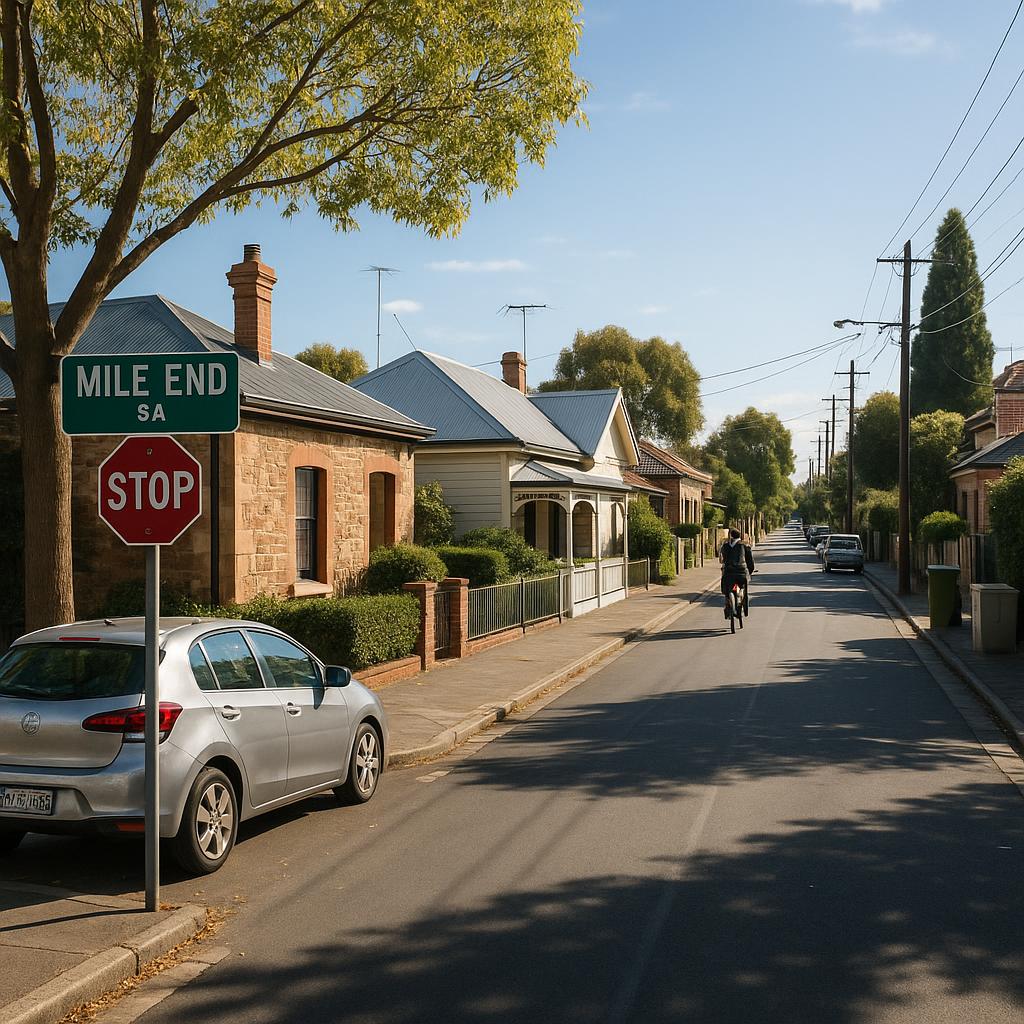
Mile End sits in Adelaide’s inner-west and appeals because it combines near-city convenience with a more grounded residential feel than the CBD fringe. The suburb has a mixed profile: some streets feel quiet and established, while others are influenced by traffic, commercial edges, or broader urban activity. That variation is exactly why property-level due diligence matters here.
From a market perspective, Mile End is not a one-size-fits-all suburb. Older homes, renovated dwellings, units, and low-maintenance options can attract different buyers and renters, so the “right” property depends on whether you value character, simplicity, or upside. A renovated home on a quieter street may appeal to an owner-occupier wanting comfort, while a compact dwelling near key amenities may better suit an investor focused on ease of leasing.
For buyers, the key is to separate suburb reputation from the realities of the actual block, building, and street. If you want character and convenience, focus on condition, parking, and privacy. If you want low-maintenance and broad tenant appeal, prioritise functional layouts, sensible upkeep, and easy access to services.
Buyer Demand
Demand in Mile End tends to come from buyers who value location efficiency: people who want shorter travel times, established surroundings, and access to everyday services without living in a high-intensity city core. That creates interest from both lifestyle buyers and practical purchasers.
The strongest demand usually follows well-presented properties in quiet, convenient pockets. Buyers should expect more competition where the home is move-in ready, the layout works, and the street feels calmer. As a result, inspecting a broader comparison set is smart, especially if you are trying to balance price, condition, and commute convenience.
Rental Market
For investors, Mile End’s rental appeal is less about flashy amenity and more about efficient living. Tenants who want an easy commute, reliable access to services, and a low-maintenance home are often drawn to suburbs like this. Well-kept properties with practical layouts and secure parking tend to be easier to present and lease.
Older homes can still perform well, but they need stronger maintenance and presentation to compete. Investors should think carefully about the likely tenant profile for each property type, then match the finish level and upkeep budget to that target renter. A tidy, functional dwelling often leases more smoothly than a larger home that requires ongoing repairs or compromises on noise.
Lifestyle, Transport & Schools
Mile End offers a practical lifestyle rather than a resort-style one. The appeal is everyday convenience: access to the city edge, nearby retail, and a suburb feel that is still connected to Adelaide’s broader urban core. For many residents, that means less time in the car and more predictable weekday routines.
Transport connectivity is a major part of the suburb’s value. Main road access can be an advantage for commuting, but it can also create trade-offs in noise and traffic exposure. Buyers should test travel times during the hours they would actually use them, rather than relying on map estimates alone.
For families, school access is important, but it should be verified directly because catchments and enrolment rules can change. Do not assume every part of Mile End offers the same school convenience. A home that looks ideal on paper may fall outside the schools you want, so check official sources before committing.
Mile End Suburb Profile
Official 2021 Census snapshot for the ABS Suburbs and Localities geography.
Age profile
Housing tenure
Occupied private dwellings by tenure type.
Salary & income profile
Median total income reported in the Census.
*Annual figures are weekly median × 52 estimates, not separate ABS annual medians.
Education & qualifications
Highest educational attainment, people aged 15+.
Employment status
People aged 15+ who reported being in the labour force.
Industry of employment
Top responses among employed people aged 15 years and over.
Occupation profile
Broad occupation groups among employed residents, including managers.
Property Type Guide
- Character homes: Good for buyers who want personality and long-term owner-occupier appeal, but inspect for maintenance and future repair costs.
- Units / low-maintenance dwellings: Often suit investors and busy professionals who prioritise simplicity, leasing flexibility, and easier upkeep.
- Renovated homes: Attractive for buyers wanting immediate comfort, though renovation quality and hidden defects still need checking.
- Older homes with value-add potential: Can suit strategic buyers, but only if the layout, structure, and site position justify the upgrade cost.
- Best-fit rule: Match the property type to your timeline, tolerance for work, and exit strategy rather than buying by postcode alone.
Risks & Watch-Outs
- Noise and traffic exposure can materially affect livability, especially near busier corridors or mixed-use edges.
- Older homes may look charming but can bring hidden maintenance, compliance, or repair costs.
- Renovation-heavy purchases can disappoint if the uplift does not justify the full cost of works.
- Rental appeal varies by property type, so investors should not assume location alone guarantees easy leasing.
- Parking, storage, and outdoor space can become deciding factors for both buyers and tenants in this suburb.
Nearby Suburbs to Compare
FAQ
Is Mile End a good suburb for first-home buyers?
It can be, especially for first-home buyers who value inner-west convenience and want an established suburb rather than a newer estate. The key is to focus on property condition, noise exposure, and whether the layout suits your longer-term plans.
Is Mile End better for investors or owner-occupiers?
It can work for both. Owner-occupiers often value the location and convenience, while investors may like the broad tenant appeal of a low-maintenance or well-presented property. The better choice depends on the exact property and your holding strategy.
What type of property is most common in Mile End?
The suburb has a mixed housing profile, which is part of its appeal. Buyers may find older homes, renovated dwellings, units, and other low-maintenance options. The right type depends on whether you prioritise character, simplicity, or value-add potential.
What should buyers inspect most carefully in Mile End?
Focus on noise, street exposure, parking, building condition, and practical layout. These details often matter more than the suburb name itself. In an established area like Mile End, the difference between a good and average property can come down to block position.
How does Mile End compare with nearby inner-west suburbs?
Mile End usually competes on convenience and access, while nearby suburbs may offer more residential calm, different housing stock, or stronger lifestyle appeal. Compare properties street by street rather than assuming one suburb is automatically better overall.
Conclusion
Mile End is best understood as a practical inner-west suburb with strong access, mixed housing stock, and real street-by-street variation. It can suit owner-occupiers, downsizers, and investors, but only if the property matches the buyer’s goals. The smartest approach is to inspect carefully, compare nearby suburbs, and verify the details that matter.
Sources & How to Verify
- Check current sale and rental listings on Domain to compare asking prices, property types, and presentation standards.
- Use realestate.com.au to review active listings and market activity, then compare them with similar nearby suburbs.
- Confirm planning controls and zoning through PlanSA before assuming future development or renovation options.
- Check suburb-level demographic context on ABS, but treat it as background only and not a substitute for property-specific research.
- Verify school catchments and enrolment rules with Education South Australia or the relevant school before relying on proximity alone.
- Review public transport routes and service frequency on Adelaide Metro to test commute practicality at the times you would actually travel.
- Arrange a building and pest inspection so you can confirm the real condition of older homes and identify repair risks before negotiating.
- Cross-check any investment assumption with recent comparable sales, local agents, and in-person inspections because street position can change value more than suburb branding.