Quick Answer
Angaston is a character-filled Barossa Valley township that can suit lifestyle buyers, local families, downsizers, and patient investors who value community and regional stability. It is generally a better fit for buyers prioritising livability, heritage appeal, and longer holding periods than for those chasing fast-turnover metro-style gains. The key is matching the property type to the likely end user and verifying condition, tenant depth, and local amenity access before you buy.
Key Takeaways
- Angaston suits buyers who want a township feel, regional character, and a slower pace rather than high-density suburban living.
- Demand is usually driven by lifestyle migration, local households, downsizers, and investors targeting durable regional rentals.
- Well-presented homes with practical layouts tend to attract broader interest than highly specialised or over-personalised properties.
- Character homes can be appealing, but buyers should budget for maintenance, upgrades, and inspection diligence.
- Smaller regional markets reward patience, careful property selection, and clear matching of the home to the likely occupant.
Pros & Cons
Pros
- Strong township identity and heritage appeal.
- Good fit for lifestyle buyers seeking a regional tree-change.
- Can suit low-turnover rental strategies if the property is practical and well maintained.
Cons
- Smaller market depth can limit choice and slow resale if the home is niche.
- Older dwellings may need ongoing maintenance and more detailed due diligence.
- Rental demand can be narrower than in larger centres, especially for unusual homes.
Market Overview
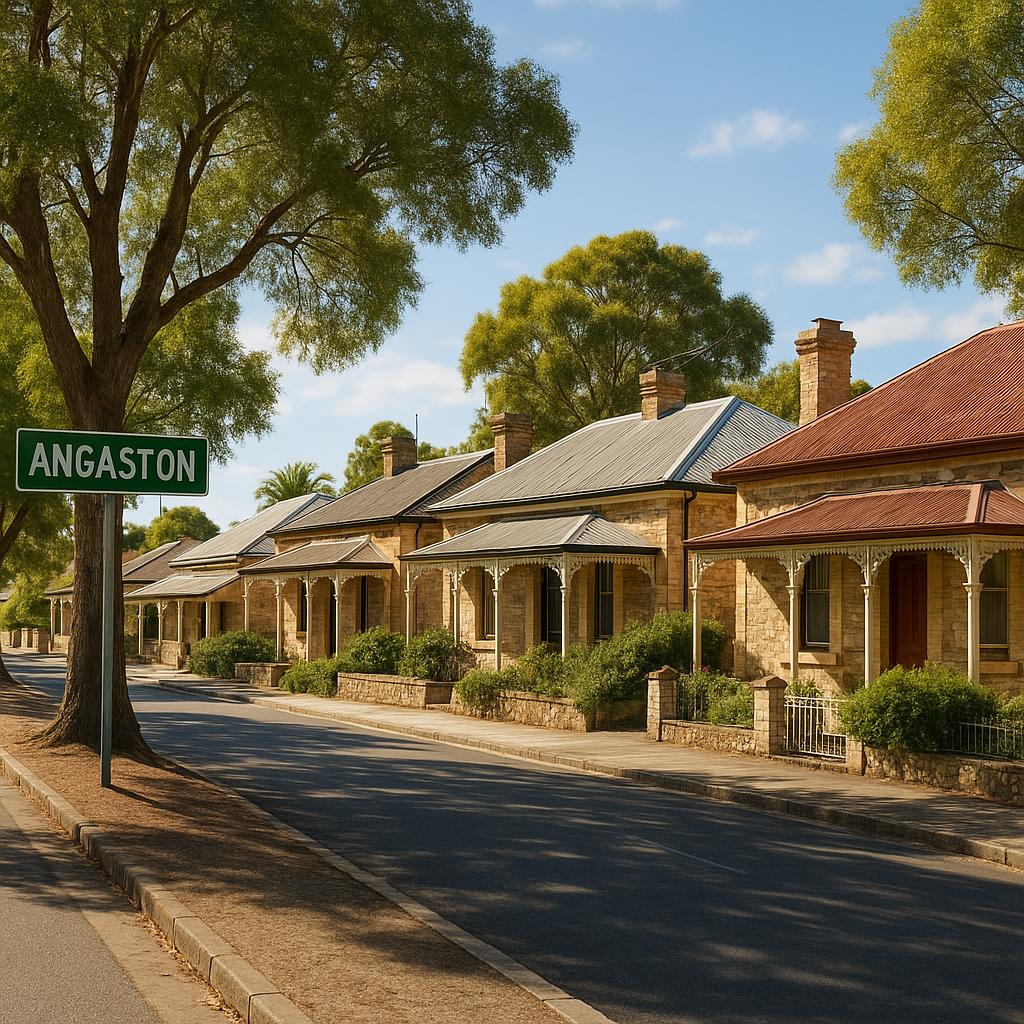
Angaston is a township-style market in South Australia’s Barossa region, with appeal built around community, heritage character, and its connection to nearby vineyards, agriculture, and tourism. It is not a metro-style market where every property type moves the same way; the local result depends heavily on presentation, land component, and how well the home fits everyday needs.
For buyers, that means the “best” property is often the one that balances charm with practicality. A renovated cottage near township services may draw broad interest, while a larger original-condition home may appeal to a narrower pool of buyers who are willing to renovate. In a smaller market, that difference matters.
For investors, Angaston is best approached as a long-term regional holding rather than a quick flip market. The strongest opportunities are usually the dwellings that are easy to live in, easy to maintain, and sensible for the local tenant pool.
Buyer Demand
Buyer demand in Angaston is typically shaped by lifestyle migration, local family needs, downsizers, and people connected to the Barossa through work or personal ties. The market is less about broad speculative activity and more about specific end-user fit.
Homes that usually attract the most attention are those with functional layouts, manageable outdoor areas, good parking, and a clean, updated feel. Character can help, but only if it doesn’t come with an expensive maintenance burden that narrows the buyer pool.
Rental Market
The rental market is usually more resilient for practical homes than for niche or heavily personalised stock. In a smaller regional township, tenants often prioritise comfort, ease of upkeep, and proximity to day-to-day conveniences over flashy finishes.
That makes low-friction properties important: sensible layouts, reliable heating and cooling, tidy bathrooms and kitchens, and yards that are easy to maintain. For investors, the key question is whether the home suits local households rather than whether it looks impressive on paper.
Lifestyle, Transport & Schools
Angaston offers a relaxed township lifestyle with regional charm, local amenity access, and connection to the broader Barossa experience. For many buyers, that lifestyle value is part of the property value itself, not just an extra benefit.
Transport is best understood as car-oriented regional living. Buyers should assess road access, commute patterns, and whether nearby services are close enough for their routine. If you work locally, the lifestyle fit may be strong; if you commute regularly, practical travel time becomes much more important.
Schools and family services can influence buyer demand and hold suitability, especially for families planning a longer stay. Rather than assuming convenience, verify current catchments, enrolment rules, and the location of childcare, health, and shopping services before committing.
Angaston Suburb Profile
Official 2021 Census snapshot for the ABS Suburbs and Localities geography.
Age profile
Housing tenure
Occupied private dwellings by tenure type.
Salary & income profile
Median total income reported in the Census.
*Annual figures are weekly median × 52 estimates, not separate ABS annual medians.
Education & qualifications
Highest educational attainment, people aged 15+.
Employment status
People aged 15+ who reported being in the labour force.
Industry of employment
Top responses among employed people aged 15 years and over.
Occupation profile
Broad occupation groups among employed residents, including managers.
Property Type Guide
- Character homes and cottages: Strong lifestyle appeal, but inspect carefully for maintenance, layout limitations, and renovation cost creep.
- Family homes: Often suit owner-occupiers and long-term tenants because practical layouts usually appeal to more buyers.
- Low-maintenance homes: Useful for investors and downsizers seeking easier living and lower ongoing management.
- Larger land holdings or semi-rural style properties: Attractive for space and privacy, but check fencing, water management, and upkeep obligations.
- Renovator opportunities: Can create value if purchased with discipline, but hidden defects and holding costs can quickly change the equation.
Risks & Watch-Outs
- Illiquidity risk: Smaller markets can have fewer active buyers, so resale may take longer if your property is highly specific.
- Maintenance risk: Older homes may look charming but still require substantial repair or upgrade spending.
- Overpaying for character: Emotional appeal can distort value if the home needs significant work or has limited broad-market appeal.
- Narrow tenant pool: Some property types suit only a small group of renters, which can affect vacancy and leasing flexibility.
- Due diligence gaps: Always check building condition, drainage, easements, insurance considerations, and any planning issues before purchase.
Nearby Suburbs to Compare
- Tanunda SA Property Market Guide: Buyers & Investors
- Nuriootpa SA Property Market Guide: Buyers & Investors
- Clare SA Property Market Guide: Buyers & Investors
- Hahndorf SA Property Market Guide: Buyers & Investors
- Mount Barker SA Property Market Guide: Buyers & Investors
FAQ
Is Angaston a good suburb to buy in for owner-occupiers?
Yes, if you value regional character, a community feel, and a slower pace of life. It is especially appealing to buyers who want a township environment rather than an outer-metropolitan commute lifestyle. Just verify property condition and suitability for your daily routine.
Is Angaston suitable for property investors?
It can be, but it suits patient investors who understand smaller-market dynamics. Focus on low-maintenance homes with broad appeal, sensible layouts, and practical access to services. The strongest investment case is usually rental durability, not short-term growth assumptions.
What types of homes are most common in Angaston?
You are likely to see a mix of character homes, cottages, family houses, and some more practical low-maintenance dwellings. Stock can vary meaningfully, so compare each property on condition, land size, and how easily it can be occupied or rented.
What should buyers check before purchasing an older home here?
Prioritise building and pest inspections, roof and drainage condition, moisture issues, wiring, plumbing, insulation, and any renovation history. In regional character homes, the visible charm can hide meaningful upkeep costs, so inspect beyond presentation and ask for documentation.
Is Angaston better for lifestyle buyers or tenants?
It can work for both, but the strongest demand often comes from lifestyle-oriented owner-occupiers and tenants who want practical, stable housing in a regional setting. Properties that are easy to live in usually perform best across both buyer and rental markets.
Conclusion
Angaston is best viewed as a character-rich regional township where property fit matters more than hype. Buyers who want community, charm, and a quieter pace may find it very appealing. Investors should keep their focus on practical homes, manageable maintenance, and realistic tenant demand. If you buy with discipline, Angaston can be a sensible long-term hold.
Sources & how to verify
- Check current sales evidence on Domain so you are comparing recent local listings and sold properties, not outdated assumptions.
- Cross-check rental availability on realestate.com.au to understand what is actually being leased in the area right now.
- Use ABS data to understand the broader regional context, then confirm that the figures still align with current local conditions.
- Review land-use and planning information through Barossa Council before assuming any renovation, extension, or subdivision pathway is available.
- Verify local schooling options using Education SA so you are checking current enrolment and catchment information directly.
- Confirm transport and road-access realities with SA Government transport information rather than relying on rough commute estimates.
- Inspect a property in person and compare it with at least three similar local examples, because small regional markets can be distorted by limited stock.
- Ask a local conveyancer, building inspector, or property manager to verify property-specific risks, especially for older homes, drainage concerns, or rental suitability.