Quick Answer
Paddington NSW is a tightly held inner-east suburb that suits buyers who value character, walkability, and long-term scarcity more than new-build convenience. It is especially attractive to owner-occupiers, downsizers, and investors targeting professionals who want a premium address close to the CBD and lifestyle amenities. The trade-off is clear: expect older housing stock, premium entry expectations, and ongoing maintenance planning rather than a low-effort, high-yield market.
Key Takeaways
- Paddington suits buyers who prioritise heritage character, convenience, and scarcity over larger lots or modern estate housing.
- Demand is driven by lifestyle fundamentals: walkability, café culture, boutique retail, and easy access to inner Sydney employment nodes.
- Investors should assess property type, tenant profile, and maintenance exposure rather than rely on a suburb-wide assumption.
- Terraces and well-presented boutique apartments are the most relevant stock types for most buyers in this suburb.
- Heritage appeal is a major draw, but it can also limit renovation flexibility and increase ownership complexity.
Pros & Cons
Pros
- Blue-chip inner-east lifestyle with strong day-to-day convenience.
- Distinctive character housing that remains highly desirable over time.
- Good appeal to buyers and tenants who value quality location and walkability.
Cons
- Premium pricing can narrow entry options for many buyers.
- Older homes may need ongoing repairs, upgrades, or compliance work.
- Parking, storage, and renovation flexibility can be limited.
Market Overview
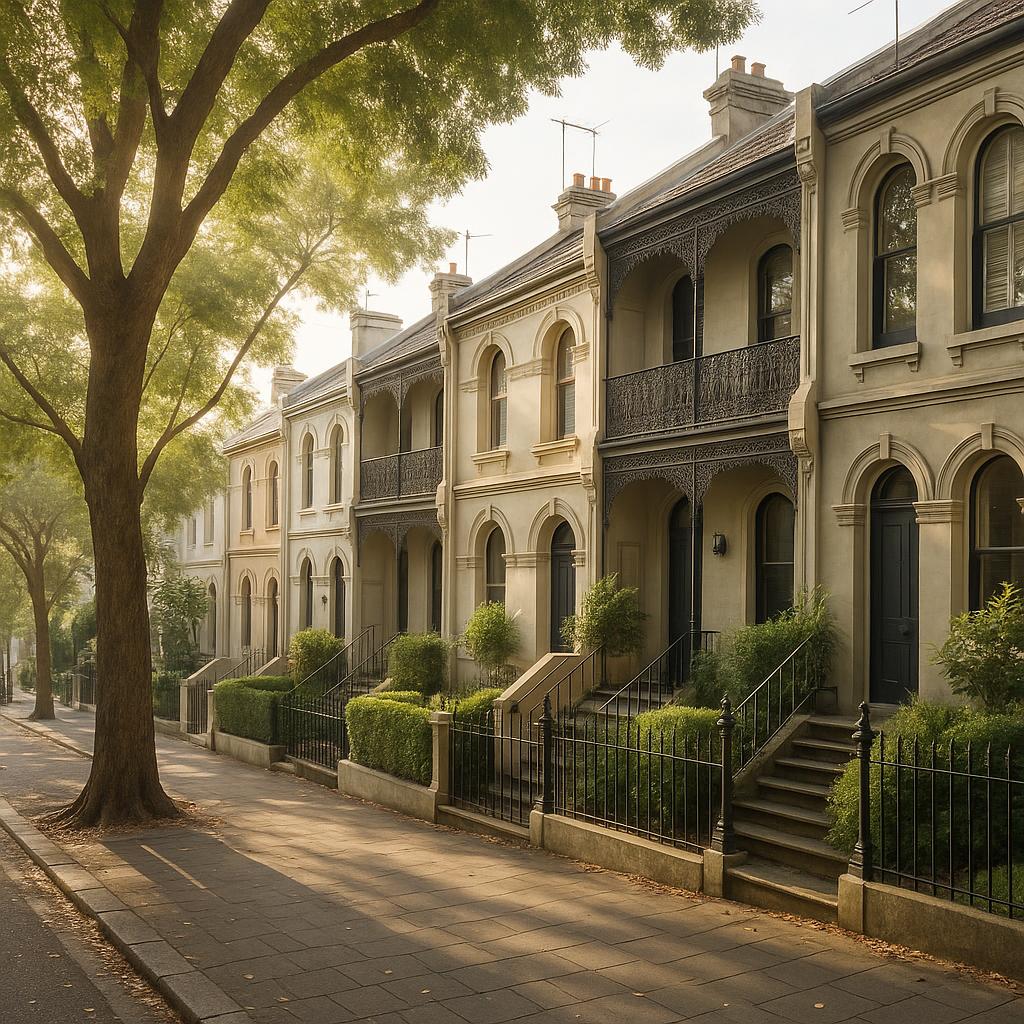
Paddington is an established inner-eastern Sydney suburb known for terraces, boutique dwellings, heritage streetscapes, and a strong owner-occupier feel. It sits in a premium lifestyle corridor close to the CBD, Oxford Street, Centennial Park, and other high-demand eastern suburbs, so the market is often shaped by location quality rather than broad land size or new supply.
What matters most here is not just the suburb name, but the specific street, property type, and condition. Two similar-looking listings can differ materially in liveability, renovation potential, privacy, and noise exposure. Buyers should treat Paddington as a micro-market where the building, aspect, and layout can matter as much as the postcode.
For investors, the market tends to reward well-presented stock that suits professionals, couples, and downsizers. For homeowners, it offers a lifestyle-first proposition with long-term scarcity support, but it requires acceptance of older building fabric and possible upkeep.
Buyer Demand
Buyer demand in Paddington is usually strongest from owner-occupiers who want character and convenience in one address. Downsizers often prefer the suburb because it offers an urban village feel without giving up access to the city, while professionals value the short commute and low-friction lifestyle.
Demand is resilient because there are limited substitutes for a Paddington terrace or a quality boutique apartment in a similarly central, heritage-led setting. In practice, buyers are often competing for a very specific combination of ambience, walkability, and proximity to amenity, which can keep interest focused even when broader market conditions soften.
Rental Market
The rental market generally suits professionals, couples, and short-to-medium term tenants who want a premium inner-east lifestyle. Tenants in this area usually respond to presentation, natural light, storage, and layout efficiency, not just headline bedroom count.
For investors, that means older stock can still perform well if it is well maintained and easy to live in. A renovated terrace may appeal to a tenant paying for character and convenience, while a boutique apartment can attract renters who want lower upkeep and a simpler daily routine. Presentation matters more here than in many outer suburbs.
Lifestyle, Transport & Schools
Paddington’s lifestyle appeal is a core part of its property value. Café strips, boutique shopping, galleries, and a strong neighbourhood identity make it feel more like a walkable urban village than a conventional suburban market. That creates real buyer depth among people who want to live local rather than commute to amenities.
Transport access is another major support factor. Residents often rely less on driving than in many Sydney suburbs, which broadens appeal to professionals and downsizers. Buyers should still check bus routes, trip times, parking arrangements, and the practical convenience of daily movements rather than assuming “inner city” always equals easy access.
Schools can influence family demand and resale depth, but catchments and enrolment rules need to be checked directly before purchase. If schooling matters to your decision, verify the relevant government information and compare Paddington with nearby suburbs on commute, space, and school access rather than assuming lifestyle alone will be enough.
Paddington (NSW) Suburb Profile
Official 2021 Census snapshot for the ABS Suburbs and Localities geography.
Age profile
Housing tenure
Occupied private dwellings by tenure type.
Salary & income profile
Median total income reported in the Census.
*Annual figures are weekly median × 52 estimates, not separate ABS annual medians.
Education & qualifications
Highest educational attainment, people aged 15+.
Employment status
People aged 15+ who reported being in the labour force.
Industry of employment
Top responses among employed people aged 15 years and over.
Occupation profile
Broad occupation groups among employed residents, including managers.
Property Type Guide
- Terrace homes: Best for buyers who want heritage character, street appeal, and long-term emotional and lifestyle value.
- Boutique apartments: Better for buyers wanting lower maintenance, smaller-scale living, and a more manageable ownership profile.
- Semi-detached homes: Offer a middle ground between character and practicality, especially for buyers wanting some outdoor space.
- Renovated stock: Often appeals to buyers who want to avoid a major project and reduce near-term maintenance uncertainty.
- Unrenovated dwellings: Can suit value-add buyers, but only if the budget accounts for hidden works and heritage constraints.
Risks & Watch-Outs
- Older homes may hide costly issues such as damp, ageing services, roofing problems, or prior patch-up work.
- Heritage controls and conservation overlays can restrict extensions, external changes, and some redevelopment ideas.
- Apartment buyers should review strata levies, sinking fund health, building reports, and repair history carefully.
- Parking and storage are often constrained, so practical livability can differ sharply from the listing description.
- Noise, traffic, and privacy can vary street by street, especially near busier local corridors and activity areas.
Nearby Suburbs to Compare
- Woollahra NSW Property Market Guide: Buyers & Investors
- Darlinghurst NSW Property Market Guide: Buyers & Investors
- Rushcutters Bay NSW Property Market Guide: Buyers & Investors
- Edgecliff NSW Property Market Guide: Buyers & Investors
- Surry Hills NSW Property Market Guide: Buyers & Investors
FAQ
Is Paddington NSW good for buyers and investors?
Yes, if you value scarcity, character, and an inner-east location more than a newer home or larger block. Buyers often choose it for lifestyle reasons, while investors are usually drawn to the quality of tenant demand rather than high-volume supply.
What property types are most common in Paddington?
Terraces, semi-detached homes, and boutique apartments are the main types to focus on. Each performs differently, so compare them separately. A terrace may suit lifestyle buyers, while a small apartment may suit investors seeking lower-maintenance ownership.
Is Paddington mainly a lifestyle suburb or an investment suburb?
It is primarily a lifestyle-led suburb, but that does not make it unsuitable for investors. The key is to underwrite the property carefully, because strong location demand does not remove maintenance, strata, or renovation risk.
What should buyers check before purchasing an older Paddington property?
Inspect the building condition, structural elements, services, moisture issues, and renovation history. For apartments, review strata documents. For terraces, confirm what can be altered under planning or heritage controls before assuming future upgrade flexibility.
How does Paddington compare with nearby inner-east suburbs?
Paddington usually stands out for heritage feel, walkability, and village-style amenity. Nearby suburbs may offer different trade-offs such as more apartment stock, different transport access, or a quieter residential feel, so compare by property type and day-to-day use.
Conclusion
Paddington is a premium inner-east suburb where lifestyle, character, and scarcity shape buyer interest more than generic market metrics. It can be an excellent fit for buyers who understand the trade-offs of older stock and want a highly liveable address. The best results come from matching property type, street, and condition to your long-term goals.
Sources & how to verify
- Check current property listings and sold results on Domain so you can compare terraces, apartments, and recent market sentiment by property type.
- Use realestate.com.au to review active listings, days on market clues, and the range of stock currently available in Paddington.
- Review zoning, planning controls, and heritage guidance through the NSW Planning Portal before assuming renovation or extension options.
- Confirm local planning and heritage context on the Woollahra Municipal Council website, especially for conservation-related constraints.
- Check official transport details on Transport for NSW to verify routes, service patterns, and practical commute assumptions.
- Use the NSW School Finder to confirm catchments and enrolment information directly rather than relying on hearsay.
- Cross-check demographic and household context with the Australian Bureau of Statistics so you understand who typically lives in the area and how that may affect demand.
- Before buying, read strata records, building reports, and the contract carefully so your decision is based on verified condition, not presentation alone.