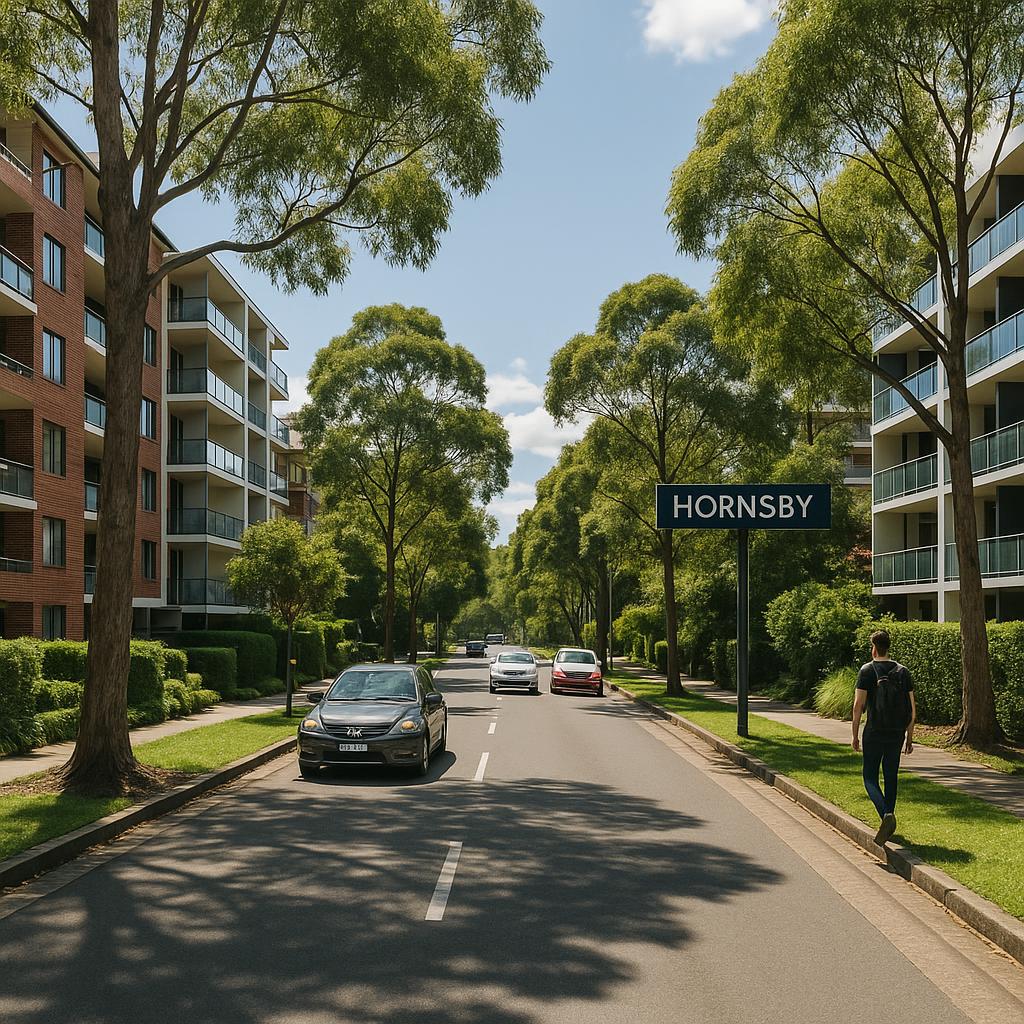
Quick Answer
Hornsby is a practical Upper North Shore suburb for buyers and investors who value rail access, everyday amenity, and a broad mix of housing options. It suits people who want a liveable suburb with family appeal, commuter convenience, and steady underlying demand rather than a purely speculative play. The strongest purchases here usually combine a sensible floorplan, good micro-location, and low-maintenance ownership. For investors, tenant-friendly stock near transport and services is typically the most defensive choice.
Key Takeaways
- Hornsby appeals to buyers who want suburb convenience, rail access, and a practical day-to-day lifestyle.
- Investors should prioritise well-located stock with broad tenant appeal and manageable ongoing maintenance.
- Family buyers usually focus on schools, parks, walkability, and functional homes over prestige alone.
- The suburb’s value varies sharply by micro-location, building quality, and property type.
- Use current sales, rental, and planning data to verify whether a specific pocket suits your strategy.
Pros & Cons
Pros
- Strong commuter convenience for rail users.
- Broad appeal across first-home buyers, families, and investors.
- Everyday amenity supports owner-occupier and rental demand.
Cons
- Busy pockets can trade convenience for noise, traffic, or parking pressure.
- Older stock may require more maintenance or careful renovation budgeting.
- Some buildings and streets are far better positioned than others, so selection matters.
Market Overview
Hornsby sits in a practical Upper North Shore position with rail access, major retail amenity, and a mix of older homes, apartments, duplex-style dwellings, and townhouse alternatives nearby. That mix matters because it creates multiple entry points for different budgets and strategies, from first-home buyers to long-term investors.
The suburb tends to attract buyers who want a functional Sydney lifestyle without paying for inner-city intensity. In simple terms, Hornsby is often judged on liveability: access to transport, usable housing stock, everyday services, and enough green space to feel balanced.
For buyers, the most important question is not “Is Hornsby good?” but “Which pocket and which asset class?” A quiet street close to amenities can behave very differently from a busier or more isolated pocket, even within the same suburb.
Buyer Demand
Demand is typically supported by a mix of commuters, families, and owner-occupiers who want a stable, established suburb with practical connections. That broad buyer pool can be helpful when you eventually resell, because the property is not relying on one narrow audience.
What buyers usually pay for here is not just the postcode, but convenience and function: walkability to transport, decent parking, low-maintenance living, and a layout that suits real life. For that reason, the best assets are often those that feel easy to occupy rather than overly ambitious or highly specialised.
Rental Market
Hornsby can appeal to tenants who want commuter access, nearby shops, and a suburb that feels settled rather than transient. That tenant mix often includes professionals, couples, and small families who value practicality and location over luxury finishes.
For investors, the safest rental strategy is usually to target a property that is easy to maintain and easy to lease: good natural light, sensible storage, functional bathrooms and kitchens, and straightforward access to transport or essential services. A well-presented, well-located apartment or low-maintenance dwelling is often easier to manage than a larger but awkward asset.
Lifestyle, Transport & Schools
Hornsby offers a solid suburban lifestyle with major retail convenience, parks, and access to bushland-style recreation. That combination is useful for households that want weekend options without leaving the area, and it helps support long-term owner-occupier demand.
Transport is one of the suburb’s clearest strengths. Rail access is a major commuter draw, while road access and local congestion patterns should still be tested at peak times. Buyers should walk the route to the station or bus stop, check lighting and comfort, and verify whether the commute works in practice, not just in theory.
School and childcare access matter to many Hornsby buyers, especially families comparing it with nearby Upper North Shore suburbs. If schools are central to your decision, confirm catchments and enrolment rules directly with official NSW sources before making an offer.
Hornsby Suburb Profile
Official 2021 Census snapshot for the ABS Suburbs and Localities geography.
Age profile
Housing tenure
Occupied private dwellings by tenure type.
Salary & income profile
Median total income reported in the Census.
*Annual figures are weekly median × 52 estimates, not separate ABS annual medians.
Education & qualifications
Highest educational attainment, people aged 15+.
Employment status
People aged 15+ who reported being in the labour force.
Industry of employment
Top responses among employed people aged 15 years and over.
Occupation profile
Broad occupation groups among employed residents, including managers.
Property Type Guide
- Apartments: Best for low-maintenance living and investor convenience; check strata quality, layout efficiency, parking, and building condition.
- Houses: Best for land, space, and family functionality; assess renovation needs, block usability, and long-term maintenance costs.
- Townhouses / duplex-style homes: Often the middle ground for buyers wanting more space than an apartment with less upkeep than a house.
- Renovators: Can offer upside, but only if the scope, costs, and end value are tightly controlled.
- Move-in-ready stock: Suits buyers prioritising convenience, lower execution risk, and easier short-term ownership.
Risks & Watch-Outs
- Micro-location matters: proximity to station, shops, schools, and quieter streets can materially change liveability and resale.
- Some older apartments may carry higher strata or maintenance risk, so review records before assuming the building is well managed.
- Do not overpay for cosmetic presentation if the floorplan, parking, or orientation is weak.
- Busy roads, noise exposure, and parking constraints can reduce buyer and tenant appeal in certain pockets.
- Compare like-for-like properties carefully, because one building or street can sit in a very different demand bracket from another.
Nearby Suburbs to Compare
- Thornleigh NSW Property Market Guide: Buyers & Investors
- Asquith NSW Property Market Guide: Buyers & Investors
- Waitara NSW Property Market Guide: Buyers & Investors
- Wahroonga NSW Property Market Guide: Buyers & Investors
- Westleigh
FAQ
Is Hornsby good for first-home buyers?
It can be, especially for buyers who value transport, established amenity, and a practical suburban lifestyle. The key is to buy a property that matches your budget and daily needs, rather than stretching for a poorly located home just because it is in a well-known suburb.
Is Hornsby a good suburb for investors?
It can suit investors who want broad tenant demand and lower-maintenance stock. The strongest approach is usually to target a property that is easy to lease, easy to maintain, and positioned for long-term resale to both tenants and owner-occupiers.
What property type is best in Hornsby?
There is no single best type. Apartments can suit convenience-led buyers, houses suit land and family use, and townhouse-style homes often sit in the middle. Your strategy should decide the asset, not the other way around.
Is Hornsby family-friendly?
Yes, for many households it is. Families often value the mix of transport access, parks, schools, and everyday services. The best family outcomes usually come from a quieter pocket with good access to routines such as childcare, shopping, and school travel.
What should buyers check before purchasing?
Check the micro-location, building condition, parking, storage, strata records if relevant, and the real commute experience at peak hour. Also compare recent sales and current listings for similar properties so you can separate market value from marketing language.
Conclusion
Hornsby is a sensible Sydney suburb for buyers and investors who want convenience, practicality, and broad-based demand. It is not about chasing hype; it is about selecting the right property in the right pocket. If you focus on transport, layout, maintenance, and resale audience, Hornsby can be a sound long-term choice.
Sources & how to verify
- Check current sold prices and active listings on Domain so you are comparing live market evidence, not stale estimates.
- Review suburb-level sales history and listing activity on realestate.com.au to see how different property types are being positioned and absorbed.
- Use Transport for NSW to confirm station access, service patterns, and any transport changes that could affect commuting convenience.
- Check planning and zoning context through the NSW Planning Portal before assuming a site has the development potential or restrictions you expect.
- Verify school catchments and enrolment guidance using the NSW School Finder because catchments can materially affect family demand.
- Use ABS data for demographic context, but confirm it against current listings and local inspection activity before drawing investment conclusions.
- Ask for strata reports, building reports, and pest inspections where relevant, because a strong suburb cannot offset a poorly maintained building or hidden defect.
- Cross-check any suburb commentary with recent agent appraisals and comparable sales so you understand the difference between headline reputation and actual transaction evidence.
Internal link suggestions:
- Ryde NSW Property Market Guide: Buyers & Investors
- Epping NSW Property Market Guide: Buyers & Investors
- Macquarie Park NSW Property Market Guide: Buyers & Investors
- Lane Cove NSW Property Market Guide: Buyers & Investors
- Baulkham Hills NSW Property Market Guide: Buyers & Investors