Quick Answer
Ashfield is a practical inner-west Sydney suburb that suits buyers who value commute efficiency, established amenity, and a mix of apartment and character housing. For owner-occupiers, it tends to appeal when location and daily convenience matter more than oversized land. For investors, the draw is broad tenant demand from commuters, couples, and small households. The main buying question is less about the suburb’s name and more about building quality, micro-location, and whether the property type matches your holding strategy.
Key Takeaways
- Ashfield offers an established inner-west location with strong day-to-day practicality for both owners and tenants.
- Transport access, amenity, and housing mix are the main reasons buyers keep returning to the suburb.
- Apartment quality varies sharply, so strata records and building condition matter as much as the address.
- Older homes can suit long-term owners who want renovation upside, but maintenance budgeting is essential.
- The best purchase is usually the one that matches your goal: convenience, rental ease, or future flexibility.
Pros & Cons
Pros
- Strong inner-west convenience with broad appeal across different buyer groups.
- Good mix of apartments, older homes, and boutique dwellings to suit varied strategies.
- Established local amenity supports everyday living without needing major lifestyle trade-offs.
Cons
- Older stock may carry maintenance, renovation, or strata complexity.
- Some pockets are exposed to rail, road, or general urban activity noise.
- Well-presented properties can be tightly held, so buyers may face competition.
Market Overview
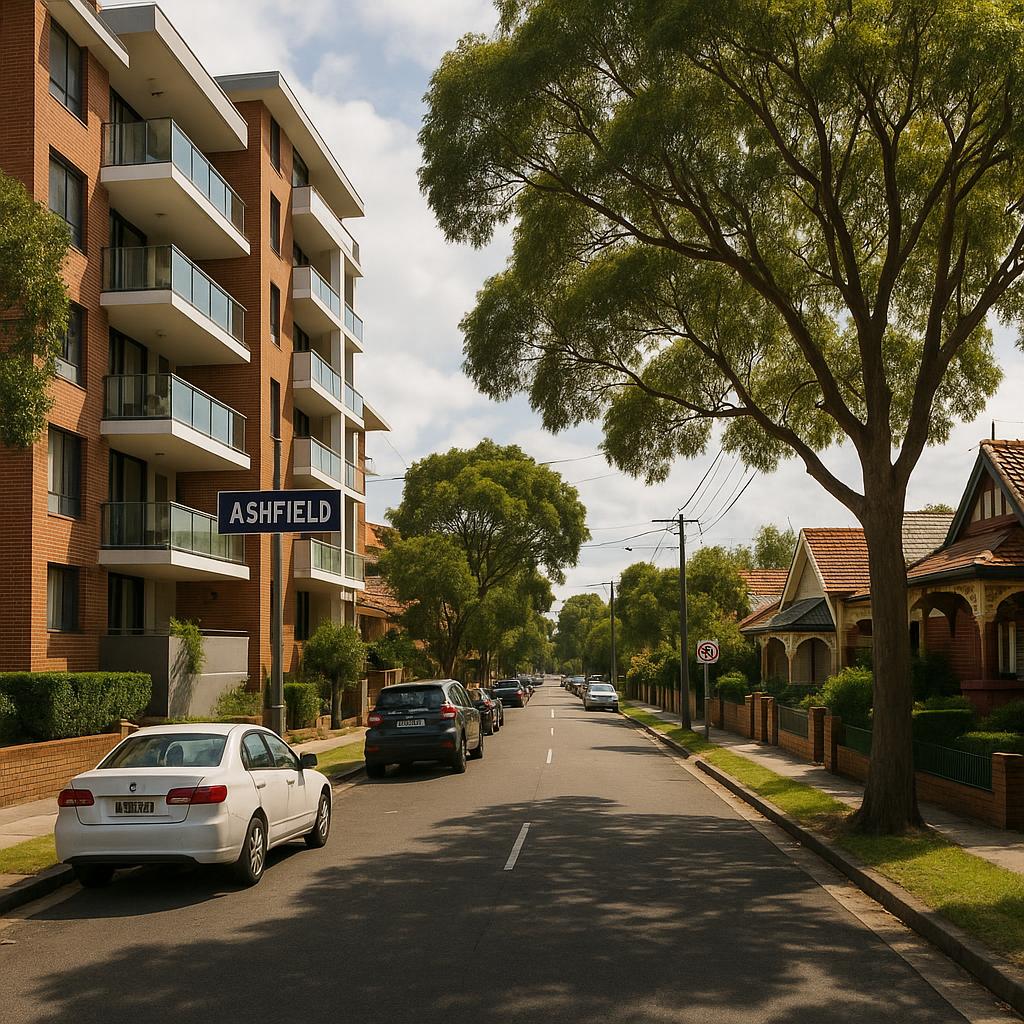
Ashfield sits in Sydney’s inner west and is typically viewed as a highly practical suburb rather than a speculative one. It attracts buyers who want access, established services, and a mix of apartment and older-house stock, rather than a new-release feel. That makes it appealing to both owner-occupiers and investors who value steady usability.
The market is shaped by its transport convenience, housing diversity, and the reality that quality varies street by street and building by building. In Ashfield, value is often found in a well-located property with solid bones, sensible layout, and manageable holding costs rather than in flashy finishes alone.
For buyers, that means the suburb rewards careful inspection. A renovated unit in a well-run block can be a very different proposition from a similar-looking apartment with weak strata management, while older houses may offer future flexibility if maintenance is acceptable.
Buyer Demand
Buyer demand in Ashfield generally comes from a mix of first-home buyers, investors, downsizers, and owner-occupiers wanting an inner-west base. That diversity tends to support the suburb’s resilience because demand is not reliant on one narrow buyer group.
Competition often concentrates around properties that are easy to live in and easy to let: functional floor plans, reasonable parking or storage, solid building condition, and convenient access to transport and services. In practical terms, buyers are usually paying for reduced friction in everyday life.
Rental Market
For investors, Ashfield’s appeal is linked to tenant breadth. The suburb can suit professionals, couples, small households, and some family tenants who want convenience without moving further out. That broader tenant pool can help reduce vacancy risk when a property is priced and presented well.
Apartment stock is often the simplest rental proposition, but strata quality matters because ongoing costs can compress returns. Houses may attract longer tenancies and family tenants, yet they usually come with higher maintenance responsibility, so investors should assess net holding costs rather than headline rent potential alone.
Lifestyle, Transport & Schools
Ashfield offers a lived-in, highly practical lifestyle. The local environment is about everyday convenience: eating out, shopping, services, and transport access rather than resort-style amenity. That suits buyers who want easy routines and a suburb that feels established rather than emerging.
Transport is one of the suburb’s strongest decision drivers. Rail and bus access can materially improve commuter convenience, while road connections matter for buyers who still drive regularly. For many households, this is the difference between a manageable weekday routine and a long, tiring commute.
School access can also shape demand, especially for family buyers comparing Ashfield with nearby suburbs. Rather than relying on hearsay, verify catchments, intake areas, and enrolment rules directly with current school and government sources, because these can influence both livability and long-term resale interest.
Ashfield (NSW) Suburb Profile
Official 2021 Census snapshot for the ABS Suburbs and Localities geography.
Age profile
Housing tenure
Occupied private dwellings by tenure type.
Salary & income profile
Median total income reported in the Census.
*Annual figures are weekly median × 52 estimates, not separate ABS annual medians.
Education & qualifications
Highest educational attainment, people aged 15+.
Employment status
People aged 15+ who reported being in the labour force.
Industry of employment
Top responses among employed people aged 15 years and over.
Occupation profile
Broad occupation groups among employed residents, including managers.
Property Type Guide
- Apartments: Often best for first-home buyers and investors seeking lower-maintenance ownership, but inspect strata, sound insulation, and common areas carefully.
- Older houses: Can suit buyers chasing character, land value, or renovation upside, provided maintenance costs and planning limits are understood.
- Townhouses and boutique complexes: Offer a middle ground between space and low upkeep, though supply is usually more limited.
- What matters most: Layout efficiency, building condition, parking, storage, natural light, and street noise often influence liveability more than cosmetic presentation.
Risks & Watch-Outs
- Do not assume every apartment block in Ashfield is well managed; strata quality can materially affect costs and resale appeal.
- Older homes may hide capital works, drainage, wiring, or roof issues that are not obvious at first inspection.
- Busy streets and transport-adjacent locations can trade convenience for noise, traffic, and privacy compromises.
- Comparable sale results should be judged by property type and building quality, not suburb averages alone.
- Buying on emotion can lead to overpaying for charm while ignoring holding costs and practical livability.
Nearby Suburbs to Compare
- Burwood NSW Property Market Guide: Buyers & Investors
- Summer Hill
- Marrickville NSW Property Market Guide: Buyers & Investors
- Leichhardt NSW Property Market Guide: Buyers & Investors
- Haberfield
FAQ
Is Ashfield good for first-home buyers?
Often yes, especially if you want an inner-west location with apartment options and practical transport access. The key is to avoid overextending on a poor-quality block or an older property that will need immediate repair spending.
Is Ashfield a good suburb for investors?
It can be, because the tenant pool is broad and the suburb is functional for commuters and small households. Investors should focus on building quality, strata control, and low-vacancy appeal rather than assuming every property will perform the same way.
What type of property is best in Ashfield?
There is no single best type. Apartments can be efficient and easier to rent, while older houses may offer land value and renovation scope. The right answer depends on whether you prioritise cash flow, convenience, or long-term flexibility.
Is Ashfield family-friendly?
It can be, particularly for families who want access to services, transport, and schools without moving too far from the inner west. The trade-off is that some homes and apartment blocks will offer less space and privacy than outer-suburban alternatives.
What should I check before buying in Ashfield?
Check strata records, building condition, noise exposure, parking, storage, and whether the layout works for your everyday routine. For houses, inspect maintenance history and renovation scope carefully so the true cost of ownership is clear.
Conclusion
Ashfield is best understood as a convenience-led inner-west suburb with broad appeal and real choice across property types. It can suit owners and investors who value access, amenity, and a mature urban setting. The best outcomes usually come from disciplined due diligence: compare buildings, inspect micro-locations, and match the property to your strategy rather than chasing suburb hype.
Sources & How to Verify
- Check current train and bus services on Transport for NSW so you can confirm commute options and service patterns before relying on general suburb commentary.
- Review zoning, planning controls, and development rules on the NSW Planning Portal to understand what may affect renovation, rebuilding, or nearby development risk.
- Use the NSW Public School Finder to verify catchments and school options, because school access can influence both family demand and resale appeal.
- Compare recent sold results and active listings on Domain to see actual property-type pricing, not broad suburb averages.
- Cross-check current listings and rental competition on realestate.com.au so you can gauge tenant demand, presentation standards, and likely holding time.
- Confirm local council planning and community information through the Inner West Council website, especially where heritage controls, works, or local amenity may matter.
- Use the Australian Bureau of Statistics for current census-based context, but treat it as background only rather than a substitute for live sales and rental data.
- For strata purchases, request the strata report and meeting minutes directly, because building levies, defects, and upcoming works can change the investment case quickly.