Quick Answer
Hurstville is a high-demand St George suburb that suits buyers who prioritise transport, convenience, and low-maintenance living over land content or prestige streets. It is often a strong fit for first-home buyers, downsizers, and investors who want broad tenant appeal in an established, amenity-rich centre. The key is to buy selectively: building quality, strata health, aspect, and noise exposure matter just as much as the postcode.
Key Takeaways
- Hurstville’s appeal is built on rail access, retail convenience, and a large apartment market that suits practical buyers and investors.
- Location within the suburb matters: walkability, street exposure, and building quality can change liveability and resale outcomes significantly.
- Investors should focus on easy-to-lease layouts, low-maintenance buildings, and strong access to transport and everyday services.
- Owner-occupiers often value Hurstville for convenience, multicultural amenity, and the ability to reduce car dependence.
- The best purchase is usually not the cheapest one; it is the property with the strongest mix of comfort, function, and future demand.
Pros & Cons
Pros
- Excellent public transport access for commuters.
- Broad buyer and tenant demand because the suburb is highly practical.
- Strong everyday amenity, including retail, dining, and medical services.
Cons
- Apartment-heavy stock can bring strata complexity.
- Noise, traffic, and density can affect comfort in some pockets.
- Parking, storage, and outdoor space may be limited in many buildings.
Why this matters: Hurstville’s strengths are real, but they are functional strengths. Buyers who ignore strata quality, building age, or street exposure can end up with a property that is convenient on paper but frustrating to live in.
Market Overview
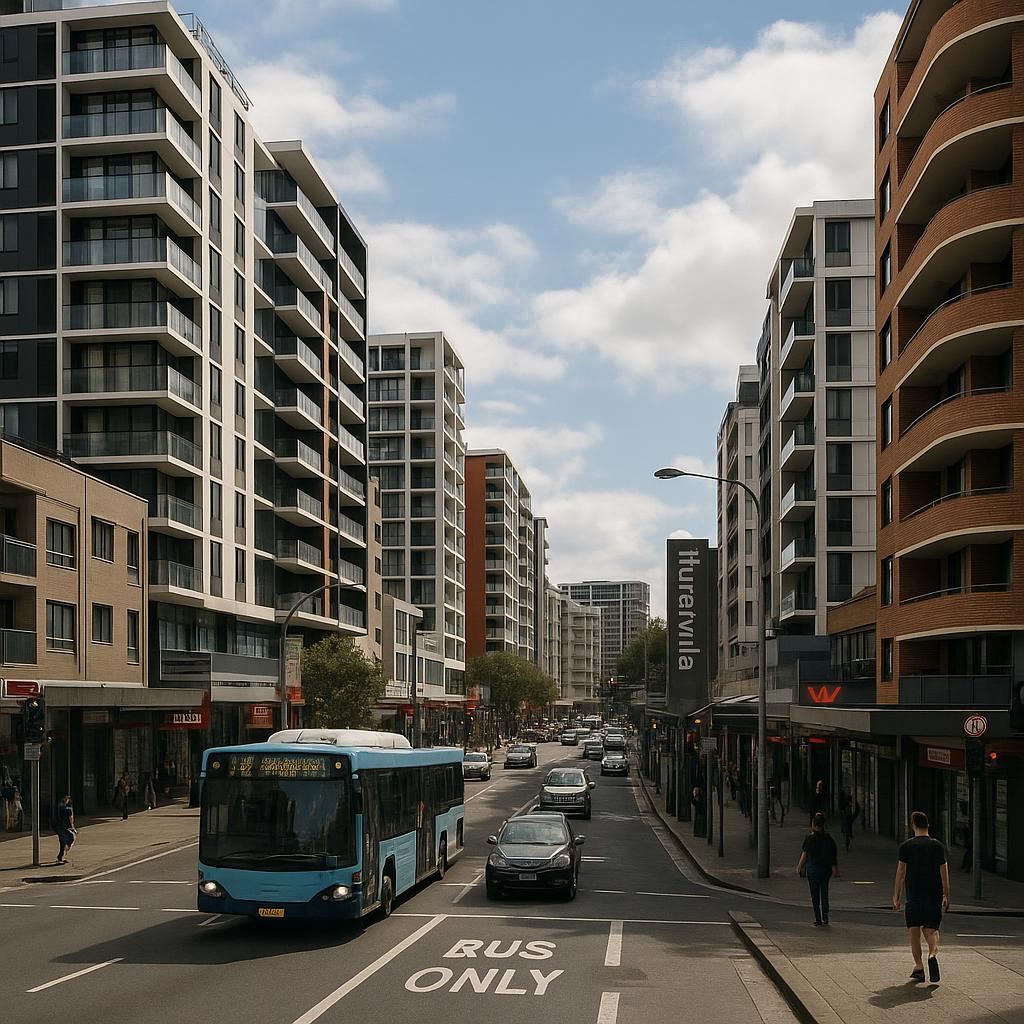
Hurstville sits in the St George area and operates as a major residential and commercial centre rather than a quiet, land-heavy suburb. The housing mix is dominated by apartments, with some townhouses, older detached homes, and redevelopment activity around the core.
That profile shapes how the market behaves. Hurstville tends to compete on convenience, access, and everyday amenity, not on prestige or large-lot lifestyle. For buyers, that means the best properties are usually the ones that are easy to live in and easy to resell, not simply the ones closest to the station.
The suburb’s centre is busy and service-rich, which is a plus for many households but not for everyone. Buyers should judge Hurstville by how well it fits their routine: if you want a practical hub with strong transport and broad amenity, it can make life simpler; if you want a leafy, quiet, house-dominated environment, it may not be the best match.
Buyer Demand
Buyer demand in Hurstville is typically driven by practicality. First-home buyers, owner-occupiers, investors, and downsizers are all drawn to the suburb for different reasons, but they share one common priority: convenience.
Well-located apartments with natural light, workable floor plans, and reasonable strata settings usually attract the strongest attention. Properties that combine station access with quieter positioning, parking, and a well-kept building presentation tend to have the broadest resale appeal.
Rental Market
Hurstville generally appeals to tenants who value transport, services, and an easy daily routine. That can include commuters, couples, small families, and service-sector workers who want to keep travel time and maintenance demands low.
For investors, the key is not just the suburb’s name but the property itself. A well-presented two-bedroom unit with sensible layout and good access to amenities will usually lease more easily than a similar apartment with poor light, awkward configuration, or noisy positioning.
Lifestyle, Transport & Schools
Hurstville offers a busy, practical lifestyle. The upside is strong food choice, retail convenience, and access to services that support day-to-day living. The trade-off is density, traffic, and a more urban feel than many buyers expect when they first inspect the area.
Transport is a major reason people choose the suburb. Rail and bus connectivity support commuter demand and can reduce dependence on a car, which matters for both owner-occupiers and renters. For many households, that convenience is the real value proposition.
Families often assess Hurstville through schooling, childcare, and commute patterns as much as through the property itself. Because school catchments and enrolment conditions can change, buyers should verify current information through official sources rather than relying on hearsay or outdated listings.
Hurstville Suburb Profile
Official 2021 Census snapshot for the ABS Suburbs and Localities geography.
Age profile
Housing tenure
Occupied private dwellings by tenure type.
Salary & income profile
Median total income reported in the Census.
*Annual figures are weekly median × 52 estimates, not separate ABS annual medians.
Education & qualifications
Highest educational attainment, people aged 15+.
Employment status
People aged 15+ who reported being in the labour force.
Industry of employment
Top responses among employed people aged 15 years and over.
Occupation profile
Broad occupation groups among employed residents, including managers.
Property Type Guide
- Apartments: Best suited to investors, first-home buyers, and downsizers seeking convenience and lower maintenance. Check natural light, ventilation, aspect, strata levies, and maintenance history.
- Townhouses: Offer a middle ground between privacy and practicality. They can suit buyers who want more space than an apartment without the upkeep of a freestanding house.
- Houses: Less common and generally tightly held. They appeal to buyers who want land and long-term flexibility, but supply is usually limited compared with units.
- Key buyer lens: In a dense suburb like Hurstville, building quality and functional layout often matter more than the headline address.
Risks & Watch-Outs
- Older strata buildings may carry repair risk, special levies, or management issues that reduce the apparent value of a lower-priced unit.
- Noise and density can be significant near the station, main roads, and retail core, so inspect at different times of day.
- Some apartments have limited parking or storage, which can affect both buyer appeal and tenant retention.
- Building age matters: check waterproofing, common area upkeep, and whether the floor plan still suits modern expectations.
- Micro-location can outweigh suburb name; a quiet, well-lit street often performs better than a busier, cheaper pocket nearby.
Nearby Suburbs to Compare
- Kogarah — compare for hospital access and a different apartment-market dynamic.
- Penshurst — a useful comparison for buyers seeking a quieter suburban feel.
- Rockdale — compare transport convenience and urban character.
- Carlton — useful for comparing local amenity and property mix.
- Bexley — consider for a more residential streetscape and different housing profile.
FAQ
Is Hurstville good for first-home buyers?
Yes, if you value transport, convenience, and lower-maintenance property types. First-home buyers should focus on layout, strata quality, and noise exposure rather than just chasing the closest building to the station.
Is Hurstville a good suburb for investors?
It can be, because the tenant pool is broad and the suburb has practical appeal. Investors usually do best with apartments that are easy to lease, easy to maintain, and positioned well within the suburb.
What type of property is most common in Hurstville?
Apartments make up a large part of the local housing stock. That means buyers should be comfortable assessing strata documents, common property condition, and the long-term suitability of compact, efficient layouts.
Is Hurstville family-friendly?
It can be, especially for families who want access to services, transport, and schools without long commutes. However, the density and busier streetscape may not suit every family’s preference for space and quiet.
Should I buy near the station?
Station proximity is useful, but it should not override everything else. Check noise, aspect, building quality, and the condition of the strata scheme so you do not trade convenience for day-to-day frustration.
Conclusion
Hurstville is best understood as a convenience-led St George market with broad appeal to commuters, investors, downsizers, and practical owner-occupiers. It rewards buyers who focus on building quality, layout, and micro-location. If you want a suburb that makes daily life easier, Hurstville can be a strong contender.
Sources & How to Verify
- Check recent comparable sales on Domain to see how similar apartments, townhouses, or houses are actually transacting in the suburb.
- Review current rental listings on realestate.com.au to understand asking rents, supply levels, and which property features are attracting attention.
- Use Transport for NSW to confirm rail and bus connections, service changes, and the real-world commute from the property.
- Check planning controls and local development information through the NSW Planning Portal before relying on any assumption about redevelopment or future building potential.
- Verify school intake areas and current enrolment information via the NSW School Finder rather than using third-party summaries that may be outdated.
- Read local planning and infrastructure information on the Georges River Council website to understand any streetscape or amenity changes that could affect liveability.
- Order a building and pest inspection and review strata minutes where available, because apartment condition, defects, and levies can materially change the real cost of ownership.
- Cross-check market commentary against official and property-specific evidence, because suburb guides are useful context but not a substitute for current inspection and due diligence.