Quick Answer
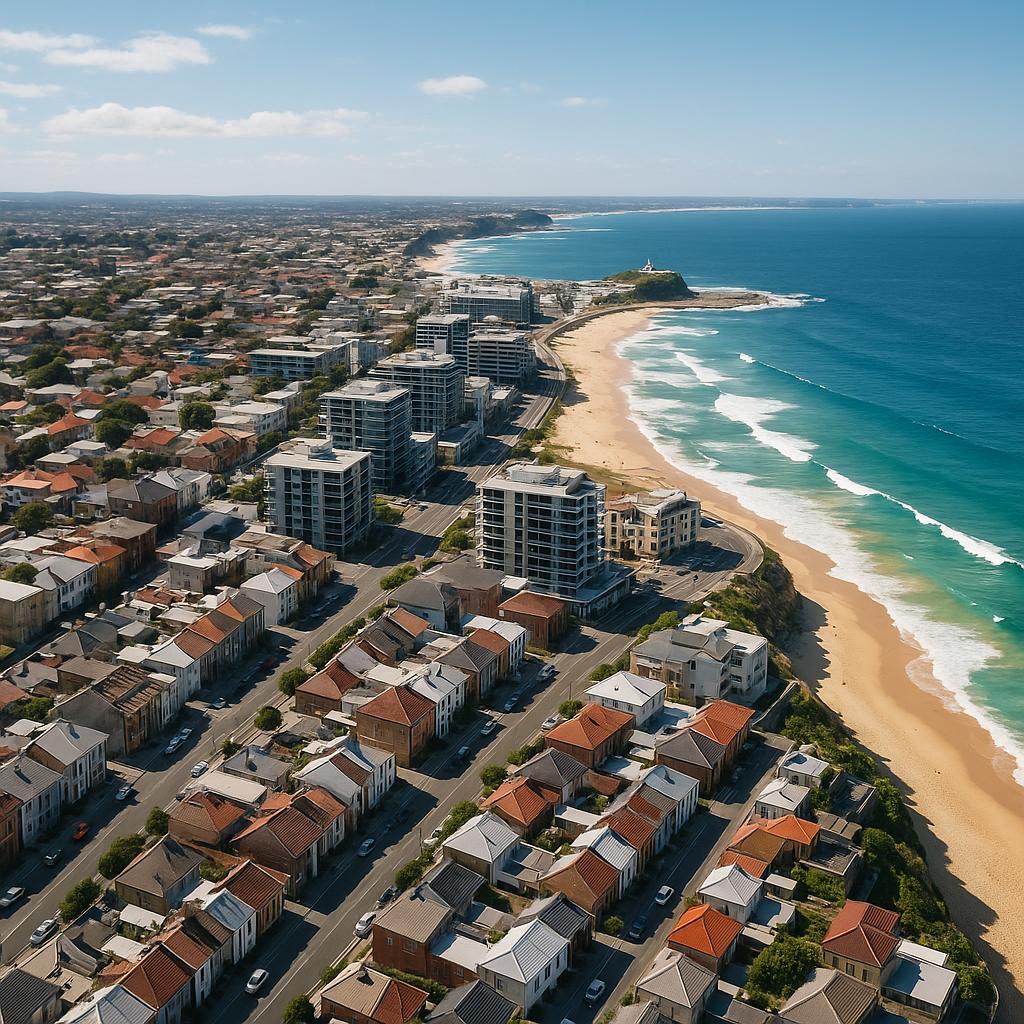
Newcastle is a major regional coastal market where lifestyle, employment access, and housing diversity all influence value. For buyers and investors, the best results usually come from selecting the right micro-location rather than assuming the whole city behaves the same way. Inner and beach-adjacent areas often suit convenience-focused buyers, while family-oriented suburbs can offer more space and stronger day-to-day practicality. Check flood exposure, strata, parking, and development context before you commit.
Key Takeaways
- Newcastle is a cluster of micro-markets, so suburb selection matters more than the city name alone.
- Buyer demand is driven by coastal lifestyle, commute convenience, and the depth of tenant and owner-occupier demand.
- Detached homes, apartments, and townhouses each perform differently depending on street, amenity, and maintenance profile.
- Investors should prioritise tenant appeal, low vacancy risk, and resale depth rather than chasing the most obvious headline suburb.
- Due diligence should focus on flood, noise, parking, strata, and surrounding development, because these can change the real value proposition.
Pros & Cons
Pros
- Strong lifestyle appeal with beaches, dining, and walkable urban pockets.
- Varied housing stock supports different budgets and strategies.
- Multiple buyer groups can underpin demand across selected suburbs.
Cons
- Micro-market differences can make broad assumptions misleading.
- Some pockets may face flood, noise, or maintenance issues.
- Popular streets and property types can attract intense competition.
Market Overview
Newcastle is best understood as a regional city market with a coastal lifestyle core and a wide spread of housing types. Inner-city apartments, terraces, renovated character homes, and family houses all compete for different buyer groups, so value depends heavily on location, condition, and future buyer pool. In practical terms, the suburb and even the street can matter as much as the broader postcode.
For investors and homeowners, this means the strongest purchasing decisions are usually made by asking why someone would buy the property in five years, not just why it looks attractive today. A beach-adjacent apartment may appeal to professionals and downsizers, while a detached home further inland may suit families who want space, parking, and easier routines. The right choice depends on your goal, not a generic city-wide narrative.
When comparing areas, use local context rather than chasing popularity alone. If you want a broader benchmark against nearby lifestyle and family markets, compare Newcastle with Merewether Property Market & Investment Guide 2026, New South Wales, Cooks Hill Property Market & Investment Guide 2026, New South Wales, and Islington Property Market & Investment Guide 2026, New South Wales for liveability-led comparisons.
Buyer Demand
Demand in Newcastle is supported by several buyer groups: owner-occupiers chasing lifestyle and convenience, families needing practical housing, downsizers wanting lower maintenance, and investors looking for solid tenant depth. That mix is valuable because it broadens the resale pool and helps reduce reliance on one buyer segment.
What drives demand most is not simply the suburb label, but the combination of access, amenity, housing type, and street appeal. A compact dwelling near the right amenities may attract professionals and down-sizers, while a house with usable land and parking can draw family buyers who prioritise everyday practicality over inner-city convenience.
Rental Market
Newcastle’s rental market tends to reward properties that are easy to live in and easy to maintain. Tenants often value off-street parking, functional layouts, air-conditioning, and access to transport, shops, work hubs, and outdoor amenity. For investors, this means the rental story is often strongest where the dwelling type matches the likely tenant pool.
Apartment and townhouse demand can be supported by professionals and lifestyle renters, while detached homes may suit families wanting more space and longer tenure. Before buying, check actual rental listings and speak with local property managers about what leases quickly and what sits longer, because property-specific demand can vary sharply by pocket and floor plan.
Lifestyle, Transport & Schools
Lifestyle is one of Newcastle’s biggest selling points. Beaches, coastal recreation, cafes, and walkable urban pockets create strong emotional appeal, particularly for buyers who want more than a purely functional location. That lifestyle premium can support long-term demand, especially in well-connected inner and beach-adjacent areas.
Transport matters too. Road access, parking, and access to public transport can make a real difference to daily life and leasing performance, particularly for apartments and smaller dwellings. Always test commute times at peak hour, because a location that looks convenient on a map may feel very different in morning traffic.
For families, schools, childcare, parks, and routine convenience often shape suburb choice more than aesthetics. Verify catchments and enrolment rules directly, and compare the practical school-run experience, not just distance. If you are also comparing family suburbs nearby, Waratah Property Market & Investment Guide 2026, New South Wales and Charlestown Property Market & Investment Guide 2026, New South Wales are useful contrasts.
Newcastle Suburb Profile
Official 2021 Census snapshot for the ABS Suburbs and Localities geography.
Age profile
Housing tenure
Occupied private dwellings by tenure type.
Salary & income profile
Median total income reported in the Census.
*Annual figures are weekly median × 52 estimates, not separate ABS annual medians.
Education & qualifications
Highest educational attainment, people aged 15+.
Employment status
People aged 15+ who reported being in the labour force.
Industry of employment
Top responses among employed people aged 15 years and over.
Occupation profile
Broad occupation groups among employed residents, including managers.
Property Type Guide
- Detached houses: Best for families and buyers wanting space, privacy, and renovation flexibility; check slope, maintenance, and heritage or planning limits.
- Apartments: Best for low-maintenance living and convenience; review strata costs, building quality, parking, and any nearby supply pipeline.
- Townhouses/terraces: A practical middle ground for couples, small families, and investors; inspect layouts, storage, shared walls, and body corporate rules.
- Renovation stock: Can add value in stronger streets, but only if the location and floor plan justify the upgrade cost; avoid overcapitalising.
- Best-fit strategy: Match the property type to your exit plan, holding budget, and likely buyer or tenant audience rather than buying on emotion.
Risks & Watch-Outs
- Flood-prone or drainage-sensitive pockets can affect insurance, resale confidence, and buyer depth.
- Noise from roads, nightlife, rail, or nearby commercial activity can change liveability materially.
- Older homes may look charming but can hide expensive maintenance or structural issues.
- Apartment and townhouse buyers should read strata records carefully for levies, defects, and management quality.
- Do not assume every Newcastle suburb behaves the same way; street-level research is essential.
Nearby Suburbs to Compare
Useful nearby comparisons include Mayfield Property Market & Investment Guide 2026, New South Wales, Waratah Property Market & Investment Guide 2026, New South Wales, Islington Property Market & Investment Guide 2026, New South Wales, Cooks Hill Property Market & Investment Guide 2026, New South Wales, and Merewether Property Market & Investment Guide 2026, New South Wales. Compare them on commute convenience, housing type, maintenance burden, and buyer competition.
FAQ
Is Newcastle a good place to buy property?
It can be, especially if you value a mix of lifestyle appeal and established demand. The main caveat is that Newcastle is not one uniform market, so the specific suburb, street, and property type matter far more than the city name alone.
Is Newcastle better for buyers or investors?
It can suit both. Buyers often focus on liveability, commute, and housing fit, while investors should focus on tenant depth, maintenance, and resale liquidity. The best strategy depends on whether you prioritise personal use, rental performance, or long-term capital resilience.
Which property type is best in Newcastle?
There is no universal winner. Apartments can suit convenience and lower maintenance, townhouses can balance practicality and affordability, and detached houses can suit families and long-term owners. Choose the type that matches your budget, holding costs, and future buyer pool.
What should I check before buying in Newcastle?
Verify flood exposure, parking, strata quality, noise, building condition, and surrounding development. Also check recent comparable sales and current rental listings nearby so you understand how the property performs in real market conditions, not just how it presents during an inspection.
How do I compare Newcastle with nearby suburbs?
Use a framework that compares commute time, lifestyle amenity, housing type mix, school access, and buyer competition. That approach shows whether you are paying for convenience, land, or scarcity, and helps you avoid overpaying for a suburb name alone.
Conclusion
Newcastle can offer strong opportunities for both buyers and investors, but the decision works best when you think in micro-markets, not headlines. Match the property type to your goal, verify street-level risks, and compare nearby suburbs before making an offer. The strongest purchase is usually the one with the broadest future buyer appeal and the fewest hidden compromises.
Sources & how to verify
- Check planning controls, zoning, and development constraints on the NSW Planning Portal so you understand whether renovation or redevelopment is realistically possible.
- Review flood and local environmental overlays on the City of Newcastle website to assess whether a property sits in a sensitive pocket.
- Use realestate.com.au to compare current listings, rental asking prices, and recent market activity for the exact property type you want.
- Check Domain for current sold and rental evidence, then compare like-for-like properties rather than relying on suburb averages.
- Verify school zones and enrolment boundaries through the NSW School Finder before assuming a property sits within a preferred catchment.
- Review commuting and timetable options on Transport for NSW so you can test real travel times instead of using rough map estimates.
- Check suburb demographic context with the ABS Census, but use it as background only and not as a substitute for current market evidence.
- Ask a local conveyancer, building inspector, and property manager to confirm issues that are not visible online, because the best decision combines data with on-the-ground checks.