Quick Answer
Chatswood is a high-demand Lower North Shore suburb that suits buyers and investors who value transport access, daily convenience, and a large apartment market. It is strongest for people who want a walkable, city-connected lifestyle rather than land-heavy living. Investors should focus on building quality, floorplan practicality, and micro-location because not every apartment will perform equally. Owner-occupiers often like Chatswood for its efficiency; investors like it for broad tenant depth and resilient everyday appeal.
Key Takeaways
- Chatswood is a major suburban centre, so its property appeal comes from convenience, transport, and amenity rather than quiet suburban isolation.
- The market is apartment-led, which gives buyers choice but also makes building quality and layout critical to value.
- Broad demand comes from professionals, downsizers, and some families who want access to services, schools, and rapid commuting options.
- For investors, the best opportunities usually combine transport access, strong strata management, and a functional, light-filled floorplan.
- The main risk is buying into a generic unit in a crowded building market where resale and tenant interest can be diluted.
Pros & Cons
Pros
- Excellent transport connectivity for CBD and North Shore commuters.
- Strong lifestyle convenience with retail, dining, and health services close by.
- Broad buyer and tenant appeal across multiple life stages.
Cons
- Apartment-heavy supply means more competition between similar properties.
- Peak-hour congestion and busy streets can reduce day-to-day comfort in some pockets.
- Poorly designed or poorly managed buildings can underperform despite a strong suburb name.
Market Overview
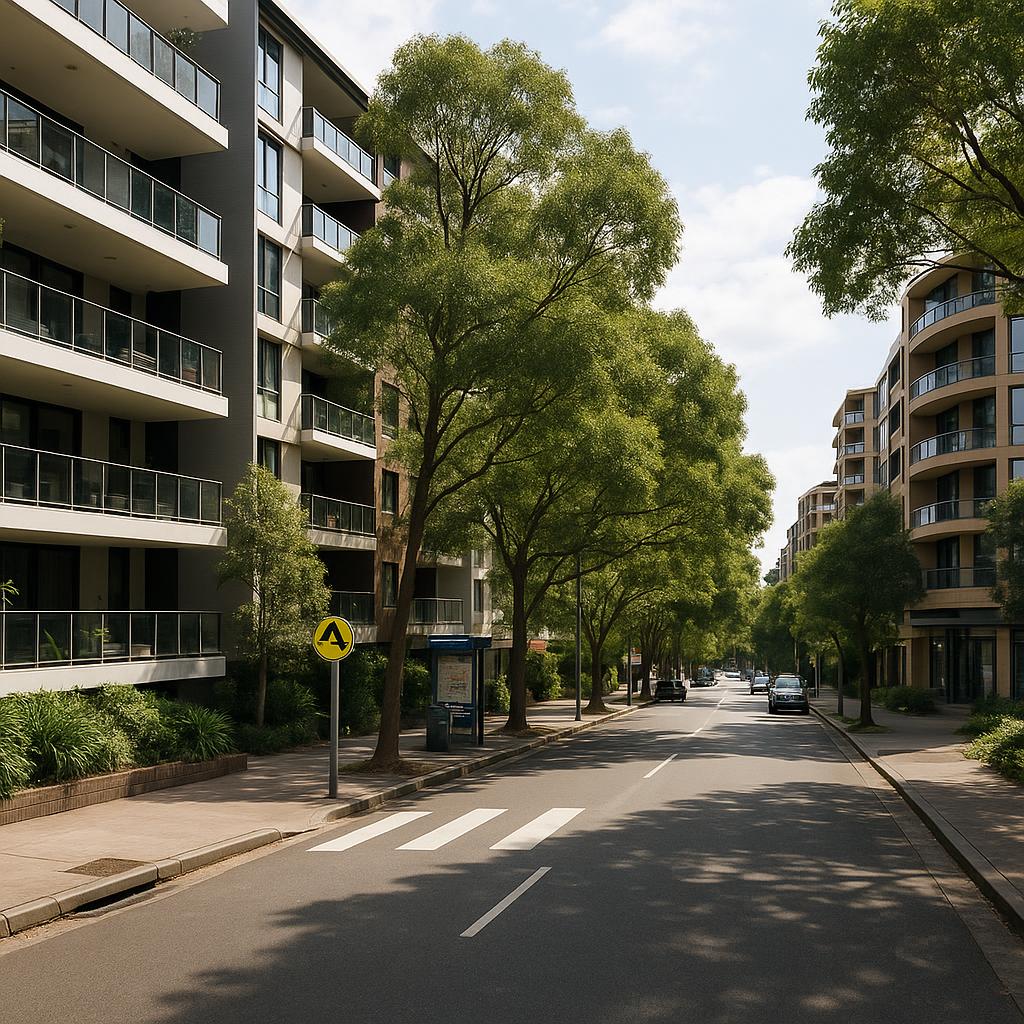
Chatswood sits on Sydney’s Lower North Shore and functions as both a residential suburb and a major commercial centre. That combination matters: it attracts people who want an efficient daily routine, not just a postcode with prestige. The local market is dominated by apartments, while detached homes are relatively scarce and tend to be tightly held.
For buyers, the key distinction is between the suburb’s reputation and the quality of the individual asset. A well-located, well-designed apartment can be easier to live in and easier to rent than a larger but awkward unit in a weaker building. For homeowners and investors alike, Chatswood rewards careful selection more than broad assumptions.
Think of Chatswood as a “convenience premium” suburb. Buyers often accept less land and more density in exchange for transport, services, and access to employment centres. That trade-off can work very well, but only if the property itself supports quiet living, light, storage, and sensible strata costs.
Buyer Demand
Demand is typically driven by professionals, couples, downsizers, and some families who want to reduce commute friction and daily admin. Chatswood appeals to buyers who see location efficiency as a lifestyle upgrade, especially if they regularly use rail or the Metro corridor.
In practice, buyers tend to reward properties that are easy to live in and easy to resell. That usually means a practical floorplan, good natural light, decent privacy, and a building that feels well maintained. In a suburb with many comparable apartments, those details can materially shape buyer interest.
Rental Market
Chatswood’s rental demand is supported by its transport links, retail core, and proximity to employment nodes. For investors, that means tenant demand can be broad rather than narrow, which helps reduce reliance on one tenant type or one market segment.
Tenants usually value convenience, security, and comfort. A bright apartment with sensible storage and a quiet outlook can outperform a flashier but noisier unit. Investors should treat rental success as a combination of location and liveability, not location alone.
Lifestyle, Transport & Schools
Chatswood offers a highly practical lifestyle: shopping, dining, medical services, gyms, and everyday necessities are all part of the suburb’s core appeal. That makes it attractive to residents who want a compact, highly functional urban environment rather than a purely residential streetscape.
Transport is a standout feature, with rail and Metro connectivity playing a major role in buyer and tenant demand. Bus routes also strengthen access across the North Shore and into the city. For many purchasers, the commute advantage is one of the suburb’s strongest value drivers.
School access is another reason some families consider Chatswood, although buyers should verify catchments and current enrolment rules directly with official education sources. The practical question is not just whether schools exist nearby, but whether the property works for school runs, after-school activities, and work commutes at the same time.
Chatswood Suburb Profile
Official 2021 Census snapshot for the ABS Suburbs and Localities geography.
Age profile
Housing tenure
Occupied private dwellings by tenure type.
Salary & income profile
Median total income reported in the Census.
*Annual figures are weekly median × 52 estimates, not separate ABS annual medians.
Education & qualifications
Highest educational attainment, people aged 15+.
Employment status
People aged 15+ who reported being in the labour force.
Industry of employment
Top responses among employed people aged 15 years and over.
Occupation profile
Broad occupation groups among employed residents, including managers.
Property Type Guide
- Apartments: The dominant stock type and the most relevant option for most buyers. Prioritise aspect, storage, sound insulation, and strata quality.
- Older apartments: Can offer better proportions and quieter building profiles, but inspect for maintenance history and strata issues.
- Newer apartments: Suit convenience-led buyers, but compare layouts carefully because “new” does not always mean “better.”
- Boutique buildings: Often appeal to owner-occupiers and downsizers wanting privacy and lower density.
- High-density buildings: Can work well for tenants, but competition, noise, and ongoing maintenance standards need close scrutiny.
- Houses: Scarcer and usually tightly held, making them more relevant for long-term family buyers than short-term opportunists.
Risks & Watch-Outs
- Do not assume every apartment in Chatswood will perform the same; building quality and layout can outweigh suburb reputation.
- Check for noise exposure from busy roads, commercial activity, or shared-building friction, especially in high-density stock.
- Review strata records, maintenance history, and any special levies before committing to a purchase.
- Be cautious of apartments that look modern but have weak natural light, poor storage, or awkward internal flow.
- Compare exact street position and walking routes, because “close to centre” can also mean more traffic and less privacy.
Nearby Suburbs to Compare
- Willoughby
- Artarmon
- Lane Cove
- Sydney
- Parramatta
FAQ
Is Chatswood a good suburb for investors?
Yes, Chatswood can be a strong investor suburb because it attracts a wide tenant pool and benefits from transport-led demand. The key is not to buy on suburb name alone. Choose a well-managed building, sensible floorplan, and a location that still feels liveable after dark and during peak traffic.
Is Chatswood better for apartments or houses?
For most buyers, apartments are the practical choice because they make up much of the available stock. Houses are much scarcer and usually appeal to long-term family occupiers. If you want land value, expect fewer options and stronger competition when those homes come to market.
What should I check before buying in Chatswood?
Focus on strata health, building condition, light, noise, storage, and floorplan efficiency. Also check walking access to transport and shops, because that is a major reason people pay for Chatswood. A great-looking apartment with weak function can be harder to own and harder to resell.
Is Chatswood family-friendly?
It can be, especially for families who want schooling access, transport options, and easy access to services. The main question is whether the specific property suits family life: security, space, parking, storage, and access to parks or school routines all matter more than the suburb label.
How do I choose the right building in Chatswood?
Compare strata reports, resident experience, maintenance evidence, and the reputation of the building’s design. Look for practical details such as natural light, ventilation, privacy, and acoustic separation. In a dense apartment market, a well-run building can make a bigger difference than a slightly larger floor area.
Conclusion
Chatswood is a strong all-rounder for buyers who want convenience, connectivity, and a low-friction lifestyle. It is especially compelling for apartment buyers who understand that building quality matters as much as location. For investors and homeowners, the best results usually come from disciplined selection, not from assuming every property in the suburb is a winner.
Sources & How to Verify
- Check current transport access and service patterns on Transport for NSW so you can confirm rail, Metro, and bus convenience before you buy.
- Review local planning controls and development activity on NSW Planning Portal to understand nearby growth pressures and future supply.
- Use Willoughby City Council or the relevant local authority pages to verify local services, planning matters, and public works affecting amenity.
- Check recent sales evidence on Domain and compare similar buildings, not just postcode medians, before drawing conclusions about value.
- Review current rental listings on realestate.com.au to gauge how quickly comparable properties are being marketed and what features tenants are prioritising.
- Verify school zones and nearby school options through the NSW School Finder because catchments and eligibility rules can change over time.
- Use the Australian Bureau of Statistics for official demographic context, but interpret suburb-level figures carefully and always pair them with current on-the-ground checks.