Quick Answer
New Farm is one of Brisbane’s most tightly held inner-city suburbs, and it suits buyers who value lifestyle, convenience, and long-term scarcity more than land size. It is especially attractive to owner-occupiers, downsizers, and investors who want broad tenant appeal in a premium location. The key is to buy the right property type: apartments, terraces, and character homes perform very differently, so building quality, strata costs, and street-level amenity matter as much as the postcode.
Key Takeaways
- New Farm is a premium inner-Brisbane suburb where location, walkability, and scarcity strongly influence buyer behaviour.
- Property type matters greatly here, because apartments, terraces, and character homes each attract different buyer and tenant profiles.
- Buyer demand is supported by lifestyle, proximity to the CBD, and established amenity rather than land release or new supply.
- Investors should pay close attention to strata, maintenance history, and building reputation, not just the advertised price.
- For homeowners, the suburb offers a convenient inner-city base, but the best fit depends on noise, parking, and property type.
Pros & Cons
Pros
- Highly desirable inner-city location with strong lifestyle appeal.
- Broad appeal to owner-occupiers, downsizers, and investors.
- Limited land supply supports long-term scarcity.
Cons
- Entry costs can be high compared with many Brisbane suburbs.
- Some buildings carry meaningful body corporate and maintenance costs.
- Traffic, parking, and noise can affect certain pockets and properties.
Market Overview
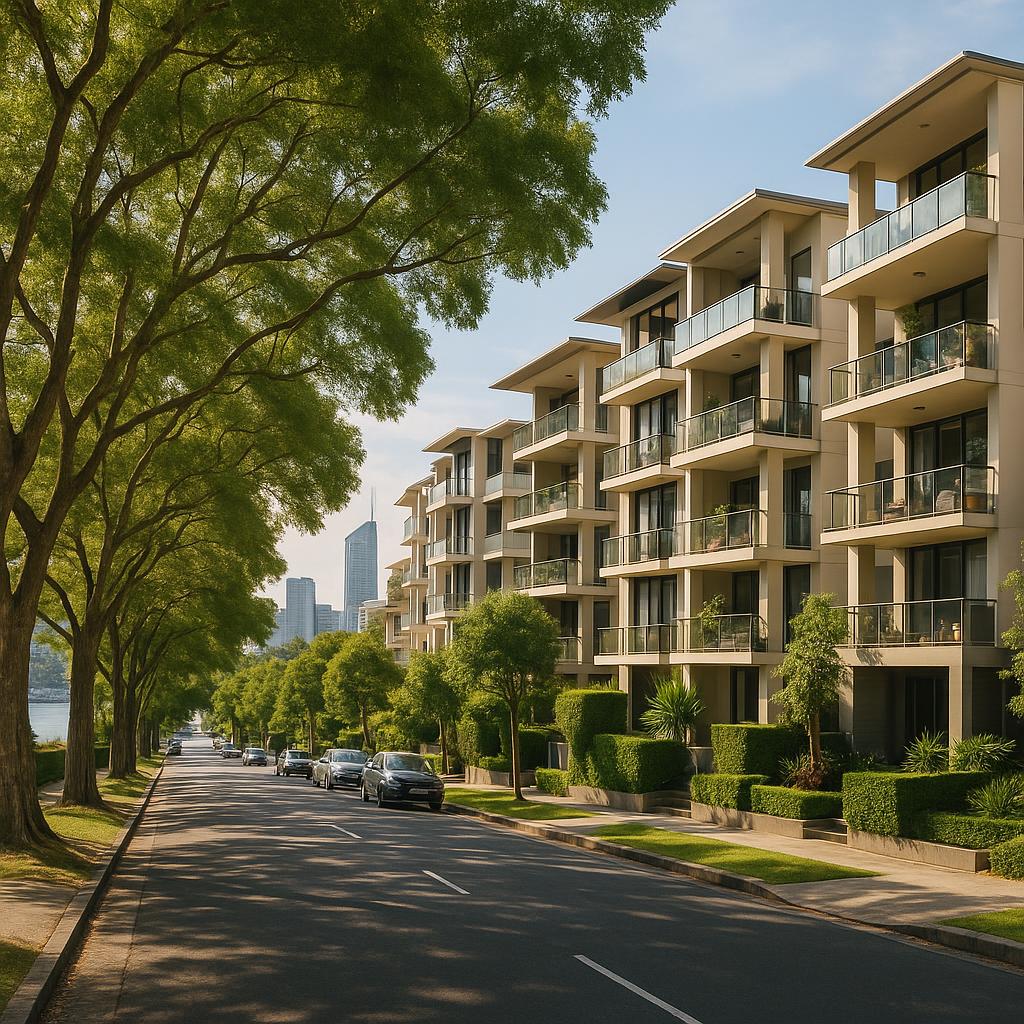
New Farm sits close to Brisbane’s CBD and is known for its inner-city convenience, established streetscape, and lifestyle-led appeal. It is not a “one market” suburb; apartments, boutique units, terraces, and rare detached homes can behave very differently, so comparison by property type is essential.
The suburb’s market is shaped by scarcity, reputation, and amenity. Buyers are often paying for location, walkability, and a low-friction daily routine rather than large blocks of land. That tends to support resilient demand across cycles, particularly for well-kept stock in quiet, convenient pockets.
For buyers, the practical question is not simply “Can I afford New Farm?” but “Which part of New Farm and which dwelling type best fits my goal?” A renovated apartment near lifestyle amenities can attract a very different buyer pool from an older unit with higher ongoing costs or a character home needing significant upkeep.
Buyer Demand
Demand in New Farm is typically driven by a mix of professionals, downsizers, and investors who want proximity to the city without sacrificing lifestyle. Buyers often prioritise walkability, secure parking, natural light, and easy access to dining, riverfront spaces, and transport options.
Competition tends to be strongest for properties that combine location with low-maintenance ownership. That usually means well-presented apartments, boutique buildings, or character homes with practical layouts and strong street appeal. Cosmetic improvements help, but fundamentals such as building quality, noise profile, and liveability usually decide who pays up.
Rental Market
New Farm generally appeals to renters who value convenience, presentation, and a desirable inner-city address. That can include professionals, couples, corporate tenants, and small households looking for an easy commute and an attractive lifestyle base.
For investors, the strongest rental candidates are usually easy-care dwellings with sensible layouts, good natural light, secure parking, and manageable ongoing costs. In apartment-heavy environments, body corporate fees, special levies, and building maintenance history can materially affect net returns, so the advertised rent should never be assessed in isolation.
Lifestyle, Transport & Schools
New Farm offers a strong café, dining, and parkland lifestyle, which is a major part of its value proposition. Buyers are often drawn to the area because they can complete daily errands, socialise, and enjoy recreation without relying heavily on long car trips.
Transport convenience is another practical advantage, especially for commuters who want quick access to inner Brisbane employment areas. Even so, the experience can vary by street: some locations are quieter and more residential, while others feel busier due to traffic, parking demand, or proximity to activity hubs.
Families should verify current school catchments directly before making decisions, because catchments and access considerations matter more than generic suburb reputation. Many households also weigh nearby parks, walkability, and the ease of school drop-off routes, especially where inner-city traffic patterns affect day-to-day living.
New Farm Suburb Profile
Official 2021 Census snapshot for the ABS Suburbs and Localities geography.
Age profile
Housing tenure
Occupied private dwellings by tenure type.
Salary & income profile
Median total income reported in the Census.
*Annual figures are weekly median × 52 estimates, not separate ABS annual medians.
Education & qualifications
Highest educational attainment, people aged 15+.
Employment status
People aged 15+ who reported being in the labour force.
Industry of employment
Top responses among employed people aged 15 years and over.
Occupation profile
Broad occupation groups among employed residents, including managers.
Property Type Guide
- Apartments: Best for buyers prioritising convenience and lower-maintenance living; check strata fees, storage, layout, light, noise, and parking.
- Boutique units: Often appeal to buyers wanting smaller-scale buildings; inspect body corporate health, maintenance records, and owner engagement.
- Terraces and character homes: Attractive for charm and scarcity; assess renovation quality, moisture, heritage constraints, and ongoing upkeep.
- Rare detached homes: Highly sought after when available; review land size, functionality, renovation scope, and parking practicality.
- Best fit by goal: Entry buyers may lean to apartments, lifestyle buyers may chase terraces, and investors should favour tenant-friendly layouts.
Risks & Watch-Outs
- Body corporate costs can materially change affordability, so a lower purchase price does not always mean a lower holding cost.
- Older apartment stock can vary sharply in quality, meaning building reports and maintenance history matter as much as the floor plan.
- Noise, traffic, and parking pressure can differ street by street, so visit at different times before committing.
- Character homes can come with renovation limits or practical maintenance issues, especially where historic fabric is involved.
- Stylish presentation can hide structural or building issues, so inspect documents and not just finishes.
Nearby Suburbs to Compare
- Brisbane City QLD Property Market Guide: Buyers & Investors
- Fortitude Valley
- Newstead
- Teneriffe
- Kangaroo Point
- Paddington
FAQ
Is New Farm a good suburb for first-home buyers?
Yes, for some buyers. It is usually more realistic for those open to apartments or smaller dwellings and willing to trade land size for location. First-home buyers should focus on building quality, body corporate costs, and layout efficiency before stretching for the postcode.
Is New Farm better for owner-occupiers or investors?
It can suit both. Owner-occupiers often value the lifestyle and convenience, while investors may focus on tenant demand and scarcity. The better choice depends on your holding strategy, desired level of maintenance, and whether you want yield, capital preservation, or personal use.
What property types are most common in New Farm?
Apartments and boutique units are common, with terraces, character homes, and rare detached houses also present. The suburb is highly property-type driven, so buyers should compare like with like rather than relying on broad suburb averages or generic market commentary.
What should investors check before buying in New Farm?
Check strata levies, maintenance history, building reputation, parking, tenant appeal, and the practicality of the layout. Also review comparable rentals in the same property type, because inner-city demand can be strong but not all stock performs equally well.
Is New Farm suitable for families?
Yes, particularly for families who value parks, convenience, and an inner-city lifestyle. The trade-off is that property type, outdoor space, traffic exposure, and school logistics matter more than in outer suburbs. Families should verify catchments and inspect the street carefully.
Conclusion
New Farm is a premium Brisbane suburb where lifestyle, scarcity, and property type drive outcomes. It suits buyers who want convenience and long-term desirability, but it rewards careful due diligence. The best purchase is usually the one that matches your goals, building tolerance, and holding strategy—not just the most attractive listing.
Sources & How to Verify
- Check current sold prices and active listings on Domain so you are comparing recent evidence rather than relying on stale price commentary.
- Review comparable properties and rental listings on realestate.com.au to see how different dwelling types are priced and presented today.
- Use ABS data to understand broad demographic and household trends, then confirm how they align with the property type you are targeting.
- Verify school zones, catchments, and enrolment eligibility through Queensland Government Education rather than relying on general suburb reputation.
- Check local planning, overlays, and development controls through Brisbane City Council so you understand renovation, redevelopment, and streetscape constraints.
- Request strata records, body corporate minutes, and levy history before buying any apartment or unit, because these documents reveal issues that listing photos cannot.
- Inspect the property at different times of day to test noise, parking, traffic flow, and pedestrian activity, which can materially affect liveability in New Farm.
- Use a local property manager or sales agent for current rent and buyer feedback, then cross-check their views against live listings and recent settlements.
Internal link suggestions: Brisbane City QLD Property Market Guide: Buyers & Investors, Kangaroo Point QLD Property Market Guide: Buyers & Investors, Paddington QLD Property Market Guide: Buyers & Investors