Quick Answer
Rivervale suits buyers who want a central-east Perth location with strong everyday convenience, rather than a lifestyle suburb with a single defining character. It often appeals to first-home buyers, investors, and downsizers because the suburb offers a mix of older homes, low-maintenance units, and newer infill product. The best purchases usually come from careful property selection: street quality, building condition, strata quality, parking, and access to transport matter more than the suburb name alone.
Key Takeaways
- Rivervale’s core strength is location: it is practical for CBD access, airport travel, and daily commuting across Perth.
- Buyers should judge the asset first, because houses, apartments, and townhouses can perform very differently here.
- Investor demand is usually broad, but the most defensible rentals are low-maintenance properties with sensible layouts and parking.
- Street-by-street variation matters, especially around traffic exposure, noise, and the feel of older versus newer pockets.
- A good Rivervale strategy is to match the property type to your end goal, then verify current comparables, strata records, and planning constraints.
Pros & Cons
Pros
- venient inner-east location with broad appeal to commuters and renters.
- Flexible housing mix that suits different budgets and strategies.
- Practical access to major transport routes and employment hubs.
Cons
- Traffic noise and corridor effects can be relevant in some streets.
- Strata ownership can add cost, rules, and due diligence requirements.
- Older homes may need more maintenance than buyers expect.
Market Overview
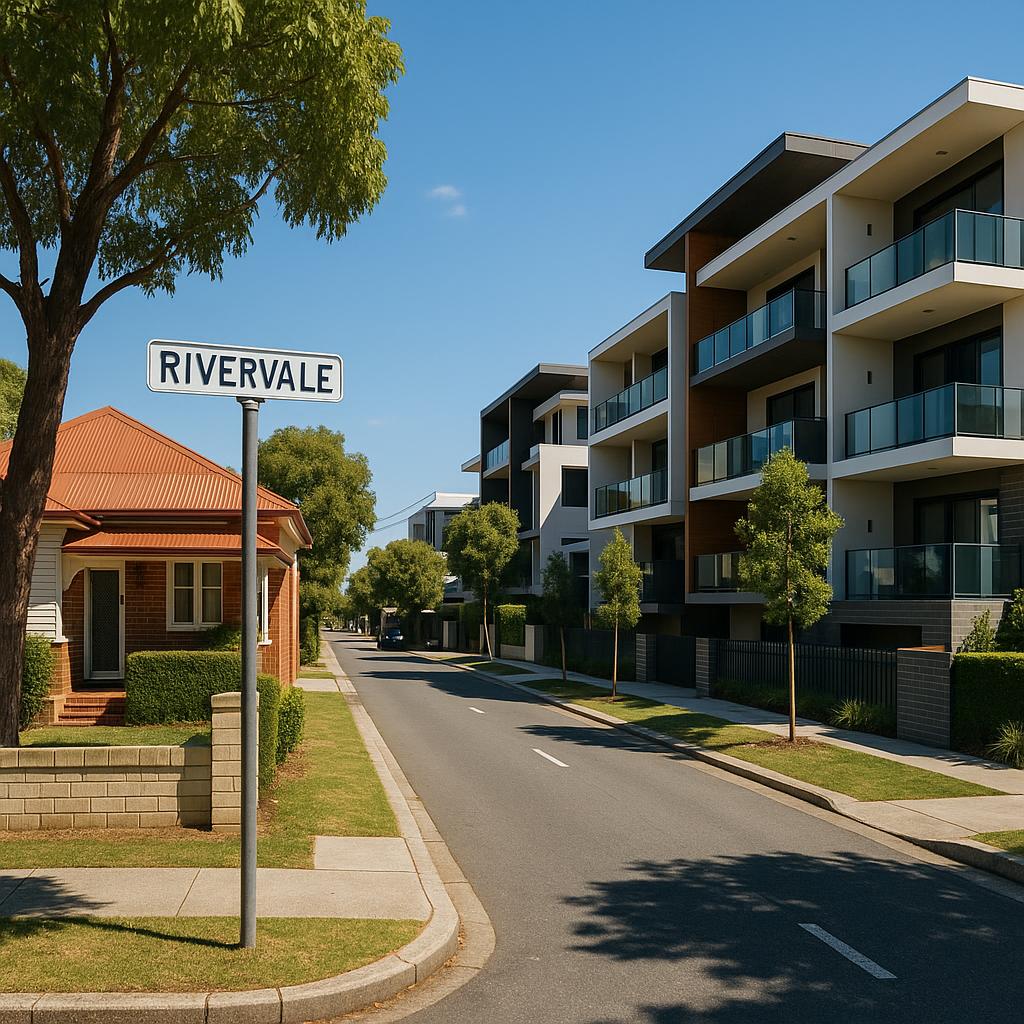
Rivervale is an established inner-eastern Perth suburb where convenience is the main selling point. It suits buyers who want to live or invest close to the city, the airport, and key roads without chasing a premium lifestyle postcode. The suburb’s appeal comes from practical access and a mixed housing stock rather than a single dominant character.
For buyers, that means the right pocket and property type matter. A renovated house on a quieter street can feel very different from a newer apartment near a busy route, even if both sit in Rivervale. This is a suburb where micro-location, parking, building quality, and renovation standard can shape outcomes more than broad suburb assumptions.
From an investment perspective, Rivervale often works best as a “function first” suburb. It can suit long-term holds, but the strongest purchases are usually those with clear end-user appeal and manageable ongoing costs. That is especially true if you are comparing land-based upside against low-maintenance convenience.
Buyer Demand
Demand is usually driven by buyers who prioritise access over large blocks. That includes first-home buyers wanting a central-east foothold, investors seeking reliable tenant interest, and downsizers who want easy-care living with good connectivity.
Competition tends to vary by property type. Well-presented homes with usable outdoor space can attract owner-occupiers, while well-located apartments and townhouses appeal to buyers focused on convenience and lower upkeep. If you are shopping here, compare the likely future buyer pool before you bid.
Rental Market
Rivervale’s rental appeal comes from its practical location and the flexibility of its housing stock. It can suit tenants who want shorter commutes, airport access, or a lower-friction base close to work and services.
For investors, the safest rental strategy is usually simple: choose a layout that is easy to maintain, easy to inspect, and easy to explain to tenants. Units with parking, decent storage, and well-run strata often have a cleaner leasing story than poorly configured stock or buildings with obvious upkeep issues.
Lifestyle, Transport & Schools
Rivervale offers a convenience-led lifestyle rather than a boutique village feel. It is a practical suburb for people who value time savings, quick travel, and everyday efficiency. That makes it attractive to professionals, shift workers, and households that spend less time at home during the week.
Transport access is a major part of the suburb’s identity. Major roads and public transport connections can materially influence both livability and resale demand, especially for buyers who commute regularly. Airport proximity can also be a genuine advantage for frequent travellers and people working in aviation-related jobs.
School considerations should be checked carefully by families, because catchments and enrolment rules can matter more than general suburb reputation. Verify current information directly before assuming a property suits your schooling needs.
Rivervale Suburb Profile
Official 2021 Census snapshot for the ABS Suburbs and Localities geography.
Age profile
Housing tenure
Occupied private dwellings by tenure type.
Salary & income profile
Median total income reported in the Census.
*Annual figures are weekly median × 52 estimates, not separate ABS annual medians.
Education & qualifications
Highest educational attainment, people aged 15+.
Employment status
People aged 15+ who reported being in the labour force.
Industry of employment
Top responses among employed people aged 15 years and over.
Occupation profile
Broad occupation groups among employed residents, including managers.
Property Type Guide
- Older houses: Best for buyers wanting land, renovation upside, or longer-term flexibility; inspect for maintenance, layout constraints, and update costs.
- Renovated homes: Best for owner-occupiers wanting move-in-ready convenience; check that the improvements are functional, not just cosmetic.
- Apartments and units: Best for investors, first-home buyers, and downsizers who prioritise low maintenance; review strata costs, rules, and building condition.
- Townhouses and newer infill stock: Best for buyers wanting a middle ground; assess privacy, shared walls, parking, and ongoing strata obligations.
- Selection rule: Start with your strategy, then shortlist by street quality, build quality, light, parking, and resale appeal.
Risks & Watch-Outs
- Traffic noise and busier road exposure can affect liveability and tenant demand.
- Some lower-lying or drainage-sensitive pockets may need closer checking during due diligence.
- Strata properties can carry ongoing levies, repair obligations, and rules that reduce flexibility.
- Older dwellings may hide repair needs that do not show up in cosmetic renovations.
- Buying on price alone can backfire if the layout, parking, or street presentation weakens resale appeal.
Nearby Suburbs to Compare
- Belmont
- Lathlain
- Burswood
- Ascot
- Carlisle
FAQ
Is Rivervale a good suburb for first-home buyers?
Yes, if you want a well-connected Perth location and are comfortable trading land size or prestige for convenience. First-home buyers should focus on property type, ongoing costs, and the quality of the immediate street rather than the suburb label alone.
Is Rivervale good for investors?
It can be, because the suburb has broad practical appeal for tenants who want access, transport, and low-friction living. The strongest investor outcomes usually come from easy-to-maintain properties with sensible layouts, manageable strata, and good parking or access.
What property type is usually safest in Rivervale?
There is no universal safest choice. Apartments can suit yield-focused buyers, houses can suit long-term growth-minded buyers, and townhouses can provide a balance. The key is matching the asset to your strategy and checking building quality carefully.
What should buyers inspect most carefully?
Check noise exposure, drainage or flood-related issues where relevant, parking practicality, strata records if applicable, and whether renovations have solved real problems or only improved presentation. For houses, look beyond paint and flooring to structure and maintenance.
How does Rivervale compare with nearby suburbs?
Rivervale is often compared with Belmont, Lathlain, Burswood, Ascot, and Carlisle. The right comparison depends on whether you want more lifestyle character, more apartment choice, stronger convenience, or a different buyer profile.
Conclusion
Rivervale is a practical Perth suburb for buyers who value access, flexibility, and a mix of housing options. It is not a one-size-fits-all market, so the best result comes from choosing the right property type, checking the right street, and verifying current market evidence before committing.
Sources & How to Verify
- Check current sold prices and active listings on Domain so you are comparing real, up-to-date market evidence rather than relying on stale estimates.
- Review recent listing history and rental competition on realestate.com.au to understand how quickly similar properties are being marketed and leased.
- Use the Australian Bureau of Statistics for suburb and area context, but verify that any demographic information is current and relevant to your purpose.
- Confirm zoning, planning controls, and redevelopment considerations through WA Planning before assuming a house or site has future subdivision or development potential.
- Check public transport routes and service patterns on Transperth so you can judge commute convenience from the specific property, not just the suburb.
- Use the My School site and official school information to verify catchments and enrolment options, rather than relying on informal rankings or reputation.
- Review local council information on City of Belmont for planning, local services, and any area-specific considerations that could affect ownership or works.
- Ask for strata records, building reports, and recent maintenance details directly from the seller or agent, because those property-specific documents often reveal more than suburb-level commentary.
General information only, not financial or legal advice. Always verify current data before buying or selling.