Quick Answer
Belmont WA is a practical inner-east Perth suburb that suits buyers who value convenience, transport access, and a mix of older housing with infill potential. It tends to appeal to first-home buyers, upsizers, and investors who want broad tenant and resale appeal rather than prestige positioning. The key is to choose the right pocket and the right dwelling type, because condition, road exposure, and future improvement scope can matter as much as the suburb name.
Key Takeaways
- Belmont’s core appeal is location: it offers close-in access without the premium of inner-city Perth.
- The suburb attracts a mix of owner-occupiers and renters, which can support liquidity across market cycles.
- Older homes may reward buyers, but only when condition, layout, and renovation scope are properly assessed.
- Low-maintenance dwellings can suit investors; houses with land can suit buyers chasing flexibility and longer-term upside.
- Street-by-street differences are important, so compare noise, access, parking, and amenity before committing.
Pros & Cons
Pros
- Strong convenience logic for commuting to Perth CBD, the airport, and eastern employment corridors.
- Diverse housing stock, including houses, villas, townhouses, and older dwellings with improvement potential.
- Broad appeal to both buyers and tenants can help support resale and leasing depth.
Cons
- perty quality can vary sharply between streets and between older and newer stock.
- Some homes may need significant updating, maintenance, or site-specific due diligence.
- Not every pocket offers the same amenity level, quietness, or family-friendly feel.
Market Overview
Belmont is an inner-east Perth suburb with a practical, connected profile rather than a premium lifestyle one. It is known for access to major roads, the airport precinct, and nearby commercial and employment hubs, which helps explain why it remains relevant to both buyers and investors.
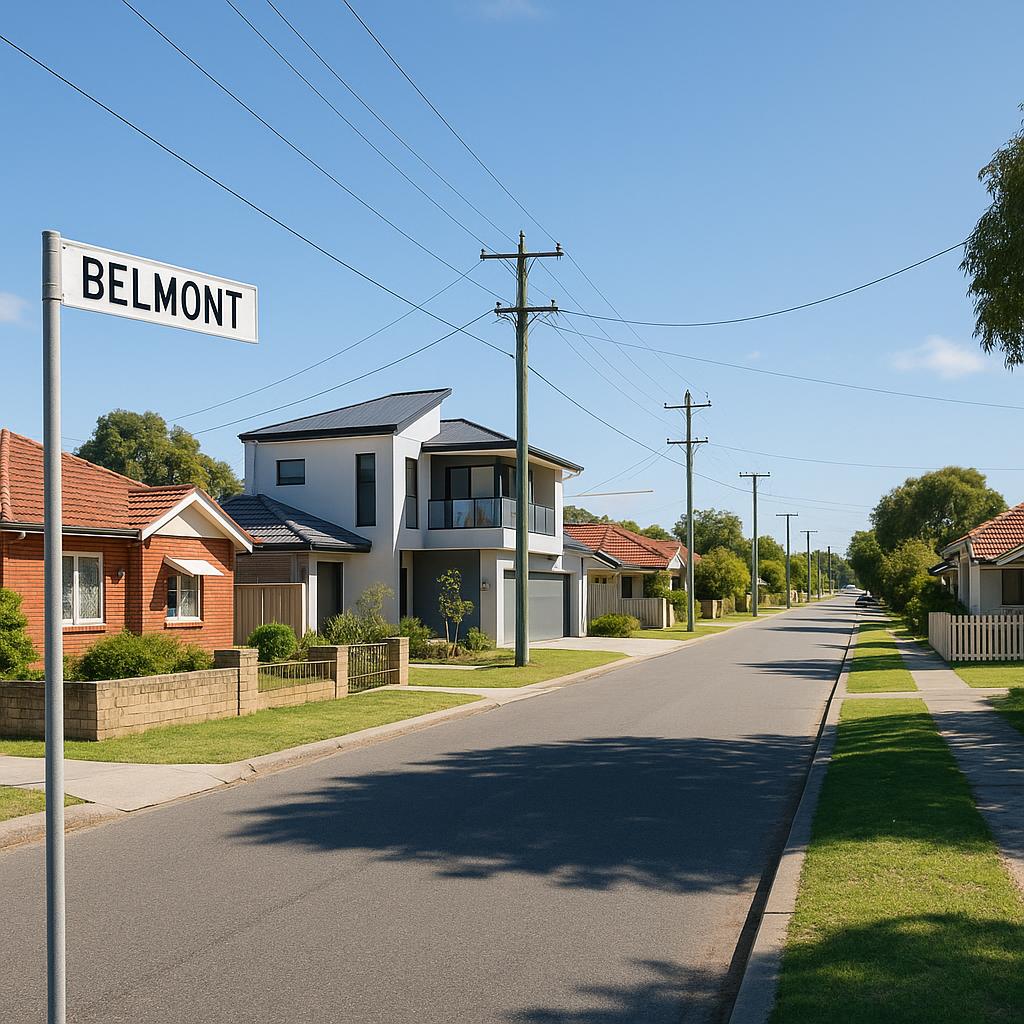
The housing mix is a major part of the story. Belmont typically offers older established homes alongside villas, duplexes, townhouses, and newer infill, so the “best” purchase often depends on whether the goal is renovation upside, low-maintenance ownership, or land-backed flexibility.
For investors and owner-occupiers, micro-location matters. A tidy property on a calmer street with good parking and usable outdoor space can feel very different to a similar dwelling near heavier traffic or busier activity. In a suburb like Belmont, the asset quality often drives the outcome more than the suburb label alone.
Buyer Demand
Demand in Belmont is usually driven by people who prioritise convenience and access. That includes first-home buyers seeking relative affordability, downsizers wanting easier living, and professionals or families who want straightforward access to work, shopping, and transport routes.
From an investment perspective, the appeal is tenant depth. Properties that are easy to maintain, well-located, and practical to live in tend to perform better because they match a wide range of renters, including commuters, airport workers, and small households.
Rental Market
Belmont generally suits tenants who want functionality over prestige. That means investors should focus on properties with sensible layouts, good parking, usable storage, and low maintenance demands, because those features often matter more than cosmetic upgrades alone.
A house may attract longer-term tenants if it offers space and versatility, while a villa or unit can suit busy renters who want simplicity and lower upkeep. The key is to verify current rental listings and compare similar properties carefully, rather than assuming a renovated finish automatically translates to stronger rent.
Lifestyle, Transport & Schools
Belmont offers a convenience-led lifestyle. It is well suited to households that want quick access to daily services, retail, employment hubs, and arterial roads, even if the suburb does not deliver the village atmosphere or prestige feel of some higher-priced Perth areas.
Transport is one of Belmont’s strongest practical advantages. The suburb works well for commuters and for people who need airport access or regular cross-city travel. That convenience can broaden both buyer and renter pools, which is why the suburb often suits time-poor households and working professionals.
For families, schools, childcare, parks, and commute patterns should be checked directly using current zoning and enrolment information. Do not rely on assumptions from older advice, because catchments, intake rules, and school preference can change. A good Belmont property is often one that shortens the daily routine as much as it improves lifestyle.
Belmont (WA) Suburb Profile
Official 2021 Census snapshot for the ABS Suburbs and Localities geography.
Age profile
Housing tenure
Occupied private dwellings by tenure type.
Salary & income profile
Median total income reported in the Census.
*Annual figures are weekly median × 52 estimates, not separate ABS annual medians.
Education & qualifications
Highest educational attainment, people aged 15+.
Employment status
People aged 15+ who reported being in the labour force.
Industry of employment
Top responses among employed people aged 15 years and over.
Occupation profile
Broad occupation groups among employed residents, including managers.
Property Type Guide
- Houses: Best for buyers wanting land, future flexibility, and renovation upside; watch for maintenance and original-condition costs.
- Units and villas: Best for investors or low-maintenance buyers; check strata, storage, outdoor space, and shared-cost obligations.
- Townhouses and duplex-style homes: Offer a middle ground between space and ease of ownership; review design quality and any shared rules.
- Renovators: Can work well if the structure and site are sound; a low asking price is not value if repairs are extensive.
- Updated homes: Suit buyers wanting move-in readiness and simpler leasing; compare the premium against the cost of doing work yourself.
Risks & Watch-Outs
- Micro-location risk is real, because traffic exposure, nearby uses, and street presentation can materially affect liveability and resale.
- Older stock may hide repair or drainage issues, so building and pest inspections are worth considering before you commit.
- Flooding, drainage, and site-specific constraints should be checked using official mapping and due diligence, not assumptions.
- Strata properties require careful review of levies, maintenance responsibilities, and any by-laws that affect use or future costs.
- Noise from roads, airport activity, or nearby commercial uses can be a feature or a flaw depending on the exact address.
Nearby Suburbs to Compare
- Ascot WA Property Market Guide: Buyers & Investors
- Rivervale WA Property Market Guide: Buyers & Investors
- Cloverdale WA Property Market Guide: Buyers & Investors
- Victoria Park WA Property Market Guide: Buyers & Investors
FAQ
Is Belmont WA a good suburb to buy in?
Belmont can be a good option if you value convenience, access, and a mix of dwelling types. It is often more about practical livability and long-term flexibility than prestige. The right result depends on pocket, condition, and your intended use.
Is Belmont better for buyers or investors?
It can suit both. Buyers may like the combination of access and renovation opportunity, while investors often appreciate tenant depth and low-maintenance property options. The better fit depends on whether you want land, ease of ownership, or strong rentability.
What property type is usually best in Belmont?
There is no single best type. Houses can suit buyers chasing land and upside, while units and villas can suit investors or people who want lower upkeep. Your budget, time horizon, and maintenance tolerance should guide the decision.
What should I inspect before buying in Belmont?
Check the condition of the roof, wet areas, drainage, parking, layout efficiency, and any strata obligations. Also inspect the street at different times of day to assess traffic, noise, and general amenity before making an offer.
How do I compare Belmont with nearby suburbs?
Compare commute convenience, housing stock, renovation potential, and lifestyle fit rather than price alone. Nearby suburbs can offer different trade-offs, so a slightly different suburb may be better if it suits your property strategy more closely.
Conclusion
Belmont is best understood as a convenience-first suburb with broad appeal and strong practical logic. It can suit investors and homeowners, but only if the property type, street, and condition align with the plan. The smart approach is to assess each asset on its merits, verify the details carefully, and buy with a clear use case.
Sources & how to verify
- Check current sold results and active listings on Domain so you are comparing recent Belmont sales and rental competition, not stale assumptions.
- Review nearby sales evidence on realestate.com.au to understand asking patterns, dwelling types, and how presentation affects market response.
- Use the Australian Bureau of Statistics to verify broader demographic and household trends before drawing conclusions about buyer or tenant profiles.
- Confirm zoning, redevelopment controls, and planning considerations through the WA Department of Planning, Lands and Heritage before assuming a site has improvement potential.
- Check local roads, infrastructure, and place management updates via the City of Belmont to see whether nearby works or local policies may affect a property.
- Verify school intake and catchment information through WA Department of Education rather than relying on third-party school summaries.
- Inspect flood and drainage exposure using relevant government mapping and request property-specific disclosure where available, because risk can vary street by street.
- Speak with a local property manager and building inspector to test rentability, maintenance risk, and likely buyer appeal for the exact dwelling you are considering.