Quick Answer
Sandgate is a bayside suburb that suits buyers and investors who value character, walkability, rail access, and a strong local identity. It is generally best for owner-occupiers seeking lifestyle and established streets, and for investors wanting durable tenant demand rather than short-term speculation. The key is to buy the right property type: older homes can offer upside, but condition, flood awareness, and maintenance costs matter just as much as location.
Key Takeaways
- Sandgate is a lifestyle-led market where coastal amenity, village convenience, and rail access all support demand.
- Owner-occupiers often compete strongly for well-presented homes near the foreshore, station, and local services.
- Investors should focus on tenant durability, maintenance burden, and layout practicality rather than chasing headline appeal.
- Older Queenslanders and established homes can be rewarding, but renovation scope and building condition need careful assessment.
- Best results usually come from matching the asset to your strategy, then verifying overlays, access, and comparable sales.
Pros & Cons
Pros
- Walkable village feel with strong bayside lifestyle appeal.
- Rail access broadens buyer and tenant demand beyond purely local users.
- Character housing and established streetscapes support long-term interest.
Cons
- Older housing can bring higher upkeep and renovation uncertainty.
- Some pockets may need careful flood and drainage due diligence.
- Popular locations can feel expensive relative to condition if emotion leads the purchase.
Market Overview
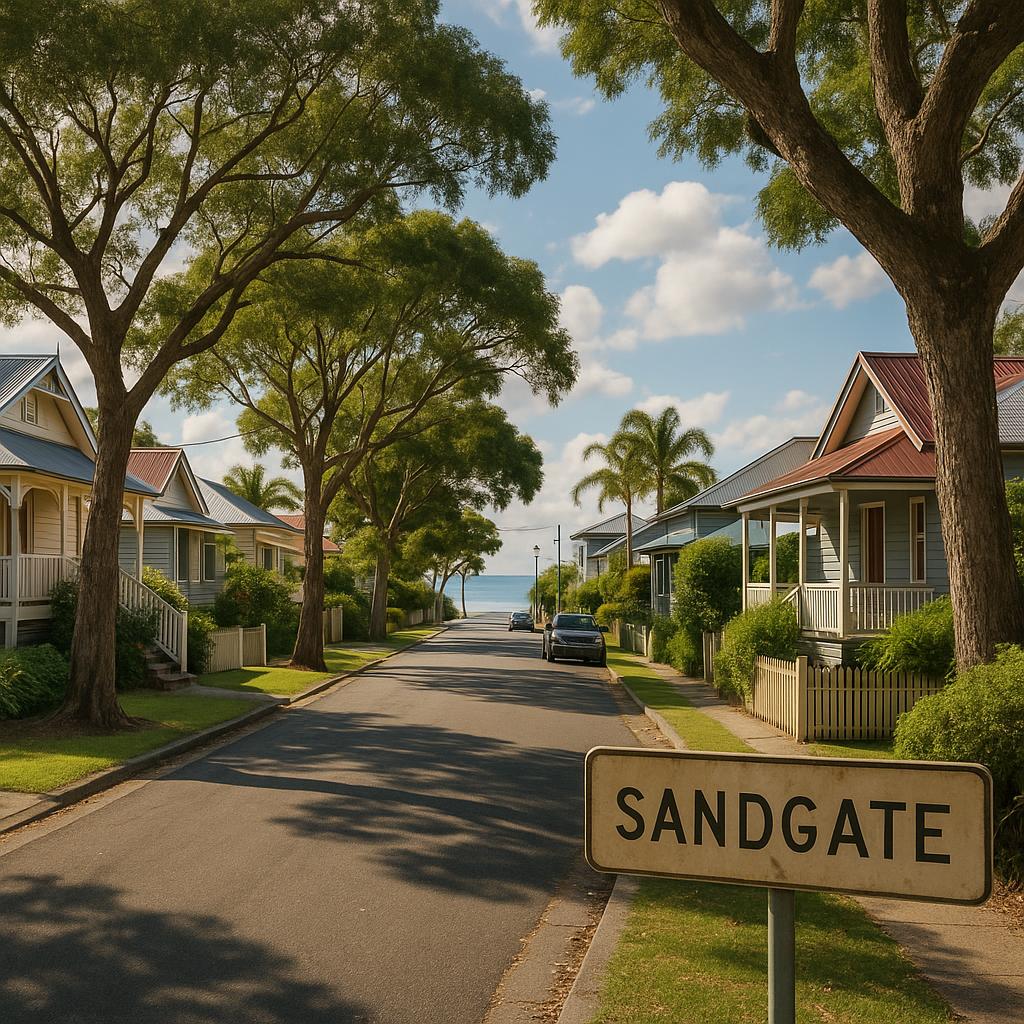
Sandgate is one of Brisbane’s more distinctive bayside suburbs: established, character-filled, and strongly shaped by lifestyle rather than large-scale new development. It tends to appeal to buyers who want a quieter coastal feel with everyday convenience, especially near the village, foreshore, and train access.
That combination gives Sandgate a different market rhythm from outer-growth suburbs. Demand is often driven by owner-occupiers, downsizers, and commuters who value amenity and identity. For investors, that usually means solid holding appeal, but it also means the best properties are often selected for liveability, presentation, and position rather than pure yield.
The practical takeaway is simple: Sandgate rewards buyers who think suburb-by-suburb and street-by-street. A great home in the wrong pocket, or a good location with poor building condition, can change the economics quickly. Use current sales evidence, inspection findings, and local planning checks before making an offer.
Buyer Demand
Buyer demand in Sandgate is typically supported by a mix of lifestyle buyers, commuters, and established households wanting a suburb with personality. The market often suits people who are willing to pay for convenience, heritage character, and foreshore proximity.
Competition is usually strongest for homes that are well maintained, easy to live in, and close to the features that define the suburb: the station, shops, and water-adjacent amenity. Renovator stock can also attract interest, but only when the underlying land, structure, and layout justify the work.
Rental Market
Sandgate’s rental appeal is tied to practicality and lifestyle. Tenants are often drawn to rail access, access to local amenity, and the sense of place that comes with an established bayside suburb. That can support steady enquiry from commuters, couples, and small households.
For investors, the strongest rental assets are usually easy to maintain, well presented, and flexible in layout. Older homes can still lease well, but the holding cost story matters: insurance, repairs, and ongoing maintenance can erode returns if the property needs constant attention.
Lifestyle, Transport & Schools
Sandgate offers a relaxed coastal lifestyle with a strong community feel. The foreshore, local cafes, and walkable streets make it attractive to buyers who want more than just a house—they want an everyday routine that feels calm and connected.
Transport is one of the suburb’s major practical strengths. Rail access is a real advantage for commuters, while road connections support access to nearby bayside and northern Brisbane destinations. That transport mix helps Sandgate appeal to a wider pool of buyers than purely lifestyle-only suburbs.
Schools and family convenience can also influence demand, but buyers should verify catchments and enrolment rules directly through official channels. In established suburbs like Sandgate, school access often affects both owner-occupier decisions and future resale interest, even when it is not the only factor.
Sandgate (Qld) Suburb Profile
Official 2021 Census snapshot for the ABS Suburbs and Localities geography.
Age profile
Housing tenure
Occupied private dwellings by tenure type.
Salary & income profile
Median total income reported in the Census.
*Annual figures are weekly median × 52 estimates, not separate ABS annual medians.
Education & qualifications
Highest educational attainment, people aged 15+.
Employment status
People aged 15+ who reported being in the labour force.
Industry of employment
Top responses among employed people aged 15 years and over.
Occupation profile
Broad occupation groups among employed residents, including managers.
Property Type Guide
- Queenslanders and character homes: Strong appeal for lifestyle buyers and renovators, but inspect for weathering, stumps, roofing, and electrical updates.
- Older freestanding homes: Often valued for land and flexibility; check drainage, liveability, and the likely cost of staged improvements.
- Townhouses and lower-maintenance homes: Useful for downsizers, professionals, and investors who want simpler upkeep and easier management.
- Units and smaller dwellings: Can provide a lower entry point, but quality of layout, body corporate settings, and tenant fit matter greatly.
- Renovator stock: Can offer upside if the bones are good, but budget discipline is essential to avoid overcapitalising.
Risks & Watch-Outs
- Older-home maintenance can be more expensive than first-time buyers expect, particularly for roofs, plumbing, wiring, and damp issues.
- Flood and drainage due diligence matters in bayside environments; check official overlays and site-specific risk before committing.
- Noise, traffic, and station proximity can improve convenience but reduce day-to-day comfort for some households.
- Renovation budgets can creep quickly, especially if cosmetic work uncovers structural or compliance issues underneath.
- Investors should factor in insurance, vacancy, and maintenance from day one rather than assuming location alone will carry returns.
Nearby Suburbs to Compare
- Bracken Ridge
- Deagon
- Boondall
- Brighton
- Shorncliffe
FAQ
Is Sandgate good for first-home buyers?
It can be, but only if the buyer is comfortable balancing lifestyle appeal with maintenance and condition risk. First-home buyers should compare smaller dwellings, townhouses, and older homes carefully, then verify whether renovation costs fit the overall budget.
Is Sandgate a good suburb for investors?
Yes, if the strategy is long-term and focused on durable tenant demand rather than chasing maximum yield. The suburb’s strengths are stability, lifestyle appeal, and broad renter interest, but investors should manage maintenance, insurance, and property-specific risks carefully.
What type of property tends to suit Sandgate best?
That depends on the strategy. Character homes suit buyers seeking lifestyle and upside, while lower-maintenance dwellings suit investors and busy households. The best purchase is usually the one that matches your holding budget, not just your emotional preference.
Should buyers be worried about flood risk?
They should be cautious, not fearful. In bayside suburbs, flood and drainage checks are standard due diligence. Use official mapping, building reports, and local advice to understand how a property performs in real conditions, not just how it looks at inspection time.
How does Sandgate compare with nearby suburbs?
Sandgate generally stands out for its village character and foreshore identity. Nearby suburbs can offer different trade-offs, such as more affordability, different home types, or simpler commuting. Comparing streets and property types is often more useful than comparing suburb names alone.
Conclusion
Sandgate suits buyers who want more than a postcode: it offers bayside character, transport convenience, and a strong sense of place. For investors, the appeal is in durable demand and broad tenant interest. The best outcomes usually come from careful property selection, realistic maintenance budgeting, and thorough due diligence before purchase.
Sources & How to Verify
- Check current comparable sales and active listings on Domain so you are not relying on stale price assumptions.
- Review nearby rental listings on realestate.com.au to understand current rental presentation, layout preferences, and tenant competition.
- Use the Queensland Government flood information to check whether a property may be affected by flood or drainage overlays.
- Confirm zoning, overlays, and planning controls through Brisbane City Council planning tools before assuming a site has a simple development path.
- Verify rail timetables and station details on Translink so commute times are based on current service information.
- Check school catchments and enrolment details via Queensland Government school search rather than relying on informal maps or agent comments.
- Use the ABS for broad demographic context, but treat it as background only because suburb conditions can change faster than census updates.
- Speak with a local building inspector, property manager, and agent to confirm street-by-street differences, likely maintenance costs, and tenant demand before you buy.