Quick Answer
The Gardens NT is best viewed as a convenience-led, inner Darwin suburb where location, building quality, and ongoing costs matter more than chasing a generic “hot spot” story. It can suit owner-occupiers who want easy access to the CBD and nearby amenities, as well as investors targeting tenant demand for low-maintenance, well-located homes. In this market, the right dwelling type and careful due diligence often matter more than the suburb name alone.
Key Takeaways
- The Gardens tends to reward buyers who prioritise central convenience, walkability, and day-to-day ease over land size or fringe-suburb growth narratives.
- Property type matters here: apartments, units, and smaller low-maintenance homes may attract the widest buyer and tenant interest.
- Buyers should pay close attention to strata terms, building condition, parking, ventilation, and climate-related maintenance.
- Investors often do better by focusing on practical tenant appeal, not just the lowest purchase price or a headline location.
- Current listings, recent sales, and leasing activity should always be checked before making a decision, because inner-suburb stock can move differently by property type.
Pros & Cons
Pros
- Central location with strong convenience appeal
- Established suburb feel close to parks and city amenities
- Well-suited to low-maintenance ownership for some buyers
Cons
- Limited stock can narrow buyer choice
- Some properties may involve strata complexity and extra costs
- Darwin weather can magnify maintenance and insurance considerations
Market Overview
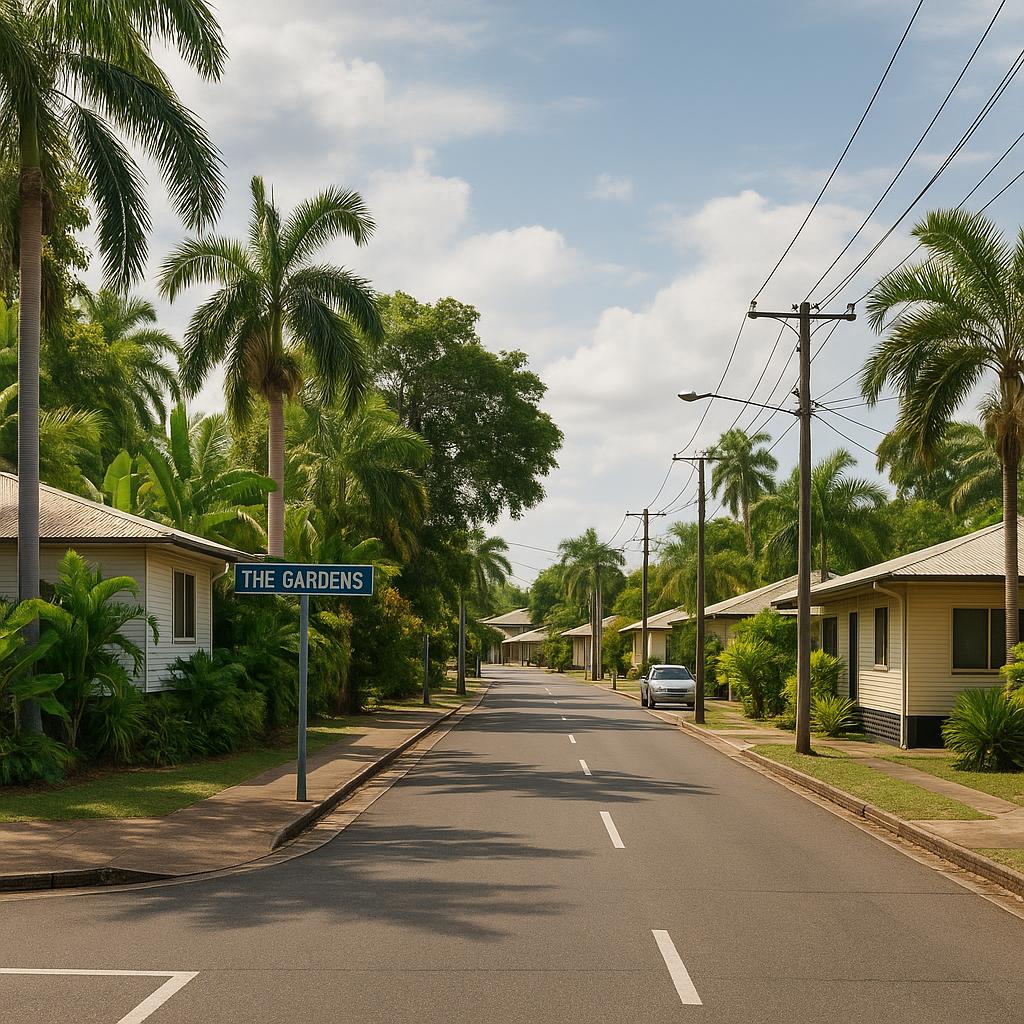
The Gardens is an established inner Darwin suburb where the market is shaped by convenience, amenity access, and the quality of individual properties. It is not a place where land release dynamics drive the story; instead, supply tends to be relatively constrained, and buyer attention often concentrates on well-presented homes that are easy to live in and easy to maintain.
That means two similar-looking properties can perform very differently depending on building condition, layout, parking, airflow, strata obligations, and how well the property has been cared for in Darwin’s climate. For buyers, this is a suburb where a disciplined inspection process matters more than broad assumptions about suburb reputation.
For investors, The Gardens is usually more about stable tenant appeal and manageable ownership than speculative upside. If you want a suburb where the practicalities of the dwelling shape outcomes as much as the postcode, this is a strong case-study suburb.
Buyer Demand
Buyer demand in The Gardens often comes from owner-occupiers who want a central lifestyle, downsizers seeking easier upkeep, and investors looking for properties that are straightforward to lease. The common thread is convenience: people are often prepared to trade size for location and lower friction.
Demand can be strongest for homes that feel functional and well cared for, especially those with practical layouts, parking, good ventilation, and reasonable ongoing costs. If a property is hard to maintain or awkward to live in, it may have a narrower resale pool even if the suburb itself is desirable.
Rental Market
The rental market in The Gardens generally suits tenants who value proximity to work, services, and central Darwin lifestyle amenities. This can include professionals, new arrivals to Darwin, and tenants who prefer an easier commute and a lower-maintenance living arrangement.
For investors, the key is to buy a property that is simple to occupy and simple to manage. In practical terms, that usually means a clean layout, reliable cooling, solid ventilation, secure parking where possible, and building administration that will not create unnecessary holding costs.
Lifestyle, Transport & Schools
The Gardens offers a lifestyle that is more about convenience than space. Residents typically value being close to parks, civic and retail services, and Darwin’s inner-area activity, which can reduce the need for long daily drives. That makes the suburb appealing to people who want a less complicated routine.
Transport convenience is one of the suburb’s key selling points, but buyers should still test the practical details: parking, peak-hour access, and how easy it is to complete daily errands without friction. In inner suburbs, these small details can shape both owner-occupier satisfaction and rental appeal.
For schools, families should verify catchments, enrolment eligibility, and daily route practicality directly with official sources. In suburbs like The Gardens, “close to schools” is not enough; the real question is whether the property works for the school run, traffic patterns, and your family’s day-to-day schedule.
The Gardens (NT) Suburb Profile
Official 2021 Census snapshot for the ABS Suburbs and Localities geography.
Age profile
Housing tenure
Occupied private dwellings by tenure type.
Salary & income profile
Median total income reported in the Census.
*Annual figures are weekly median × 52 estimates, not separate ABS annual medians.
Education & qualifications
Highest educational attainment, people aged 15+.
Employment status
People aged 15+ who reported being in the labour force.
Industry of employment
Top responses among employed people aged 15 years and over.
Occupation profile
Broad occupation groups among employed residents, including managers.
Property Type Guide
- Apartments/units: Often the best fit for buyers and investors who want convenience, lower upkeep, and a central location.
- Townhouses/villas: Useful for those wanting a middle ground between space and manageable maintenance, especially for downsizers or small households.
- Houses: Can offer more flexibility and control, but buyers should budget carefully for climate-related maintenance and ongoing care.
- Strata properties: Check fees, inclusions, building records, pet rules, and any special levies before you rely on the advertised price alone.
- Renovated stock: Can improve liveability and leasing appeal, but only if the renovation quality is genuine rather than cosmetic.
Risks & Watch-Outs
- Strata levies and special contributions can materially change the real cost of ownership.
- Older or poorly maintained stock may hide ventilation, moisture, or repair issues that are costly in Darwin’s climate.
- Parking, access, and noise can affect both resale depth and tenant satisfaction.
- Buyers can overvalue location and underweight ongoing holding costs, especially in smaller dwellings.
- Any property with limited natural light, weak airflow, or poor layout may be harder to rent or resell well.
Nearby Suburbs to Compare
- Stuart Park NT Property Market Guide: Buyers & Investors
- Larrakeyah NT Property Market Guide: Buyers & Investors
- Parap NT Property Market Guide: Buyers & Investors
- Fannie Bay NT Property Market Guide: Buyers & Investors
FAQ
Is The Gardens a good suburb for first-home buyers?
The Gardens can suit first-home buyers who value convenience and low-maintenance living, particularly if they want to stay close to Darwin’s core services. The main caution is to choose the right property type and check ongoing costs carefully before committing.
Is The Gardens better for investors or owner-occupiers?
It can work for both, but the stronger fit depends on the property. Owner-occupiers may value the lifestyle and centrality, while investors may prefer easy-to-lease homes with manageable upkeep and practical layouts that suit tenant demand.
What property types are most suitable in The Gardens?
Apartments, units, and smaller low-maintenance dwellings often make the most sense because they align with the suburb’s convenience-led appeal. Houses can still be attractive, but the maintenance and ownership burden should be weighed carefully.
What should buyers check before purchasing here?
Focus on strata costs, building condition, ventilation, parking, noise, and how the property handles Darwin weather. A thorough building and pest inspection, plus review of body corporate records if relevant, is essential.
How should investors assess rental potential in The Gardens?
Look for properties that are easy to maintain, comfortable in the climate, and appealing to tenants who want a central location. Check current rental listings and compare similar properties rather than relying on suburb-wide assumptions.
Conclusion
The Gardens NT is a strong example of a suburb where convenience, property quality, and ownership costs shape the outcome. It suits buyers and investors who want practical inner-Darwin living rather than speculative growth stories. If you match the right property type to your goals and verify the details properly, it can be a sensible, durable choice.
Sources & how to verify
- Check current listings and recently sold comparable properties on Domain so you can verify how the market is pricing similar homes right now.
- Review live rental listings on realestate.com.au to confirm what tenants are actually seeing and comparing in the current rental market.
- Use the ABS Census for suburb context, but cross-check any demographic assumptions against the latest release date before relying on them.
- Confirm planning, zoning, and development controls through the Northern Territory Government property and development resources before assuming a property can be altered or extended.
- Verify school catchments and enrolment eligibility directly with the NT Government school finder rather than relying on third-party map overlays.
- Review transport access and route planning using official Northern Territory transport information so you can test commute practicality rather than guessing from a map.
- Request strata records, building reports, and insurance details before purchasing, because these documents often reveal the real cost of ownership better than marketing copy.
- Cross-check agent claims against multiple primary sources, and always note the date stamp on any market report so you do not act on outdated data.