Quick Answer
Fannie Bay is one of Darwin’s most established lifestyle suburbs, and that matters because buyers typically pay for location quality, character, and convenience rather than sheer stock volume. It can suit owner-occupiers who want a premium inner-northern setting and investors who value resilient tenant interest from professionals and long-term renters. The main trade-off is that older coastal housing can bring higher maintenance and inspection risk, so the best purchases are usually the ones that combine good land, practical layout, and climate-aware upkeep.
Key Takeaways
- Fannie Bay is a lifestyle-led market where scarcity, reputation, and convenience matter more than generic suburb comparisons.
- Buyers often accept older housing stock in exchange for a stronger location and more established streetscape.
- Investors should underwrite maintenance carefully, especially for homes exposed to tropical weather and coastal wear.
- Rental appeal is strongest when the property feels easy to live in, cool, secure, and low-fuss for long-term tenants.
- Compare Fannie Bay against nearby suburbs to judge whether you are paying for premium location, prestige, or practical convenience.
Pros & Cons
Pros
- Prestigious, tightly held suburb identity that supports long-term desirability.
- Strong lifestyle appeal with coastal access, greenery, and proximity to key Darwin amenities.
- Suitable for buyers who value established neighbourhood character over new-build uniformity.
Cons
- Entry prices can be demanding, which reduces margin for error.
- Older homes may need more frequent upkeep, especially in tropical conditions.
- Scarce stock can push some buyers into emotional decision-making.
Market Overview
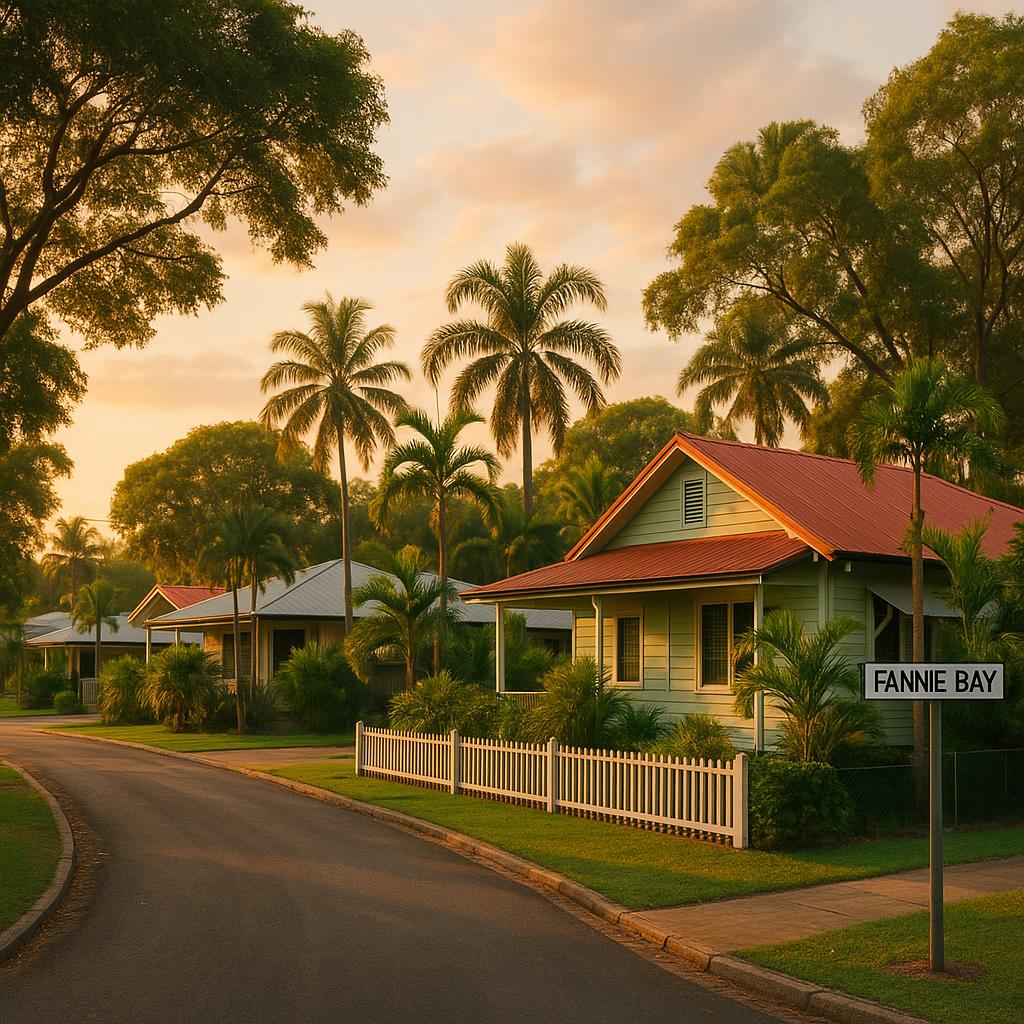
Fannie Bay is an established inner-northern Darwin suburb with a premium feel, a residential streetscape, and a reputation that tends to draw serious buyers rather than casual browsers. In suburb-profile terms, it is the kind of market where location, character, and liveability often matter as much as the floorplan itself.
The housing mix is generally older and more varied than in newer estates, which means buyers often compare renovated houses, traditional family homes, and lower-maintenance dwellings on a case-by-case basis. That variety is useful, but it also means two properties on the same street can perform very differently depending on upkeep, design, and how well they suit Darwin’s climate.
What makes the market distinct is the combination of scarcity and lifestyle demand. Buyers are not only assessing land and bricks; they are paying attention to shade, airflow, outdoor usability, and how the home sits within an established, sought-after pocket.
Buyer Demand
Demand in Fannie Bay is typically driven by owner-occupiers, professionals, and families who want convenience without sacrificing a premium residential feel. Investors also watch the suburb because quality tenants often respond to location, privacy, and a home that is easy to maintain.
For sellers, the practical takeaway is that presentation matters. A home that looks good online but feels hot, cramped, or maintenance-heavy in person may not perform as well as a less flashy property with sensible layout and strong liveability. For buyers, that means inspecting beyond cosmetics and asking whether the home genuinely suits tropical living.
Rental Market
Fannie Bay can appeal to tenants who want an established suburb with easy access to city-bound commuting and daily amenities. That usually narrows the pool to quality renters who are prepared to pay for convenience, comfort, and a better residential environment.
For investors, the key is to match the dwelling to that tenant profile. Secure parking, cooling efficiency, shade, and practical outdoor space can matter more than high-end finishes alone. A well-presented older home may lease more effectively than a stylish but impractical renovation if it feels comfortable in Darwin’s conditions.
Lifestyle, Transport & Schools
Fannie Bay offers a coastal, established lifestyle that many buyers find hard to replicate in newer suburbs. The appeal is not just scenic; it is the everyday ease of living close to recreation, city access, and well-used local amenity without feeling overly built-up.
Transport is generally convenient for drivers who want short trips into Darwin’s inner areas. When assessing a specific property, check parking, peak-hour route convenience, and how easy it is to move between home, work, and weekend destinations. In Darwin, those practical details can materially affect day-to-day satisfaction.
For families, education decisions are usually more about access and commute logic than abstract rankings. Proximity, drop-off convenience, and how the home fits the family routine can be more important than any single school metric. That is especially true for buyers balancing work, sport, and after-school commitments.
Fannie Bay Suburb Profile
Official 2021 Census snapshot for the ABS Suburbs and Localities geography.
Age profile
Housing tenure
Occupied private dwellings by tenure type.
Salary & income profile
Median total income reported in the Census.
*Annual figures are weekly median × 52 estimates, not separate ABS annual medians.
Education & qualifications
Highest educational attainment, people aged 15+.
Employment status
People aged 15+ who reported being in the labour force.
Industry of employment
Top responses among employed people aged 15 years and over.
Occupation profile
Broad occupation groups among employed residents, including managers.
Property Type Guide
- Older detached homes: Often offer better land presence and character, but inspect structure, ventilation, roof condition, and weather exposure carefully.
- Renovated family homes: Best when upgrades are functional rather than cosmetic, with layouts that support tropical comfort and easy entertaining.
- Character homes with updates: Can be attractive to lifestyle buyers, provided the renovation quality matches the suburb’s premium positioning.
- Smaller-lot or lower-maintenance dwellings: Useful for downsizers or investors who want less yard work and simpler ongoing upkeep.
- Buyer rule of thumb: Buy for land, liveability, or low maintenance—but be clear which objective you are prioritising before you inspect.
Risks & Watch-Outs
- Premium suburbs can create overconfidence, so compare each property on its own merits rather than relying on the suburb name alone.
- Older homes may hide maintenance issues in roofs, drainage, moisture management, or corrosion-prone components.
- Coastal and tropical exposure can increase ongoing wear, so factor in upkeep rather than assuming holding costs will be modest.
- Cosmetic renovations can mask practical problems, especially if airflow, shade, and layout were not improved.
- Limited stock can lead to emotional bidding, so set your ceiling price before you inspect and keep your due diligence disciplined.
Nearby Suburbs to Compare
- Parap NT Property Market Guide: Buyers & Investors
- Rapid Creek NT Property Market Guide: Buyers & Investors
- Nightcliff NT Property Market Guide: Buyers & Investors
- Darwin NT Property Market Guide: Buyers & Investors
- East Point
- The Gardens
FAQ
Is Fannie Bay a good suburb for first-home buyers?
It can be, but only if the budget stretches comfortably and the buyer is happy with an older, established housing mix. First-home buyers should focus on condition, borrowing buffer, and whether the property suits long-term ownership rather than chasing prestige alone.
Is Fannie Bay better for owner-occupiers or investors?
It tends to be especially attractive to owner-occupiers because lifestyle and location are major value drivers. Investors can still do well, but the case is usually strongest when the property is easy to maintain and appeals to quality long-term tenants.
What type of property performs best in Fannie Bay?
Well-located, well-maintained homes that suit tropical living usually stand out. Buyers often favour properties with good airflow, shade, practical outdoor areas, and renovations that improve function rather than only aesthetics. Land position and livability often matter more than size alone.
What should buyers inspect most carefully in older coastal homes?
Start with roof condition, drainage, moisture signs, corrosion, ventilation, and any evidence of deferred maintenance. In Darwin’s climate, small issues can become expensive if ignored, so a thorough building and pest inspection is essential before you commit.
How does Fannie Bay compare with nearby Darwin suburbs?
It usually sits in the premium conversation, but nearby suburbs may offer different trade-offs in value, amenity, or property type. Compare commute convenience, upkeep expectations, and the lifestyle premium you are actually paying for before deciding.
Conclusion
Fannie Bay is a premium Darwin suburb for buyers who value location, character, and lifestyle convenience. It can work well for both homeowners and investors, but success depends on property quality, not just suburb reputation. If you compare nearby areas, inspect carefully, and stay realistic about maintenance, it can be a strong long-term hold.
Sources & How to Verify
- Check current sales evidence on realestate.com.au so you can compare asking prices, sold listings, and time-on-market patterns before relying on any general suburb view.
- Review live rental listings on Domain to confirm the type of tenants, property features, and rent ranges that are actually being advertised now.
- Use the Northern Territory Government property, lands and planning pages to verify zoning, planning controls, and any local development considerations.
- Cross-check suburb boundaries and dwelling context with ABS if you want a reliable reference point for area definitions and broader demographic context.
- Confirm school options and catchment-related details through the NT school zones information rather than relying on anecdotal advice or outdated forum posts.
- Look at Darwin council information on City of Darwin for waste, infrastructure, local amenity, and any place-based updates that may affect liveability.
- For transport and road access, use official Northern Territory transport resources and map your daily commute at different times before you decide a home is “convenient.”
- Before buying, arrange a building and pest inspection and verify drainage, roof condition, and coastal wear directly on the property rather than assuming premium suburb stock is low-risk.