Quick Answer
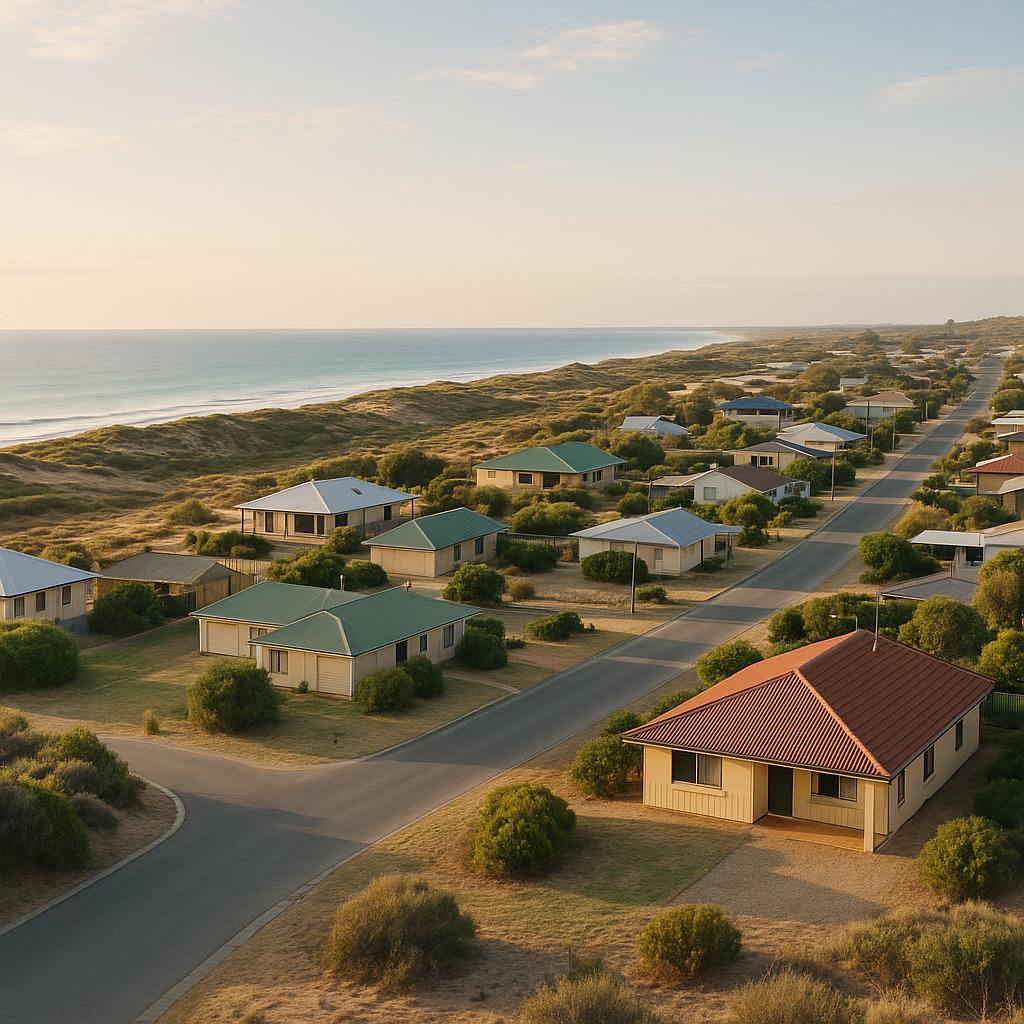
Preston Beach, Western Australia, is a small coastal lifestyle suburb best suited to buyers who prioritise beachside living, holiday-home appeal, and a quieter pace over inner-metro convenience. For investors, the opportunity is usually more about scarcity, lifestyle demand, and long-term holding than high-volume turnover.
- Best fit: lifestyle buyers, downsizers, holiday-home owners, and long-horizon investors.
- Main caution: smaller buyer and tenant pools can mean slower resale and more variable leasing demand.
- Key practical issue: coastal wear, insurance, and service access matter as much as the view.
Key Takeaways
- Preston Beach is a lifestyle-led market, not a high-volume suburban investment market.
- Coastal amenity is a major draw, but buyers should weigh maintenance, insurance, and weather exposure carefully.
- The suburb can suit patient investors who understand niche demand and are not relying on rapid capital growth.
- Owner-occupiers often value the peace, open space, and sense of escape more than commute convenience.
- Due diligence is essential because location benefits can come with practical trade-offs such as service access, seasonal demand, and infrastructure limitations.
- A strong decision here depends on matching the property to your goals: living, holiday use, hold-and-enjoy, or long-term niche investment.
Pros & Cons
Pros
- Coastal lifestyle and relaxed atmosphere
- Strong appeal for holiday and lifestyle buyers
- Lower-density feel with a quieter residential experience
- Potential scarcity value due to limited comparable coastal stock
- Attractive for buyers wanting a retreat-style property
Cons
- Smaller buyer and tenant pool than established metro suburbs
- Potentially slower resale process due to niche demand
- Maintenance can be higher in coastal environments
- Service, shopping, and transport options may be limited
- Seasonal demand can make investment planning less predictable
Why these trade-offs matter: A suburb can feel highly desirable to live in but still be challenging as a short-term investment. Always test the exit strategy, not just the entry price.
Suburb snapshot
What Preston Beach is known for
- Quiet coastal setting in Western Australia
- Holiday and lifestyle appeal
- Small-suburb character rather than urban density
- Nature-based identity and retreat-style living
Property profile overview
- Likely appeal to standalone homes, beach-oriented cottages, and low-density residential stock
- Buyers often look for easy access to the coast, outdoor space, and low-maintenance layouts
Investor view: Preston Beach can work as a niche, long-hold purchase where scarcity and lifestyle demand matter more than broad market liquidity. If you are comparing it with inland alternatives, see South Bunbury Property Market & Investment Guide 2026, Western Australia and Beachlands Property Market & Investment Guide 2026, Western Australia for a broader coastal-vs-service-centre contrast.
Homeowner view: For owner-occupiers, Preston Beach often makes sense when lifestyle value outranks convenience. It suits buyers who want calm, beach access, and a slower weekly rhythm.
Market drivers
- Coastal lifestyle demand
- Limited local housing supply and small-market dynamics
- Holiday-home interest and sea-change buyer sentiment
- Broader regional trends affecting affordability and mobility
Small suburbs can move differently from the wider market. Emotional demand, scarcity, and lifestyle preferences can be more influential than standard metro indicators. If you are comparing the “retreat” end of the market, it can also help to review similar niche locations such as Ocean Beach Property Market & Investment Guide 2026, Western Australia and Goode Beach Property Market & Investment Guide 2026, Western Australia.
Cost of Living Breakdown
- Groceries and essentials: verify where you will actually shop and how often you will travel for top-up runs.
- Fuel and transport: add regular driving into your budget if the suburb is not close to major services.
- Insurance: coastal exposure can affect premiums, excesses, and policy conditions.
- Maintenance: salt, wind, UV exposure, and moisture can increase repainting, corrosion checks, and external upkeep.
- Internet and utilities: confirm available services at the exact address, not just the suburb level.
Practical tip: A home that looks affordable on purchase price can become more expensive once travel, upkeep, and insurance are fully loaded into your budget.
For comparison with other WA lifestyle markets, you may also want to review Kalbarri Property Market & Investment Guide 2026, Western Australia and North Beach Property Market & Investment Guide 2026, Western Australia to understand how different coastal settings change ongoing cost profiles.
Lifestyle & Daily Life
Daily life in Preston Beach is typically quiet, outdoor-oriented, and more self-directed than in a metro suburb. Residents usually choose it for the pace and environment rather than for convenience. That means beach time, walking, fishing, and unhurried weekends often shape the lifestyle proposition.
- Good for buyers who value open space and low-density living
- Less suited to those who want frequent dining, retail, and service options close by
- Can suit remote workers, retirees, and second-home owners
Homeowner view: If your ideal week is defined by calm, nature, and fewer moving parts, Preston Beach may feel restorative. If your routine depends on quick access to services, the trade-off may be harder to accept over time.
Schools & Education
Families should verify nearby schooling, childcare, and support services directly, as small lifestyle suburbs often rely on surrounding towns for education access. Check current catchment arrangements, transport practicality, and travel times before making assumptions.
- Confirm the nearest government and non-government school options
- Check preschool, childcare, and vacation care availability
- Consider the daily logistics for multiple children and after-school activities
Verification step: Use official school finder tools and call schools directly to confirm catchments, enrolment rules, and transport arrangements.
Transport & Commute Details
Transport convenience is a major part of the Preston Beach decision. Buyers should test the actual driving route to work, school, shops, medical services, and major town centres rather than relying on map impressions alone.
- Road access matters more than public transport in a low-density coastal setting
- Commute suitability depends heavily on your work pattern and travel tolerance
- Remote workers and retirees often find the location easier to justify than daily commuters
If you need frequent access to larger service hubs, compare Preston Beach with more connected suburbs such as Wembley Property Market & Investment Guide 2026, Western Australia or Osborne Park Property Market & Investment Guide 2026, Western Australia to weigh convenience against lifestyle value.
Property type guide
In a small coastal suburb, property type matters because it determines who can realistically buy or rent the home later. The broadest-demand properties are usually those with simple layouts, easy upkeep, and outdoor usability without excessive maintenance.
- Detached homes: usually the main lifestyle choice for buyers seeking privacy and space.
- Low-maintenance homes: often appeal to downsizers, holiday-home buyers, and investors.
- Outdoor-friendly properties: usable verandas, sheltered entertaining areas, and practical parking can improve appeal.
Common mistake: Over-customised coastal properties can look attractive but narrow the resale pool. Simple, durable, broadly appealing homes are usually easier to hold and exit.
Comparison with Other Areas
Preston Beach should be compared on lifestyle and liquidity, not just on postcode. Relative to busier coastal hubs, it typically offers more seclusion but fewer services. Relative to inland alternatives, it offers stronger retreat value but less day-to-day convenience.
- Preston Beach vs busier coastal hubs: quieter, more niche, more retreat-like.
- Preston Beach vs inland alternatives: stronger lifestyle value, but often less practical for frequent errands and commuting.
- Preston Beach vs larger regional centres: likely less amenity, but also less density and more privacy.
For a richer comparison framework, look at Parkfield Property Market & Investment Guide 2026, Western Australia and Watermans Bay Property Market & Investment Guide 2026, Western Australia to see how different buyer pools and amenity profiles shape demand.
Rental Market Insights
Rental demand is likely to be shaped by lifestyle appeal, seasonal travel patterns, and the availability of local work and services. In a small coastal market, landlords should assume the tenant pool may be narrower and more variable than in metro areas.
- May suit longer stays, holiday arrangements, or niche tenant profiles
- Well-maintained, flexible homes tend to have broader appeal than highly stylised retreats
- Seasonality can influence both occupancy and rent-setting power
Investor view: If you are relying on rental income, speak with a local property manager about off-peak vacancy risk, tenant profile, and whether short-stay or longer-term leasing is more realistic for the specific property.
Future Growth & Development
Future performance in a suburb like Preston Beach usually depends on gradual changes rather than dramatic transformation. That may include improved access, modest amenity upgrades, shifting lifestyle preferences, or broader regional growth around coastal and sea-change markets.
- Infrastructure or access improvements
- Local amenity changes
- Environmental constraints and planning rules
- Longer-term coastal lifestyle demand
For context on how regional growth drivers can vary, compare with Onslow Property Market & Investment Guide 2026, Western Australia or The Vines Property Market & Investment Guide 2026, where growth narratives are driven by different fundamentals.
Safety & Crime
Buyers should assess safety in practical terms: lighting, visibility, passive surveillance, property security, and how the area feels during both busy and quiet periods. In holiday-style suburbs, vacant properties need extra attention because the risk profile can change when homes are unattended.
- Check street lighting and sightlines
- Ask local agents about typical vacancy periods and security practices
- Review official police or local government information rather than relying on hearsay
Balanced view: Safety perceptions matter, but they should be based on current official sources and on-site observation. Quiet suburbs can feel peaceful for residents yet still require sensible security planning for vacant homes.
Who This Area Is Best For
- Lifestyle buyers seeking coastal calm
- Downsizers wanting a simpler pace
- Holiday-home owners
- Patient investors with a long-term horizon
- Remote workers who value environment over commute speed
Less suitable for: buyers needing strong public transport access, families requiring frequent services nearby, investors seeking highly liquid fast-turnover assets, and buyers uncomfortable with seasonal demand patterns.
Due diligence checklist
- Inspect the building condition thoroughly, including roof, windows, drainage, and external finishes
- Assess coastal wear, corrosion risk, and moisture exposure
- Verify internet, utilities, and service reliability at the exact address
- Check local zoning, planning controls, and any holiday-letting restrictions
- Compare insurance quotes and policy terms before committing
- Test the commute to schools, shops, and medical services in real driving conditions
- Speak with a local property manager about rental demand and vacancy patterns
- Visit in different seasons or at least different times of day
Decision rule: If you would not be comfortable holding the property through a slower resale period, the purchase may be too niche for your risk profile.
Red flags / watch-outs
- Overly unique homes with limited resale appeal
- Signs of coastal deterioration or poor upkeep
- Heavy reliance on peak-season optimism
- Limited awareness of insurance and maintenance costs
- Buying without testing practical access and service needs
- Assuming lifestyle appeal automatically equals strong investment performance
Common mistake: A property can feel perfect for holidays but still be a poor fit for rental demand, insurance cost, and resale liquidity. Treat emotion as one input, not the whole decision.
Tools, templates & resources
- Local council planning maps and local planning scheme documents
- WA Government school and catchment tools
- Police and local government community safety information
- Insurance comparison quotes for coastal properties
- Property manager rental appraisal and seasonal demand discussion
- Building and pest inspection reports
Use a simple comparison template: purchase price range, estimated maintenance, insurance, travel costs, rental flexibility, likely buyer pool, and exit strategy. That framework is often more useful in a niche coastal market than chasing a headline yield number.
Sources & how to verify
- ABS for census, household, and local demographic context.
- REIWA for WA market commentary and suburb-level property activity checks.
- Domain to review current listings, recent sales signals, and rental asking trends.
- realestate.com.au to compare active listings and market presentation.
- My School for school information and comparison context.
- WA Department of Education for enrolment, zoning, and official school details.
- WA Police for official safety and community information.
- WA Planning Commission / DPLH for planning and land-use context where relevant.
- Western Australia tourism information to understand the lifestyle and visitor appeal of the broader region.
- Check the exact property address against council, insurance, and utility sources before relying on suburb-wide assumptions.
FAQ
Is Preston Beach a good investment in 2026?
It can be, but mainly for buyers with a long time horizon and realistic expectations. This is usually a niche market rather than a high-turnover growth market, so the quality of the property and your exit strategy matter.
Is Preston Beach better for homeowners or investors?
It is often better suited to homeowners or lifestyle-led investors. Investors can still participate, but they should underwrite the holding costs, maintenance, and rental demand carefully.
What type of property performs best?
Broadly appealing, low-maintenance homes with practical outdoor living tend to be the safest bet. Highly customised properties can be harder to rent and resell.
Is Preston Beach suitable for families?
It can be for some families, but the education, services, and transport logistics need careful checking. Families who need frequent access to schools and activities may find the location less convenient.
How important is seasonality?
Very important. Seasonality can affect buyer interest, rental occupancy, and even how quickly a property sells. Do not rely only on peak-period impressions.
What are the main risks for investors?
The main risks are a small buyer pool, variable tenant demand, coastal maintenance costs, and slower liquidity. Those risks are manageable if you buy the right property and plan to hold it for the long term.
What should I verify before buying?
Verify insurance, building condition, access to services, planning rules, and local rental demand. Then compare those findings with your lifestyle or investment goals.
Conclusion
Preston Beach offers a clear lifestyle proposition: coastal calm, retreat-style living, and niche buyer appeal. It can work well for homeowners and patient investors who understand the trade-offs. The main question is not whether the suburb is attractive, but whether its pace, service access, maintenance profile, and market liquidity match your goals.
Best next step: compare the suburb’s lifestyle benefits against your practical needs, review property condition and ongoing costs, and treat the purchase as both a home decision and a long-term market decision.
General information only. This content is not financial or legal advice.