Quick Answer
- Goode Beach is a niche coastal suburb in Albany with strong appeal for lifestyle buyers and long-hold investors.
- Property value tends to be driven by scarcity, outlook, privacy, and condition rather than broad suburb turnover.
- Best fit: sea-changers, downsizers, owner-occupiers, and patient investors.
- Less suited to buyers needing dense amenity, easy commuting, or a wide rental pool.
Key Takeaways
- Goode Beach is a coastal market where the exact property position can matter as much as the postcode.
- Coastal wear, weather exposure, and insurance considerations should be treated as core buying factors.
- For investors, the strongest case is often capital preservation and lifestyle demand rather than aggressive yield assumptions.
- For homeowners, the suburb can deliver exceptional lifestyle value if you are comfortable with a quieter, less convenient setting.
Pros & Cons
- Pros: beachside setting, privacy, low-density feel, strong emotional appeal, limited comparable stock.
- Cons: car dependence, narrower tenant pool, coastal maintenance, fewer everyday amenities, more sensitivity to presentation and condition.
Suburb snapshot
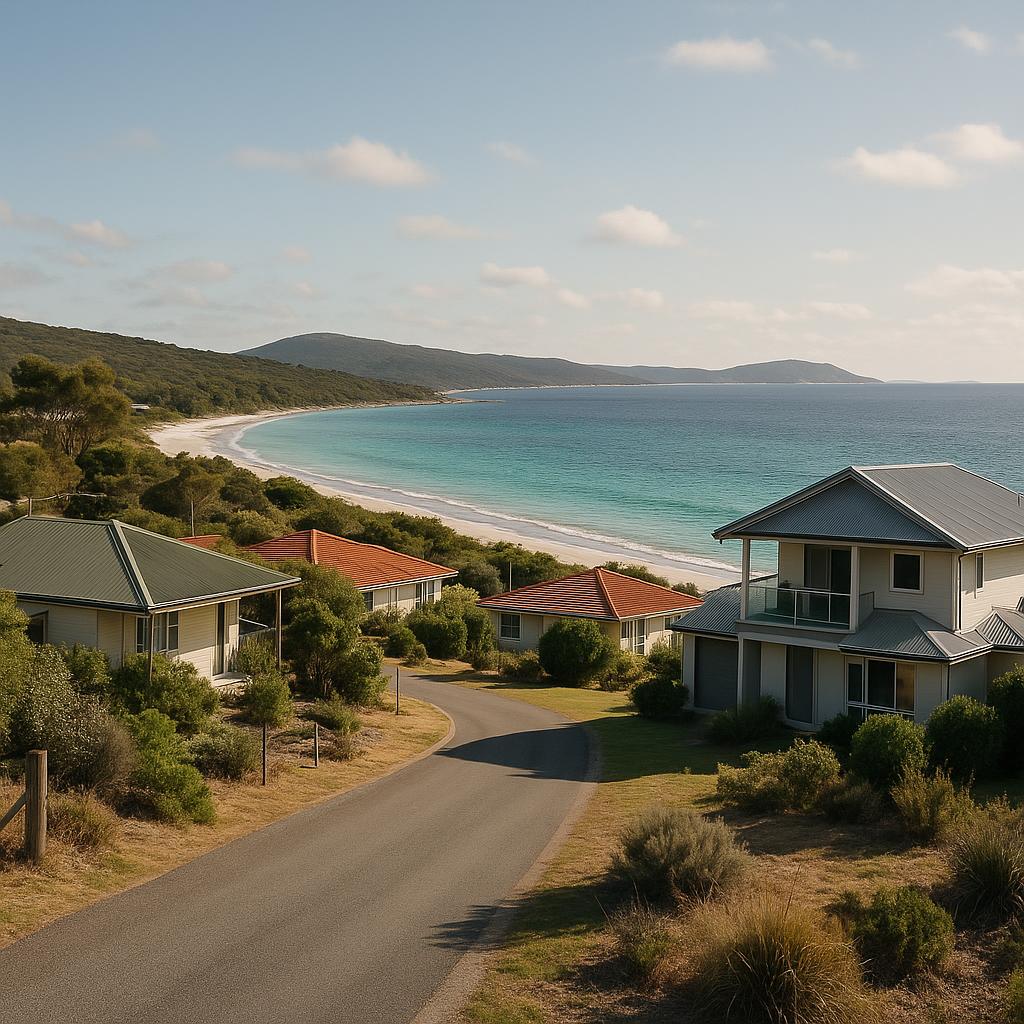
Goode Beach is known for its quiet coastal character, scenic outlooks, and low-density residential feel. Housing is typically detached and lifestyle-oriented, with site orientation, views, and outdoor usability often carrying real weight in buyer decision-making. In a suburb like this, a home’s street position and maintenance standard can influence desirability more than generic “bedroom count” comparisons.
Why this matters: buyers here are usually selecting a lifestyle package, not just a dwelling. A well-kept home with protected outdoor areas can outperform a larger but more exposed property.
Investor view
Goode Beach is better viewed as a patient, quality-driven holding than a yield-maximising play. Limited supply and lifestyle demand may support resilience, but a narrow tenant pool means rental outcomes can be uneven if the property is overly specialised or high-maintenance.
- Look for homes that can appeal to owner-occupiers, holiday users, or long-term tenants.
- Favour durable materials and simple upkeep over elaborate finishes that age poorly near the coast.
- Verify local short-stay rules and management practicality before assuming holiday-let viability.
Mini case-study: Investor A buys a well-located, easy-care home with broad lifestyle appeal and holds through quieter rental periods. Investor B buys a highly exposed property with ongoing repair needs and finds tenancy, maintenance, and valuation more demanding. In niche coastal markets, the difference is often the holding experience, not just the headline purchase price.
Homeowner view
Homeowners are usually drawn to Goode Beach for calm, scenic living and direct access to a beach-oriented lifestyle. The trade-off is everyday convenience: shopping, services, schooling, and work commutes may require more planning than in central Albany locations.
- Check how the home performs in windy weather and cooler months.
- Inspect for corrosion, drainage issues, and weather exposure around windows, roofing, and external fixtures.
- Choose layouts that support indoor-outdoor living without relying on perfect weather.
Market drivers
- Lifestyle migration: buyers seeking a sea-change and a calmer daily rhythm.
- Scarcity of coastal land: limited supply can help underpin value over time.
- Holiday-home and second-home appeal: discretionary buyers can add demand in the right property segment.
- Albany regional strength: the suburb benefits from the broader appeal of Albany as a regional centre.
Why this matters: scarcity can support prices, but only if the property is broadly appealing. A niche location with a difficult layout or heavy maintenance burden can still be harder to sell or lease.
Cost of Living Breakdown
Goode Beach can feel cost-effective on paper if you only look at the purchase decision, but lived costs can be higher than in more central suburbs.
- Housing-related costs: coastal maintenance, repainting, corrosion control, and insurance review are important line items.
- Transport costs: most households will rely on a car, so fuel, servicing, and travel time matter.
- Daily living costs: access to supermarkets, trades, and services may involve trips into Albany or nearby hubs.
- Lifestyle spending: residents often spend more on outdoor equipment, home presentation, and occasional travel.
Practical example: a family may accept longer drives and fewer convenience options in exchange for a quieter beachside setting and a home that feels like a retreat.
Lifestyle & Daily Life
Daily life in Goode Beach is shaped by its coastal setting: beach walks, relaxed routines, privacy, and a strong connection to the outdoors. This is a suburb where the day-to-day pace is the product, not an inconvenience to tolerate.
- Weekdays: best suited to flexible workers, retirees, or people who do not need frequent city-style access.
- Weekends: ideal for entertaining, nature-based recreation, and slower living.
- Seasonality: buyers should visit in different weather conditions, not just on a sunny day.
Watch-out: a suburb can feel magical on a holiday weekend and less convenient on a wet, windy Tuesday morning. Test the real-life experience before you buy.
Schools & Education
For families, schooling should be assessed in the context of Albany access and daily travel patterns. Rather than assuming everything is “close enough,” map the actual drop-off route, travel time, and back-up options for after-school activities.
- Families comfortable with commuting may find the lifestyle trade-off worthwhile.
- Retirees and couples without school-age children may place little weight on this factor.
- Use the official WA school locator and individual school websites to confirm catchments and enrolment details.
Tip: if education access is central to your decision, compare Goode Beach with more central Albany suburbs before committing.
Transport & Commute Details
Goode Beach is primarily a car-based suburb. Commute suitability depends on where you work or study, and how often you need to travel. For remote workers and retirees, the transport trade-off is usually manageable. For daily commuters, it may become a major lifestyle factor.
- Road access is the main movement pattern.
- Access to Albany services is important for most everyday tasks.
- Public transport options, if relevant to your routine, should be checked directly with local providers.
Why this matters: transport convenience shapes both liveability and resale depth. A broader buyer pool usually exists where daily movement is easier.
Property type guide
Most buyers will be looking at detached homes. In Goode Beach, the best-performing properties are often the ones that combine strong outlook, practical layout, and manageable upkeep.
- Detached homes: the core product type and the most aligned with the suburb’s lifestyle appeal.
- Renovated homes: attractive if the updates are durable and reduce future maintenance.
- Original-condition homes: may offer entry opportunities, but budget carefully for upgrades.
- View-oriented homes: often command emotional appeal, but the quality of the outlook should be assessed in person.
Common mistake: paying mainly for view potential while ignoring repair cost, access, and the ongoing effect of coastal exposure.
Comparison with Other Areas
Compared with more central Albany suburbs, Goode Beach is more secluded, more lifestyle-driven, and generally more niche. That can be an advantage if privacy and coastal access are priorities, but a disadvantage if you need convenience, school access, or stronger rental flexibility.
You can also compare Goode Beach with other WA lifestyle-coastal markets such as Cable Beach, North Beach, or Trigg to understand how different coastal markets trade off convenience, scarcity, and buyer depth.
- Goode Beach: quiet, scenic, and highly lifestyle-led.
- More central Albany suburbs: typically more practical for everyday living and rental demand.
- Other coastal WA areas: may offer different levels of amenity, liquidity, and buyer competition.
Framework: choose Goode Beach if privacy and beach access matter most. Choose a more central location if services, schools, and rental depth matter more.
Rental Market Insights
Rental demand is likely to be narrower than in larger, family-dense, or city-fringe suburbs. The strongest tenant profile may include professionals, relocators, or lifestyle renters who are prepared to pay for setting and quality.
- Long-term lease strategies may be more stable than assuming short-stay demand.
- Holiday or short-stay use can be viable where permitted and well managed.
- Property presentation and maintenance are critical to attracting interest.
If you are comparing rental-style coastal suburbs, it may help to study other niche markets such as Beachlands or Kalbarri to see how demand depth changes with location and use profile.
Future Growth & Development
Goode Beach’s long-term outlook is likely to be shaped more by regional confidence, tourism patterns, and sea-change demand than by intense local redevelopment. In a small coastal market, meaningful growth often comes from broader appetite for scarce lifestyle property.
- Watch Albany region infrastructure and service improvements.
- Monitor lifestyle migration trends from metro areas.
- Track tourism demand and any changes to short-stay rules or management requirements.
Caution: not every regional improvement flows through to suburb-level value. A market can benefit from better confidence without requiring major new development.
Safety & Crime
Safety in a quiet coastal suburb should be assessed using official sources, property design, and the specific street context. Lower activity does not automatically mean lower risk, especially for homes used seasonally or left vacant.
- Consider lighting, sightlines, fencing, and entry control.
- Assess how secure the property is when unoccupied.
- Check local and state crime data directly rather than relying on anecdotes.
Suggested sources: Western Australia Police, local council reporting, and any available community safety resources. For a vacant or holiday home, security design can matter as much as the suburb itself.
Who This Area Is Best For
- Best for: lifestyle-led owner-occupiers, sea-changers, downsizers, and patient investors.
- Less suitable for: yield-only investors, buyers needing daily convenience, or households requiring dense amenity.
Investor view: treat Goode Beach as a long-term, quality-led holding. Homeowner view: treat it as a lifestyle decision first and a property decision second.
Due diligence checklist
- Inspect roofing, paint, external fixings, windows, and any signs of coastal corrosion.
- Check drainage, stormwater flow, and how the site performs in wet weather.
- Review privacy, view corridors, and neighbour impact on outlook.
- Confirm zoning, overlays, easements, and any holiday-let restrictions.
- Estimate ongoing maintenance and insurance costs before making an offer.
- Assess access to Albany, schools, shops, and medical services.
- Compare the property with at least two alternatives in Albany or nearby coastal suburbs.
Simple workflow: inspect, verify, compare, budget, then re-check the property as a long-term holding.
Red flags / watch-outs
- Overpaying for view appeal without checking condition and repair needs.
- Buying a property that is hard to insure, maintain, or secure when vacant.
- Assuming short-term rental demand will be consistent year-round.
- Choosing a layout that is too specialised for resale depth.
- Underestimating the car dependence and daily convenience trade-off.
Common mistake: letting a holiday feeling override a conservative ownership assessment. In niche coastal markets, emotions can be expensive if they replace due diligence.
Common mistakes
- Comparing Goode Beach only with mainstream suburban markets instead of other lifestyle coastal areas.
- Ignoring maintenance load in favour of aesthetics.
- Using broad suburb averages rather than inspecting the specific street, site, and house condition.
- Assuming the rental market is deep enough without checking current listings and vacancy evidence.
Tools / templates / resources
- WA school finder for catchments and enrolment pathways.
- City of Albany planning and local development information.
- WA Police crime statistics and community safety resources.
- ABS census data for household composition and dwelling trends.
- Real estate portals for current listings, sold evidence, and rental comparables.
- A simple ownership budget template covering insurance, maintenance, rates, and travel costs.
FAQ (6–8 questions)
Is Goode Beach a good suburb for investors?
Yes, if you are a patient investor focused on scarcity, quality, and long-term holding. It is less suitable if you need strong, predictable rental depth.
Is Goode Beach better for lifestyle buyers than rental investors?
Generally yes. The suburb’s strongest appeal is lifestyle, privacy, and beach proximity.
What type of property performs best in Goode Beach?
Well-presented detached homes with durable finishes, practical layouts, and strong outlook or access are usually the most broadly appealing.
Is Goode Beach suitable for families?
It can be, especially for families who value a coastal lifestyle and are comfortable travelling for school, sport, and services.
What should buyers inspect in a coastal property?
Focus on corrosion, drainage, roof condition, external materials, privacy, wind exposure, and maintenance history.
How does Goode Beach compare with other Albany suburbs?
Goode Beach is more secluded and lifestyle-led, while central Albany suburbs are usually more convenient and often easier for rental demand.
Is short-stay accommodation a viable strategy here?
Potentially, but only if local rules allow it and the property is well suited to management, presentation, and guest turnover.
What are the main risks of buying in Goode Beach?
The biggest risks are maintenance, narrow rental depth, car dependence, and overpaying for aesthetics without enough attention to practical usability.
Conclusion
Goode Beach is a premium lifestyle suburb where the best purchases are guided by scarcity, quality, and long-term fit. For investors, the focus should be patience, maintenance, and location quality. For homeowners, the priority is whether the daily experience genuinely matches your idea of coastal living. If the suburb suits your goals, it can be a compelling coastal holding. If you need convenience or yield, compare alternatives before committing.
Sources & how to verify
- Check the City of Albany website for local planning, services, and community information: https://www.albany.wa.gov.au/
- Use the ABS for census and dwelling-profile context: https://www.abs.gov.au/
- Check WA Police for official crime information: https://www.police.wa.gov.au/
- Use the WA Government school finder for catchments and school details: https://www.education.wa.edu.au/school-finder
- Review Main Roads WA for road and transport context: https://www.mainroads.wa.gov.au/
- Check the WA planning portal or relevant state planning pages for zoning and overlays: https://www.planning.wa.gov.au/
- Verify current sold evidence and listing depth through major portals such as REA: https://www.realestate.com.au/
- Cross-check rental listings and median asking trends via major portals and local agents.
- Ask a local licensed property manager about tenant demand, vacancy patterns, and holiday-let practicality.
- Obtain insurance quotes early, especially for coastal exposure and vacant-home scenarios.
- Inspect the property in more than one weather condition if possible.
- Confirm any holiday rental or short-term accommodation restrictions before relying on that strategy.
Internal link ideas: For broader coastal comparison, see Cable Beach, North Beach, Trigg, and Beachlands.