Quick Answer
Goodna is a practical, value-focused suburb in the Brisbane–Ipswich corridor that suits buyers who care more about affordability, access, and usable housing than prestige. It can appeal to first-home buyers, investors, and families who want a functional base with rail and road connectivity. For investors, the strongest case is usually broad tenant appeal and a manageable entry point. For homeowners, the value is in land, convenience, and a liveable everyday location.
Key Takeaways
- Goodna is best understood as a practical commuter suburb, not a prestige address, so property selection matters more than broad branding.
- Affordability and access are the main reasons buyers and tenants keep coming back to the suburb.
- Houses with functional layouts and decent presentation usually attract stronger interest than awkward or heavily compromised stock.
- Investors should focus on tenant durability, maintenance risk, and resale depth rather than chasing a headline purchase alone.
- Why it matters: Goodna can work well, but it rewards careful property-level due diligence and realistic expectations.
Pros & Cons
Pros
- More accessible entry point than many Brisbane suburbs
- Rail and road links support commuting to wider employment areas
- Broad housing stock gives buyers multiple ways to enter the market
Cons
- Not a premium lifestyle suburb, so capital-growth expectations should be grounded
- Street-by-street variation can be significant, especially in older pockets
- dition, layout, and location can affect value more than many buyers expect
Market Overview
Goodna sits in the established western corridor between Brisbane and Ipswich, and that positioning is a big part of its appeal. It is a suburb where everyday practicality matters: access to transport, services, and reasonably attainable housing often drives decisions more than lifestyle polish.
The market tends to suit buyers who want a liveable suburban base rather than a status address. In suburbs like this, suburb-wide commentary can be misleading because street quality, house condition, and proximity to key amenity can materially change the buying case. A tidy home near convenient links may attract a very different audience from a tired property on a busier road.
For investors and homeowners, the core question is not whether Goodna is “hot” or “not”; it is whether the specific property fits the strategy. Goodna can be a sensible choice for people who want function, access, and a clearer path into the market.
Buyer Demand
Buyer demand in Goodna usually comes from a mix of first-home buyers, investors, and families. That mix can be useful because it broadens the exit market, but it also means the suburb is price-sensitive and quality-sensitive. Well-presented homes in sensible locations generally attract more enquiry than properties that need too much work.
For buyers, the practical checklist tends to be simple: layout, yard usability, maintenance burden, and commute convenience. A home that is easy to live in and easy to resell often beats one with a flashy feature set that does not match the local buyer pool.
Rental Market
Goodna’s rental appeal is rooted in affordability and function. Tenants are often looking for a straightforward home with sensible access to work routes, transport, shops, and schools. That makes easy-care houses and low-maintenance layouts particularly relevant for investors.
In practical terms, the rental market usually rewards homes that are clean, durable, and uncomplicated. Over-capitalising on features that tenants are unlikely to pay for can reduce investment efficiency, while a well-located, well-presented property is more likely to support steady interest.
Lifestyle, Transport & Schools
Goodna is a convenience-led suburb rather than a lifestyle-led one. For many residents, the value is in being able to get to work, handle school drop-offs, and run errands without needing a long cross-city commute. That daily practicality can be more important than café culture or boutique retail.
Transport access is a major part of the suburb’s function. Rail and road connectivity influence both liveability and investor appeal, particularly for households that commute regularly or rely on a flexible travel routine. Buyers should verify current transport options and travel times against their actual destination, not just the map.
Schools and family routines also matter. Parents often compare Goodna against nearby suburbs based on the simplicity of the morning routine, not just the school name itself. If you are buying for family use, confirm catchment, enrolment rules, and current access details directly through official sources.
Goodna Suburb Profile
Official 2021 Census snapshot for the ABS Suburbs and Localities geography.
Age profile
Housing tenure
Occupied private dwellings by tenure type.
Salary & income profile
Median total income reported in the Census.
*Annual figures are weekly median × 52 estimates, not separate ABS annual medians.
Education & qualifications
Highest educational attainment, people aged 15+.
Employment status
People aged 15+ who reported being in the labour force.
Industry of employment
Top responses among employed people aged 15 years and over.
Occupation profile
Broad occupation groups among employed residents, including managers.
Property Type Guide
- Detached houses: Often the strongest fit for families, long-term owners, and investors wanting land value and broader resale appeal.
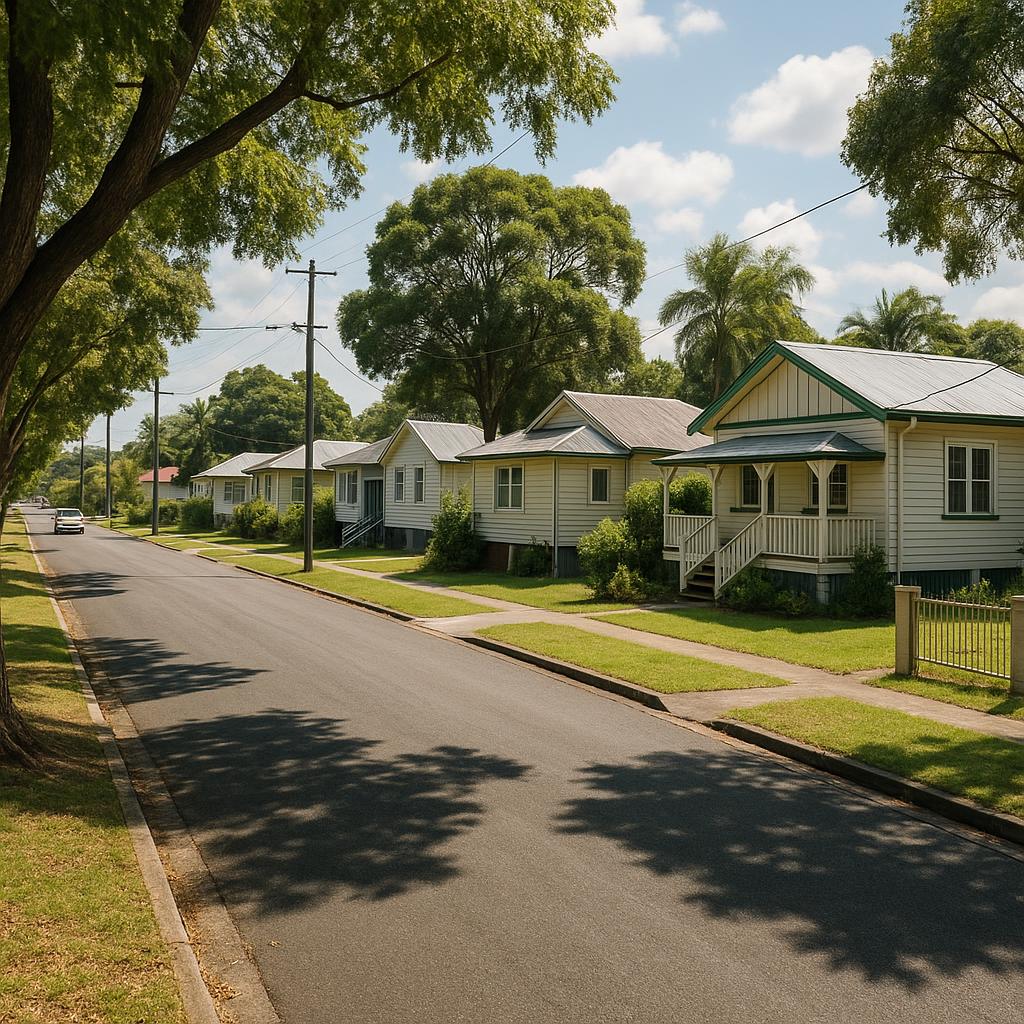
- Older homes: Can be attractive if the structure and site are sound, but budget for maintenance and functional upgrades.
- Low-maintenance options: Useful for first-home buyers, downsizers, and investors who want simpler upkeep and easier management.
- Renovation-ready stock: Best for disciplined buyers with a clear budget, because cosmetic improvements only work if the fundamentals are right.
Risks & Watch-Outs
- Street selection matters a lot, because two seemingly similar properties can have very different buyer and tenant appeal.
- Older homes may hide maintenance costs, so always inspect for structural issues, drainage concerns, and deferred repairs.
- Do not buy on suburb reputation alone; the property’s layout, condition, and liveability can outweigh broad market talk.
- Busy roads, awkward access, or poor surrounding presentation can weaken resale depth and day-to-day comfort.
- Check flooding, planning, and local infrastructure context using current official sources before making an offer.
Nearby Suburbs to Compare
- Ipswich QLD Property Market Guide: Buyers & Investors
- Griffin QLD Property Market Guide: Buyers & Investors
- Strathpine QLD Property Market Guide: Buyers & Investors
- Stafford QLD Property Market Guide: Buyers & Investors
- Redbank Plains
- Bellbird Park
FAQ
Is Goodna a good suburb for first-home buyers?
Yes, if your priority is getting into the market without stretching into a higher-priced area. Goodna is most appealing when you value practicality, transport access, and a liveable home over prestige. Just be selective about condition and street quality.
Is Goodna a good suburb for investors?
It can be, particularly for investors targeting broad tenant demand and manageable purchase costs. The key is to choose a property that is easy to maintain, easy to lease, and likely to remain attractive to future buyers, not just current tenants.
What type of property is best in Goodna?
Detached houses often make the most sense for long-term flexibility, but low-maintenance options can also work well if you want simplicity. The best property type depends on whether your strategy is owner-occupier comfort, rental ease, or value-add potential.
Is Goodna family-friendly?
It can be, especially for families who prioritise routine convenience, transport access, and usable housing. The best fit is usually a home that makes school runs, commuting, and daily errands straightforward. Families should verify local schooling and amenity access directly.
What should buyers inspect most carefully in Goodna?
Focus on location, building condition, layout efficiency, and surrounding context. In value-oriented suburbs, the difference between a smart purchase and a poor one is often found in the details rather than the suburb name itself.
Conclusion
Goodna is a practical, value-oriented suburb that can suit buyers and investors who focus on function, access, and affordability. It is not about luxury positioning; it is about making a sensible property choice in a corridor where everyday usefulness matters. If the property is well selected, Goodna can offer a grounded and workable path into the market.
Sources & how to verify
- Check current listings and recent sold evidence on Domain so you can compare the specific property against live market conditions.
- Use realestate.com.au to review active rentals, property features, and how similar homes are being marketed right now.
- Verify suburb and dwelling characteristics through the Australian Bureau of Statistics if you want demographic context, but do not rely on old census data alone.
- Confirm transport routes, service changes, and station information via Translink before assuming commute convenience is the same for every household.
- Check planning, overlays, and development information through the local Ipswich City Council site so you can identify site-specific constraints.
- Use the Queensland Government’s school tools or official school websites to confirm catchments, enrolment rules, and any changes that may affect family buyers.
- Review flood and hazard mapping from official government sources where relevant, because site conditions can materially change property risk and insurability.
- Cross-check all claims with an on-the-ground inspection, because street presentation, noise, access, and maintenance issues are often not obvious online.