Quick Answer
Key Takeaways
- Stafford’s core strength is everyday convenience, with a location that supports commuting, errands, and access to key Brisbane corridors.
- The suburb has broad appeal because different buyer groups can target houses, townhouses, or units depending on budget and strategy.
- Street selection matters more than many buyers expect, particularly near busy roads, commercial edges, or noisier traffic routes.
- Older housing can offer value-add potential, but buyers should budget carefully for maintenance, renovation, and compliance checks.
- For investors, the strongest fit is usually a low-maintenance property that matches the tenant profile attracted to inner-north practicality.
Pros & Cons
Pros
- Strong day-to-day convenience for commuting and routine living
- Broad demand from both owner-occupiers and renters
- Multiple dwelling types support different budgets and strategies
Cons
- Some pockets can feel busy or traffic-exposed
- Older homes may need ongoing maintenance or upgrades
- Micro-location can materially change livability and resale appeal
Market Overview
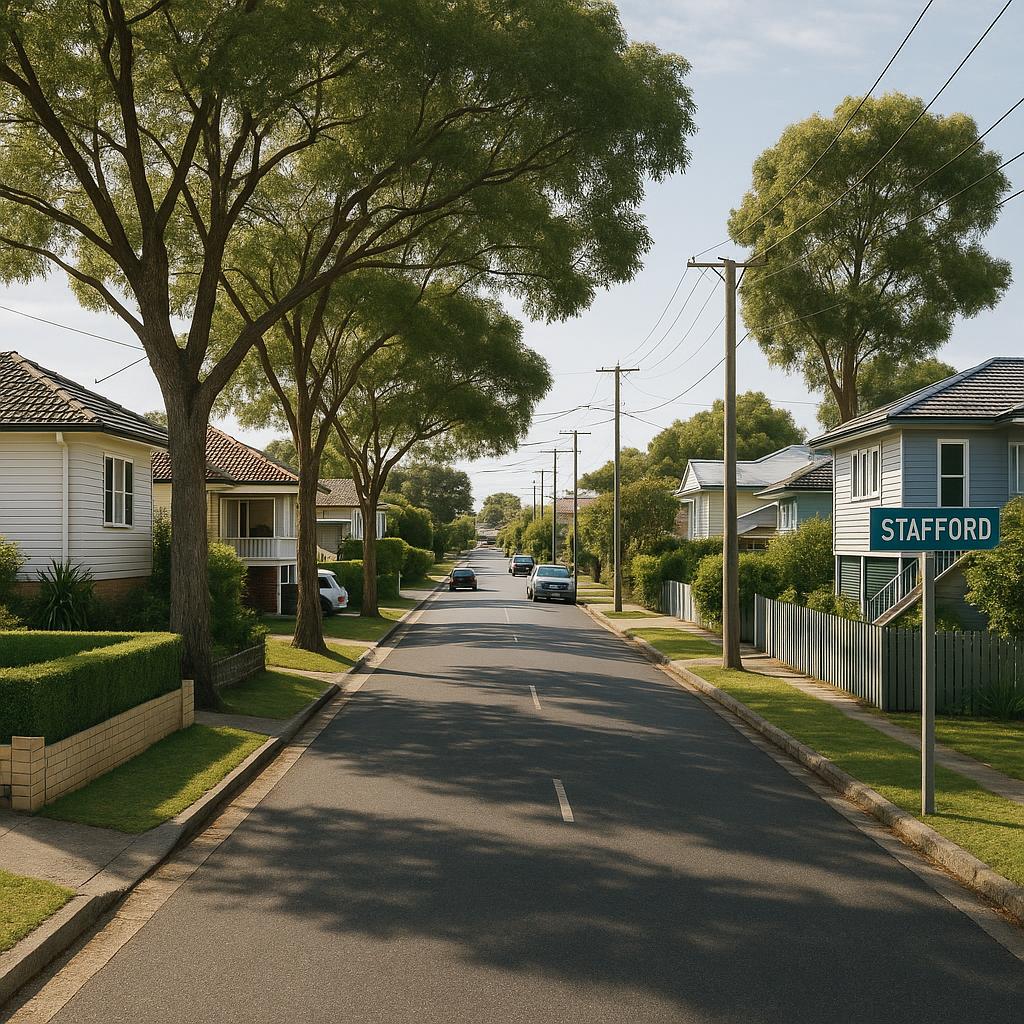
Stafford sits in Brisbane’s inner north and is best understood as a practical, access-led suburb. Its value proposition is less about prestige and more about how easily residents can move through daily life: commuting, shopping, school runs, and access to surrounding employment areas.
The suburb’s housing mix is part of the story. Buyers can find older freestanding homes, renovated dwellings, townhouses, and units, which means the market can suit different ownership goals. That variety also means two homes in Stafford can behave very differently depending on street, land size, layout, and condition.
For investors and homeowners, this is a suburb where due diligence matters at the property level as much as the postcode level. A good purchase in Stafford usually comes from matching the dwelling to the use case, then checking the immediate surroundings carefully before making an offer.
Buyer Demand
Demand in Stafford tends to come from buyers who value function, accessibility, and a manageable commute. That includes first-home buyers looking for an inner-Brisbane foothold, families wanting to stay relatively close to the city, and downsizers who want convenience without moving to a high-rise lifestyle.
Buyer competition can vary by property type. Renovated homes, well-kept townhouses, and neatly presented units often attract the broadest pool because they reduce uncertainty. In practical terms, buyers are not just purchasing a suburb name; they are competing for a property that suits a specific daily-life pattern.
Rental Market
Stafford is the kind of suburb that can appeal to renters who want low-friction living: workers with commutes, couples, and small households who prefer access over a large yard. That makes it useful for investors who want a tenant pool that values location, practicality, and manageable upkeep.
Units and townhouses often align well with this rental profile, while smaller houses can also perform well if they offer usable space and are positioned away from the noisiest streets. Investors should assess not only how fast a property may lease, but also whether the likely tenant is seeking convenience, extra rooms, or low-maintenance living.
Lifestyle, Transport & Schools
Stafford offers a straightforward, everyday lifestyle. It is not a suburb built around destination-style attractions; instead, it suits people who prefer short drives, efficient routines, and easy access to services. That makes it attractive to busy households that spend most of their time managing work, school, and errands.
Transport access is one of the suburb’s major strengths, especially for commuters. Road connectivity is a clear advantage, but buyers should also recognise that convenience can come with noise or traffic exposure in some pockets. Peak-hour testing is worthwhile, because a street that feels calm at midday can behave very differently in the morning and afternoon commute windows.
School access can be important for family buyers, but catchments and enrolment arrangements should always be verified directly before purchase. Families should also map the real-school-run experience, not just the distance on a listing page, because small route differences can matter more than the suburb label.
Stafford Suburb Profile
Official 2021 Census snapshot for the ABS Suburbs and Localities geography.
Age profile
Housing tenure
Occupied private dwellings by tenure type.
Salary & income profile
Median total income reported in the Census.
*Annual figures are weekly median × 52 estimates, not separate ABS annual medians.
Education & qualifications
Highest educational attainment, people aged 15+.
Employment status
People aged 15+ who reported being in the labour force.
Industry of employment
Top responses among employed people aged 15 years and over.
Occupation profile
Broad occupation groups among employed residents, including managers.
Property Type Guide
- Older houses: Often appeal to buyers seeking land, renovation upside, and more privacy, but they can carry higher maintenance and upgrade costs.
- Townhouses: A practical middle ground for buyers wanting lower upkeep than a house and better space than many units, with body corporate considerations.
- Units: Usually suit buyers prioritising affordability and low-maintenance ownership, though building quality and strata management become critical.
- Best fit for families: A well-located house on a quieter street, if space and long-term flexibility are priorities.
- Best fit for investors: A tidy townhouse or unit that matches local tenant demand and limits ongoing management friction.
Risks & Watch-Outs
- Traffic noise and arterial-road exposure can affect both liveability and buyer appeal, so inspect at busy times as well as quiet ones.
- Older homes may hide deferred maintenance, so building inspections and realistic repair budgets are essential.
- Not every pocket has the same feel, and a poor micro-location can outweigh the benefits of an otherwise strong suburb.
- Body corporate fees, building condition, and strata rules can materially change the value proposition of attached dwellings.
- A cheap-looking property is not necessarily a good investment if it is harder to lease or resell in the future.
Nearby Suburbs to Compare
- Kedron — compare for similar inner-north convenience with a different residential feel.
- Clayfield — useful if you want to compare Stafford’s practicality against a more established prestige-leaning market.
- Milton — a stronger apartment and inner-city comparison for buyers prioritising access and urban convenience.
- Taringa — compare for different housing stock, access patterns, and buyer profile mix.
- Chermside — useful for retail access and larger-scale amenity comparison.
- Stafford Heights — helpful for buyers wanting a nearby alternative with a different street feel and housing profile.
FAQ
Is Stafford a good suburb for first-home buyers?
It can be, if you value access and accept that the best purchase may be a townhouse, unit, or older home needing updates. First-home buyers should focus on condition, street quality, and commute practicality rather than just suburb name recognition.
Is Stafford better for houses, townhouses, or units?
It depends on your goal. Houses suit buyers wanting land and future flexibility, townhouses suit those balancing space and convenience, and units suit buyers or investors prioritising lower maintenance and easier entry. The right fit depends on budget and holding strategy.
Is Stafford good for investors?
It can be, because the suburb attracts tenants who value convenience and access. Investors should prefer a property that is easy to maintain, sensibly located, and aligned with local tenant expectations. A well-chosen dwelling usually matters more than buying broadly in the suburb.
What should I check before buying in Stafford?
Check street noise, traffic exposure, parking, building condition, and whether the home suits your intended use. Also confirm school catchments, transport options, and any body corporate obligations. These details can influence both liveability and resale confidence.
How does Stafford compare with nearby suburbs?
Stafford is often chosen for practicality and usable convenience. Nearby suburbs may offer different trade-offs such as more prestige, better apartment stock, or a stronger residential feel. Compare the actual property type, commute pattern, and micro-location rather than relying on suburb reputation alone.
Conclusion
Stafford is a solid option for buyers who want a functional inner-north Brisbane base with broad property choice and strong everyday convenience. It rewards careful street selection, realistic budgeting, and matching the dwelling type to the buyer profile. For investors and homeowners alike, the key is to buy the property that fits the strategy, not just the suburb.
Sources & How to Verify
- Check current listings, sold results, and rent advertisements on Domain so you are working from live market evidence rather than outdated assumptions.
- Use realestate.com.au to compare dwelling types, price brackets, and time-on-market signals across Stafford and nearby suburbs.
- Review planning and local area information on Brisbane City Council to understand nearby amenities, planning context, and any future-use considerations.
- Verify school catchments and school details through Queensland Government school directory rather than relying on listing descriptions.
- Cross-check population and household characteristics using ABS if you want to understand the broader resident profile behind local demand.
- Inspect transport routing and service changes on Translink before assuming a commute is straightforward in peak periods.
- Order a building and pest inspection for any older home, because visible presentation in Stafford can hide repair, drainage, or maintenance issues.
- Walk or drive the immediate streets at different times of day, because micro-location often changes the buying experience more than the suburb label does.