Quick Answer
The University of Adelaide precinct suits buyers who want centrality first and space second. It is generally strongest for investors, parents assisting students where appropriate, first-home buyers who value walkability, and downsizers who prefer low-maintenance living. The market is typically compact, competitive, and heavily shaped by apartment quality, strata costs, and access to the CBD, transport, and education employment. If you need a large block or quiet suburban streets, this is usually not the best fit.
Key Takeaways
- The precinct benefits from a rare combination of university presence, CBD access, and inner-city amenity that supports broad demand.
- Investors should focus on tenant fit, building quality, and strata health rather than assuming every central property will perform equally.
- Owner-occupiers often trade land size for walkability, convenience, and a simpler day-to-day lifestyle close to work and study.
- Apartment and unit stock usually dominates, so due diligence on layout, parking, noise, and building management matters more than in suburban markets.
- Use current listings, rental evidence, strata records, and planning checks to confirm value before you commit.
Pros & Cons
Pros
- Strong location advantage close to the university, CBD, and major city services.
- Broad appeal to students, staff, professionals, and downsizers seeking convenience.
- Low-maintenance living can suit investors and busy owner-occupiers.
Cons
- Apartment-heavy stock can limit land content and change growth dynamics.
- Strata fees and special levies can materially affect returns.
- Parking, noise, and density may not suit all buyers.
Market Overview
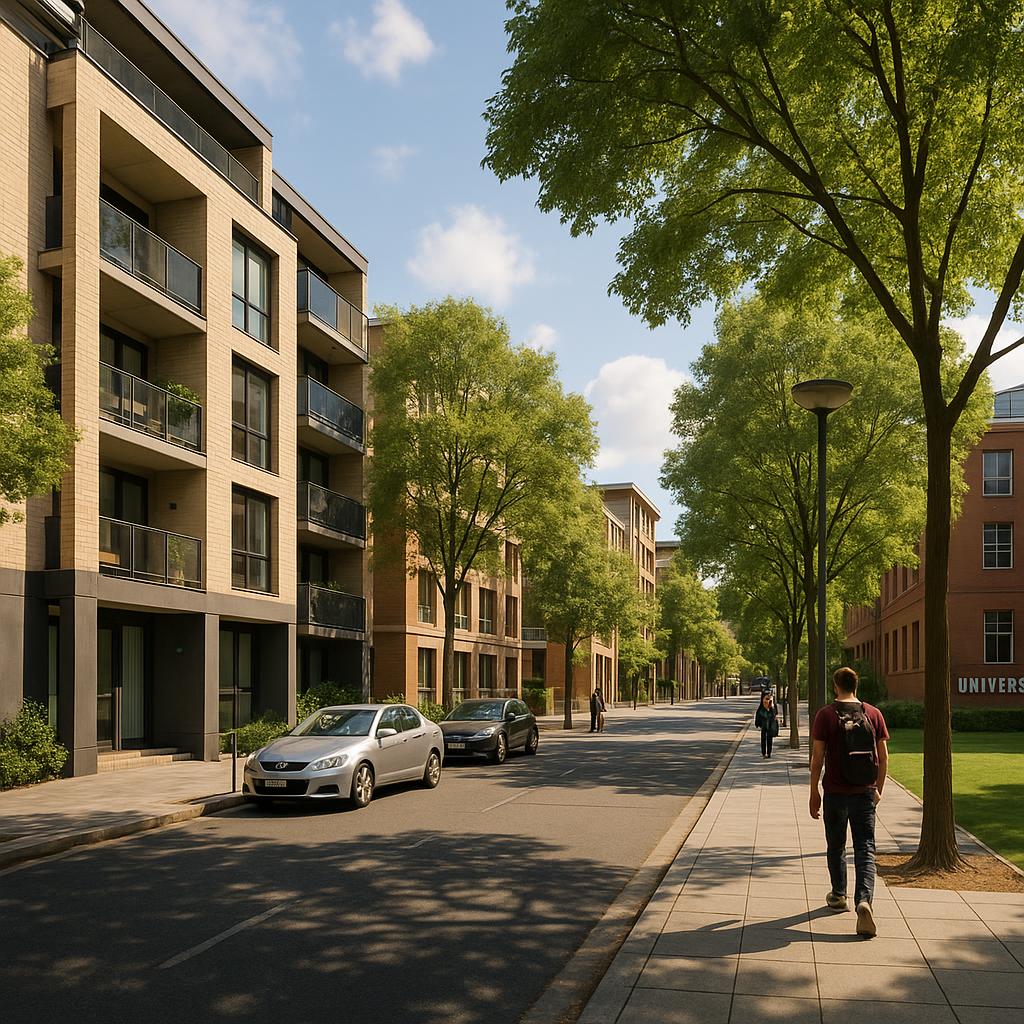
The University of Adelaide area is not a single, uniform housing market. It is a city-fringe education precinct influenced by the university, the Adelaide CBD, nearby health and employment hubs, and surrounding inner suburbs. Market outcomes can vary sharply by building age, street position, apartment quality, and how easily a property connects to campus and central Adelaide.
For buyers, that means location and liveability often matter more than raw size. A smaller, well-managed apartment with practical access can be more competitive than a larger dwelling that feels isolated or awkward to use. The precinct generally rewards buyers who understand who the likely tenant or future owner will be.
A useful way to view the area is as a convenience market rather than a broad-acre family market. The strongest assets are usually those that combine low-maintenance ownership with reliable access to study, work, and daily amenity. In this setting, building quality and strata governance can influence value almost as much as the address itself.
Buyer Demand
Demand is supported by a mixed pool: students, academic and professional staff, CBD workers, medical workers, and some owner-occupiers who want an inner-city base. That diversity matters because it reduces dependence on one tenant type or one seasonal pattern.
From an investment perspective, the key question is not just “Is it near the university?” but “Does it solve a practical need?” A well-located one or two-bedroom apartment with secure entry, decent natural light, and simple upkeep may appeal to multiple buyer and tenant groups, which helps resale and leasing confidence.
Rental Market
Rental demand in this precinct generally favours low-maintenance dwellings with sensible layouts, secure access, and easy connectivity to campus and the CBD. Furnished stock may attract some student or short-stay style demand, while unfurnished homes often appeal to longer-term renters seeking stability.
Landlords should think carefully about tenant experience: reliable internet, storage, ventilation, and noise control can all affect leasing speed. A property that is easy to live in often outperforms a visually attractive one that is inconvenient or expensive to maintain.
Lifestyle, Transport & Schools
The lifestyle appeal is straightforward: daily convenience. Cafes, dining, cultural venues, health services, and retail are all part of the drawcard for buyers who prefer to walk rather than drive for every errand. That convenience is a major reason the area retains interest from both renters and owner-occupiers.
Transport access is also a key feature. Good bus and tram connectivity, plus proximity to the CBD, expands the tenant pool and reduces car dependence. Parking remains important, though; limited or costly parking can narrow demand for some buyers even when the overall location is strong.
School considerations are more of a lifestyle and life-stage issue than a headline driver here. Families may still compare nearby public and private options depending on eligibility, catchment and preference, but the precinct is usually more attractive to students, professionals, and downsizers than to buyers seeking a traditional family estate environment.
Property Type Guide
- Apartments: The most common fit for investors, students, professionals, and downsizers. Check strata fees, management quality, security, lift access, and sound insulation.
- Units and compact dwellings: A practical entry point for budget-conscious buyers. Focus on privacy, parking, renovation quality, and long-term resale appeal.
- Townhouses / low-rise alternatives: Useful for buyers who want a little more space without leaving the inner-city orbit. Assess street exposure, strata structure, and noise.
- Older stock vs newer stock: Older properties may offer character or larger proportions, while newer ones can provide better amenity; in both cases, inspect construction quality and ongoing costs.
Risks & Watch-Outs
- Noise from traffic, nightlife, and city-fringe activity can affect liveability and tenant retention.
- Apartment living can bring strata levies, special levies, and building maintenance costs that materially change returns.
- Poor parking provision or awkward access can narrow the buyer and tenant pool.
- A visually appealing unit is not necessarily a strong investment if the building is poorly managed or has defects.
- Seasonal leasing patterns and tenant turnover can be more relevant here than in many suburban markets.
Nearby Suburbs to Compare
- Adelaide University SA Property Market Guide: Buyers & Investors
- Kent Town SA Property Market Guide: Buyers & Investors
- North Adelaide
- Adelaide CBD
- Walkerville SA Property Market Guide: Buyers & Investors
FAQ
Is the University Of Adelaide area good for property investors?
Yes, if you are buying with tenant demand, low-maintenance ownership, and location fundamentals in mind. The precinct can suit investors because it draws from multiple renter groups, but the building itself still needs careful assessment. Strata quality and layout matter a lot.
What property type is usually best near the university?
For many buyers, a well-located apartment or unit is the most practical choice. These properties tend to match the area’s convenience-led demand. If you buy a townhouse or low-rise alternative, check whether the extra space meaningfully improves livability and resale appeal.
Is the area better for students or professionals?
It supports both. Students value closeness to campus and transport, while professionals often want access to the CBD, hospitals, and nearby employment hubs. That broader demand base can be useful, provided the property offers the features each group expects.
What should buyers check before purchasing?
Review strata records, building condition, fees, parking, noise levels, and how the property functions day to day. Also verify zoning, title details, and any rules that affect leasing or renovations. A strong address cannot always overcome poor building fundamentals.
Does the precinct suit families?
Some families may like the convenience, but the area is usually better suited to smaller households, students, professionals, and downsizers. Families wanting a backyard, quiet streets, and a more traditional suburban feel will often find better value elsewhere.
Conclusion
The University of Adelaide precinct is a convenience-led, education-influenced market that can work well for investors and lifestyle-focused buyers. The best outcomes usually come from matching the property type to the likely tenant or future owner, then checking strata, access, and building quality carefully. Compare nearby inner suburbs, inspect at different times, and verify current market evidence before making an offer.
Sources & How to Verify
- Check current listings and recent sales on Domain to see how building quality, floorplan, and parking affect asking prices in real time.
- Review rental listings on realestate.com.au to confirm what tenant-facing features are common and how quickly comparable stock is being advertised.
- Use the University of Adelaide website to verify campus location, precinct activity, and the types of people likely to create ongoing demand.
- Check planning and zoning information through the City of Adelaide before buying, because local rules and precinct character can influence redevelopment and use.
- Confirm demographic and household context via the Australian Bureau of Statistics, then interpret it alongside current listings rather than relying on broad averages alone.
- Verify school options and catchment details using the South Australian Department for Education, because enrolment and zoning arrangements can change.
- Ask for strata minutes, budgets, sinking fund details, and any special levy history before purchasing an apartment or unit, as these records often reveal the real cost of ownership.
- Arrange an independent building and pest inspection, then compare the findings with current market evidence so you can separate cosmetic appeal from long-term value.