Quick Answer
Surry Hills suits buyers who value location, walkability, and strong day-to-day convenience more than space or quiet streets. For investors, it offers broad tenant appeal because it sits close to the CBD and supports multiple renter profiles, from professionals to couples and downsizers. For homeowners, it is a lifestyle-led suburb where building quality, street position, and strata health matter more than suburb averages. If you want an inner-city base with enduring demand, Surry Hills is worth serious consideration.
Key Takeaways
- Surry Hills is an established inner-city suburb where access, amenity, and character shape value more than land size.
- The market suits buyers who can trade off space and parking in exchange for convenience and strong urban lifestyle appeal.
- Investors should focus on building quality, strata management, and tenant usability rather than relying on postcode prestige alone.
- Well-located apartments and character terraces typically attract the broadest buyer and tenant interest in this suburb.
- Micro-location matters: light, noise, aspect, and street feel can materially change liveability and resale strength.
Pros & Cons
Pros
- Exceptional proximity to the CBD and major employment hubs
- Strong walkability with high amenity density
- Broad appeal across owner-occupiers and renters
Cons
- Limited space, parking, and storage in many properties
- Noise and density can affect day-to-day liveability
- Strata and building quality vary widely between stock types
Market Overview
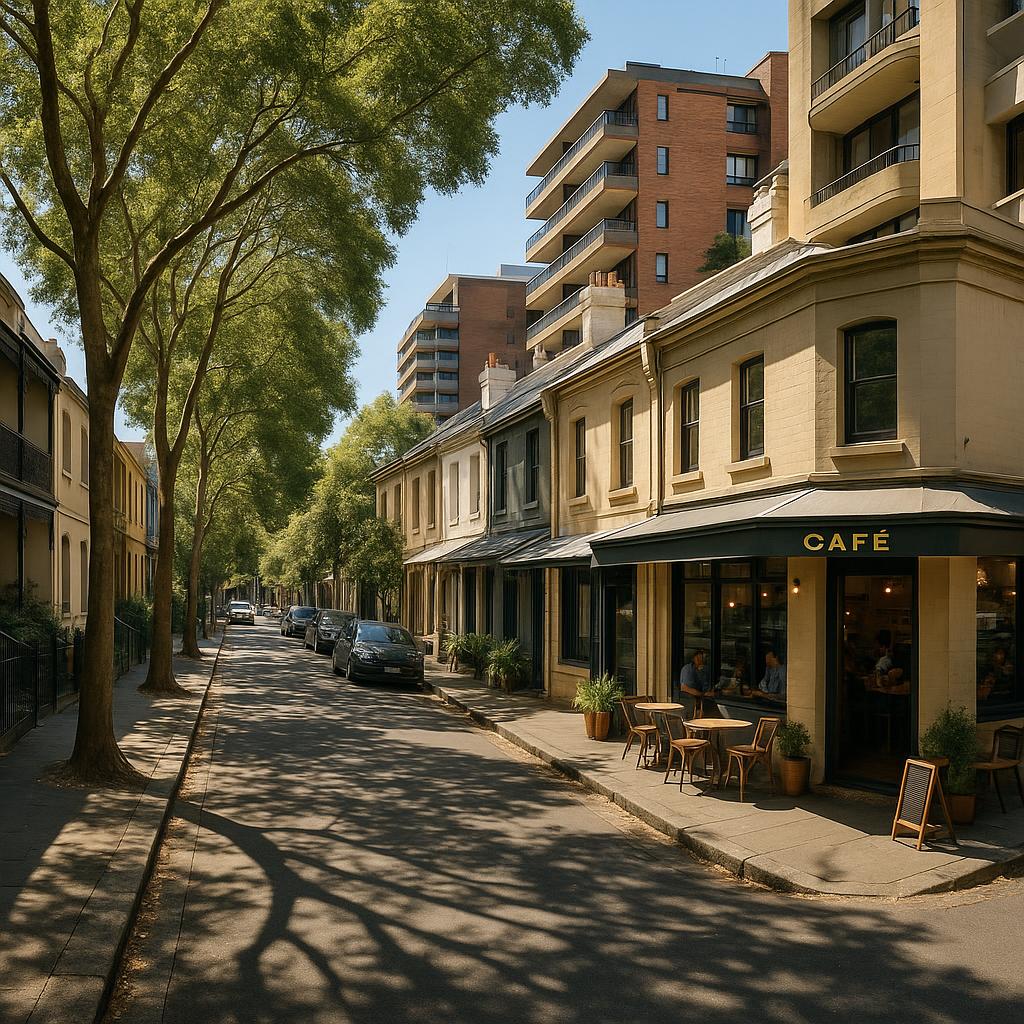
Surry Hills is a mature inner-Sydney suburb with a dense mix of terraces, apartments, creative workplaces, hospitality venues, and everyday services. It is an urban village rather than a family-home suburb, and that shapes how buyers should think about value: the best assets are usually the ones that balance location, layout, and building quality.
The market is highly micro-sensitive. Two properties on nearby streets can perform very differently depending on light, noise, outlook, parking, and strata history. That means headline suburb averages are only a starting point; buyers should compare the actual dwelling, the building, and the street environment before deciding whether it is worth paying a premium.
For homeowners, Surry Hills makes sense when convenience is a priority and space is a secondary concern. For investors, the suburb’s strength is its broad tenant base and repeat demand from people who want to live close to work, transport, and lifestyle amenity.
Buyer Demand
Demand in Surry Hills is driven by buyers who want an inner-city lifestyle with minimal commuting friction. That includes professionals, first-home buyers looking for a city foothold, downsizers seeking lower-maintenance living, and lifestyle buyers who value being able to walk to dining, retail, and transport.
Competition is usually strongest for well-presented apartments in sound buildings and for character terraces with practical layouts. The best buyers here are selective: they understand that a great street can still contain weak stock, and that a modest property with good fundamentals can outperform a flashier one with poor liveability.
Rental Market
Surry Hills tends to attract tenants who prioritise location, convenience, and access to the CBD. Typical renter segments include young professionals, couples sharing apartments, tertiary-linked tenants, and city-focused renters who want an easy commute and a lively neighbourhood feel.
For investors, that broad tenant pool is a major advantage. Smaller, efficient apartments often lease well if they are well maintained, light-filled, and easy to live in. Rental appeal is often determined by practical details such as storage, ventilation, noise insulation, and building presentation, not just address prestige.
Lifestyle, Transport & Schools
Surry Hills offers one of Sydney’s more complete inner-city lifestyles: cafes, dining, design, retail, and cultural energy all sit close together. That is a major draw for buyers who enjoy an active urban environment and want daily life to be concentrated in a short walk rather than a long drive.
Transport access is a key selling point because it reduces reliance on cars and expands the suburb’s appeal to commuters. In practical terms, that matters for both owners and investors: a suburb that works well for public transport users tends to have a wider market on resale. Buyers should still test travel patterns at peak times rather than assume convenience from the map alone.
School considerations are more nuanced. Surry Hills is not primarily a large-family housing market, so buyers with children should assess space, childcare, and school-run practicality very carefully. Use the NSW Government school finder and local catchment information to confirm current options before making assumptions about enrolment access.
Surry Hills Suburb Profile
Official 2021 Census snapshot for the ABS Suburbs and Localities geography.
Age profile
Housing tenure
Occupied private dwellings by tenure type.
Salary & income profile
Median total income reported in the Census.
*Annual figures are weekly median × 52 estimates, not separate ABS annual medians.
Education & qualifications
Highest educational attainment, people aged 15+.
Employment status
People aged 15+ who reported being in the labour force.
Industry of employment
Top responses among employed people aged 15 years and over.
Occupation profile
Broad occupation groups among employed residents, including managers.
Property Type Guide
- Terraces: Strong character appeal and potential emotional pull, but check heritage constraints, maintenance, and renovation scope.
- Apartments: The most common fit for investors and downsizers; inspect strata records, layout efficiency, light, and noise control.
- Boutique or older blocks: Can offer better character and larger proportions, but building maintenance and sinking fund health matter.
- Studio or compact stock: Can suit entry-level buyers and investors, but only if the floor plan is functional and the building is well managed.
The key lesson is simple: in Surry Hills, property type can be more important than raw size. A smaller apartment with a sensible layout and strong building fundamentals may be easier to rent and resell than a larger, awkward property.
Risks & Watch-Outs
- Noise from traffic, nightlife, or active commercial streets can reduce liveability if the property is poorly insulated or badly positioned.
- Strata quality varies sharply, so review records, levies, maintenance history, and any signs of deferred repairs.
- Parking and storage are often limited, which can restrict buyer appeal for households with cars or extra belongings.
- Heritage controls and older building layouts can limit renovation options and raise costs for owners planning improvements.
- Do not assume every street has the same feel; inspect on weekday and weekend, daytime and evening, before committing.
Nearby Suburbs to Compare
- Darlinghurst NSW Property Market Guide: Buyers & Investors
- Redfern NSW Property Market Guide: Buyers & Investors
- Waterloo
- Chippendale
FAQ
Is Surry Hills good for first-home buyers?
It can be, if your priority is location and lifestyle rather than space. First-home buyers should focus on apartments with strong natural light, practical layouts, and manageable strata costs. The main trade-off is that inner-city convenience usually comes with a higher entry price and less room than outer suburbs.
Is Surry Hills a good suburb for investors?
Yes, for investors who value tenant depth and long-term leasing flexibility. The suburb attracts a wide renter pool, but success depends on selecting the right building and property type. Review strata health, presentation, and noise exposure before relying on any rental assumption.
What type of property is best in Surry Hills?
There is no single best property type. Apartments often suit investors and downsizers, while terraces can appeal to buyers wanting character and stronger emotional value. The best asset is usually the one that matches your end goal, with the least compromise on light, layout, and liveability.
Is Surry Hills family-friendly?
It can work for some families, but it is not the suburb’s natural strength. Families should assess space, storage, parking, and daily school-run practicality rather than just the postcode. The lifestyle is urban and busy, which suits some households and frustrates others.
What should buyers inspect before making an offer?
Inspect the property at different times, then check noise, aspect, airflow, natural light, and the condition of the building. For apartments, strata records are essential. For terraces, assess maintenance needs, renovation scope, and any heritage or planning issues that could affect future changes.
Conclusion
Surry Hills is a strong inner-city choice for buyers and investors who want location-driven value and broad demand. Its appeal is real, but the right purchase depends on selecting the right street, building, and property type. If you do the micro-level due diligence, Surry Hills can be a durable, flexible purchase.
Sources & How to Verify
- Check current listings and recent sold evidence on Domain so you are comparing the right property type, not relying on stale market assumptions.
- Use realestate.com.au to review current rent listings and see what style of apartment or terrace is actually being leased.
- Confirm train and transport access on Transport for NSW because walk times, service frequency, and route changes affect daily convenience.
- Review planning controls and any development or heritage constraints through the NSW Planning Portal before assuming renovation or redevelopment potential.
- Check suburb and demographic context with ABS, but treat broad data as background only and not a substitute for inspecting the specific property.
- Verify school options and current catchment information using the NSW Government School Finder because enrolment zones and access can change.
- Review council planning, local development activity, and public domain projects on City of Sydney to understand streetscape, amenity, and nearby change drivers.
- Ask for a strata report, then compare it with building inspections and agent feedback, because document quality often reveals more than a polished listing.