Quick Answer
Toowoomba City is best suited to buyers and investors who value central convenience over big-block suburban living. In practical terms, it is a compact CBD-core market with access to services, employment, education, dining, and transport, which can support steady tenant demand and owner-occupier appeal. The trade-off is that you need to assess each property carefully: older stock, parking, noise, and maintenance can materially change the outcome. It is a location-led market, but the right dwelling type matters just as much.
Key Takeaways
- Toowoomba City is a central, convenience-first market where street-level differences strongly influence value and livability.
- Demand often comes from buyers and tenants who prioritise access to work, services, and the CBD rather than large yards.
- Older housing stock can create opportunity, but condition, parking, and renovation quality must be checked closely.
- Units, townhouses, and smaller dwellings may suit low-maintenance buyers and investors seeking practical holding costs.
- Compare Toowoomba City with nearby suburbs before buying, because quieter streets and more space may change the value equation.
Pros & Cons
Pros
- perty performance varies sharply by exact location and dwelling type
Market Overview
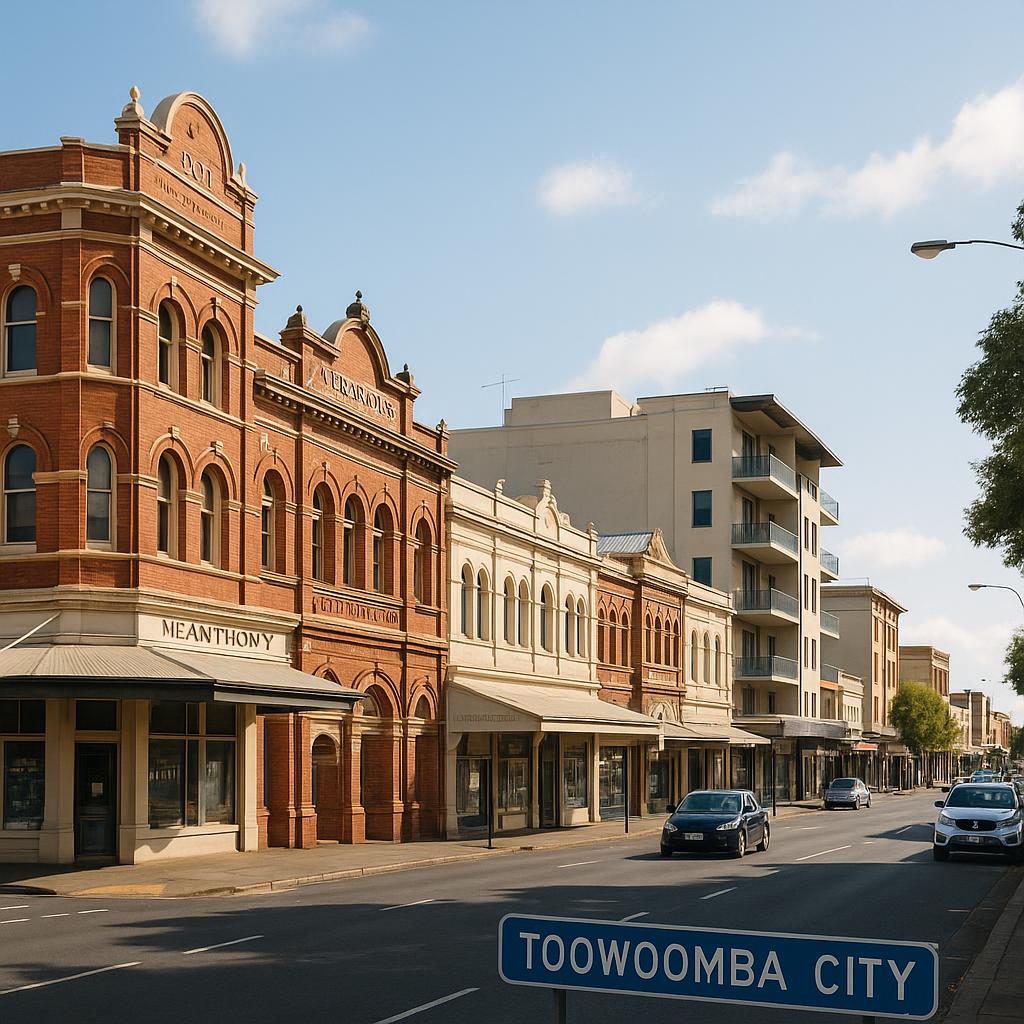
Toowoomba City is the CBD core of the broader Toowoomba region, so it behaves differently from a typical family suburb. The market is shaped by commercial activity, civic services, older residential pockets, and smaller-format dwellings. That mix creates opportunity, but it also means buyers should judge the exact street, building quality, and land use context rather than relying on a suburb-wide impression.
For homeowners, the suburb can work well if you want walkability, central access, and a practical daily routine. For investors, the main draw is not a simple growth story; it is the combination of location, convenience, and the tenant base that comes with a central regional hub. Properties that are easy to maintain and easy to access tend to stand out more than cosmetic upgrades alone.
In other words, this is a market where utility matters. A well-located, well-presented dwelling can appeal across multiple buyer groups, while a compromised property may struggle even if it sits in the right postcode.
Buyer Demand
Demand in Toowoomba City is usually driven by people who want to stay close to work, services, and central amenity. That includes first-home buyers, downsizers, professionals, and investors looking for practical rental demand. Buyers often compare the convenience of a central address against the space and quiet of surrounding suburbs.
Competition tends to be strongest for properties that feel low-fuss and well kept. Renovated character homes, neat units, and townhouses can all attract interest if they solve a clear problem for the buyer: less maintenance, better access, or a more manageable lifestyle. A property with awkward parking or a tired presentation can lose appeal quickly, even in a good location.
Rental Market
The rental story in Toowoomba City is usually built around convenience. Tenants who work in the CBD, health, education, retail, or nearby services may prefer shorter commutes and simpler routines. That makes compact, easy-care dwellings especially relevant, particularly where they balance liveability with manageable upkeep.
For investors, the main question is whether the property suits the tenant type most likely to rent it. A tidy unit or townhouse may lease more smoothly than a larger older home if the target tenant values convenience over space. Presentation, parking, and ongoing maintenance matter because central tenants often have clear expectations about practicality and comfort.
Lifestyle, Transport & Schools
Lifestyle in Toowoomba City is best described as convenience-led. You are close to shopping, cafes, civic services, and day-to-day essentials, which can suit people who prefer easy routines over a suburban spread. That makes the suburb attractive to downsizers and professionals who want less time spent driving for basics.
Transport access is generally one of the suburb’s strengths because central positioning usually means better access to arterial roads and local public transport connections. The trade-off is that busier streets can bring more noise and less privacy. Parking is worth checking carefully, especially for older homes, converted dwellings, or properties near commercial edges.
School considerations are still relevant, particularly for families who want a central base but need a workable school run. Rather than focusing on suburb branding, verify catchments, travel time, and the suitability of the dwelling itself. In a CBD-style location, the property’s layout, storage, and outdoor space may matter as much as the address.
Toowoomba City Suburb Profile
Official 2021 Census snapshot for the ABS Suburbs and Localities geography.
Age profile
Housing tenure
Occupied private dwellings by tenure type.
Salary & income profile
Median total income reported in the Census.
*Annual figures are weekly median × 52 estimates, not separate ABS annual medians.
Education & qualifications
Highest educational attainment, people aged 15+.
Employment status
People aged 15+ who reported being in the labour force.
Industry of employment
Top responses among employed people aged 15 years and over.
Occupation profile
Broad occupation groups among employed residents, including managers.
Property Type Guide
- Older character houses: Suited to buyers who want central charm and the possibility of renovation upside, but they can carry repair and compliance costs.
- Renovated homes: Attractive for owner-occupiers wanting a ready-made lifestyle solution; inspect the quality of the work, not just the finish.
- Units and apartments: Often appealing for investors and downsizers, provided body corporate costs, building quality, and tenant appeal stack up.
- Townhouses: A middle ground for low-maintenance living, though layout, access, and shared-facility costs should be checked carefully.
- Fringe-CBD mixed-use dwellings: Can be practical for location-driven buyers, but surrounding land use and parking need closer scrutiny.
Risks & Watch-Outs
- Older buildings may hide expensive repair items such as roofing, drainage, wiring, or moisture issues.
- Some streets can be affected by traffic, activity noise, or limited on-site parking.
- Properties with awkward layouts or minimal outdoor space may appeal to a narrower buyer pool.
- Mixed-use surroundings can create a trade-off between central convenience and day-to-day livability.
- Renovation quality should be assessed carefully because cosmetic updates can disguise functional shortcomings.
Nearby Suburbs to Compare
- Woombye QLD Property Market Guide: Buyers & Investors
- Nambour QLD Property Market Guide: Buyers & Investors
- Palmwoods QLD Property Market Guide: Buyers & Investors
- Bundall QLD Property Market Guide: Buyers & Investors
- Nerang QLD Property Market Guide: Buyers & Investors
FAQ
Is Toowoomba City a good suburb for first-home buyers?
It can be, especially if your priority is central convenience rather than a large yard. First-home buyers should focus on condition, parking, strata or maintenance obligations, and how the dwelling suits long-term living costs. The suburb rewards practical buyers.
Is Toowoomba City better for owner-occupiers or investors?
It can suit both, but for different reasons. Owner-occupiers often value the convenience and walkability, while investors may like the tenant access to services and employment. The best property type depends on whether you want lifestyle, yield resilience, or a balance.
What type of property usually works best in Toowoomba City?
There is no single best type, but low-maintenance dwellings often make sense in central areas. Renovated homes can work well for owner-occupiers, while units and townhouses may suit investors. The right answer depends on your budget, holding costs, and exit plan.
Is Toowoomba City suitable for downsizers?
Yes, if downsizers want easier access to services, a more compact lifestyle, and less time spent on property upkeep. The key is to choose a dwelling with manageable access, good storage, comfortable parking, and a layout that supports everyday convenience.
What should investors check before buying in the CBD area?
Inspect tenant appeal, building condition, parking, noise exposure, and ongoing expenses before assuming the location will do the heavy lifting. Also compare recent rental listings and comparable sales so you understand whether the property is genuinely competitive.
Conclusion
Toowoomba City is a central, convenience-led market that can suit both buyers and investors when the property is chosen carefully. It is strongest for people who value access, practicality, and low-friction living. The best results usually come from matching the dwelling type to the goal, then checking condition, parking, and surrounding uses with discipline.
Sources & How to Verify
- Check current listings and recent sold evidence on Domain so you can see how property type, presentation, and location are being priced right now.
- Use realestate.com.au to compare rental listings, dwelling formats, and days-on-market indicators rather than relying on a single agent opinion.
- Review suburb and demographic context on the Australian Bureau of Statistics to understand how the area is changing over time.
- Confirm planning controls, zoning, and development constraints with Toowoomba Regional Council before assuming renovation or redevelopment options are straightforward.
- Check state-based property, land, and planning resources through Queensland Government when you need an official starting point for property and infrastructure information.
- Verify school catchments, enrolment rules, and attendance areas directly with the relevant school or education authority rather than relying on third-party suburb summaries.
- For transport, parking, and local accessibility, compare official corridor information with on-the-ground inspection notes so you understand how the street actually functions.