Quick Answer
Gledswood Hills, located in New South Wales, offers a promising property market for 2026, driven by strong community growth and infrastructure development. Investors can find opportunities in both residential and rental markets, though they should be mindful of emerging market volatility.
Key Takeaways
- Strong growth potential in Gledswood Hills.
- Suitable for both investors and homeowners.
- Importance of understanding local market dynamics.
Pros & Cons
- Pros
- Growing community with expanding infrastructure.
- Relatively affordable compared to broader Sydney.
- Cons
- Emerging market volatility.
- Limited long-term historical data to analyze trends.
Suburb snapshot
Gledswood Hills is situated approximately 50 km southwest of the Sydney CBD. With a current population of around 5,000, the suburb has experienced significant growth in recent years. Key property types include detached houses and townhouses, appealing to a diverse demographic.
Investor view
The suburb has shown promising rental yields, estimated at 4%–5%, with vacancy rates remaining low due to high demand. Emerging property developments, particularly townhouses, signal further investment potential.
For example, a local investor focused on Gledswood Hills recently acquired a townhouse, achieving strong rental returns and significant equity growth within two years.
Homeowner view
Homeownership trends indicate an increasing number of families relocating to Gledswood Hills for its community-driven atmosphere and amenities. One family sharing their experience noted the suburb’s blend of tranquillity and convenience, making it an ideal place to raise children.
Market drivers
Key economic indicators such as rising employment rates in nearby industrial areas and government support for housing development are propelling property values. Infrastructure projects, like new transport links, are set to further enhance accessibility.
Cost of Living Breakdown
Compared to Greater Sydney, the cost of living in Gledswood Hills is more manageable. A typical family’s budget can expect expenses like:
- Housing: Generally lower than suburban averages in Sydney.
- Utilities: Average utility costs range from $250 to $350 monthly.
- Transport: Public transport and commuting costs are competitive, with passes costing around $45 per week.
Transport & commute
Gledswood Hills offers reasonably accessible public transport options, including buses to major employment hubs in Liverpool and Campbelltown. Commuters should expect travel times around 40–60 minutes by public transport to the Sydney CBD.
Property type guide
Popular property types in the area include:
- Detached Houses: Typically family-friendly, with 3-4 bedrooms.
- Townhouses: Increasingly popular for young professionals and small families.
Pros of detached houses include larger land sizes and greater privacy, while townhouses tend to offer easier maintenance and lower prices.
Rental market insights
The rental market has strengthened in recent years, with demand outpacing supply, particularly for family-sized homes. A recent example illustrates a property in Gledswood Hills rented quickly at market value, demonstrating high demand for quality housing.
Schools & education
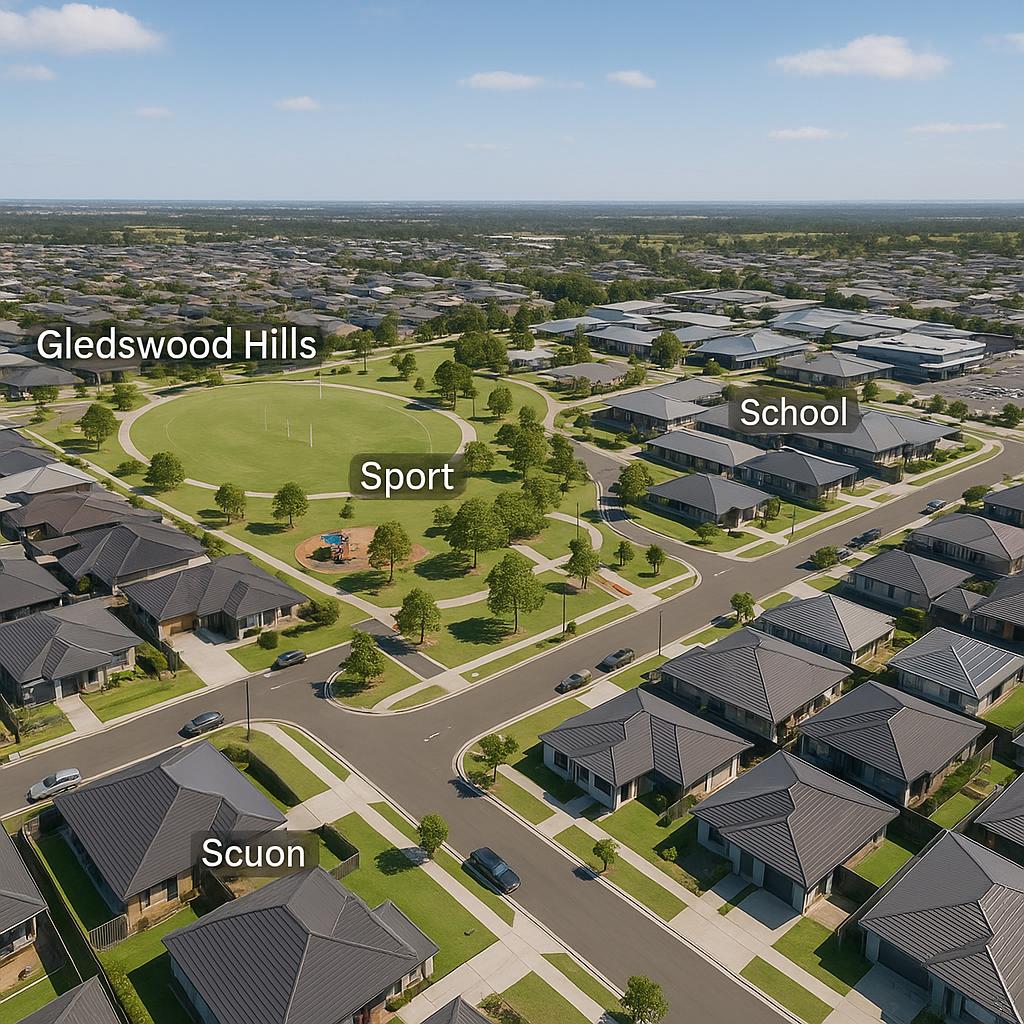
Gledswood Hills is home to reputable educational institutions that positively impact property values. Parents often choose this area due to high ratings for local primary and secondary schools, enhancing its appeal for families.
Lifestyle & daily life
A vibrant community life is evident through local parks, dining options, and retail outlets. Families frequently praise the balanced lifestyle, which combines access to urban amenities while retaining a suburban feel.
Comparison with nearby suburbs
When compared with suburbs like Gregory Hills and Oran Park, Gledswood Hills stands out for its affordability and community engagement; however, it may lack some of the larger commercial amenities those nearby areas offer.
Future growth & development
Ongoing developments, including new schools and retail centers, are expected to bolster property demand. Observing these trends will be crucial for investors considering long-term gains.
Safety & crime
Crime rates in Gledswood Hills are relatively low, contributing to its family-friendly reputation. For detailed statistics, refer to official resources such as the Bureau of Crime Statistics & Research.
Who this suburb suits
Gledswood Hills is ideal for families seeking a community environment, retirees interested in a peaceful lifestyle, and young professionals looking for affordable housing options without sacrificing connectivity to the city.
Due diligence checklist
- Conduct local market research to understand property trends.
- Evaluate property condition through inspections.
- Gather data on rental yields and historical growth.
Red flags & watch-outs
Investors should be wary of market volatility and ensure proper research on upcoming developments to avoid overpaying for properties. Monitoring trends, such as increased listings or longer selling times, can indicate potential downturns.
FAQ
- What is the average rental yield in Gledswood Hills? Current estimates range between 4% and 5%.
- How does Gledswood Hills compare with nearby suburbs? It is generally more affordable than suburbs like Gregory Hills and Oran Park.
- What amenities are available in Gledswood Hills? Local parks, dining facilities, and schools are instrumental in community life.
- Is public transport accessible in Gledswood Hills? Yes, with well-connected bus services.
- What’s an important check for investors? Always assess local market conditions and property valuation history.
- How safe is Gledswood Hills? Crime rates are generally low, contributing to its appeal for families.
Sources & how to verify
- Australian Bureau of Statistics
- NSW Planning Portal
- Bureau of Crime Statistics & Research
- NSW Government school finder
- Transport for NSW
- Real Estate Australia
- Domain
Conclusion
Gledswood Hills presents a plethora of opportunities for both investors and homeowners in 2026. Thorough research, understanding local market dynamics, and being aware of upcoming developments will enhance the potential for successful investments. Engage in thoughtful planning and consider the suburb’s strengths to maximize your real estate journey.