Quick Answer
Cremorne is a tightly held Lower North Shore suburb that suits buyers who value convenience, lifestyle, and low-maintenance living over land size. It is especially relevant for owner-occupiers, downsizers, professionals, and investors focused on apartment demand rather than freestanding homes. The key decision is not just the suburb name, but the building, strata quality, and micro-location within the suburb. For many buyers, Cremorne works best as a practical, blue-chip-fringe option with enduring appeal.
Key Takeaways
- Cremorne is a lifestyle-led suburb with strong appeal for buyers who want convenience, walkability, and established amenity.
- Apartments dominate the market, so building quality, strata management, layout, and natural light matter more than size alone.
- The suburb attracts a broad buyer base, which can support resale confidence and improve long-term rentability.
- It suits investors and homeowners who prefer low-maintenance living close to the city and nearby North Shore centres.
- Nearby suburb comparisons are essential because small location shifts can change property type, entry point, and likely competition.
Pros & Cons
Pros
- venient Lower North Shore position with easy access to city-fringe employment and amenity.
- Strong everyday lifestyle appeal, including dining, retail, and practical services nearby.
- Mostly apartment-based stock, which suits investors and downsizers seeking lower upkeep.
Cons
- Limited land-backed housing means fewer options for buyers wanting a house-and-yard profile.
- Strata costs, building age, and maintenance standards can vary materially between complexes.
- Busy-road exposure, parking constraints, and noise can affect both liveability and resale appeal.
Market Overview
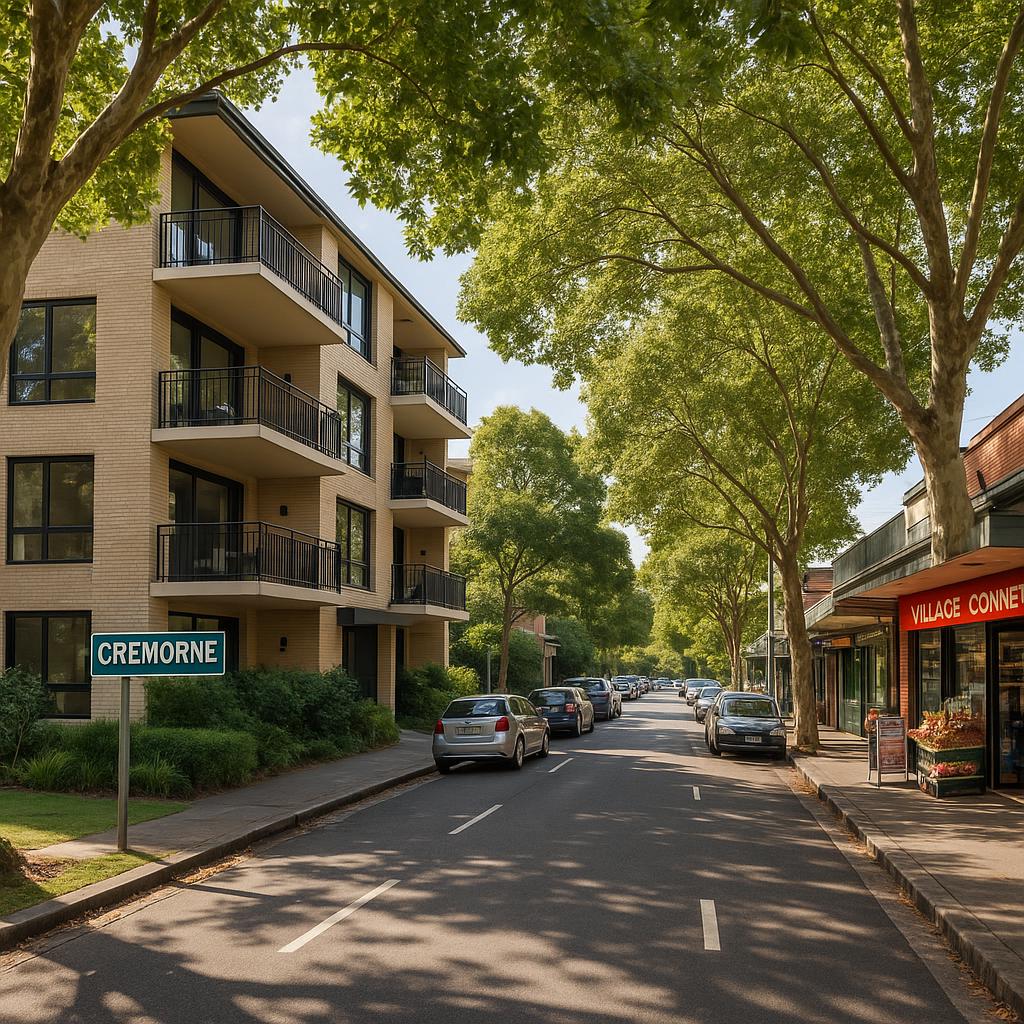
Cremorne sits in a classic Lower North Shore pocket where convenience and postcode prestige do much of the work. The suburb’s housing mix is heavily apartment-based, with occasional townhouse and house pockets depending on the street and micro-location. That means the asset-level details matter: building condition, floorplan, aspect, outlook, and walkability can outweigh the suburb label itself.
For homeowners, the appeal is a low-fuss urban base with good amenity. For investors, the market is usually about securing a property that stays attractive to both renters and future owner-occupiers. In that sense, Cremorne is less of a “speculative” market and more of a “quality selection” market, where the right stock can hold up better than generic apartment product.
Buyers should also remember that Cremorne competes with nearby suburbs for attention. If a property is compromised by traffic, poor layout, or weak strata governance, the market will often compare it against alternatives in Neutral Bay, Mosman and other nearby North Shore locations, even if the buyer initially started with Cremorne in mind.
Buyer Demand
Demand in Cremorne tends to come from three main groups: owner-occupiers who value convenience, downsizers who want a manageable property, and investors chasing strong tenant appeal. That mix matters because it broadens the buyer pool. When one segment slows, another may still be active, which can help reduce volatility in well-located stock.
The strongest interest usually goes to apartments that feel easy to live in: sensible floorplans, good light, secure parking, and a building that has been looked after. Buyers often pay a premium for practical features that improve day-to-day use, not just cosmetic finishes. In a suburb like Cremorne, the property that “works” tends to outperform the one that only looks impressive on paper.
Rental Market
From an investor perspective, Cremorne’s rental appeal comes from lifestyle and convenience rather than flashy size. Professional tenants, couples, and downsizers often want a low-maintenance home close to transport, shops, and the CBD. That means well-presented apartments in strong buildings can be easier to lease than stock with awkward layouts or ongoing maintenance concerns.
Rental performance is usually supported by practical features: secure parking, usable storage, good natural light, and a building with tidy common areas. Investors should check current rental listings and leasing pace before buying, because small differences between buildings can materially affect tenant enquiry. In this market, presentation and functionality are often more important than a generic “North Shore” label.
Lifestyle, Transport & Schools
Cremorne offers an urban lifestyle with day-to-day convenience at the centre of its appeal. Cafes, retail, cinemas, and service businesses support residents who want to get things done locally. The suburb suits buyers who value a well-connected routine more than a large backyard or a quiet outer-suburban feel.
Transport access is a major reason the suburb remains attractive. Bus connections and proximity to surrounding North Shore centres help make commuting manageable for many households. For buyers, that transport convenience should be tested in practice: walk the route, check the timetable, and see how the property performs during peak periods rather than relying on map proximity alone.
School considerations are best handled carefully and directly. Families should verify catchments, enrolment rules, and transport logistics through official sources, because these can change and may differ by address. In suburb markets like Cremorne, practical family planning often hinges on where daily routines, school access, and commuting lines intersect.
Cremorne (NSW) Suburb Profile
Official 2021 Census snapshot for the ABS Suburbs and Localities geography.
Age profile
Housing tenure
Occupied private dwellings by tenure type.
Salary & income profile
Median total income reported in the Census.
*Annual figures are weekly median × 52 estimates, not separate ABS annual medians.
Education & qualifications
Highest educational attainment, people aged 15+.
Employment status
People aged 15+ who reported being in the labour force.
Industry of employment
Top responses among employed people aged 15 years and over.
Occupation profile
Broad occupation groups among employed residents, including managers.
Property Type Guide
- Apartments: The core market segment. Best suited to investors, first-home buyers, and downsizers who value low maintenance and convenience.
- Boutique apartments: Often more attractive to owner-occupiers seeking quieter living and a less crowded building profile.
- Older apartments: Can offer larger proportions or solid construction, but buyers should budget for updating and investigate future maintenance.
- Townhouses and houses: Scarcer and usually more competitive, which can support long-term interest but narrows entry options.
In Cremorne, the building often matters more than the suburb. A well-maintained complex with efficient layouts and decent parking can be a better long-term hold than a larger but awkward apartment in a weaker building.
Risks & Watch-Outs
- Strata risk is real: read minutes, sinking fund reports, and defect history before relying on a glossy listing.
- Busy-road exposure, noise, and privacy issues can weaken liveability and affect resale value.
- Parking scarcity or awkward access can matter more here than in outer suburbs, especially for tenants and downsizers.
- Older buildings may have hidden maintenance costs, special levies, or future repair requirements.
- Do not assume every apartment performs the same; layout, light, and building quality can change demand sharply.
Nearby Suburbs to Compare
- Neutral Bay
- Mosman
- Cammeray
- North Sydney
These suburbs help buyers test whether Cremorne is the best mix of amenity, property type, and budget. Small changes in micro-location and stock profile can materially alter both rental strategy and future resale audience.
FAQ
Is Cremorne a good suburb for first-home buyers?
It can be, especially if you are comfortable with apartment living and want a low-maintenance lifestyle close to the city. The main checklist is not just price entry, but strata quality, parking, layout, and the ability to live there comfortably over time.
Is Cremorne suitable for investors?
Yes, particularly for investors targeting apartments with strong tenant appeal. The key is to buy a property that is easy to lease and easy to resell. Good natural light, practical floorplans, and well-run strata are more important than buying the cheapest unit.
What property type is most common in Cremorne?
Apartments are the dominant product, with some townhouse and house pockets in select locations. That means many purchase decisions come down to building quality rather than land size. Investors and homeowners should compare complexes carefully, even within the same street.
What should buyers inspect most carefully?
Inspect the building first, then the apartment. Look at strata records, common areas, maintenance history, floorplan efficiency, noise, light, and parking access. In suburbs like Cremorne, a good building can protect value; a poor one can undermine it quickly.
How does Cremorne compare with nearby suburbs?
Cremorne is often compared with Neutral Bay, Mosman, Cammeray, and North Sydney. The right choice depends on whether you want stronger prestige, more family feel, more commercial convenience, or a better value entry point in a similar lifestyle corridor.
Conclusion
Cremorne is best viewed as a convenience-led Lower North Shore suburb where apartment quality, building management, and micro-location drive outcomes. For buyers and investors, the opportunity is in choosing a property that will remain easy to live in, lease, and resell. If you verify the fundamentals carefully, Cremorne can be a durable long-term choice.
Sources & how to verify
- Check current sold prices, active listings, and days on market on Domain so you are comparing live evidence rather than relying on stale assumptions.
- Use realestate.com.au to review comparable listings, floorplans, and rental availability across Cremorne and nearby suburbs.
- Confirm local planning and zoning context through the NSW Planning Portal before assuming redevelopment or change-of-use potential.
- Review transport routes and service changes on Transport for NSW to verify commute options and stop locations for a specific address.
- Check official school catchment and enrolment information via NSW School Finder because catchments are address-specific and can change.
- Use ABS suburb and area data for broad demographic context, but treat it as background rather than a substitute for current market research.
- Obtain strata records, building reports, and recent AGM minutes before buying any apartment, because hidden repair issues often sit outside listing copy.
- Inspect the property at different times of day so you can verify noise, parking, traffic, and natural light under real conditions, not just at open homes.