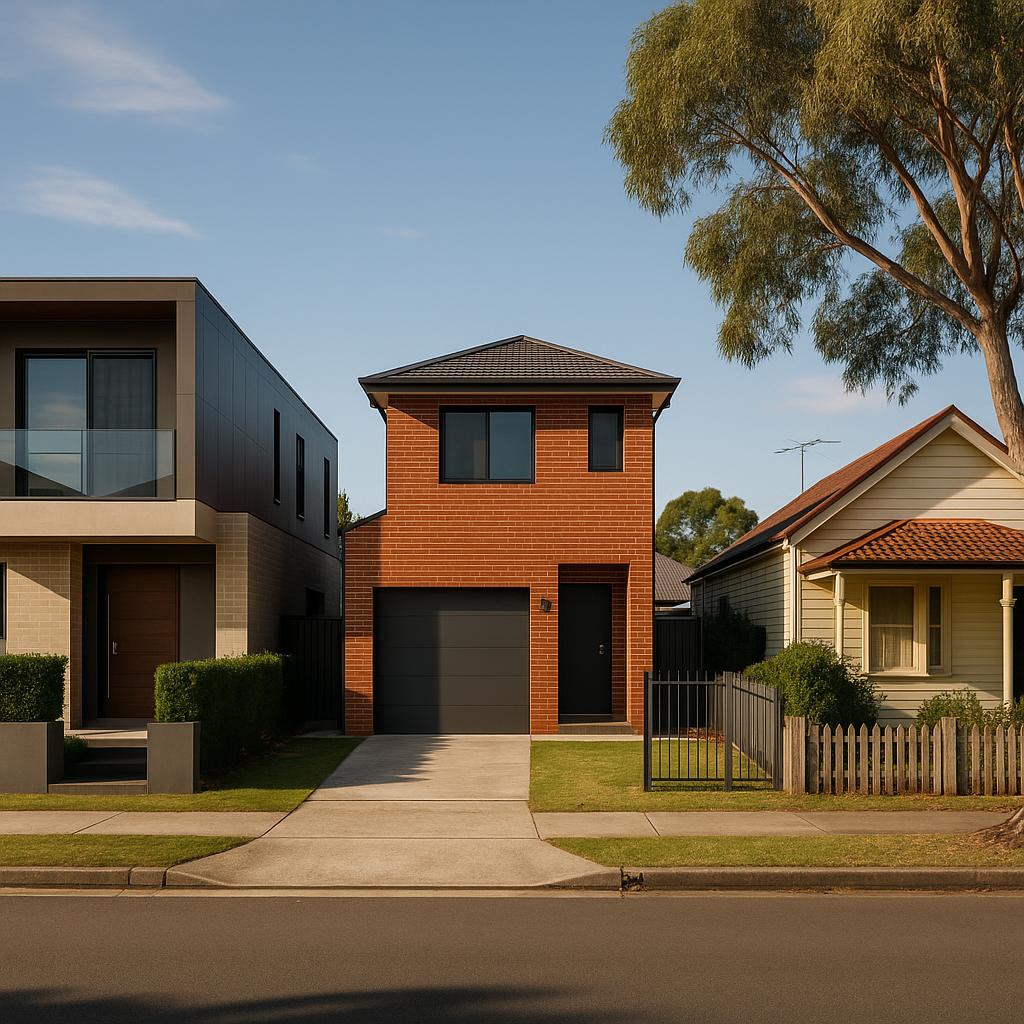
Sydney’s housing market is increasingly being described as a market of multiple speeds, with some properties attracting immediate attention while others take much longer to sell, according to Elite Agent. The contrast is sharp enough to raise questions about how buyers are behaving, how sellers are pricing, and how much room there is for a single headline to explain what is happening across the city.
That uneven picture lands alongside new Roy Morgan findings that ING, Suncorp Bank and Bendigo Bank home loan customers are the most satisfied with their bank after three interest rate rises. Taken together, the two reports point to a housing market still being shaped by borrowing costs, but also by differences in how households experience those costs and how quickly they respond to them.
For buyers, sellers and renters, the message is not that one trend is overriding all others. Rather, the sources suggest a market where timing, price point, location and finance conditions can matter just as much as the broader direction of rates and sentiment.
Sydney’s market is not moving at one speed
Elite Agent describes Sydney’s property market as “tri-speed”, a phrase that captures the idea that homes are not all being bought and sold under the same conditions. The publication’s framing suggests some properties are moving very quickly, while others are taking far longer to find a buyer.
That kind of split is important because it challenges the idea that Sydney can be read through a single average. A citywide median price, average days on market figure or broad auction clearance rate can hide the fact that some segments are still highly competitive while others are more cautious.
The source material does not provide a full breakdown of which suburbs, dwelling types or price brackets are moving fastest, so any attempt to generalise would go beyond the evidence supplied. What can be said is that the market appears to be fragmented enough for very different selling experiences to coexist at the same time.
Why speed matters for housing sentiment
When homes are selling in hours, that usually signals strong competition and limited room for negotiation. When comparable properties take weeks, the balance shifts and buyers may have more time to inspect, compare and decide. Elite Agent’s “37 days or four hours?” framing is a reminder that both conditions can exist within the same city.
That matters because speed affects more than the final sale. It shapes vendor expectations, buyer confidence and the tone of local campaigns. A fast-moving pocket can encourage urgency, while a slower one can make buyers more selective and sellers more realistic about price.
The source does not say whether the faster sales are concentrated in premium homes, entry-level stock or particular parts of Sydney. It also does not establish whether the pattern is new or simply more visible now. Still, the reported whiplash dynamic suggests that market participants are dealing with a less predictable environment than a simple boom-or-bust narrative would imply.
Borrowers are still feeling the effect of rate rises
Roy Morgan’s latest report adds another layer to the housing picture. The research group says ING, Suncorp Bank and Bendigo Bank home loan customers are the most satisfied with their bank after three interest rate rises.
The report does not, in the supplied material, set out the full methodology or the underlying satisfaction scores. It also does not say why those banks ranked highest. Even so, the finding is notable because it comes after a period of higher borrowing costs that has tested household budgets and mortgage holders’ tolerance for repayment increases.
In practical terms, customer satisfaction after rate rises can reflect a range of factors, including service, communication, product structure and how borrowers perceive value. The source material does not allow a conclusion about which of those factors mattered most. What it does show is that the mortgage market is not responding uniformly to higher rates.
Higher repayments, different borrower experiences
The Roy Morgan result suggests that the impact of rate rises is being experienced differently across lenders and customer groups. That is consistent with a broader housing market where one borrower may be under pressure while another feels comparatively well supported by their bank or loan structure.
It would be a mistake to read the satisfaction ranking as proof that any one lender has solved the problem of higher rates. The supplied source only says those customers are the most satisfied after three interest rate rises. It does not claim that they are unaffected by higher repayments, nor that other banks are performing poorly in every respect.
Still, the finding is relevant to the property market because mortgage sentiment can influence how confidently households bid at auction, negotiate privately or decide whether to buy at all. When borrowers feel more stable, they may be better placed to participate. When they feel stretched, they may step back or target cheaper stock.
What the two reports suggest about demand
Read together, the two reports point to a market where demand is not disappearing, but is becoming more selective. In Sydney, some homes are still drawing swift interest. At the same time, the mortgage market is showing that borrowers are paying close attention to how lenders respond to rate rises.
That combination can produce a patchwork effect. Well-located or well-priced homes may still attract strong competition, while properties that miss the mark on price, presentation or timing may sit longer. Borrowers who feel comfortable with their lender may remain active, while others may become more cautious.
The supplied sources do not provide auction data, listing volumes or lending approvals, so it is not possible to quantify how broad these effects are. But the direction of the reporting is clear enough: the market is being shaped by uneven demand and by the ongoing influence of borrowing costs.
Uncertainty remains around the broader market picture
There is also a degree of uncertainty in the available reporting. Elite Agent’s “tri-speed” description is vivid, but it is still a market interpretation rather than a full statistical snapshot. Roy Morgan’s satisfaction result is also specific to a particular measure and period, and it should not be treated as a complete guide to mortgage stress or lender performance.
That means the two stories should be read as complementary rather than definitive. One highlights how quickly some Sydney properties are moving. The other shows how borrowers are reacting to three interest rate rises. Neither source alone explains the whole market, and they do not fully agree on the emphasis: one is about sales tempo, the other about borrower sentiment.
That tension is useful. It suggests the housing market is not being driven by a single force, but by a mix of local conditions, finance pressure and buyer behaviour that can vary sharply from one segment to another.
What this means for buyers, sellers and renters
For buyers, the reports suggest that patience and preparation may matter more than a broad reading of the market. Some homes may still attract rapid competition, while others may allow more time for comparison. The supplied sources do not support any blanket rule about where opportunities are strongest.
For sellers, the “tri-speed” description is a reminder that pricing and presentation can affect how quickly a property moves. A fast sale in one part of the market does not guarantee the same result elsewhere, and the evidence supplied does not support assuming that all Sydney stock is equally in demand.
For renters, the reports do not provide direct rental data, but they still matter because mortgage conditions can influence investor behaviour, household mobility and the broader pace of housing turnover. Any effect on rents or vacancy would need separate evidence, which is not included here.
The bigger picture for July 2026
As of July 8, 2026, the strongest angle in the supplied sources is not a single price surge or a clear policy shift. It is the contrast between a fragmented Sydney sales market and a mortgage environment still adjusting to higher rates. That combination is likely to keep housing conditions uneven across suburbs, dwelling types and borrower profiles.
For now, the safest conclusion is that Australia’s housing market remains highly localised and highly sensitive to finance conditions. The latest reporting does not point to a simple national story. Instead, it suggests a market where speed, satisfaction and affordability pressures are all moving at different rates.
That makes broad assumptions risky. The available sources point to a housing market that is still active, but far from uniform, and one where the next move may depend as much on the details of a listing or loan as on the headline direction of interest rates.
Sources used for this draft
This article was generated from the following recent news reports and should be reviewed before publication.
- ING, Suncorp Bank and Bendigo Bank home loan customers are the most satisfied with their bank after three interest rate rises – Roy Morgan — Roy Morgan
- Wellness Wednesday: Nathan Newlan, Mortgage Choice – The Adviser — The Adviser
- 37 days or four hours? Inside the whiplash dynamics of Sydney’s ‘tri-speed’ property market – Elite Agent — Elite Agent