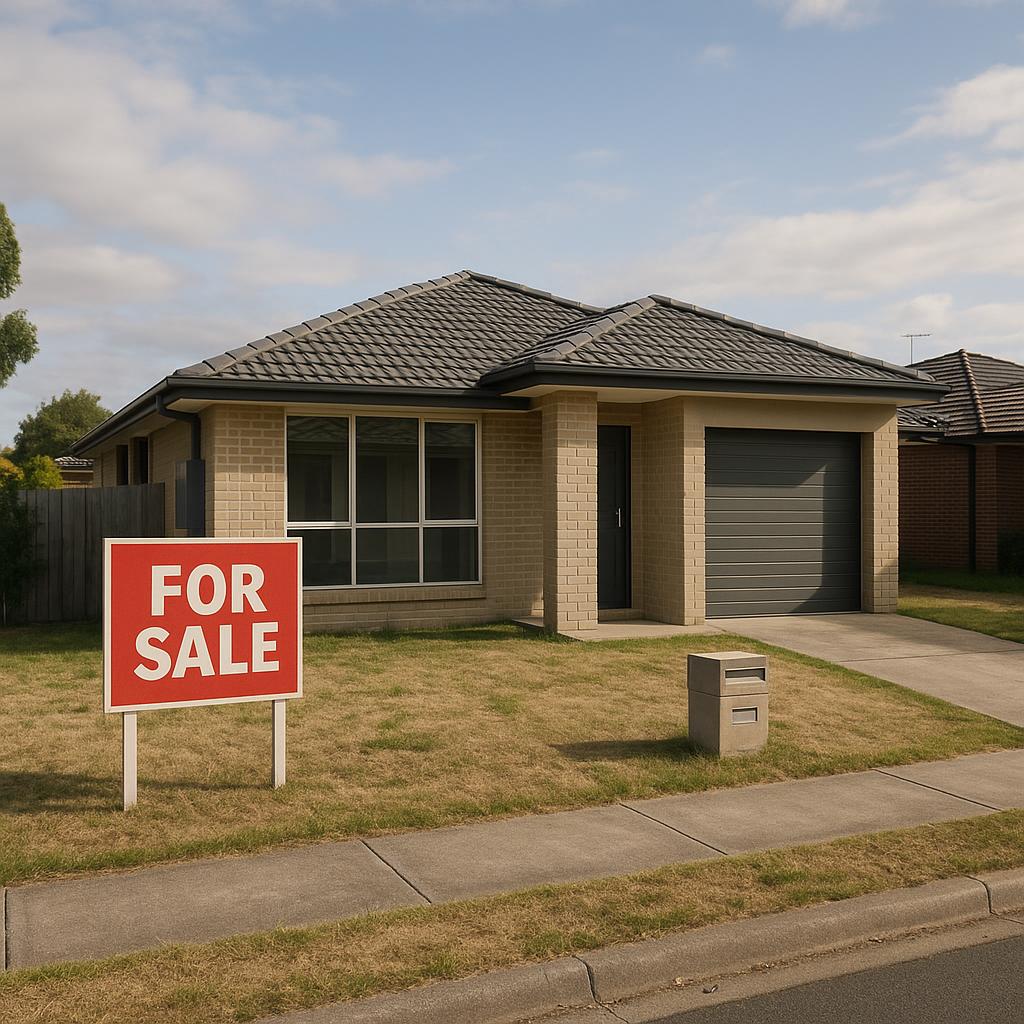
Australia’s housing market is entering August with a more cautious tone, as fresh reporting points to falling prices, hesitant buyers and rising mortgage stress. The latest coverage from SMH.com.au and afr.com suggests the recent slide in property values is no longer just a market story — it is also becoming a political and household-budget issue. At the same time, Roy Morgan Research says extreme mortgage stress has increased nationally, with lower-income households and people in lower socio-economic quintiles driving the rise.
The broad message from the sources is clear enough: the market is softer than it was, but not everyone is feeling that softness in the same way. For some would-be buyers, lower prices may look like an opening. For others, especially households already stretched by repayments, the same conditions can deepen caution and delay decisions.
Prices are easing, but buyers are not rushing in
SMH.com.au reported on August 4 that homes are getting cheaper, yet buyers are not stepping in with much enthusiasm. The article’s framing — “So scaredy-cat” — captures a market where lower prices have not automatically translated into stronger demand. That matters because housing markets often rely on confidence as much as affordability. When buyers expect further falls, they may wait rather than commit.
That hesitation can create a feedback loop. If buyers hold off, sellers may need to adjust expectations. But if sellers are reluctant to cut too far, transactions can slow. The result is a market that feels softer without necessarily becoming easier to navigate.
Political pressure builds around the property slide
afr.com reported that the property price slide is exposing political peril for the Albanese government. The report places the housing downturn in a broader policy context, where affordability, household stress and market sentiment can quickly become national political issues. The source does not suggest a single cause, and the market picture remains mixed, but it does indicate that housing weakness is being watched closely beyond the real estate sector.
That political sensitivity is not surprising. Housing affects owners, renters, first-home buyers and investors at the same time, but not in the same direction. A softer market can ease the entry point for some buyers while reducing the value of an existing asset for others. It can also leave governments exposed to criticism from both sides if affordability remains strained and confidence weakens.
Mortgage stress is rising nationally
Roy Morgan Research said on August 4 that extreme mortgage stress has increased nationally, driven by people on lower incomes and in lower socio-economic quintiles. That is a significant warning sign because mortgage stress can affect spending, saving and housing decisions well beyond the household directly involved.
The Roy Morgan finding also helps explain why a falling-price environment may not feel like relief for many households. If repayments are already difficult, lower prices do not necessarily improve day-to-day cash flow. In that setting, even households that might otherwise consider upgrading, refinancing or entering the market can remain on the sidelines.
Why cheaper homes can still feel hard to buy
The SMH.com.au report points to a familiar but often misunderstood housing dynamic: cheaper prices do not always mean easier buying conditions. Buyers still need deposit savings, borrowing capacity and confidence that their financial position can handle the commitment. When mortgage stress is rising, those hurdles become more pronounced.
There is also uncertainty in the market outlook. Some buyers may believe prices have further to fall, while others may worry that borrowing conditions remain too tight. The supplied sources do not agree on a single direction for the market, and that uncertainty itself can suppress activity. In practical terms, a market can be more affordable on paper and still feel inaccessible in real life.
What this means for buyers, sellers and renters
For buyers, the current environment may offer more choice or softer pricing in some areas, but the sources suggest caution remains high. Lower prices do not remove the need to assess borrowing capacity carefully, and the rise in mortgage stress shows that repayment pressure is still a major issue for many households.
For sellers, a slower market can mean longer campaign times and more pressure to meet buyer expectations. The SMH.com.au reporting suggests buyers are not rushing in simply because homes are cheaper, which can make pricing strategy more important than ever. However, conditions will vary by location, property type and local supply.
For renters, the direct effect is less clear from the supplied sources, but broader housing weakness can still matter. If would-be buyers stay out of the market, demand may remain in the rental sector for longer. At the same time, any easing in purchase prices does not automatically translate into lower rents, so renters may not see immediate relief.
Affordability remains the central pressure point
The common thread across the three sources is affordability. Whether the issue is falling prices, mortgage stress or political risk, housing remains under pressure because the gap between incomes, borrowing power and housing costs is still difficult to bridge. Roy Morgan’s data suggests that pressure is not evenly shared: lower-income households are bearing more of the strain.
That unevenness matters for the broader market. A softer headline price can mask the fact that many households are still locked out or stretched thin. In that sense, the current market is not simply “cheaper”; it is more fragile, with confidence and capacity both under strain.
Uncertainty remains the defining feature
The supplied sources do not present a single, settled outlook. SMH.com.au highlights buyer reluctance even as homes become cheaper. afr.com frames the price slide as a political problem. Roy Morgan Research shows mortgage stress rising, especially among lower-income households. Taken together, they point to a market that is moving, but not resolving.
For now, the most defensible reading is that Australia’s housing market is in a cautious phase. Prices may be easing in some places, but the combination of weak confidence and rising stress means the path ahead remains uncertain. That is likely to keep housing at the centre of both household planning and public debate in the weeks ahead.
Sources used for this draft
This article was generated from the following recent news reports and should be reviewed before publication.
- ‘So scaredy-cat’: Why no one wants to buy when homes are getting cheaper – SMH.com.au — SMH.com.au
- Property price slide exposes political peril for Albanese government – afr.com — afr.com
- Extreme mortgage stress increases nationally, driven by people on lower incomes and in lower socio-economic quintiles – Roy Morgan Research — Roy Morgan Research