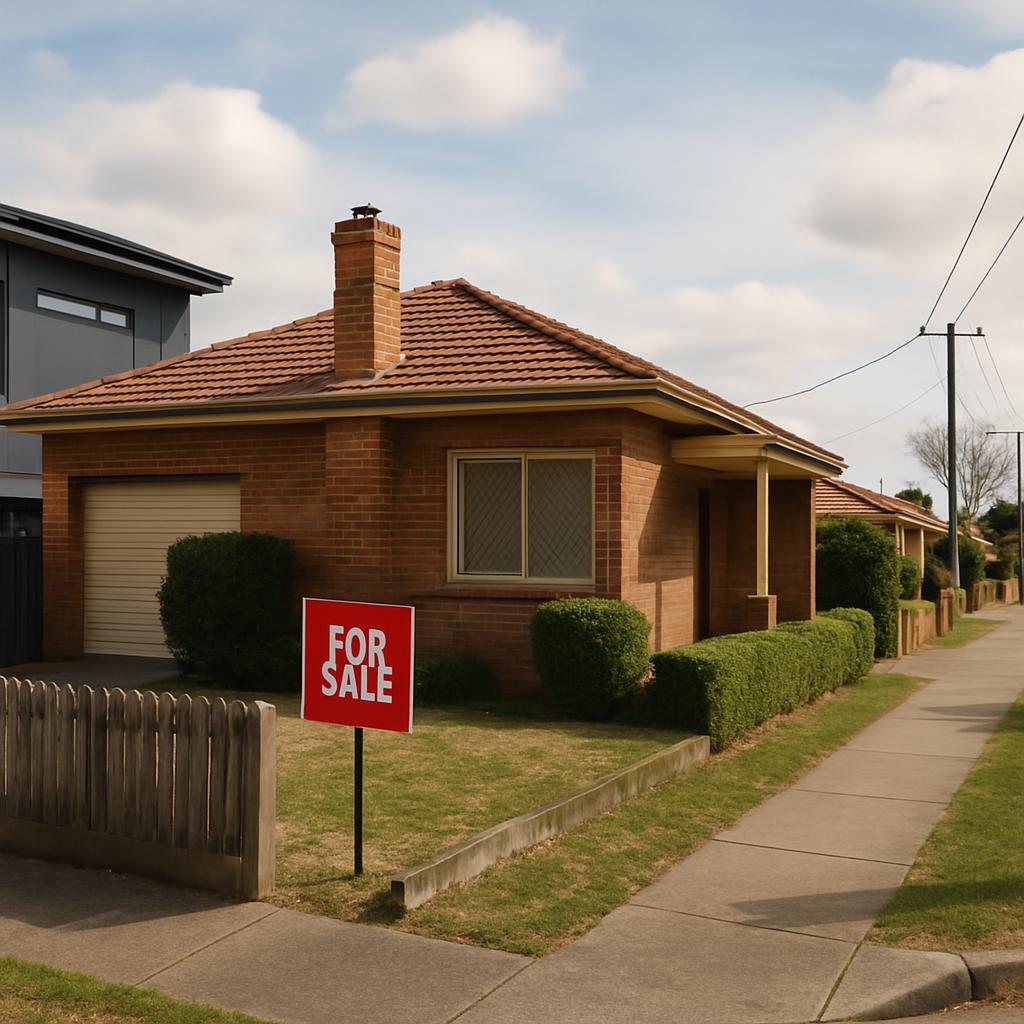
Melbourne’s housing market has emerged as one of the clearest pressure points in the latest round of Australian property reporting, with ABC News saying investors are “all but gone” from the city’s market after the budget. At the same time, The Australian has reported a 20 per cent fall in first-home buyer loan applications, raising fresh questions about how policy settings, borrowing costs and confidence are shaping demand.
The picture is not straightforward. Some of the latest coverage points to a cooling market and weaker buyer activity, while other sources highlight government-backed support still available to eligible borrowers. The result is a housing market story defined less by one clear trend than by a mix of softening demand, affordability strain and uncertainty about what comes next.
Melbourne’s investor pullback is in focus
ABC News reported on July 4 that investors are “all but gone” from the Melbourne property market after the budget. That framing suggests a sharp change in sentiment, at least in the short term, and places Melbourne at the centre of a broader discussion about how tax, policy and market expectations can affect investor behaviour.
The reporting does not, on its own, establish a single cause for the shift across the whole market. But it does indicate that investor participation is being watched closely, particularly in a city where investors have historically played a significant role in rental supply and transaction activity.
If investor activity is weaker, that can matter beyond sales volumes. It can also affect the balance between owner-occupiers and investors competing for stock, and it may feed into rental availability over time. However, the extent and duration of any change remain uncertain from the available reporting.
First-home buyer applications fall
The Australian reported on July 2 that first-home buyer loan applications were down 20 per cent, describing the result as a “budget backfire”. That is a strong claim, but it is also one that should be read carefully: the source context does not provide the underlying methodology, time period or whether the figure reflects a national trend, a state-based trend or a lender-specific sample.
Even so, the headline points to a real concern in the market: first-home buyers may be finding it harder to step in, or may be delaying decisions because of affordability pressures and uncertainty about policy support. For many households, the gap between incomes, deposit requirements and property prices remains the central obstacle.
That pressure is especially relevant in a market where prices have risen over many years. ABC News also published a piece on July 2 examining what a fall in house prices could mean after decades of growth. That broader context matters because even a modest cooling in prices can have different effects depending on whether a buyer is entering the market for the first time or already owns property.
Policy support is still part of the picture
Not all of the source material points in the same direction. Bank Australia says it is lending for the Australian Government Help to Buy Scheme, which indicates that policy support for eligible buyers remains active through at least some lenders. That matters because it suggests the market is not simply being shaped by falling confidence; it is also being influenced by the availability of assistance programs.
At the same time, the presence of a scheme does not guarantee stronger demand. Buyers still need to meet lending criteria, and the broader affordability challenge remains. In other words, support measures may help some households, but they do not remove the underlying pressures of deposit size, repayments and property prices.
CommBank’s updated housing outlook, published in May, also points to the fact that major lenders are still tracking the housing market closely in the context of the 2026 Budget. While the supplied summary does not set out the bank’s detailed forecasts, it reinforces that the market is being assessed through a policy lens as much as a price lens.
Affordability remains the central constraint
Across the supplied sources, affordability sits underneath nearly every headline. Whether the issue is fewer first-home buyer applications, weaker investor participation or uncertainty about the effect of a possible price fall, the common thread is that housing remains expensive relative to many buyers’ capacity to borrow and save.
That does not mean the market is moving in one direction nationally. Some areas may be cooling, others may be holding up, and the available reporting does not provide a single nationwide verdict. But it does suggest that the market is more sensitive than usual to policy changes, lending conditions and buyer sentiment.
ABC News’ reporting on what a fall in house prices could mean is a reminder that softer prices are not automatically a simple win for buyers. A decline can improve entry prospects for some households, but it can also affect existing owners’ equity and confidence. The impact depends on the scale of any fall, the local market and the financial position of the household involved.
What this means for buyers, sellers and renters
For buyers, the latest reporting suggests there may be pockets of softer demand, but affordability remains a major hurdle. First-home buyers in particular appear to be under pressure, even with some government-backed support still available through participating lenders.
For sellers, weaker investor activity in Melbourne and softer first-home buyer applications may mean fewer active bidders in some segments of the market. That does not guarantee lower prices, but it can change the pace and competitiveness of sales.
For renters, the implications are less direct and harder to pin down from the supplied sources alone. A drop in investor participation could, over time, affect rental supply, but the timing and scale of that effect are uncertain. Any short-term benefit from softer purchase demand would need to be weighed against the possibility of tighter rental conditions later.
Overall, the latest reporting points to a housing market that is still being pulled in different directions: policy support on one side, affordability strain on the other, and a growing sense that confidence is uneven across buyer groups and cities.
Why Melbourne is being watched closely
Melbourne is significant because it is large, liquid and often seen as a bellwether for broader market sentiment. If investors are retreating there, as ABC News reported, that could be an early sign of changing expectations rather than a one-off event. But the supplied sources do not establish whether the shift is temporary, budget-related or part of a longer trend.
That uncertainty is important. Property markets rarely move in a straight line, and the same policy change can affect different groups in different ways. Investors may respond quickly to tax or budget settings, while first-home buyers may be more constrained by borrowing capacity and deposit hurdles. Sellers may be watching for signs of price support, while renters are more focused on availability and affordability.
With the 2026 Budget still being digested by the market, the next few months may help clarify whether the recent reports reflect a short-lived pause or a more durable shift in demand. For now, the clearest message from the available coverage is that confidence is fragile and the housing market remains highly sensitive to policy and price signals.
Uncertainty remains around the next move
There is no single, settled reading of the market in the supplied sources. One report points to investors leaving Melbourne, another to fewer first-home buyer loan applications, while lender and bank material shows that support schemes and updated housing outlooks are still part of the landscape. Those signals can coexist, but they do not add up to a simple national trend.
That is why caution is warranted. The latest reporting suggests a market under strain, but it does not prove that prices will fall broadly, that demand will recover quickly, or that policy support will be enough to offset affordability pressures. The most defensible conclusion is that Australia’s housing market, and Melbourne in particular, is entering a period where buyer behaviour is being shaped by competing forces and incomplete information.
Sources used for this draft
This article was generated from the following recent news reports and should be reviewed before publication.
- Investors ‘all but gone’ from Melbourne property market after budget – ABC News & Headlines – Australian Broadcasting Corporation — ABC News & Headlines – Australian Broadcasting Corporation
- We’re lending for the Australian Government Help to Buy Scheme – Bank Australia — Bank Australia
- Budget backfire: 20pc fewer first-home buyers applying for loans – The Australian — The Australian
- Home | First Home Buyers – First Home Buyers — First Home Buyers
- For decades Australian house prices have grown. This is what a fall could mean – ABC News & Headlines – Australian Broadcasting Corporation — ABC News & Headlines – Australian Broadcasting Corporation
- 2026 Budget: Updated housing outlook – CommBank — CommBank