Quick Answer
Walkerville is generally best understood as a tightly held, prestige-adjacent inner-north Adelaide suburb with strong owner-occupier appeal and limited stock. It suits buyers who value convenience, character, and long-term scarcity more than bargain entry or headline yields. Investors can still find merit here, but the play is usually tenant quality, resale resilience, and land scarcity rather than cash-flow chasing. In practice, Walkerville rewards patient buyers who compare street by street and focus on fit, condition, and hold strategy.
Key Takeaways
- Walkerville tends to attract buyers who want established charm, convenience, and a suburb with clear long-term appeal.
- Scarcity of well-located homes can support competition, especially when presentation and layout align with owner-occupier demand.
- Investors should assess tenant fit, maintenance risk, and resale strength rather than relying on broad suburb averages.
- Character homes, renovated dwellings, and low-maintenance options each appeal to different buyer groups in distinct ways.
- Comparing nearby suburbs is essential, because small differences in streets, housing stock, and amenity access can change value outcomes.
Pros & Cons
Pros
- Strong lifestyle appeal for buyers seeking convenience and character.
- Tight supply can support price resilience for well-located homes.
- Attractive to quality tenants who value established surroundings.
Cons
- Entry costs can be higher than in many surrounding suburbs.
- Yield may be less compelling than in lower-priced investment markets.
- Older homes can bring maintenance, renovation, or heritage-sensitive costs.
Market Overview
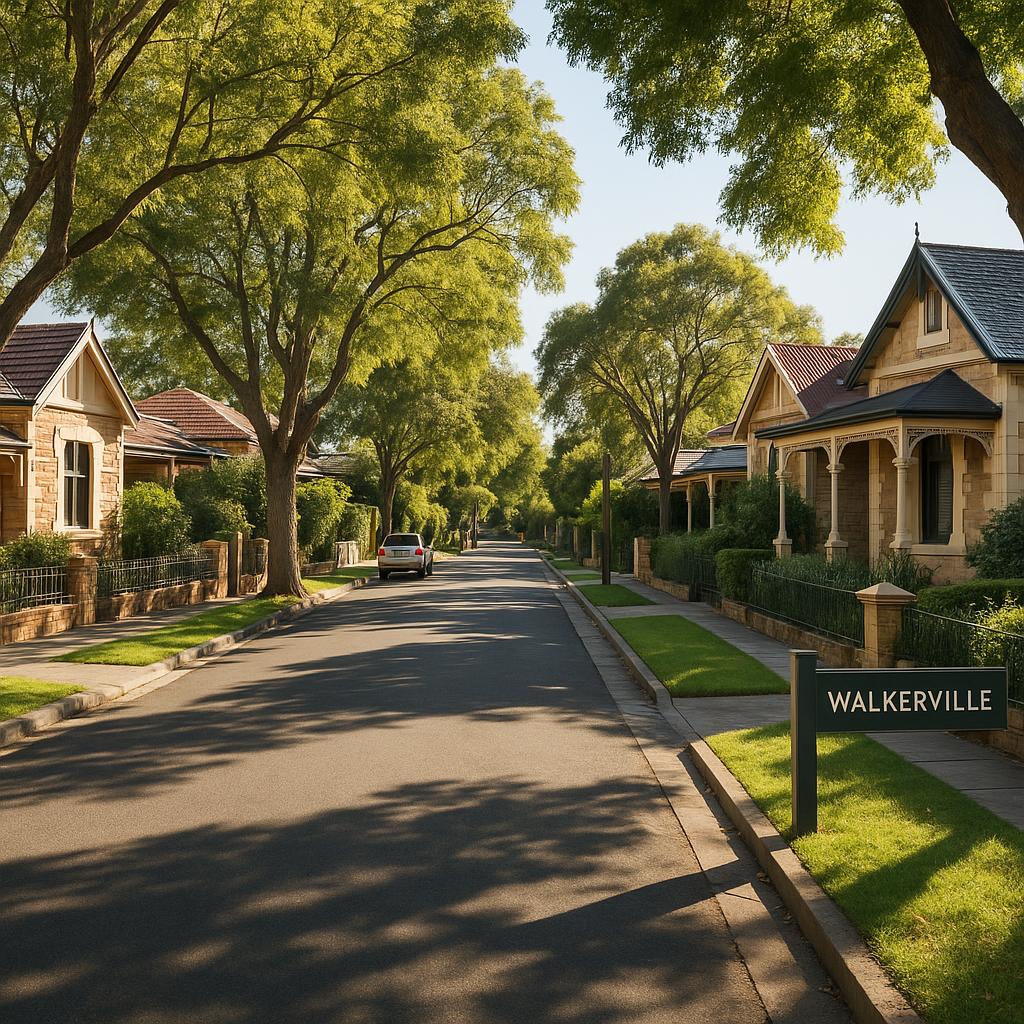
Walkerville sits in Adelaide’s established inner-ring market and is often treated as a premium-leaning, tightly held suburb. Its appeal comes from a mix of character housing, convenience, and a suburb identity that feels settled rather than speculative.
For buyers, the key point is that Walkerville is not a volume market. Price and demand can shift meaningfully by street, land size, renovation level, and whether the home feels ready for an owner-occupier or needs work. That makes comparable sales and local inspection work more important than broad suburb commentary.
In practical terms, the market tends to reward homes that reduce compromise: good presentation, functional layout, sensible parking, and easy access to daily amenities. If you are comparing it with nearby suburbs, the question is often whether you are paying for location certainty, long-term scarcity, or simply the lifestyle feel of an established Adelaide pocket.
Buyer Demand
The core buyer pool usually includes professional families, downsizers, and owner-occupiers who want convenience without losing suburb character. Investors also look here, but the strongest competition is often from people buying with lifestyle in mind.
Demand tends to be strongest for well-kept homes that are easy to live in from day one. A renovated character home, a tidy low-maintenance residence, or a layout that suits modern daily life will usually have broader appeal than a property that needs major rework.
Rental Market
Walkerville’s rental market is generally suited to tenants who value a neat, established environment and practical access to nearby services and the city fringe. That often means professionals, relocating households, and downsizers renting temporarily while deciding on a longer-term move.
For investors, the key is to match the property to the likely tenant. In this suburb, presentation and comfort matter a lot: functional floorplans, decent storage, effective heating and cooling, and easy-care finishes can make a stronger difference than trying to maximise internal size alone.
Lifestyle, Transport & Schools
Walkerville has a calm, established feel that appeals to buyers who want a more refined residential setting without being far from central Adelaide. The suburb’s lifestyle value comes from everyday convenience, established streetscapes, and the sense that it is already “finished” rather than a growth corridor in transition.
Transport access is an important part of the buying case. Proximity to major arterial routes and practical commuting options broadens the suburb’s buyer and tenant pool, especially for people who want easy access to the CBD, nearby employment areas, and weekend amenities. That convenience can support demand even when buyers are paying a premium upfront.
Families also tend to research schooling carefully, including catchments, commute times, and suitability for their children’s stage of life. In a suburb like Walkerville, school proximity can strengthen demand for family-friendly homes, but buyers should always verify current catchments and options directly before relying on assumptions.
Walkerville (SA) Suburb Profile
Official 2021 Census snapshot for the ABS Suburbs and Localities geography.
Age profile
Housing tenure
Occupied private dwellings by tenure type.
Salary & income profile
Median total income reported in the Census.
*Annual figures are weekly median × 52 estimates, not separate ABS annual medians.
Education & qualifications
Highest educational attainment, people aged 15+.
Employment status
People aged 15+ who reported being in the labour force.
Industry of employment
Top responses among employed people aged 15 years and over.
Occupation profile
Broad occupation groups among employed residents, including managers.
Property Type Guide
- Character homes: Strong emotional appeal, land value, and owner-occupier demand; check maintenance history and any renovation constraints.
- Renovated older homes: Often the best fit for buyers wanting style plus liveability; inspect workmanship and hidden upgrade costs closely.
- Low-maintenance units/townhomes: Can suit investors and downsizers; assess owner-occupier resale appeal and ongoing strata-style costs where relevant.
- Premium family homes: Usually attract the strongest lifestyle buyers; focus on layout, parking, outdoor usability, and long-term resale quality.
Risks & Watch-Outs
- Do not assume the suburb name alone justifies the asking price; comparable sales and street quality still matter.
- Older dwellings can hide expensive maintenance, especially where cosmetic presentation masks structural or services issues.
- Emotional bidding is a real risk in tightly held markets, so set a ceiling before you inspect.
- Some properties may appeal strongly to owner-occupiers but less so to tenants, which can affect investment flexibility.
- Always check whether noise, traffic flow, parking, or awkward access reduces the liveability premium on a specific street.
Nearby Suburbs to Compare
- Kent Town
- Gilberton
- Medindie
- North Adelaide
- Vale Park
FAQ
Is Walkerville SA a good suburb to buy in?
It can be a strong option for buyers who value established character, convenience, and long-term scarcity. The best purchases usually suit the suburb’s owner-occupier bias, so buyers should compare condition, street appeal, and resale fit rather than chasing the cheapest listing.
Is Walkerville better for owner-occupiers or investors?
It often suits owner-occupiers first because lifestyle appeal and presentation are major drivers of demand. Investors can still perform well, but they generally need to be more selective about tenant fit, maintenance exposure, and the likely resale market at exit.
What types of properties are most in demand in Walkerville?
Well-presented character homes, renovated dwellings, and low-maintenance properties with practical layouts tend to attract the strongest interest. Homes that are easy to live in, easy to maintain, and close to daily amenities usually have broader appeal than highly specialised properties.
Is Walkerville a good rental market?
It can be, especially for investors targeting stable, quality tenants rather than maximum yield. The rental case is stronger when the dwelling is comfortable, low-fuss, and well maintained. Always check current listings and rental competition before making assumptions about returns.
What should buyers check before purchasing in Walkerville?
Inspect the home more than once if possible, review recent comparable sales, and understand the condition of the building and services. Also verify parking, access, noise, and any planning or heritage constraints that could affect renovation, extension, or resale options.
Conclusion
Walkerville is best approached as a quality-over-quantity suburb where lifestyle, scarcity, and resale discipline matter more than bargain hunting. For owner-occupiers, the priority is fit and liveability. For investors, it is tenant demand, holding costs, and exit strength. Compare carefully, verify the detail, and let the suburb’s actual property stock guide the decision.
Sources & How to Verify
- Check current sold evidence and listing depth on realestate.com.au so you are comparing today’s market, not stale suburb summaries.
- Review current rentals on Domain to see what property types, finishes, and lease-ready features are actually competing for tenants.
- Use ABS data to understand broader demographic and household trends before drawing conclusions about buyer and tenant demand.
- Check planning and zoning controls on SA Government planning resources before assuming a renovation, extension, or redevelopment path is straightforward.
- Confirm school zones and enrolment guidance through Education South Australia rather than relying on third-party summaries.
- Verify travel options and route changes using Adelaide Metro, especially if commute convenience is part of your buying decision.
- Cross-check suburb-level amenity and local area information via the City of Adelaide and relevant local government sources where applicable.
- Always compare at least three recent nearby sales and inspect several current listings so your decision is based on evidence, not suburb reputation alone.