Quick Answer
Broken Hill can suit buyers looking for affordable regional property, but success depends on understanding local demand, rental conditions, property type, and the risks of remote markets. It is a very different story to coastal NSW—lower entry points, a distinctive local economy, and investment decisions that hinge on practicality as much as price. Best for: value-focused buyers, cash-flow-conscious investors, and buyers wanting character homes or larger blocks. Not ideal for: buyers needing metro-style liquidity, short commute access, or fast capital growth certainty.
Key Takeaways
- Broken Hill is a unique outback market with its own buyer and renter profile, not a scaled-down version of Sydney or Newcastle.
- Demand is influenced by local employment, essential services, trades, and regional migration rather than broad metro-style speculation.
- Rental performance depends on stock quality, maintenance, and tenant fit, not just a low purchase price or headline appeal.
- Lifestyle appeal matters here: heritage character, open space, and strong local identity are major drawcards for many buyers.
- Property type matters: houses, fibro homes, heritage cottages, and larger blocks each bring different maintenance and tenancy implications.
Pros & Cons
Pros
- Relative affordability compared with many NSW markets.
- Distinctive heritage character and a strong sense of community.
- Can attract attention where good-quality homes are limited.
Cons
- Remote location can mean slower resale and a smaller buyer pool.
- Older homes may bring higher maintenance and compliance work.
- Travel, servicing, and contractor access can be more complex than in metro markets.
Market Overview
Broken Hill is an outback regional city in far western NSW with a strong identity, a long mining legacy, and a housing market that behaves differently from mainstream coastal or metropolitan centres. Demand tends to be shaped by local services, healthcare, education, industry, and the realities of living in a remote location.
The housing mix typically includes heritage homes, practical worker-style housing, older detached homes, and some updated stock. That means buyers are often deciding between character, condition, and practicality rather than chasing uniform estates. In a market like this, “cheap” and “good value” are not always the same thing.
For investors, the biggest lesson is to look beyond the entry price. Comparable sales can be fewer, repairs can take longer to organise, and tenant demand can be very property-specific. A neat, functional home in the right pocket may outperform a bargain purchase that needs ongoing attention.
Buyer Demand
Broken Hill buyer demand is usually driven by locals upgrading or downsizing, first-home buyers wanting affordability, and investors looking for practical rental demand. Lifestyle buyers are also drawn to the town’s open feel, heritage streetscapes, and stronger sense of place.
That demand profile matters because resale depth is narrower than in larger NSW centres. Buyers tend to respond to homes with good bones, sensible layouts, and manageable upkeep. If you are planning to hold for the long term, focus on properties that appeal to both owner-occupiers and tenants rather than highly niche renovations.
Rental Market
The rental market in Broken Hill is shaped by tenant practicality, housing condition, and local employment needs. Tenants typically value comfort, functionality, and easy maintenance over premium finishes that add cost but little day-to-day benefit.
For investors, durable homes with reliable heating and cooling, workable layouts, and manageable yards are often more sensible than cheap properties that need constant repairs. In a smaller market, vacancy risk and re-leasing time can be more sensitive to property quality, so a good presentation and sound maintenance plan matter.
Lifestyle, Transport & Schools
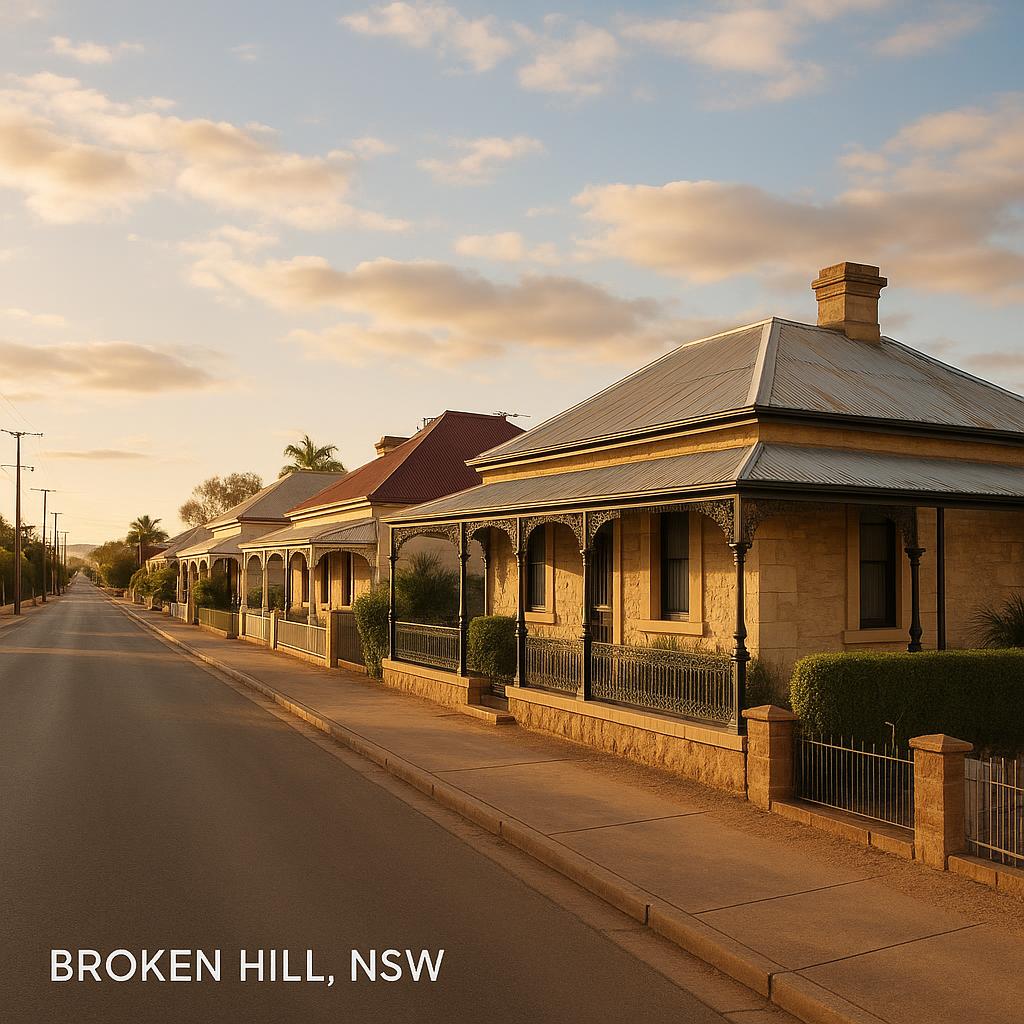
Broken Hill offers a strong outback lifestyle: heritage character, open skies, a slower pace, and a community-minded feel. That makes it appealing to buyers who value space and identity more than urban convenience.
Transport planning matters more here than in metro suburbs because car dependence is common and daily logistics can be more demanding. Buyers should think carefully about access to work, shops, and services before choosing a property, especially if they plan to rent it out to tenants who rely on practical travel patterns.
Families should verify school options, catchments, childcare, and commute practicality directly with official sources. For both owner-occupiers and investors, liveability often comes down to how well the home fits the daily routine—not just how it looks on inspection day.
Broken Hill Suburb Profile
Official 2021 Census snapshot for the ABS Suburbs and Localities geography.
Age profile
Housing tenure
Occupied private dwellings by tenure type.
Salary & income profile
Median total income reported in the Census.
*Annual figures are weekly median × 52 estimates, not separate ABS annual medians.
Education & qualifications
Highest educational attainment, people aged 15+.
Employment status
People aged 15+ who reported being in the labour force.
Industry of employment
Top responses among employed people aged 15 years and over.
Occupation profile
Broad occupation groups among employed residents, including managers.
Property Type Guide
- Houses: The default choice for many buyers, offering land, flexibility, and broad appeal, but they can carry roof, plumbing, electrical, and yard maintenance.
- Heritage cottages / character homes: These can deliver charm and street appeal, but renovation costs, hidden defects, and specialist trades need careful budgeting.
- Older practical homes: Often functional for tenants, but tired interiors and deferred maintenance can reduce appeal unless priced and managed well.
- Lower-maintenance dwellings: If available, these may suit investors seeking simpler management, though stock can be limited and strata needs review.
- Large-block properties: Attractive for lifestyle buyers and trades-based households, but fencing, landscaping, water, and general upkeep can add to holding costs.
Risks & Watch-Outs
- Resale can be slower than in larger NSW centres because the buyer pool is smaller and more locally driven.
- Older housing stock can hide costly issues, so a low asking price should never replace a proper inspection.
- Remote servicing can make repairs, insurance handling, and trade access slower than many buyers expect.
- Rental demand may vary by dwelling type and condition, so not every “cheap” property will attract reliable tenants.
- Always verify any heritage, planning, or zoning considerations before renovating or extending an older property.
Nearby Suburbs to Compare
FAQ
Is Broken Hill a good place to buy property?
It can be, if you want an affordable regional purchase and understand the local market. The best results usually come from buying a well-kept, functional property rather than chasing the cheapest available house.
Is Broken Hill better for investors or owner-occupiers?
It can suit both, but for different reasons. Owner-occupiers may value space and character, while investors need to be disciplined about maintenance, tenant fit, and exit strategy because liquidity is more limited.
What types of homes perform best in Broken Hill?
Generally, practical homes with good bones, manageable upkeep, and comfortable living spaces tend to be safer choices. Character homes can work too, but only when the condition and repair budget are realistic.
What should I check before buying an older home there?
Inspect roofing, plumbing, electrics, moisture issues, flooring, and pest activity carefully. In a remote market, also consider whether local trades, materials, and insurance support are readily available when you need them.
Is rental demand stable in Broken Hill?
It can be steady for the right property, but it is not broad or automatic. Demand tends to depend on condition, location, and fit for local tenants, so durability and liveability matter more than cosmetic upgrades.
Conclusion
Broken Hill offers a distinct regional opportunity for buyers who understand its market structure. The best outcomes come from matching the property to the likely tenant or owner-occupier, then managing maintenance and exit strategy with care. In Broken Hill, the smartest purchase is usually the one that fits the town’s reality—not just the lowest advertised price.
Sources & how to verify
- Check live listings on realestate.com.au to see what stock is available right now and how condition varies across the market.
- Review comparable sold evidence on Domain before relying on any estimate of value or buyer depth.
- Use the Australian Bureau of Statistics to confirm current demographic context rather than assuming the town profile has stayed unchanged.
- Check planning, zoning, and development rules through the NSW Planning Portal before purchasing or renovating.
- Verify school options and catchments on the NSW Government School Finder rather than relying on informal maps or agent comments.
- Look at local health and service access via NSW Health if your purchase decision depends on family or worker convenience.
- Inspect transport, road access, and travel implications through Transport for NSW, especially if commute or freight access matters.
- Confirm council requirements, permits, and any local updates with Broken Hill City Council before making renovation assumptions.