Quick Answer
Maitland can suit buyers and investors who want regional value, established amenity, and access to the wider Hunter economy without relying on a single postcode story. The main decision is not whether Maitland is “good” in general, but which pocket, property type, and condition level best match your goal. For many buyers, the attraction is space and liveability; for investors, it is tenant depth across families, workers, and commuters, provided you buy carefully.
- Best for: buyers wanting regional lifestyle access with city links; investors seeking tenant demand from families, workers, and commuters.
- Watch for: pocket-to-pocket variation, flood-prone areas, infrastructure timing, and older housing stock condition.
- Bottom line: Maitland can offer strong value and growth drivers, but success depends on location choice, property type, and long-term planning.
Is Maitland good for buyers and investors? Yes, if you treat it as a cluster of micro-markets rather than one uniform suburb. The strongest results usually come from matching the pocket to the buyer profile, then stress-testing the property for maintenance, drainage, access, and resale depth.
Key Takeaways
- Buyers are often drawn to Maitland for a practical regional lifestyle, family amenity, and better value than many metro alternatives.
- Investors should focus on tenant depth, street appeal, condition, and the ease of holding rather than headline expectations.
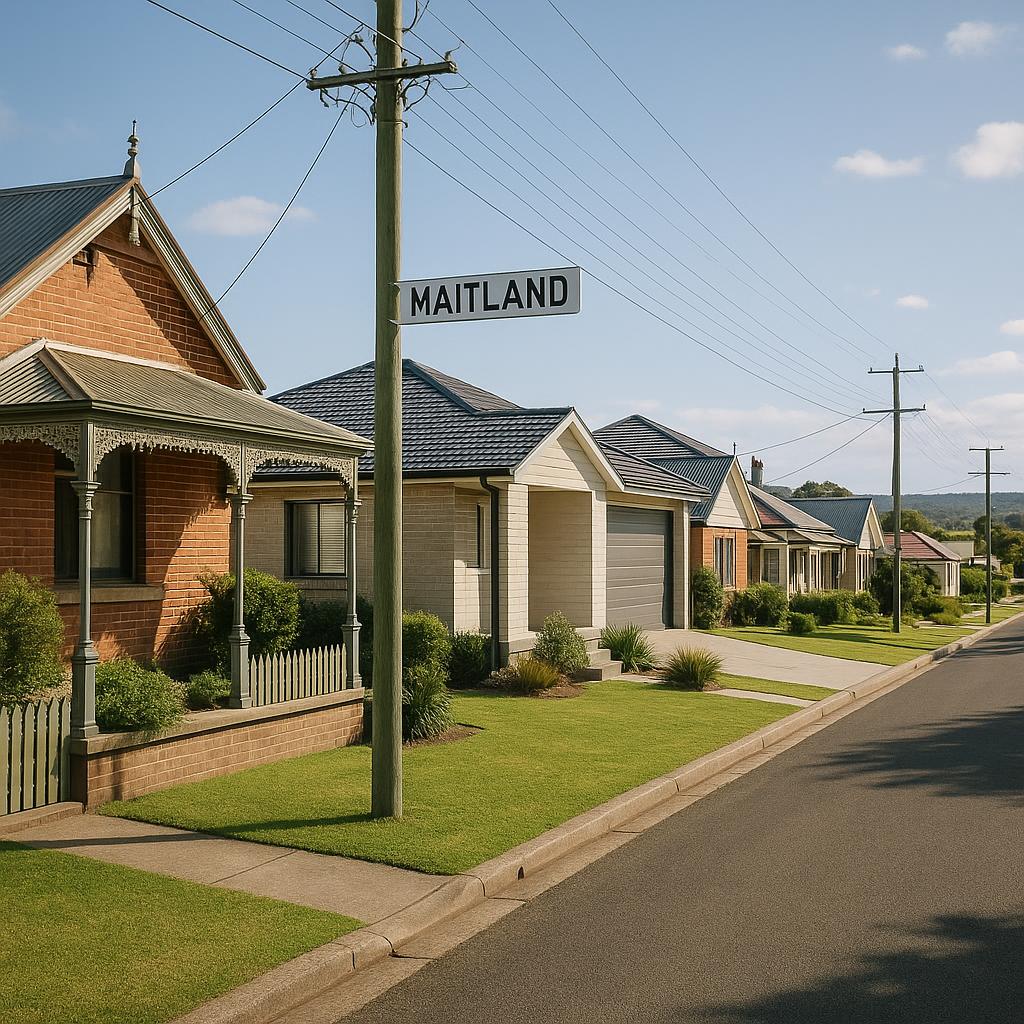
- Maitland stands out because it blends heritage streets, established neighbourhoods, and newer growth areas within one regional centre.
- Caution is needed around flood exposure, older-home maintenance, and the fact that nearby pockets can perform very differently.
- This guide is for first-home buyers, upgraders, families, buy-and-hold investors, renovators, and downsizers seeking regional convenience.
Pros & Cons
Pros
- Strong regional lifestyle appeal with a practical commuter base.
- Mix of heritage charm and newer estates gives buyers real choice.
- Broad buyer pool across price points and property types.
Cons
- Not all pockets behave the same, even within the broader Maitland market.
- Some areas need extra flood, drainage, and maintenance due diligence.
- Older housing can carry hidden upgrade costs and slower renovation timelines.
Market Overview
What Maitland is and why it matters in the Hunter
Maitland is a regional centre in the Hunter with a market shaped by historic town precincts, family suburbs, and growth-oriented edges. The “Maitland market” is best understood as several distinct pockets, not one suburb with one buyer profile.
That matters because a character home closer to established amenity can appeal very differently from a newer home on the fringe. Buyers who understand that difference usually make cleaner decisions on land size, maintenance, and resale potential.
Maitland matters to buyers and investors because it offers a regional affordability narrative, access to local services, and commuter links into the broader Hunter employment base, including Newcastle-connected work patterns. Its housing stock range also creates value-add opportunities for buyers prepared to inspect carefully.
Buyer Demand
Buyer demand in Maitland tends to come from first-home buyers, local families upsizing, commuters needing a workable base, investors chasing steady tenant demand, and downsizers who want community and convenience. Each group values something slightly different, which is why one pocket can outperform another for the same type of property.
In practical terms, demand often splits between established homes with land and character, and newer homes with lower maintenance and more predictable upkeep. That split affects negotiation power: the wrong renovation can look impressive online but still underperform if the layout, parking, or micro-location do not suit the target buyer.
Rental Market
The rental market is supported by families, local workers, and commuters who want practical access and a livable home rather than a speculative asset. Well-presented, low-maintenance properties generally appeal because they reduce friction for tenants and owners alike.
Older homes can still rent well if they are functional, tidy, and well-located, but investors should assume maintenance will matter more. A fresh three-bedroom home with usable parking and durable finishes will usually be easier to hold than a tired property with vague renovation upside.
Lifestyle, Transport & Schools
Maitland’s lifestyle appeal comes from its regional convenience, heritage character, and residential streets that feel more settled than many newer growth areas. For homeowners, that can mean more space and a stronger community feel; for investors, it often translates to better tenant retention.
Transport practicality depends heavily on the exact pocket. Road access to the wider Hunter is an important draw, while rail and public transport options can be useful for commuters, but daily convenience still varies by location and traffic pattern.
For schools and family amenity, focus on access rather than rankings. Childcare, parks, shopping, healthcare, and school proximity all shape liveability, especially for families who want a sensible daily routine rather than a purely aspirational address.
Maitland (NSW) Suburb Profile
Official 2021 Census snapshot for the ABS Suburbs and Localities geography.
Age profile
Housing tenure
Occupied private dwellings by tenure type.
Salary & income profile
Median total income reported in the Census.
*Annual figures are weekly median × 52 estimates, not separate ABS annual medians.
Education & qualifications
Highest educational attainment, people aged 15+.
Employment status
People aged 15+ who reported being in the labour force.
Industry of employment
Top responses among employed people aged 15 years and over.
Occupation profile
Broad occupation groups among employed residents, including managers.
Property Type Guide
- Older character homes: Good for land, charm, and renovation upside; weaker where maintenance, compliance, or hidden costs are ignored.
- Newer family homes: Suited to owner-occupiers and low-maintenance investors who want modern layouts and simpler upkeep.
- Townhouses and units: Useful for affordability and easier tenancy management, but strata or body corporate rules need checking.
- Renovation candidates: Best when the numbers allow for contingency, not just cosmetic uplift; inspect structure and services first.
- Established pocket vs newer estate: Choose between land, character, and maturity versus convenience, low maintenance, and a newer streetscape.
Risks & Watch-Outs
- Flood and drainage diligence is essential in relevant pockets; verify mapping, past events, and insurer feedback before committing.
- Older homes can hide costly issues in wiring, plumbing, roofing, ventilation, and pests, so building and pest checks are non-negotiable.
- Street-by-street variation is real in Maitland, so compare the exact pocket rather than relying on broad suburb commentary.
- Renovation overcapitalisation is a common trap when buyers chase style without checking the local resale ceiling.
- Holding costs matter, especially if you need repairs, vacancy allowance, or a buffer while waiting for the right tenant or buyer.
Nearby Suburbs to Compare
- Rutherford – practical, value-driven, and often compared for affordability and convenience.
- East Maitland – more established, family-oriented, and amenity-rich as a comparison point.
- Lochinvar – growth and space oriented for buyers who prefer a newer development feel.
- Lorn – premium-leaning character and prestige comparison for lifestyle buyers.
- Telarah – close-to-centre convenience with an older housing mix and practical appeal.
FAQ
Is Maitland NSW a good place to buy property?
It can be a good choice for buyers who want regional liveability, space, and access to the Hunter economy. The key is to compare pockets carefully, because property age, flood exposure, and commute convenience can change the outcome materially.
Is Maitland good for property investors?
Potentially yes, if you buy for tenant depth and holding quality rather than chasing a headline story. Investors should prioritise durable homes, practical layouts, and locations that appeal to families, workers, and commuters over the long term.
Which Maitland suburbs are best for families?
Family suitability depends on daily convenience, schooling access, parks, and home type. Established pockets often suit families wanting amenity and character, while newer areas may suit those prioritising low-maintenance living and simpler upkeep.
What types of homes are most in demand?
Broadly, functional houses with usable land, good parking, and sensible layouts attract the widest audience. Newer homes and well-updated older homes can both perform well if they match the target tenant or owner-occupier profile.
Are there flood risks in Maitland?
Some pockets require careful flood and drainage due diligence, so do not assume every street carries the same risk. Check mapping, insurance implications, and local history before buying, especially if the property sits low or near waterways.
Conclusion
Maitland suits buyers and investors who value regional lifestyle, practical amenity, and the ability to choose between different property types and pocket profiles. The strongest results usually come from matching the location, home type, and risk profile to your long-term plan. Inspect carefully, compare micro-locations, and verify the details before you commit.
Sources & how to verify
- Check current sold prices and active listings on Domain so you are comparing today’s market, not stale estimates.
- Cross-check listing depth and recent sales on realestate.com.au to understand how similar homes are actually presented and priced.
- Use ABS data for broad demographic context, but treat it as background rather than a substitute for street-level research.
- Review planning controls and zoning on the NSW Planning Portal before assuming a block can be extended, subdivided, or repurposed.
- Check local flood and hazard information through the Maitland City Council website, especially if a property sits near drainage lines or lower ground.
- Confirm school zones and enrolment information via the NSW School Finder rather than relying on informal local commentary.
- Validate commute assumptions with live route checks and timetable information on Transport for NSW, because convenience can differ by pocket and time of day.
- Always pair online research with a building and pest inspection, then review insurance terms carefully where flood or maintenance risk may affect ownership costs.